
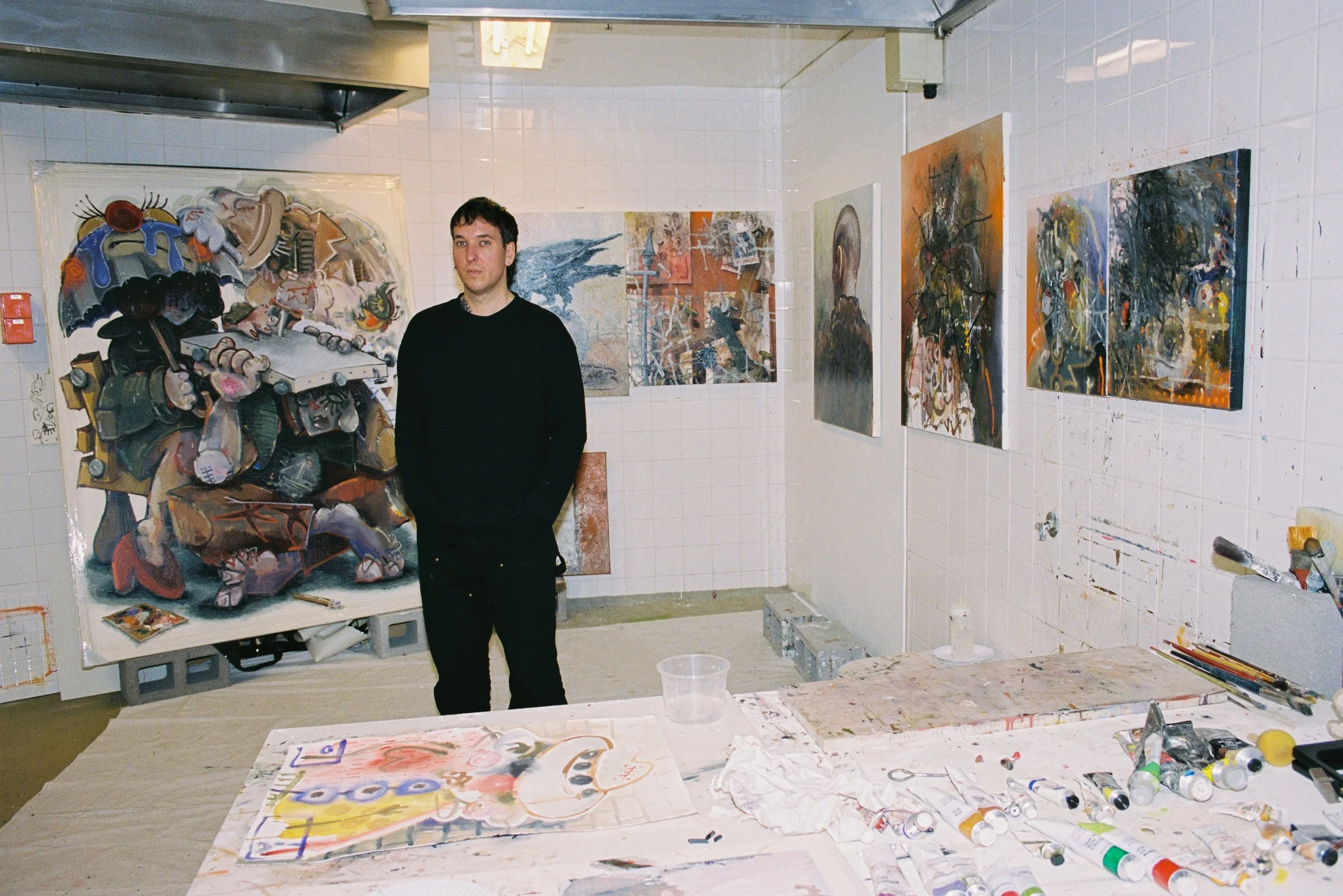
Photography by Josh Sabini.
There’s a certain familiarity within the abstraction of Melbourne-based artist Rhys John Kaye’s work.
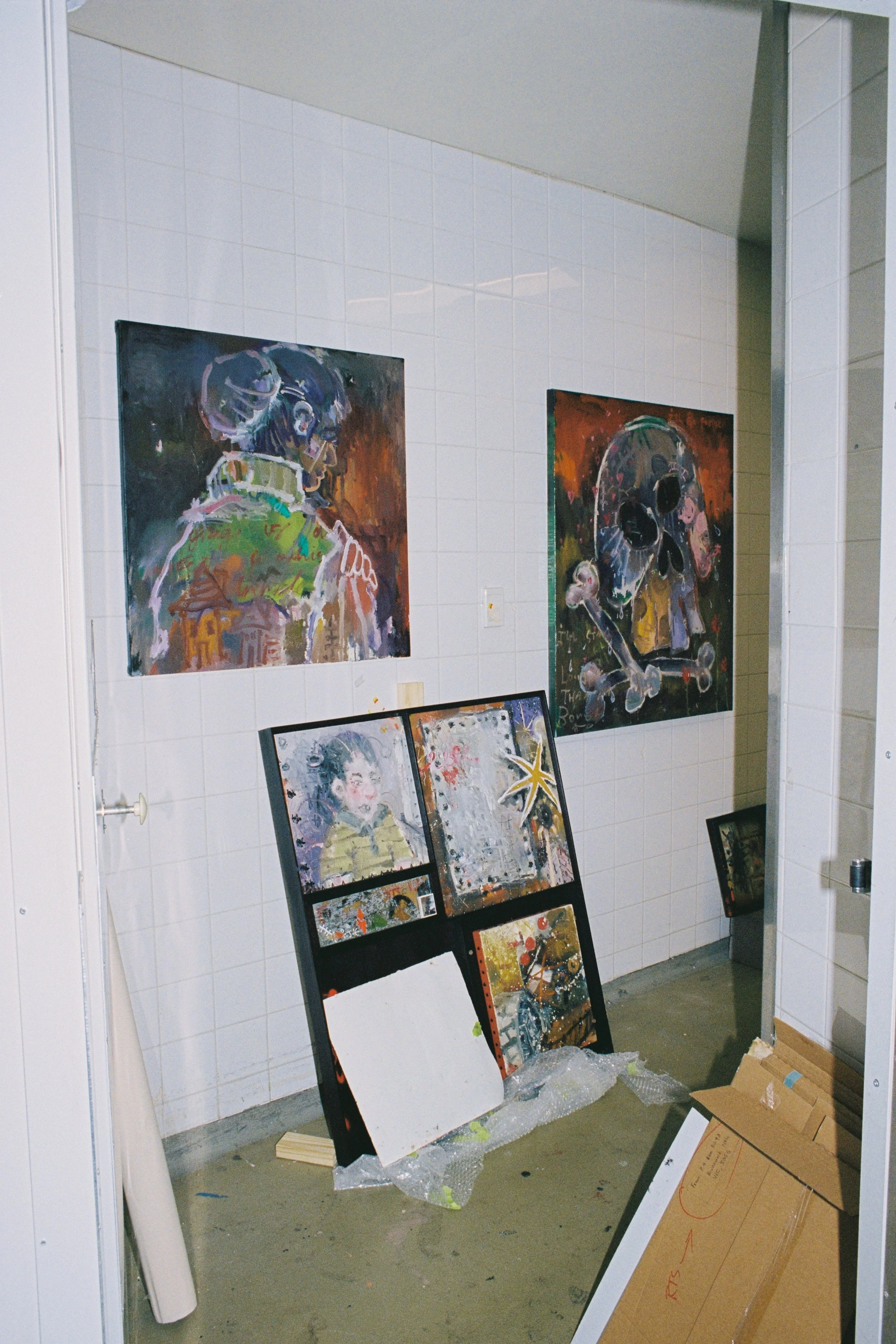
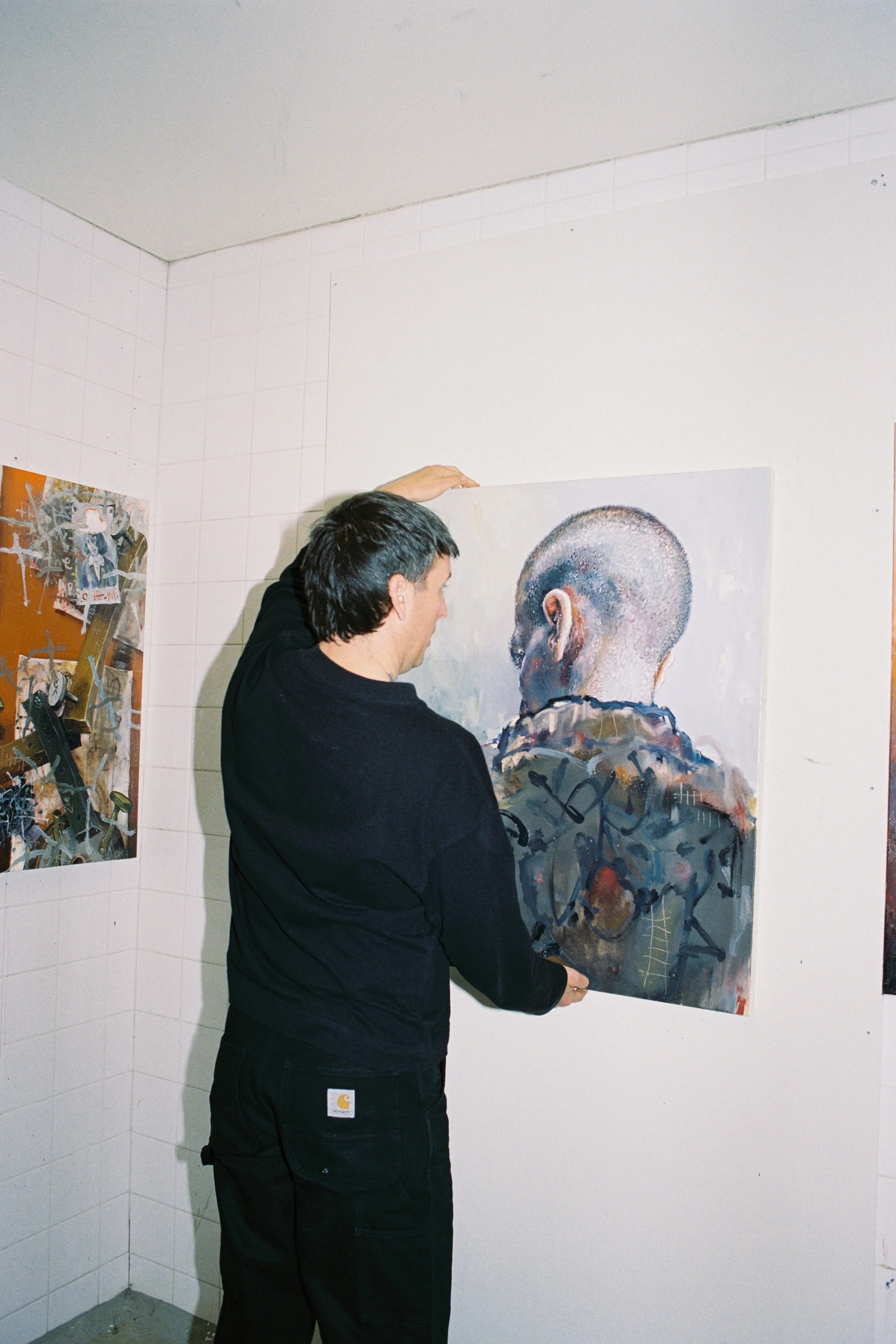
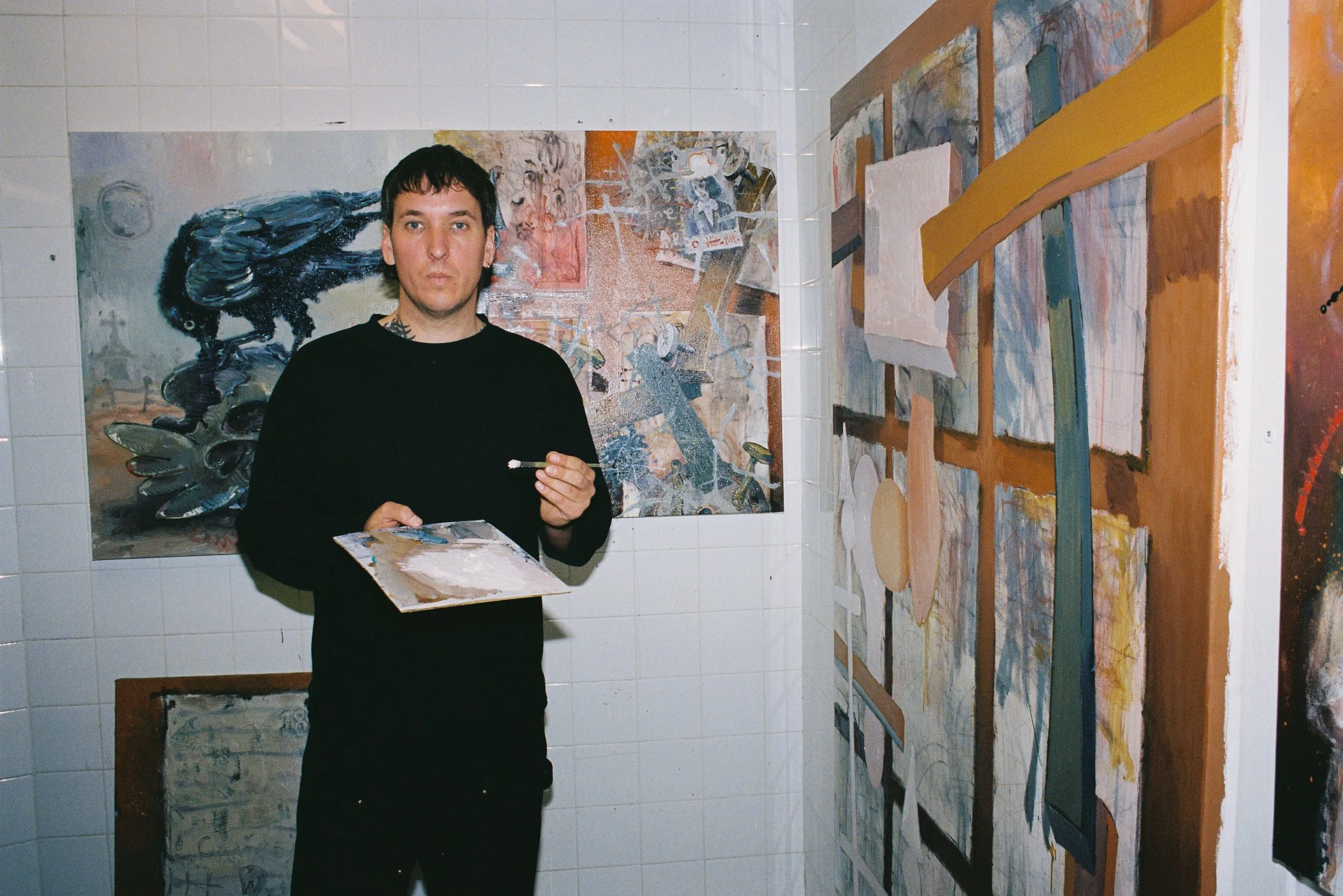
While at a glance that statement may come across as confusing, as his paintings aren’t pretty pictures of pristine landscapes or to-scale portraits, but instead a chaos of rich colours. Yet, it’s upon closer inspection, it's understood that the chaos is where the familiarity lies. The layers of paint that compose his characters with the smudges, scribbles and scratches blending into spiderwebs, stars, and the ambiguous, almost illegible phrases hidden in between are reminiscent of notebook doodles made while trying to declutter. The work is autobiographical, directly from Rhys’ mind; real life happenings, memories and dreams, driven by honesty, as each painting he says is ‘symbolic of whatever is happening in the moment’. And that symbolism remains long after the painting is done.
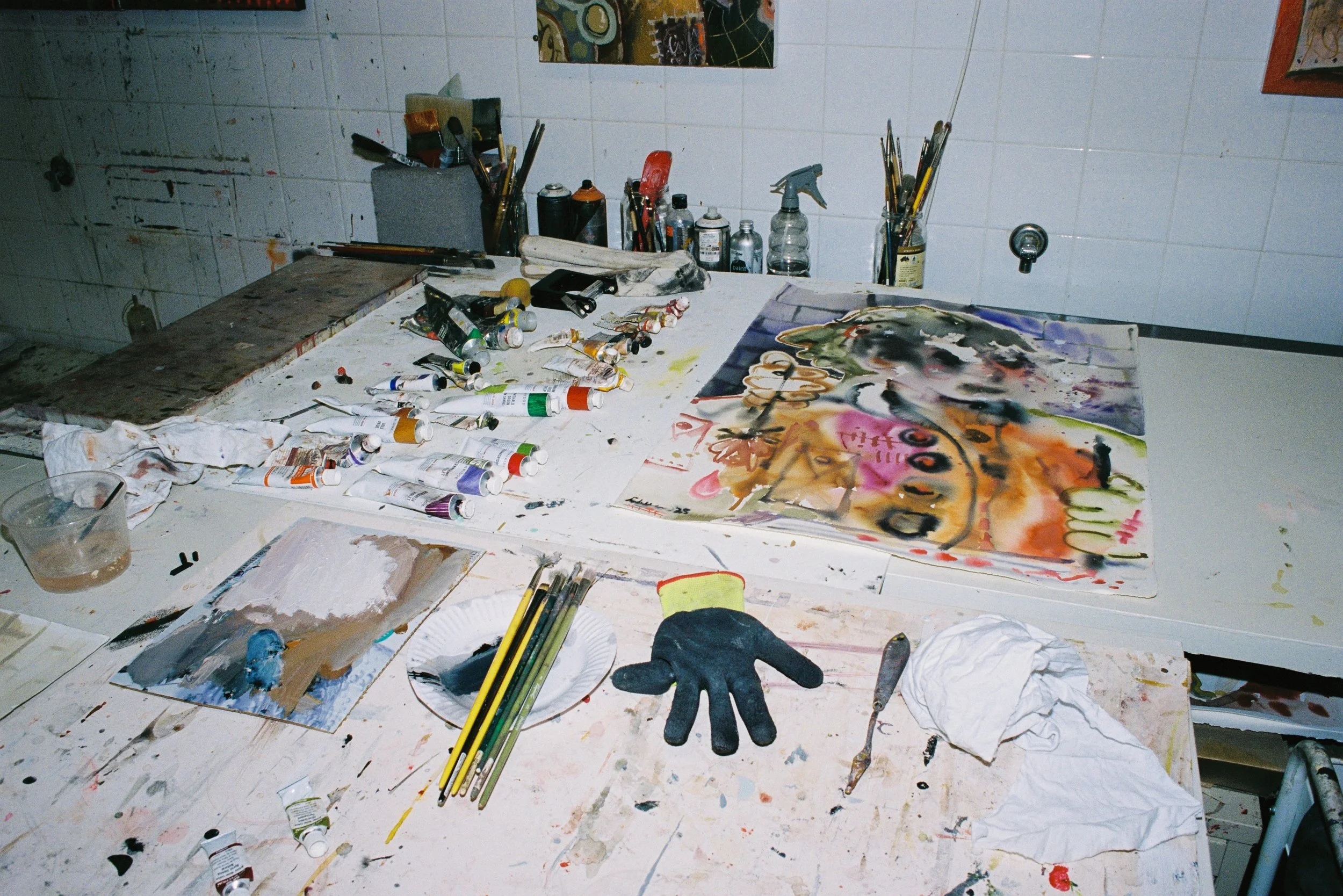
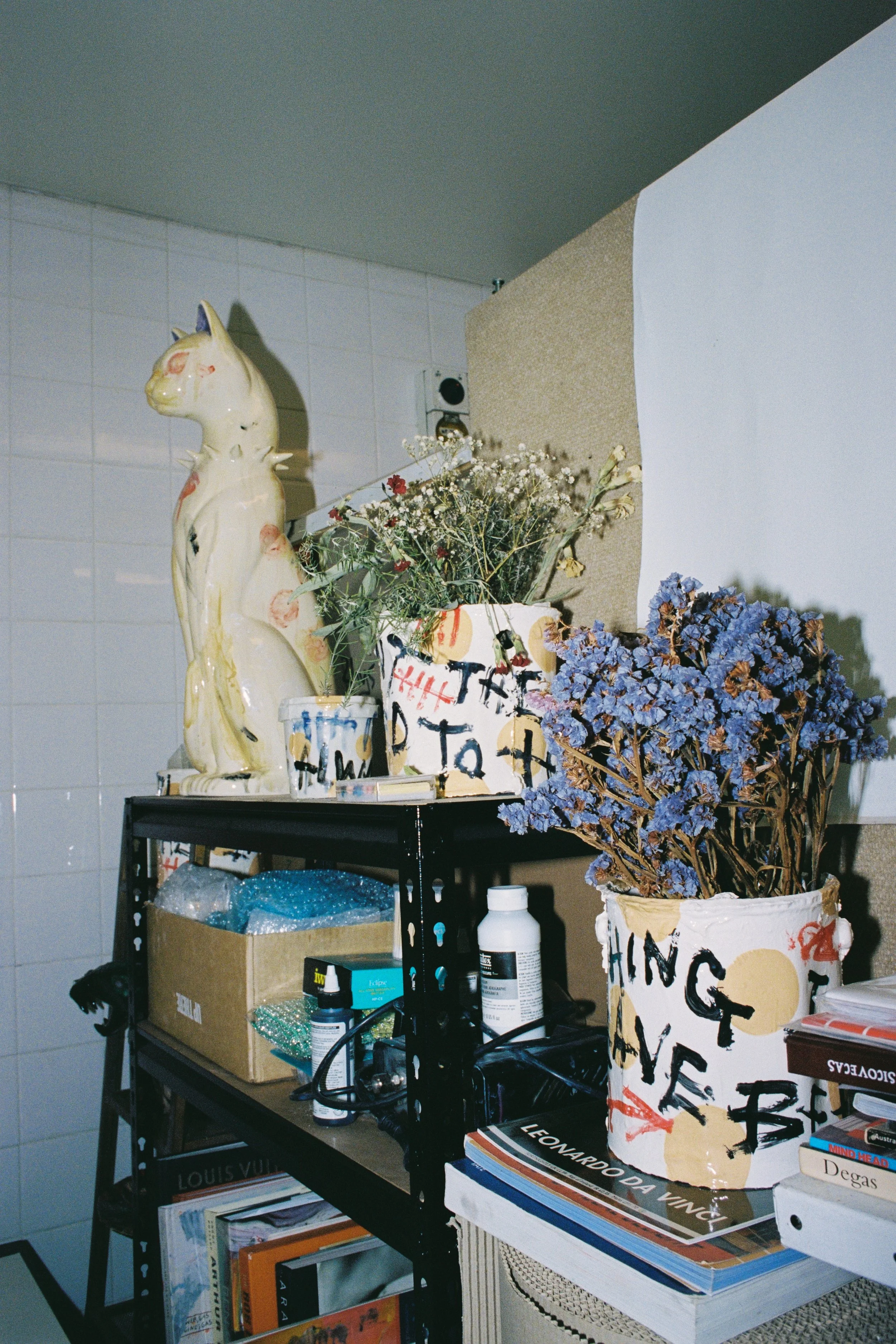
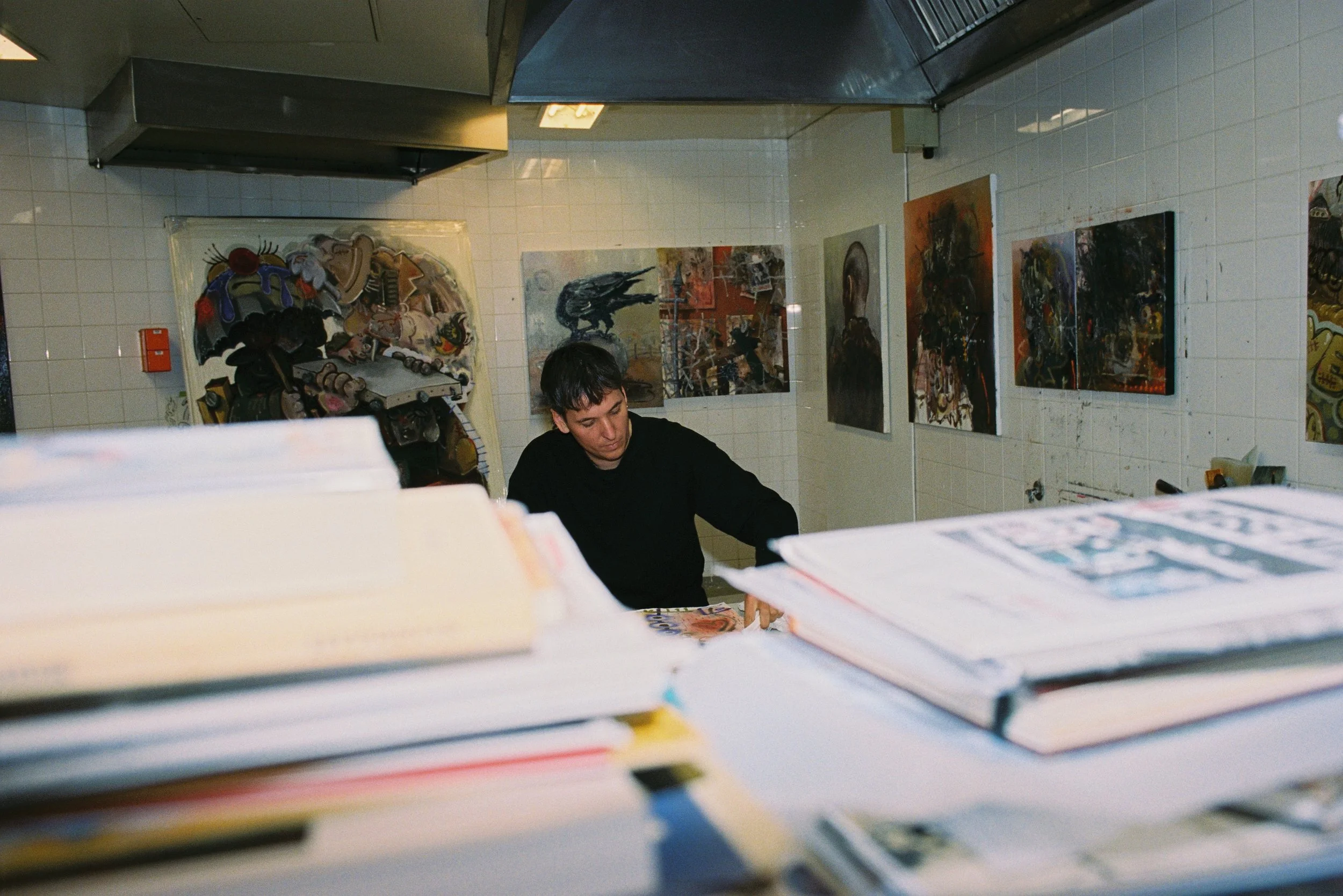
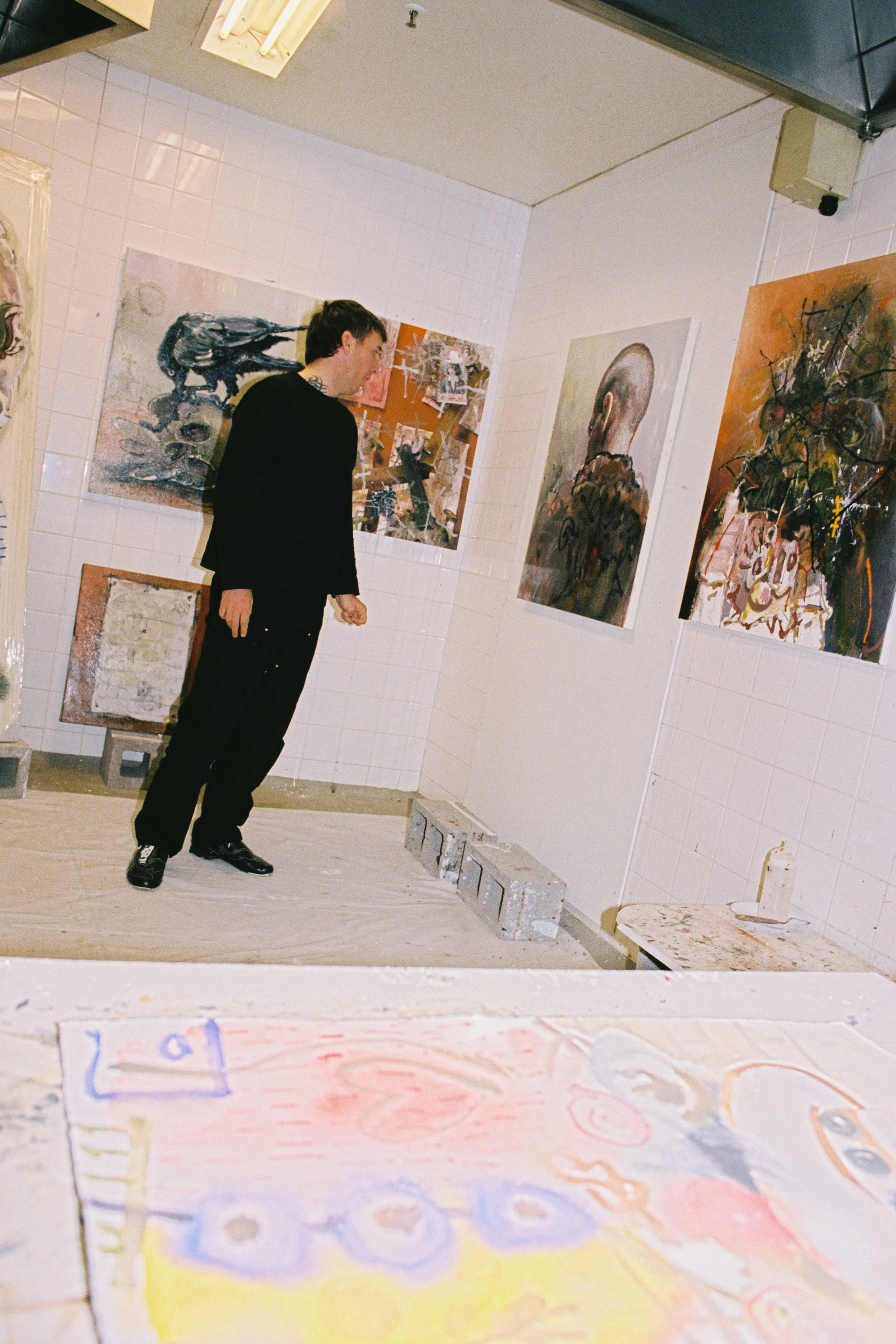
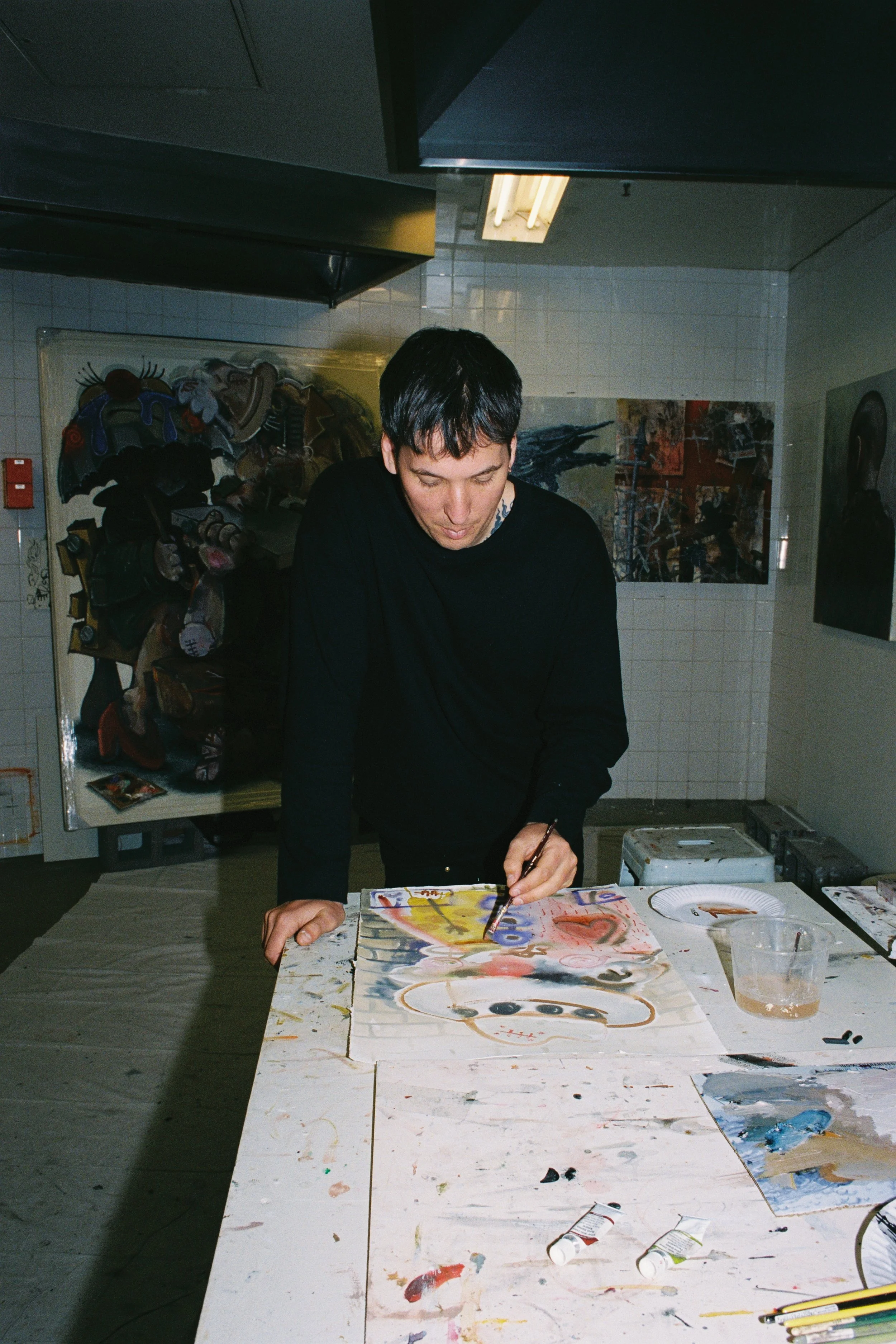
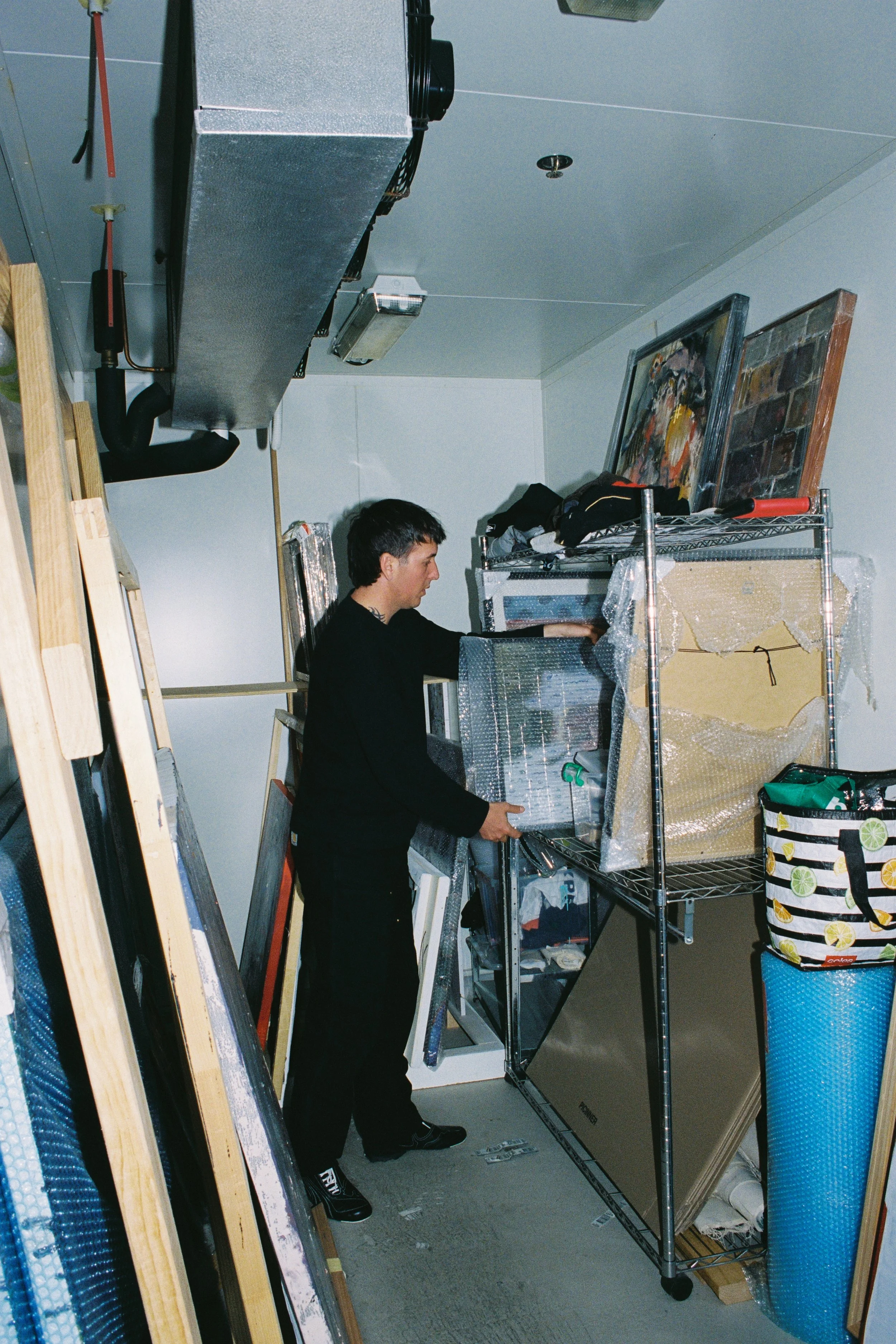
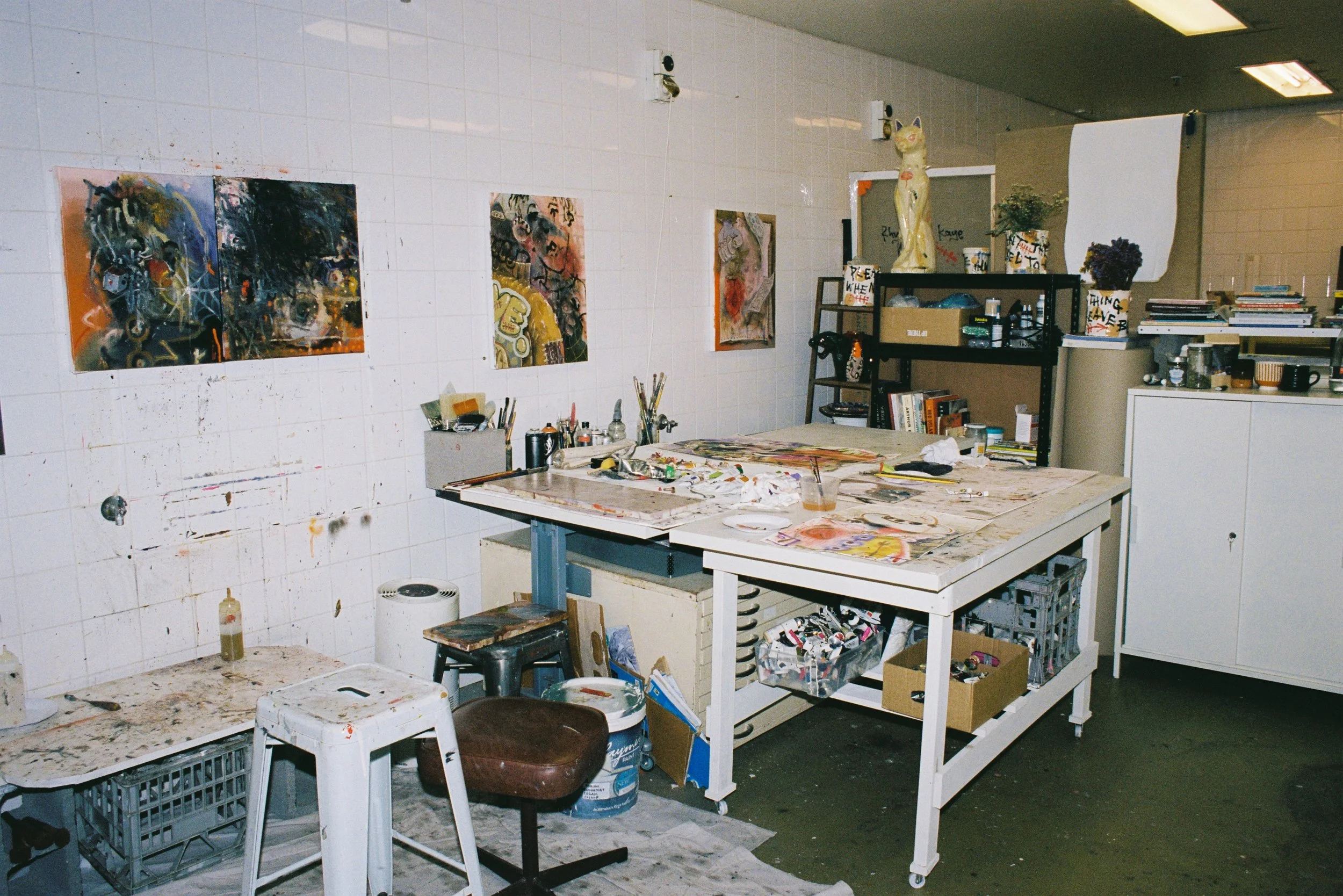
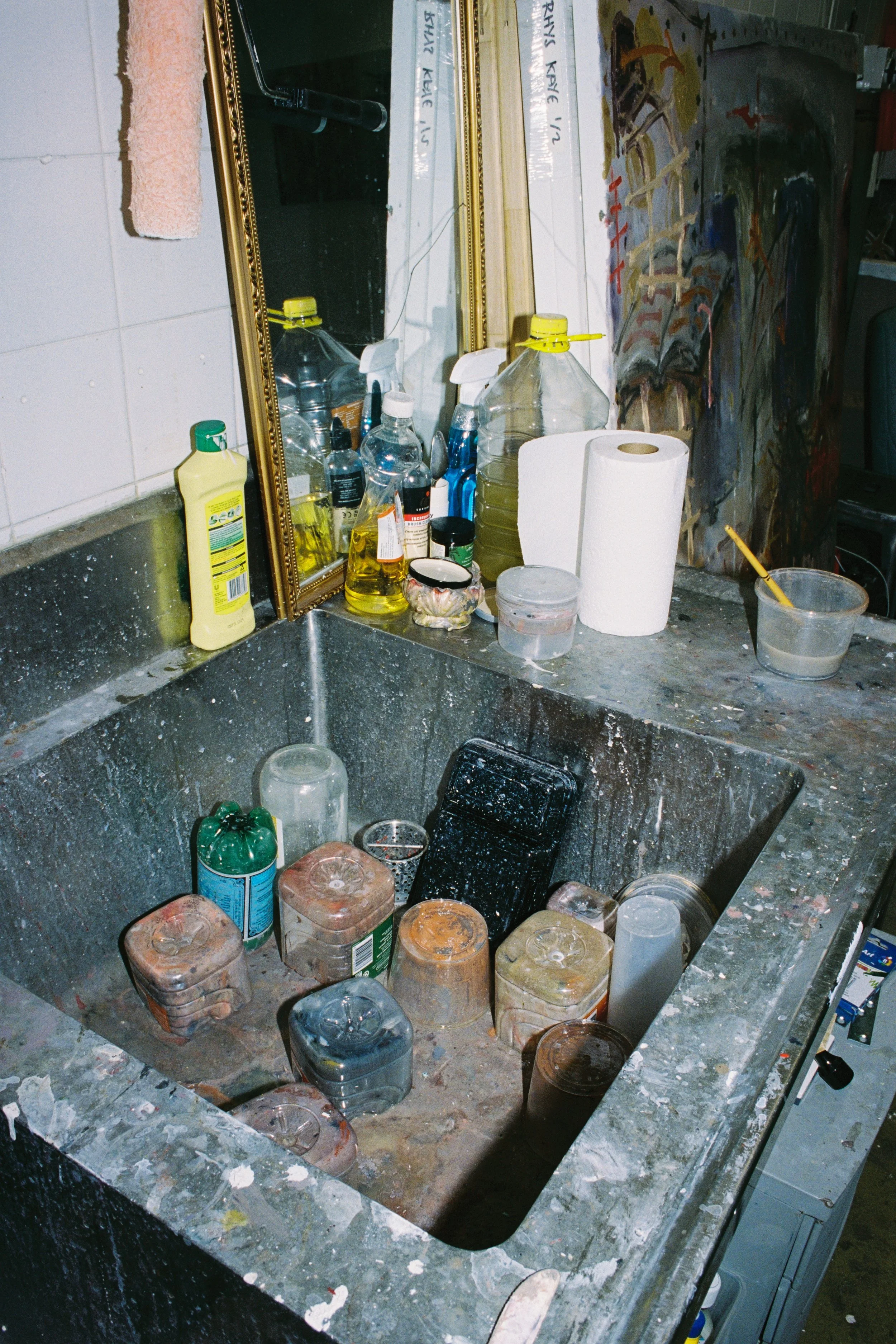
I visited him in his studio, located in what was once a supermarket deli, to talk about his art, the studio and how having the space has helped him evolve as an artist.
This is a longform interview version of a piece that originally appeared in Monster Children Issue 74, which you can get your hands on here.
You lived on the Gold Coast, then South Korea, before eventually settling in Melbourne. How did you end up moving to South Korea?
I was on the Gold Coast at the time, and both the leases on my place and studio were coming to an end. So I thought it would be a good time to move. I’d spent a lot of time in Europe and America before that; I'd been based in Copenhagen, and I'd spent a couple of months at a time in America. Whenever I went to Asia, it was only for short stints, and I’d always wanted to be based there. At the time, I was doing a lot of ink-based work that was similar to calligraphy, so I thought Asia would be the best place to do that work. I originally planned to live in Japan; I’d been there a few times briefly and loved it. I stopped over in Korea for what was planned to be a two-week stay before heading to Japan, but when I got there, I fell in love with it, and everything fell into place within a week. I met some people, they offered me a room, and I had no reason to go anywhere else. I was there for a year and three months and would visit Japan and Hong Kong every few months.
How long did you stay in Copenhagen?
I spent three summers there in a row. The first trip was one month, the second was three and then the third was six months.
What made you come back to Australia?
I came back for my visa, then covid happened. I couldn't leave the country, so I moved to Melbourne.
What made you want to move to Melbourne?
I was on the Gold Coast for two months. I had nothing set up there; I was staying in my friend’s spare room. I had a bunch of friends in Melbourne, and knew that studios and rent were cheaper, so I moved down. I thought I’d only be here for six months and move back overseas, but it’s been five years now. Once I got here, got set up with a studio and a house I liked, I wanted to stay.
Do you think your practice has changed from being in one place?
Yeah, I started making bigger-scale work and sculptures. Before that, I wasn’t living anywhere for more than six months at a time, so I had to paint accordingly. I would paint just for an exhibition, thinking in three-month blocks, rather than building work up for a longer project. Once I came here, I was able to build a routine, put more time into projects and see what would come from that. I reevaluated everything and thought maybe it’s in my best interest, as far as my art is concerned, to have a base and do shorter trips instead of floating around and making small work that would move.
Did traveling and being immersed in so many different art scenes help introduce new ways of thinking into your practice?
Yeah, it’s always shifted and changed a lot from learning and being around other artists. When I was in Korea, a lot of the people I met were photographers and designers, not so many painters, which was great because I got a lot from the exposure to other practices and ideas. It made me think more deeply about artwork and its purpose, whereas before, I hadn’t thought of a lot about that. My friends in Copenhagen were building furniture, and industrial and fashion design were big. Those weren't things that I wasn’t around on the Gold Coast, so those aspects of creative work didn’t ever enter my mind.
Totally, especially with the design scene in Copenhagen being super unique too.
Yeah, it felt like another planet to me, especially at the time, it was pre-Instagram, so it was so different. There were a lot of DIY artist-run initiatives, which I had never seen before. In Queensland, it was always commercial galleries or a warehouse party with art, but there was no in between. It gave me a different outlook on working something out yourself rather than going the traditional gallery route.
That’s something which is really nice, it seems to happen a lot in cities with bigger scenes, where people come together, no matter their creative pursuit.
Yeah, and Melbourne had the closest example of that in Australia. Credit where credit is due, Brisbane has come a long way now, but when I was growing up, there wasn’t that much.
For sure. Going back to the thought of working differently, now you have the studio. I know you’ll still go on residencies. When you’re on one, how do you approach making work?
When I didn’t have such a stable set-up, I would go with the idea of creating something in the time, but now it’s a bit different. It’s more research-based now because I have this studio. I try to go into them with an open mind and let the environment and experience lead the work. If I’m just going to work on what I was already doing, I may as well stay here. I was just in Japan, and I went to work on ceramics because that's what the town was in is known for.
What was the town?
It’s a really small town called Takeo, about an hour away from Fukuoka. It’s such a beautiful place; a lot of the Studio Ghibli films are based on the landscapes of the area. It’s one of the original places of Japanese porcelain, so there are a lot of old masters there who are really good at what they do. There’s also one of the oldest trees in the world there.
Earlier, when we were talking, you said you feel like you’re in a developmental stage. What does that look like?
The past few months, I’ve locked myself away for the winter, so I’ve been deep diving into subjects, spending more time considering what the work is. I’m trying to make work that’s more personal and finding a way to capture that.
I feel like your work has evolved quite a bit over the last two years. It’s always had texture, but now it has evolved to be busier, more colourful and blank space has been essentially eliminated.
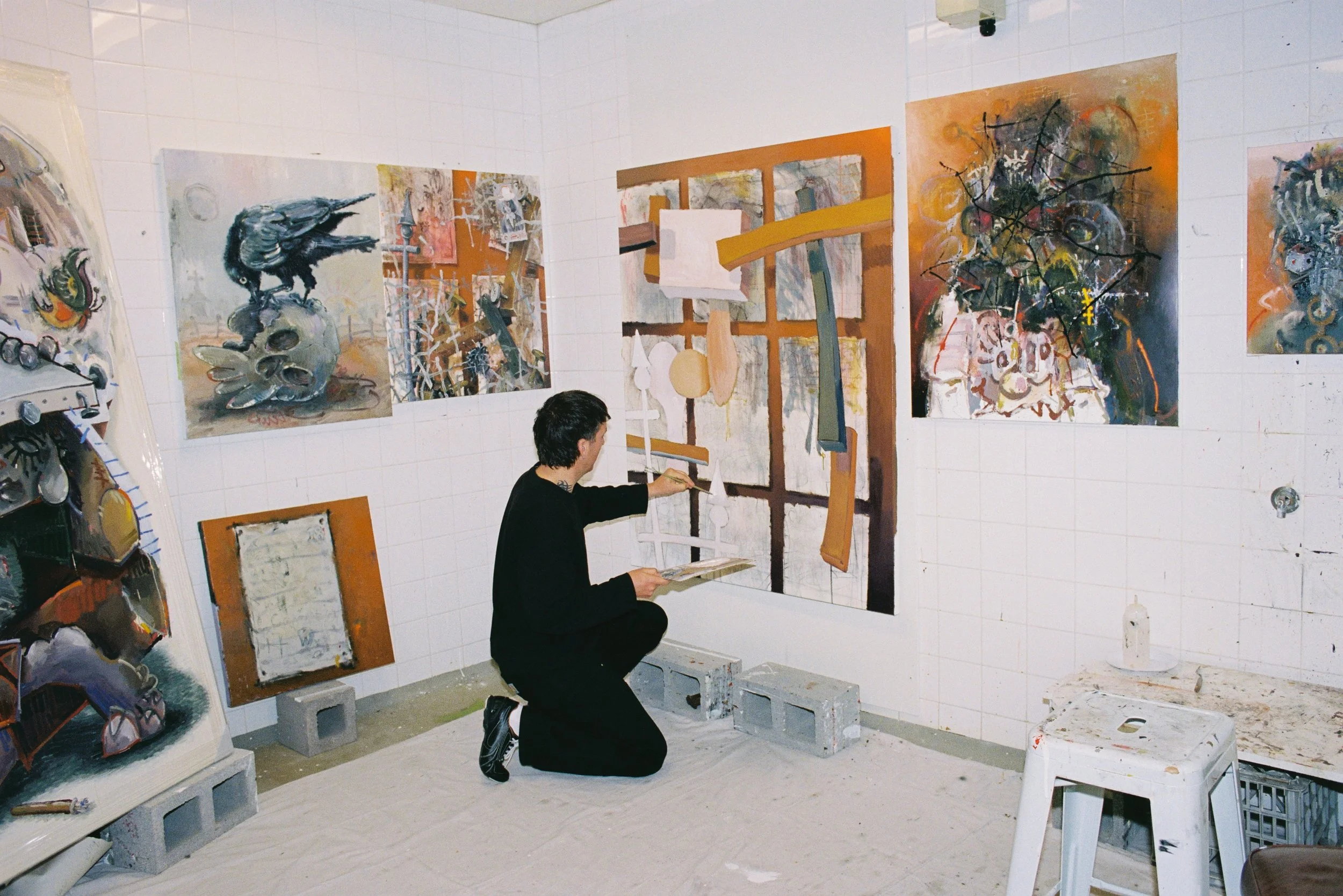
Yeah, until 2023, a lot of my work had white backgrounds and was more illustrated. Recently, I’ve been painting over paintings repetitively. I go into them wanting to have white space, but I’ll do an entire painting, then when I look at it a week later, I’ll just paint over it. It’s never the intention at the beginning; it’s just that I know when it’s enough. I’m trying to strip that back and hoping I’ll get closer to achieving that without putting as much time into it, but they seem to require that.
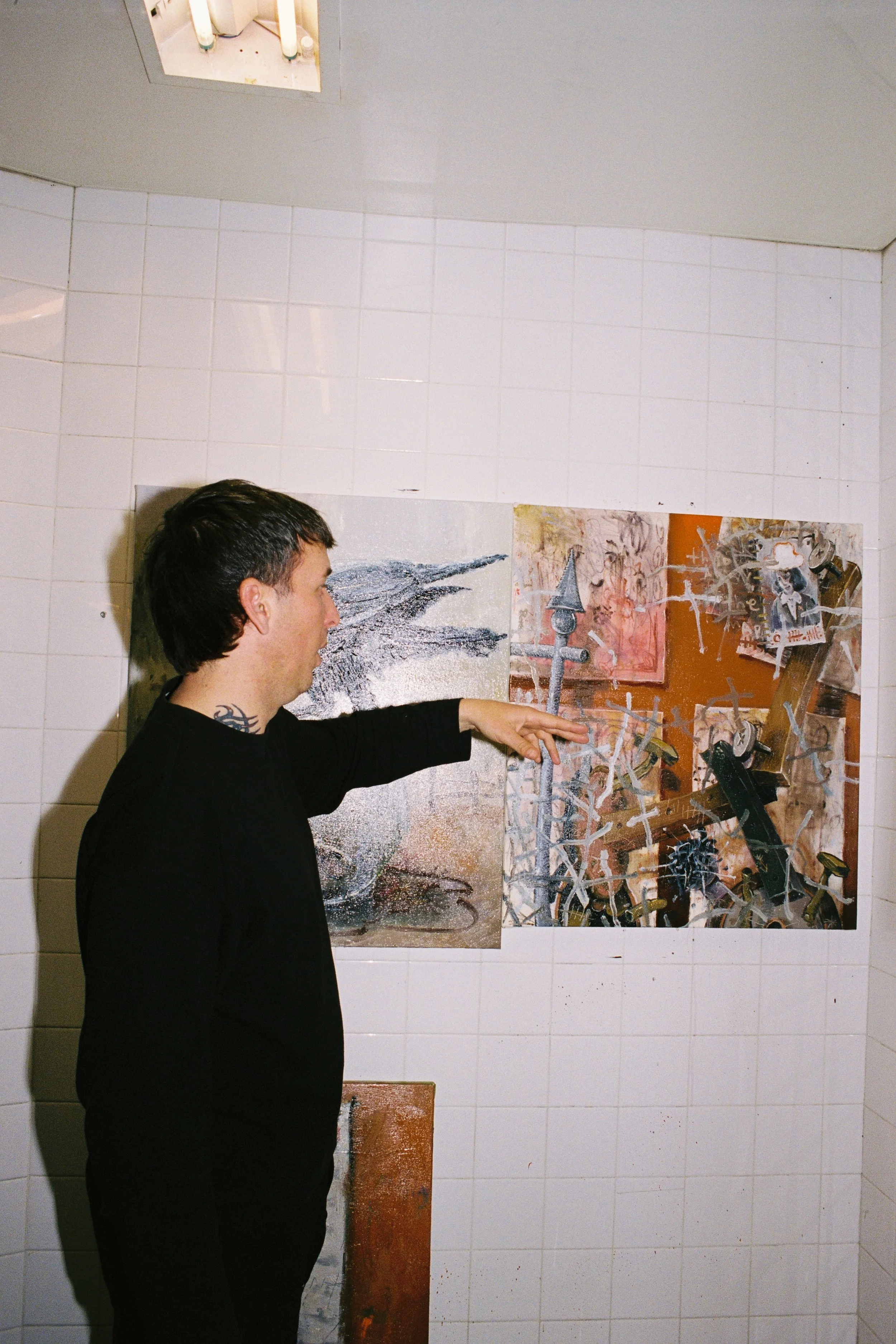
Before I start a painting, I brainstorm and draw on the canvas. With this one [points to a painting], when I got to that point, I didn’t want to paint completely over it. I really liked where it was heading, so I was like, ‘How can I retain the prior energy and turn it into a painting?’ So I’ve painted on top of it, but I’ve purposely left the gaps because it tells more of a story than destroying the original energy. By the time I do a nice, fixed-up painting, you’d never know how many skulls are under it. I purposely leave a hole, charcoal mark, or scratches to show there’s something behind the paint.
Yeah, the scratching stands out a lot.
I want the person to know that there is a long process involved and it’s not simple. It’s this back and forth of what seems to make sense. I want to make a painting that if someone asks me to do it again, I wouldn’t even know where to start. If I’ve done a painting in the past that I know I could do again, or that other people could do, it doesn’t feel needed. When I do something that has a heartbeat to it, it feels symbolic of whatever was happening in that moment, and when time passes, it immediately brings me into that space.
Do you feel like you’re trying to declutter chaos?
Yeah, totally, and the paintings feel like they’re almost alive. My hope is that they don’t have to feel like this, but it’s an honest representation of what’s happening.
When you’re making something really pristine, it feels performative. I’ve done so many of those nice pictures, and it got to a point where it didn’t feel like it was serving me anymore. I feel like I have more to unravel. The stage the work is in, to go back to what you asked earlier, is: clearing all this mess. That’s kind of why the work started to become more abstract, because I’m starting to clear out all this mess, these ideas, visual images, and trying to make sense of stuff, and I want that to be reflective in the paintings.
How do you feel about painting something knowing you’ll most likely paint over it?
It’s hard, but I feel like art is constantly teaching me things about life and myself, and that’s a part of that. I can look at a picture and paint it so many times over, but it doesn’t give me anything. To show other people that, and for them to clap it feels empty. I’m not in the business of making a pretty picture; it needs to make sense to me.
Has your work felt more enjoyable to do since you’ve been thinking about it more critically, or has it become almost painful?
Both. It’s more rewarding because it surprises me. I was never interested in abstraction. I had always had a simple thought process with the painting, of thinking of a cool picture and painting it. Then, through the act of doing it continuously, I was thinking about the way the work interacts with psychology, human interaction, connection, and spaces. The best word to describe it is unravelling; it feels like an unravelling that doesn’t make sense when you’re focusing on a small part, but when you zoom out and focus on the big picture, it’s really clear.
Do you think that going over paintings continuously is, in a way, surrendering to having the art tell you what it is?
Yeah, it always surprises me, and that’s why I have to get into that place of surrender.
I want the work to tell me what it’s going to be rather than be like ‘I’m going to draw a picture of this’. We have way more potential than we realise, and shutting off the logical brain and trusting that intuition to guide us is how we find it out. My constant goal is to try to ignore logic and trust intuition. That’s when I think you get that magic, it’s this magical feeling you can’t fake, and I’m just chasing that. I want whatever that feeling is to be instilled in this. I just need to let that intuition guide me and trust that it’s going to end up somewhere interesting.
It's a complete flow state.
Exactly. Full surrender. It’s easier said than done. That’s why they call it a practice; there is no finish line. The more I learn about that, the more I fall in love with it and the more important it all feels collectively.
What do you want people to get out of your work?
I want it to have whatever impact it needs to have. I don’t think that’s something I control.