An Artist You Should Know: Tallulah King
This series, An Artist You Should Know, much like its fellow editorial series’ like A Band You Should Know, are meant to expose you to something new and interesting, as well as to explain their importance.
We often spend an amount of time and language combatting shortened attention spans to prove to you exactly why this person or thing is worthy of your focus and affection. However, in the case of today’s subject, NYC-based illustrator Tallulah King, the work itself is so striking that there isn’t much need for rhetoric. Just have a look, there is a lot to see. The illustrations are intricate and immediate, the feelings are strong and dedicated; sharp, funny, ominous, distinct, and with an extraordinary amount of brush-stroke decision making that somehow fills but does not overwhelm. It’s literally marvelous. Tallulah is a professional illustrator focusing on editorial and musical collaborations, a feat in itself in a creative environment under constant threat by technology and convenience, we suspect is due in no small part to Tallulah’s bold and extremely distinct style, so we asked about it.
So you did a residency in Italy and started to get into some color.
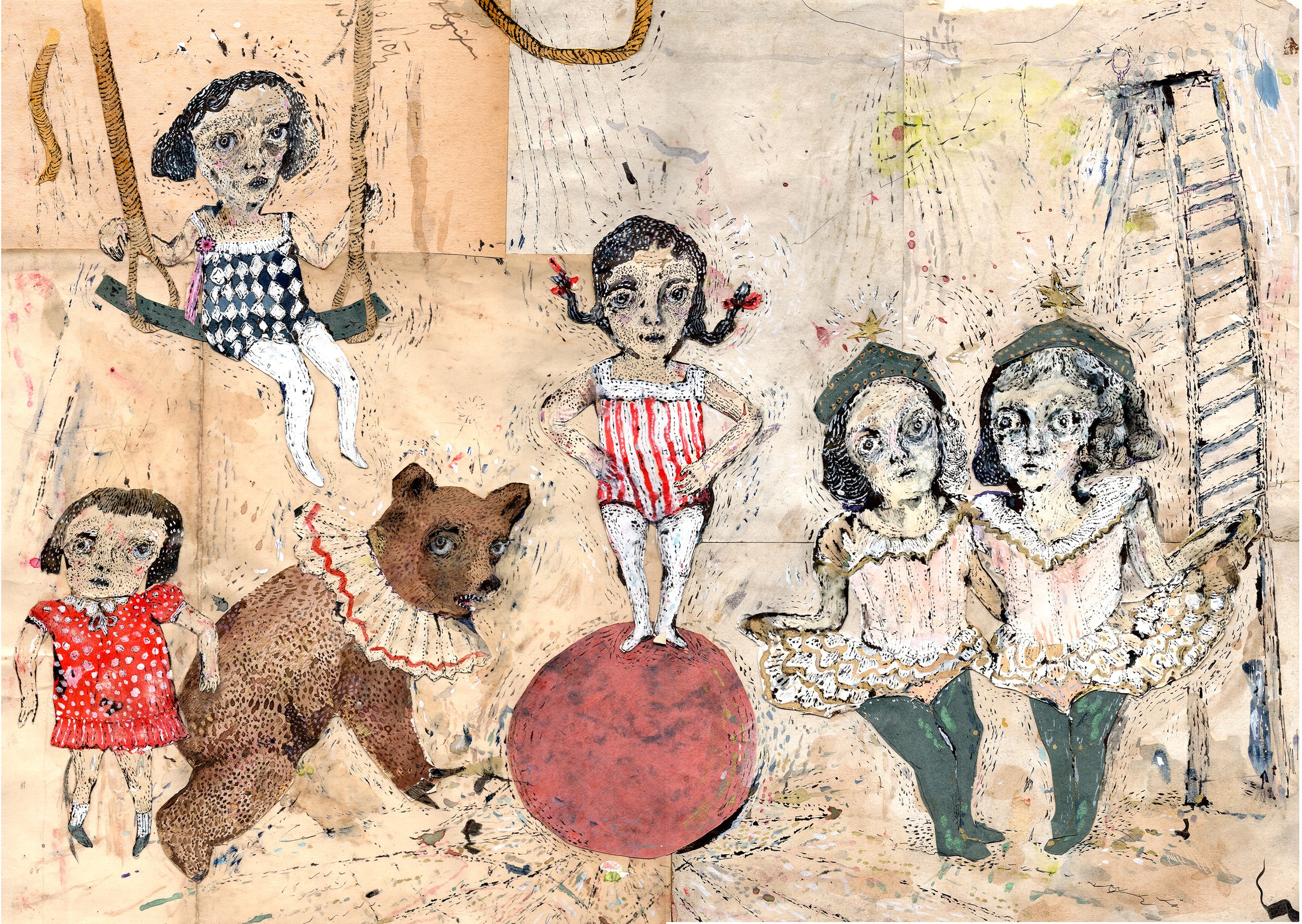
Yeah, I did these drawings there. Before I left, I bought all of this vintage school paper on Ebay - I think it was a record case that someone had stuffed with paper. I really like finding materials that have character, a bit of a tinge. Until then, my trajectory of drawing, I’ve only really drawn on white paper with black ink. This was the first time that I brought color into it in a big way. I wanted to use a tinted ground and commit to color.
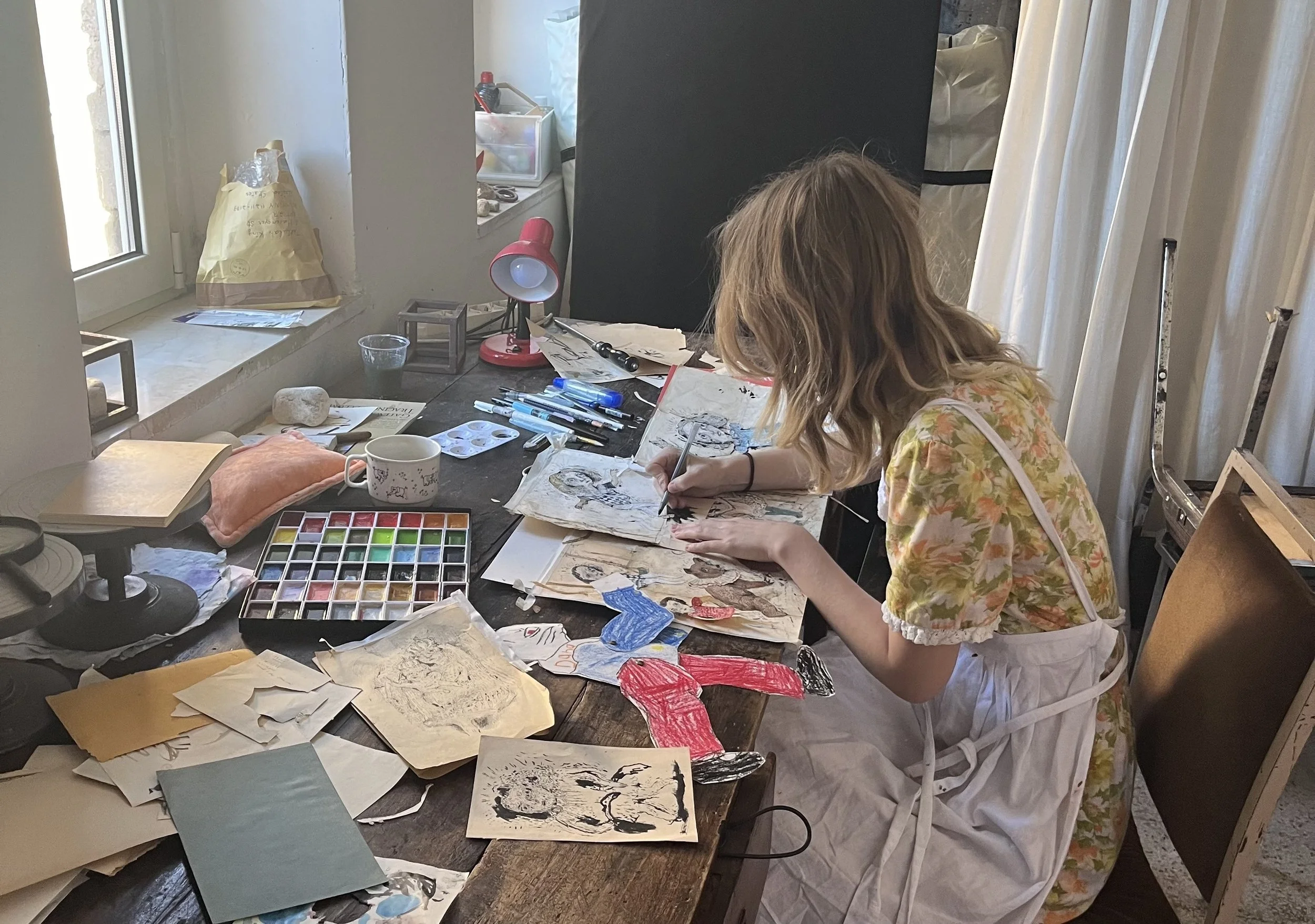
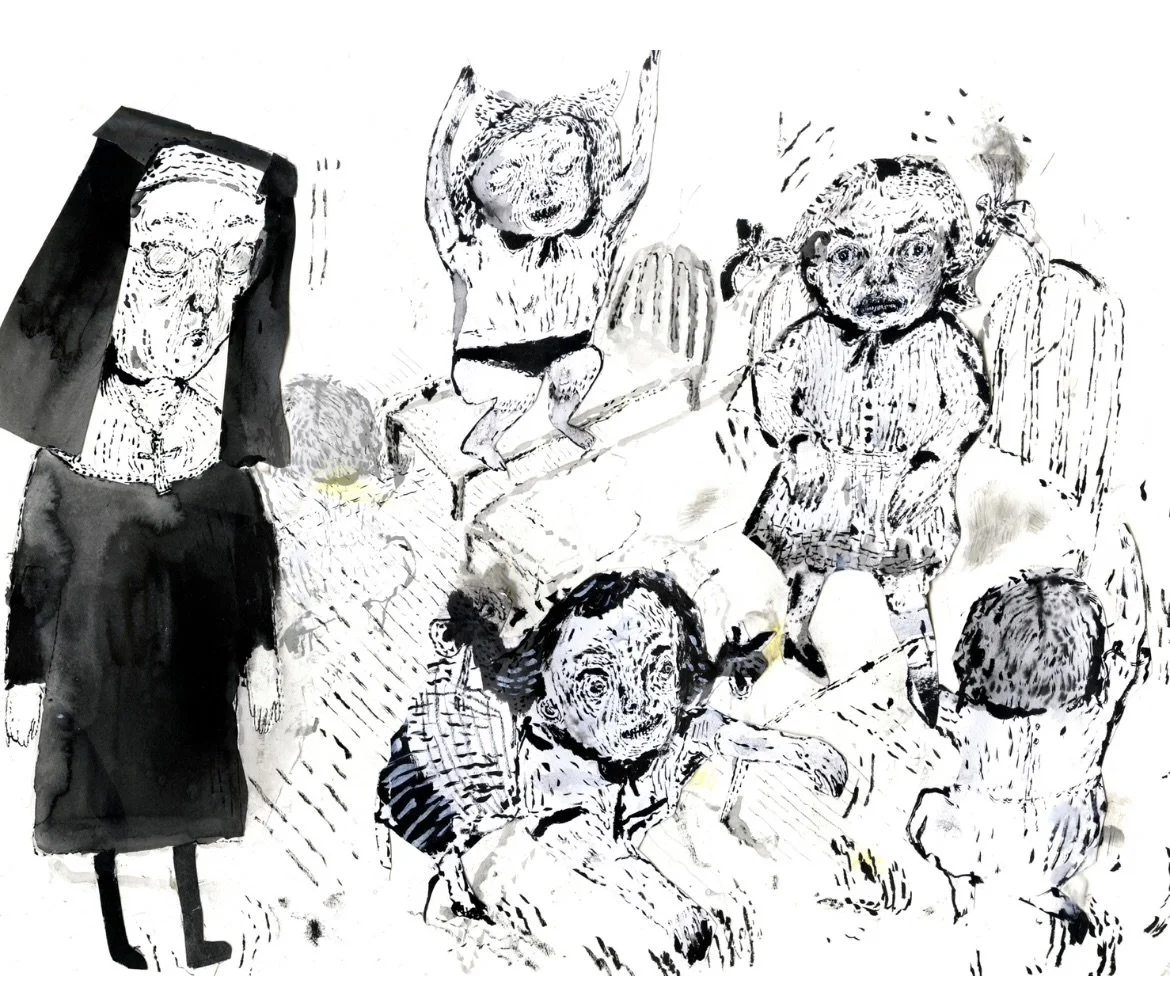
Also, all of these [color illustrations like Circus above] are collages. I’m cutting out pieces of paper. I’ll draw someone on a piece of paper and then Xacto knife them and lay them out on a different piece, and once they were there I created texture and environment around them.
Why the shift to color?
I was just curious about it. I really believe in the immediacy and strength of just a black and white drawing, and it’s how I had been working for a long time, but I feel that I have a strong sense of color in my mind. It’s something that developed when I moved back to the city, and I wanted to explore that.
At least in these illustrations you did in Italy, there is a very strong circus theme. Can you talk a bit about environment, setting, and dressing for your characters?
I went there and it was this beautiful pastoral thing, and I did two or three sketches of what was going on around me. Around then I had been fascinated by the circus - I kind of get fixated on images and have to see it through. I think that it was also something interesting to me because it was a very staged component happening around me.
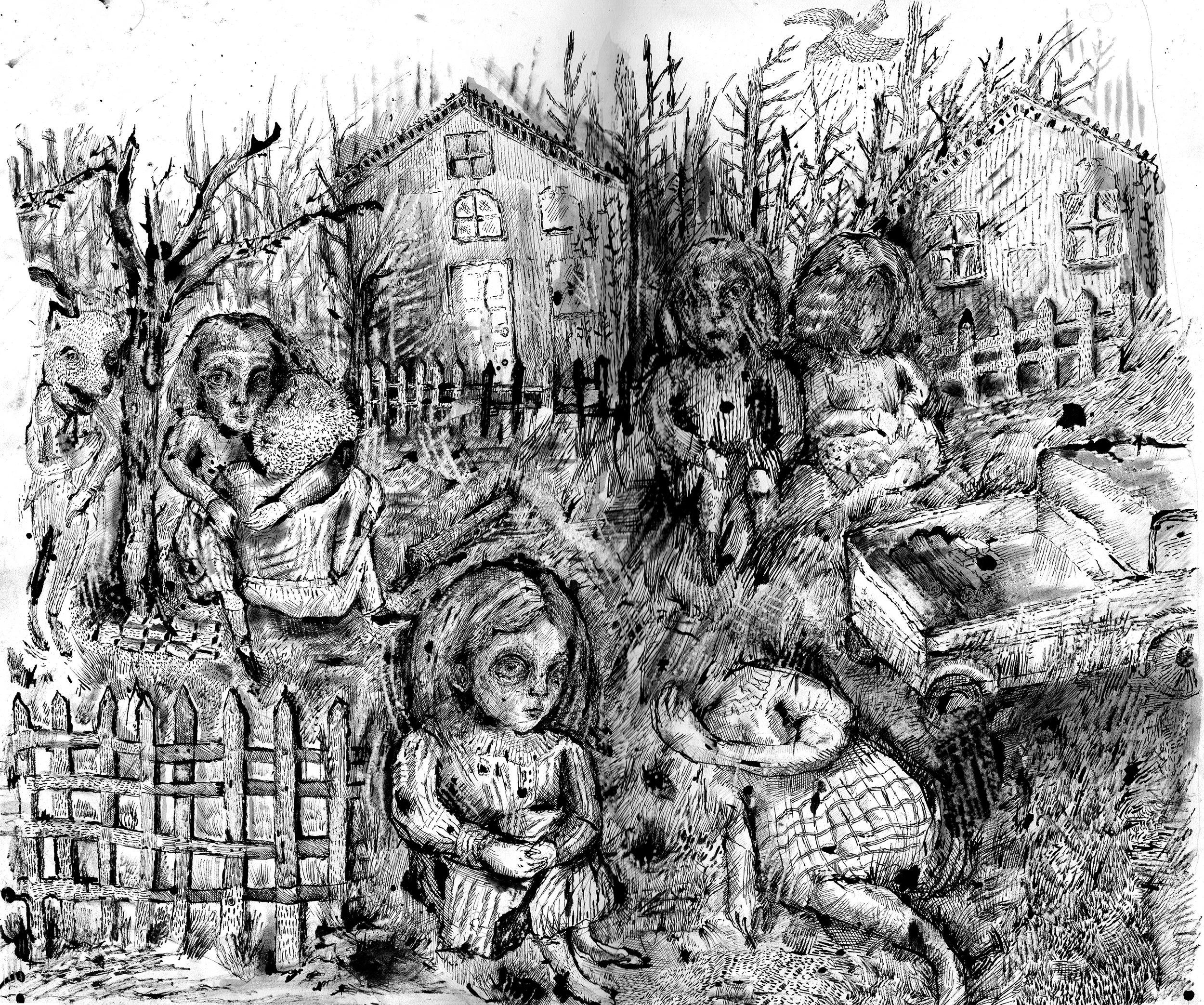
I think that more broadly, one of the first things that someone will notice is the sheer amount of ink on paper - the amount of brush strokes. Can you talk about that? How long does that take you? Like a week or two?
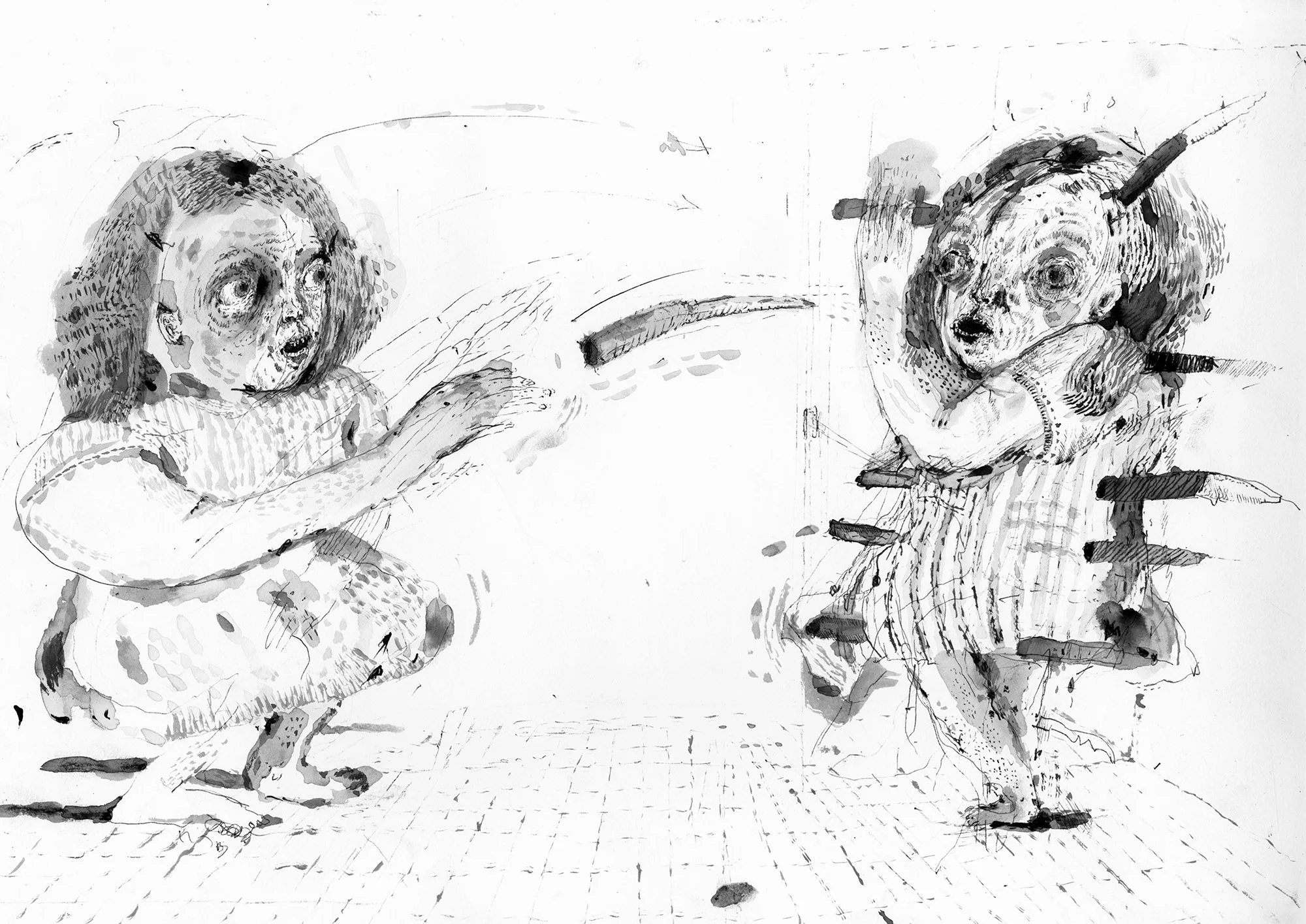
Oh, no, it is very quick. Like an hour. Less than an hour. The way that I draw is a very continuation of the way that I’ve drawn since I was a child - a very intuitive hand habit, sort of like compulsive expression that I feel hasn’t totally shifted since I was a kid. The feeling of making a drawing for me is very compulsive. Sometimes it’s deliberate and slow and measured, but a lot of the time it is very frenetic and active and quick. Kind of frantic. Trying to get something out, and I usually don’t know where a drawing is going. I’ll start with a face, and then it kind of takes shape around that. I mean, I have an idea where I know I’m going to make this guy a rabbit, but the rest is kind of a surprise to me.
On the topic of rabbit people, there are a lot of turn of the century Americana kinds of themes in your work.
I think that there are a couple of reasons for that. The other parallel interest that I have is vintage and antique objects and ephemera. That’s something I grew up with, going to flea markets and antique stores with my parents. I’m also really interested in clothes, and ornamentation and intricacy - I like collecting these things. I would say that a lot of my drawings are quite autobiographical.
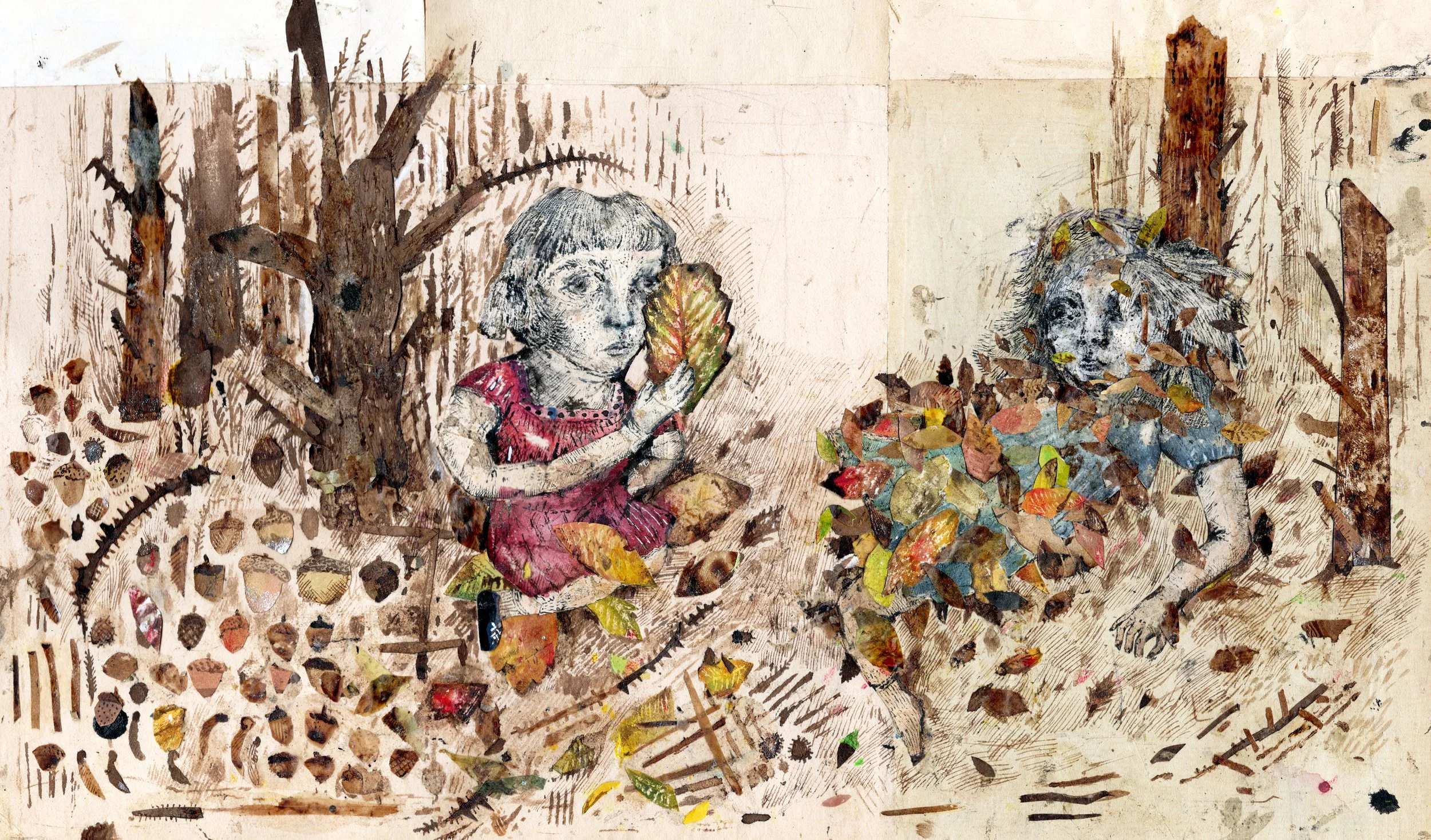
You were in the circus?
Or I had a feeling of being in the circus. There’s a little bit of self insertion. That’s me. That’s me, too.
Are you okay?
Yeah! I think a lot of my drawings… I’m a little neurotic, very in my head. Fairly internal, and I think that there are often these feelings that are a little knotted up and difficult for me to decipher within myself, and I think that with drawing, it is often a process where I can better understand, because it is so expressive, I can have a perspective on what I’m feeling by looking at them.
So it’s a de-tanglement process.
They feel very close to me, and I’m not really considering a client when I’m making things.
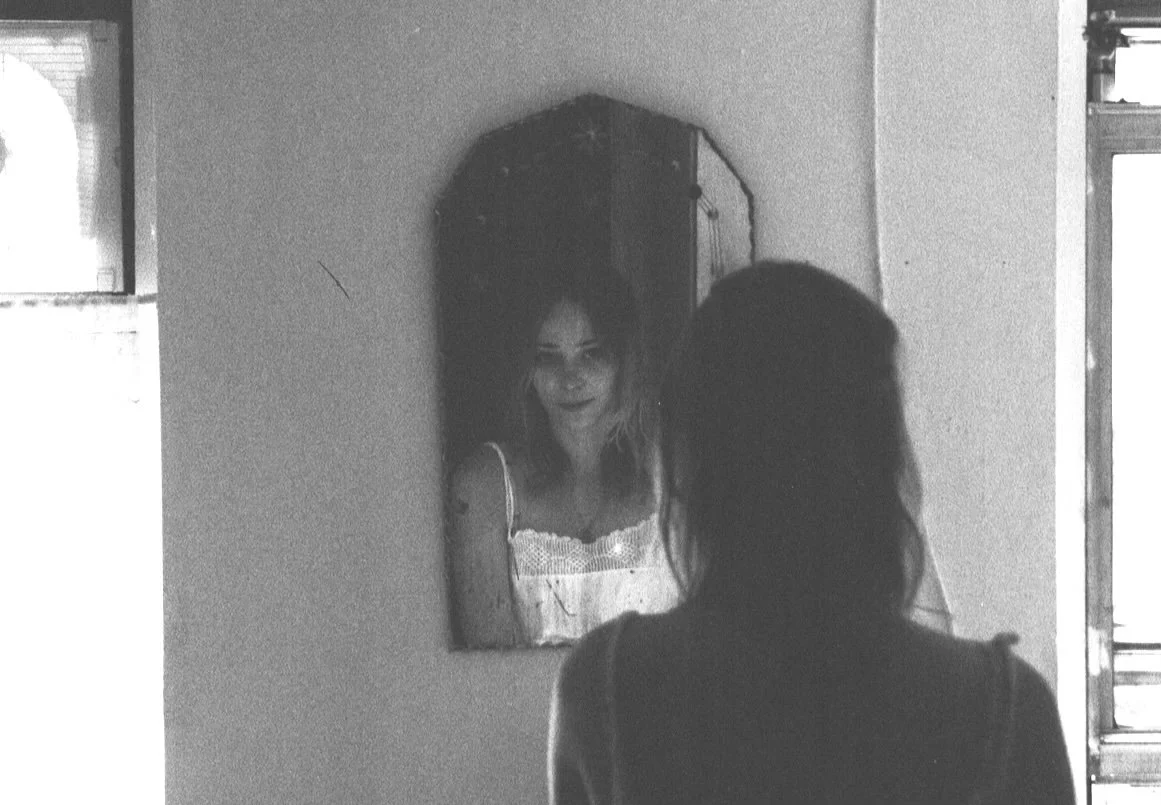
Portrait of Tallulah by Jan Rybczynski.
When do you consider something is complete?
I kind of just know… maybe it becomes a little about composition and balance, and its sort of my own logic. I’d say that I’m very thorough about everything, but it isn’t restrictive. It’s very fluid and fun.
I often hear from artists that once they get paid for their thing, it stops being fun. Has that been a hard thing or is it all fun?
It’s all fun! I do like production illustration with a fashion brand, but I’m really interested in editorial work. I think that there’s a quality to my style that allows some flexibility, but if you hire me, what I make is going to have a certain look. I’m not really willing to not have it be that way. If I were asked to draw in a way that wasn't this way… drawing this way is what makes it exciting for me.
Well I mean when I talk to photographers for example, a client will hire them to shoot a photo that looks completely different from their style, so when that happens, how do you negotiate that kind of thing in the professional world?
I think it’s been different for me because these are so particular looking, it’s been difficult to find them, but it is really about finding publications and clients who are coming to me for the style that I produce. There are less opportunities, but I’m really pleased with the ones that do come my way. In my professional work with the fashion house, I work a lot with capacity and color, so I think that I can access different styles; I think that I have the ability to work in different ways, but I want the hand to be recognizable. I want the touch to be recognizable. I would really love to make a children’s book one day, that’s what I’m really after.
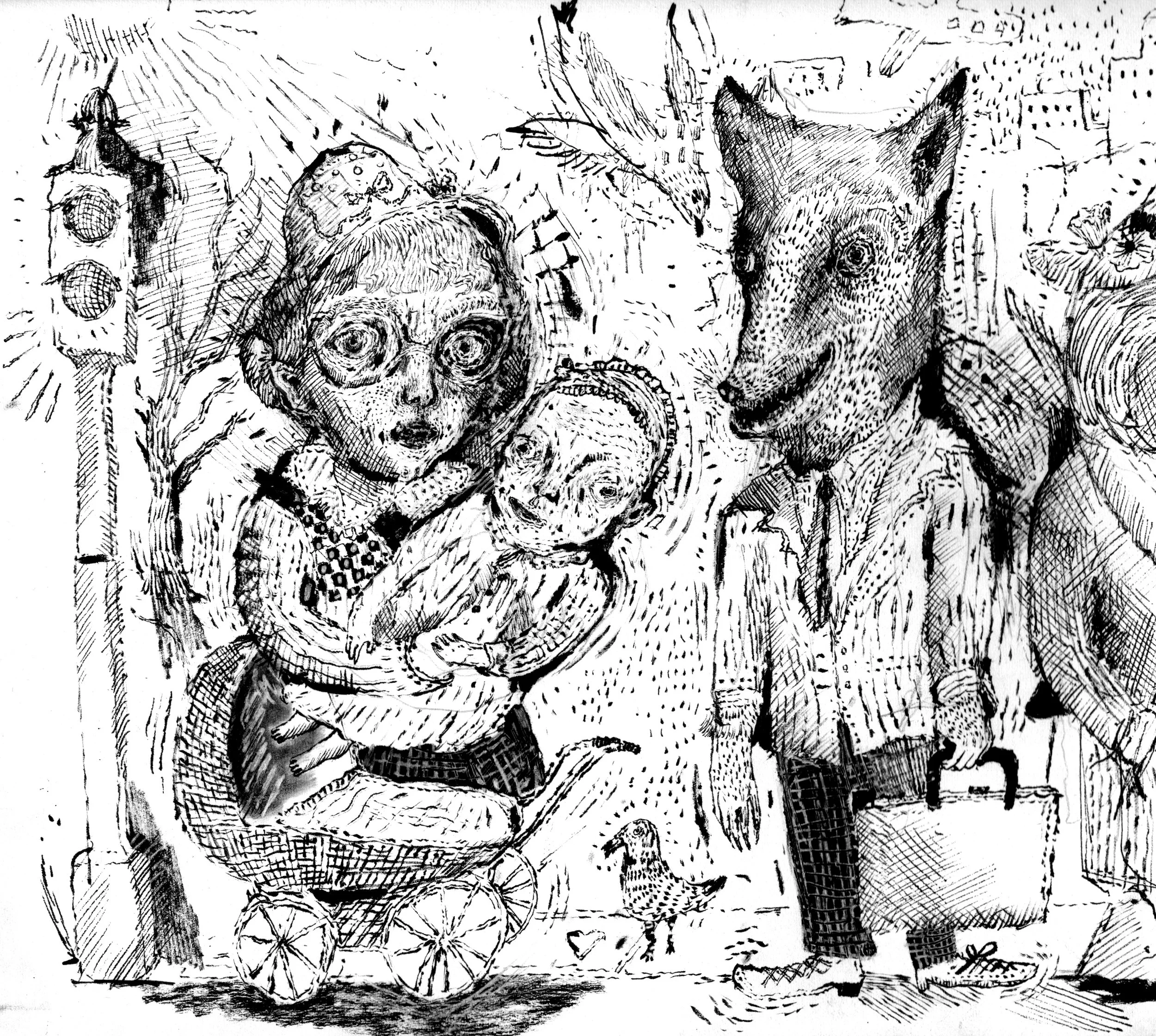
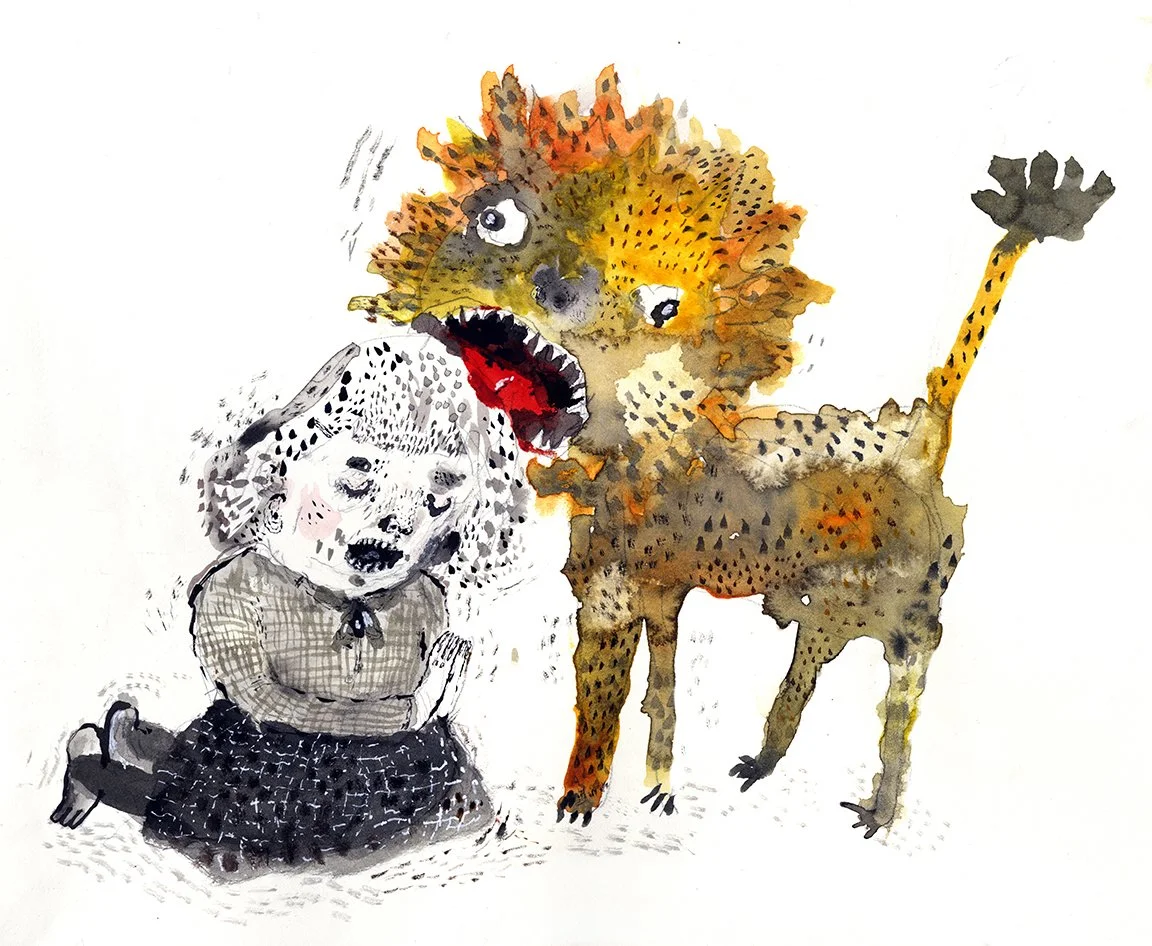
I’m looking at a drawing of a rabbit head on a man’s body. You have a very childlike but scary perspective.
Yeah, a little bit. I have this very recurrent character who is kind of a fuzzy guy - an animal guy. I went to Waldorf school, so there was a lot of imagination and drawing and time spent outside, and I think that a lot of the stories that I was hearing and media that I was consuming had a lot to do with the natural world. A lot of the things that I liked as a child had to do with anthropomorphic animals and people.
When I was in school, I took this study option where I took classes in ceramics as well as drawing, so I would sculpt these dolls and puppets that were the physical embodiment of the anthropomorphic drawings. I liked the idea of adding a dimension to the drawings. Interested in sculpture and puppetry, Jim Henson and weirdness.
My dad, I also want to shout him out. For the last nine years, he goes to skateparks around the city and brings a white roll of paper - he really likes Richard Avedon - and he’ll take these formal portraits of skaters. He’s become a staple of the skateparks. He has been a very big influence on me through his creativity and even his collecting antique things and arranging them in these beautiful sort of alter-like ways around the house - my desk at my studio has these same arrangements of things.
What other mediums of art do you engage with and how do you think that they affect your artistic output?
I look at a lot of art. I don’t know if that’s a good answer, but I look at a lot of other people’s things. Do you know about Arena? It’s like a Pinterest idea thing but you upload all of your own original stuff. You can upload music, drawings, whatever, and you can make boards dedicated to an idea. So its like if I’m making a series of drawings, I can make a board for it and add songs and drawings and films and photographs and its all in one place.
I look at a lot of work that is sort of indirectly related to my work, I love folk and outsider art and the drawings of children. I look to those things a lot for a sort of… feeling. I’m a huge Darger head. He has this huge work and takes up this very big ecstatic space. I don’t know, I think I look to things to not for material inspiration, but for energetic inspiration.