
Miah Madden On Mob, Blak Excellence and Curating The Best Art Fair In The Country
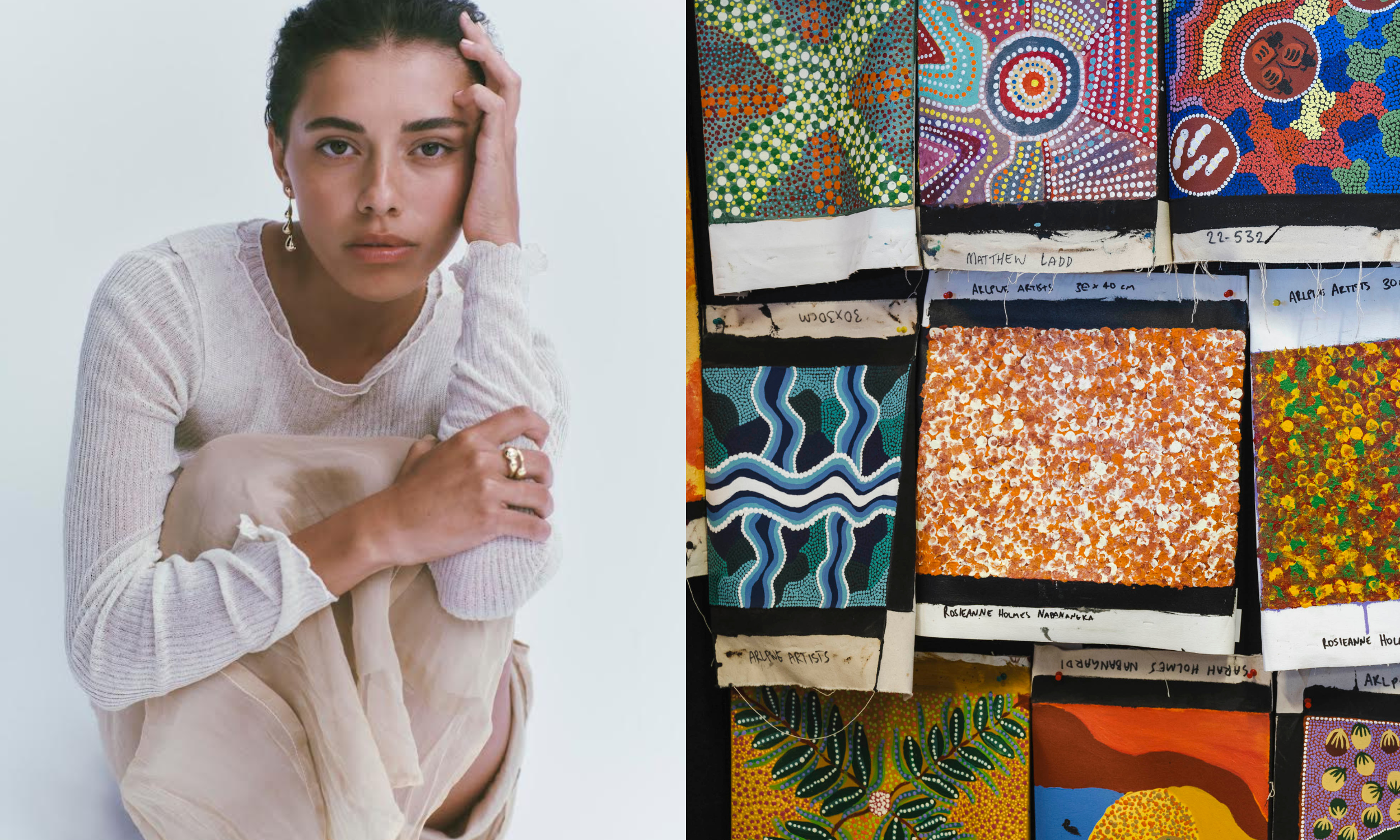
The National Indigenous Art Fair (NIAF) kicks off during NAIDOC Week from 3–5 July 2026 at The Cutaway at Barangaroo, bringing together over one hundred First Nation artists from over thirty art collectives from around the country and has been curated by none other than Miah Madden.
If you haven’t attended this Fair before, let me tell you right now it is my absolute favourite. I first attended the NIAF back in 2022. As an avid First Nation art admirer but someone who knows next to nothing about art - this was a place that really allowed me to learn and appreciate First Nation art on a whole new level. Not only was I able to interact with the art collectives and curators, but also plenty of the artists themselves. This year, actress and curator Miah Madden is back curating The Living Room, a special exhibition designed to create an even more immersive experience. We chatted to Miah about it all below.
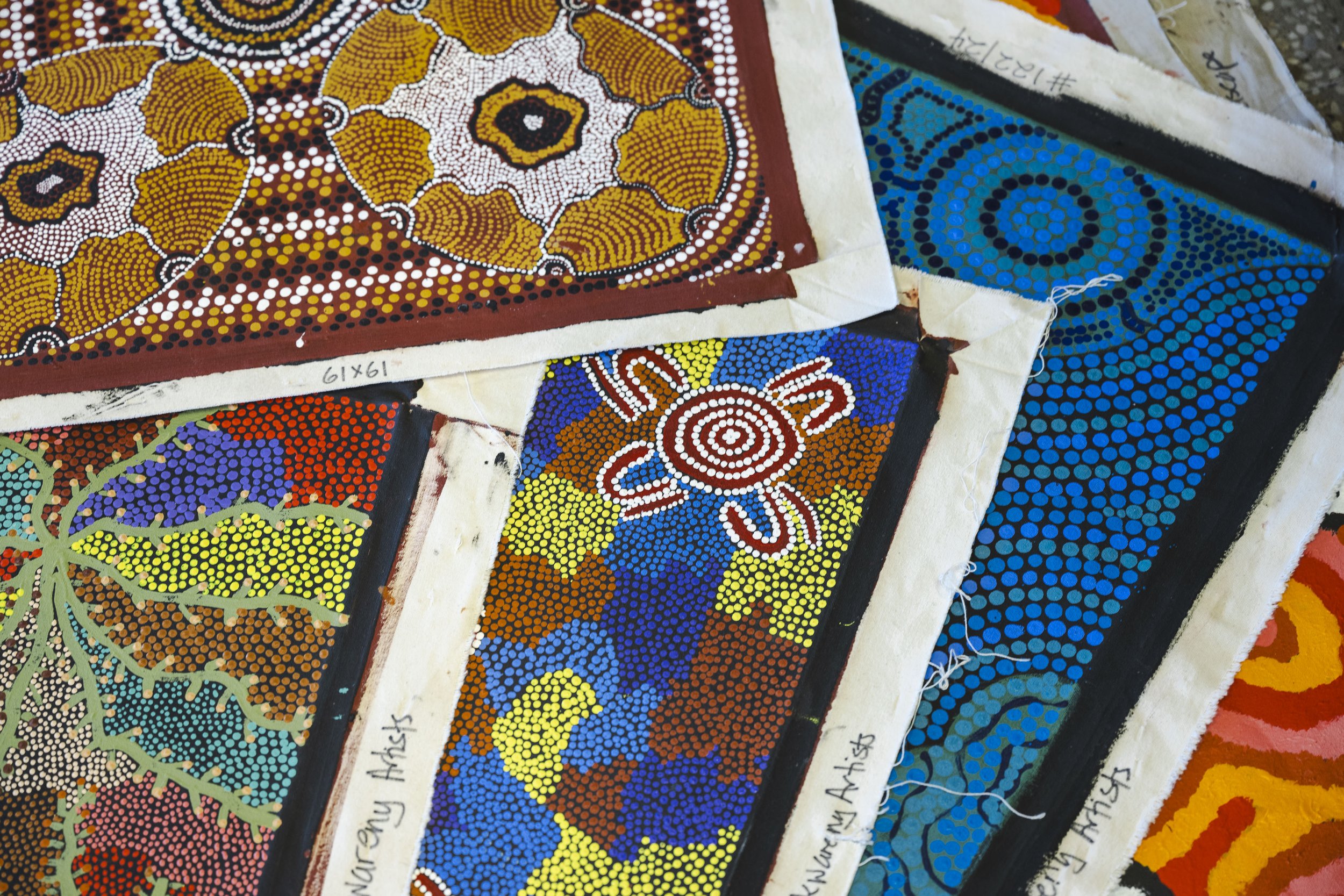
Image: Paul McMillan
Tell me about The Living Room exhibition you’ve created for this year’s National Indigenous Art Fair?
The Living Room was created a couple of years ago to showcase Indigenous art in a way that viewers would be able to resonate with. Sometimes when you go to an art fair, it can be absolutely wonderfully overwhelming with the amount of art that you can see. We sort of found that some viewers who maybe didn't know too much about art had a bit of a gap in being able to visualise the work that they would want in their home. So we thought in order to bridge that gap, we might as well create a living room space that has furniture to showcase what the work would look like in a space in your home. And it’s worked really well. Two years ago we had a few art centres who had incredible works but weren’t selling and it only took ten minutes of their art being properly stretched, framed and hung on a wall for people to see how it would look within a space, and their homes.
That is such a great idea. When did it start?
It started at the 2024 Art Fair.
How long have you personally been involved with the Fair?
I started working with the National Indigenous Art Fair in 2024. I was there for the first iteration of The Living Room and then did a bit more creative producing last year.
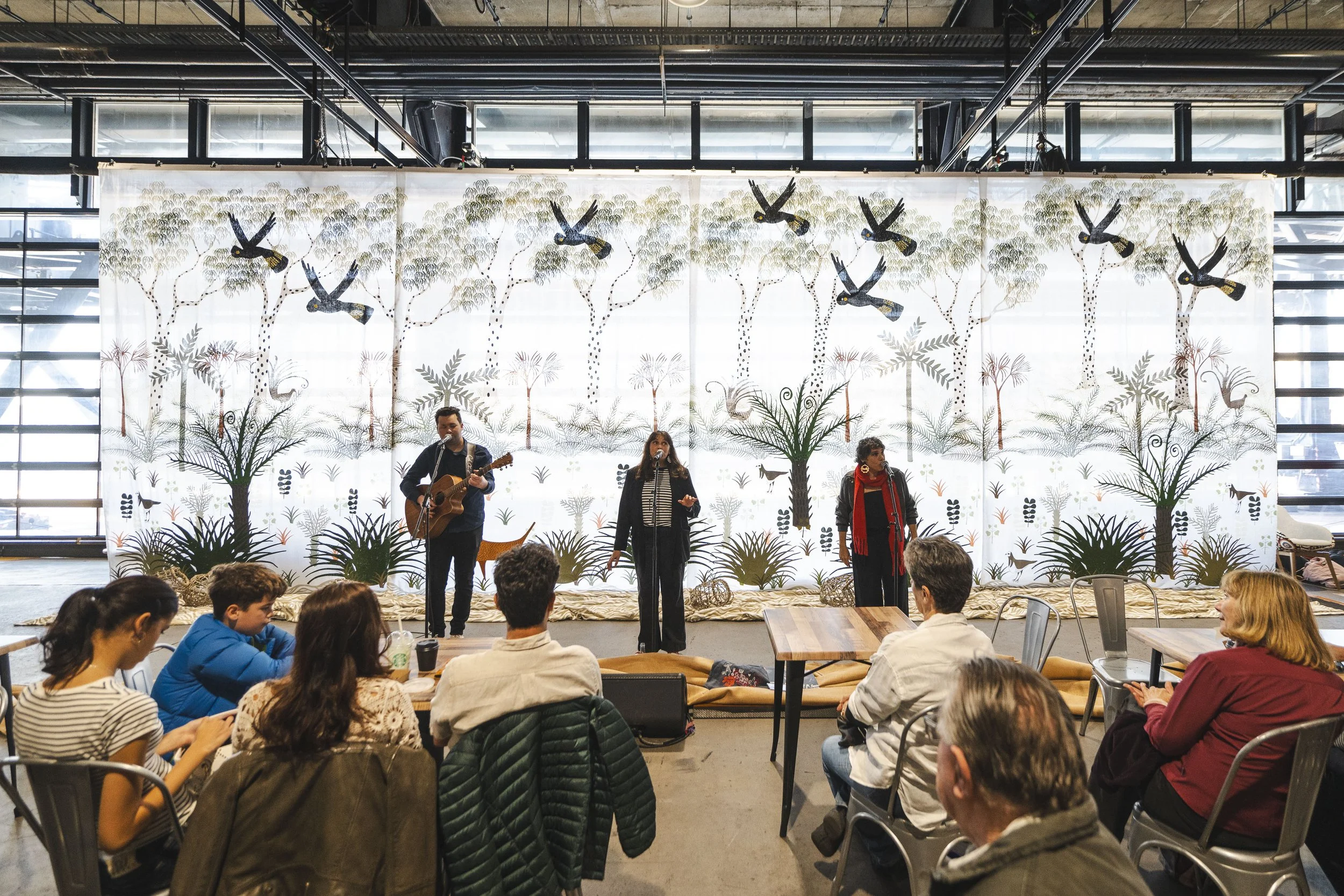
Image: Paul McMillan
What does it mean to you to be a part of the team that curates this Fair?
Yeah I love working with the wonderful team, it’s been such a great opportunity. It’s basically started a new career path for me. I’m used to just being an actor so being able to curate has been so wonderful in terms of connecting with Mob and community firsthand. Also just being able to connect with these artists from grassroots communities in Sydney has been really valuable.
Obviously First Nation art varies from around the country but do you have a particular region or style that you are drawn to personally?
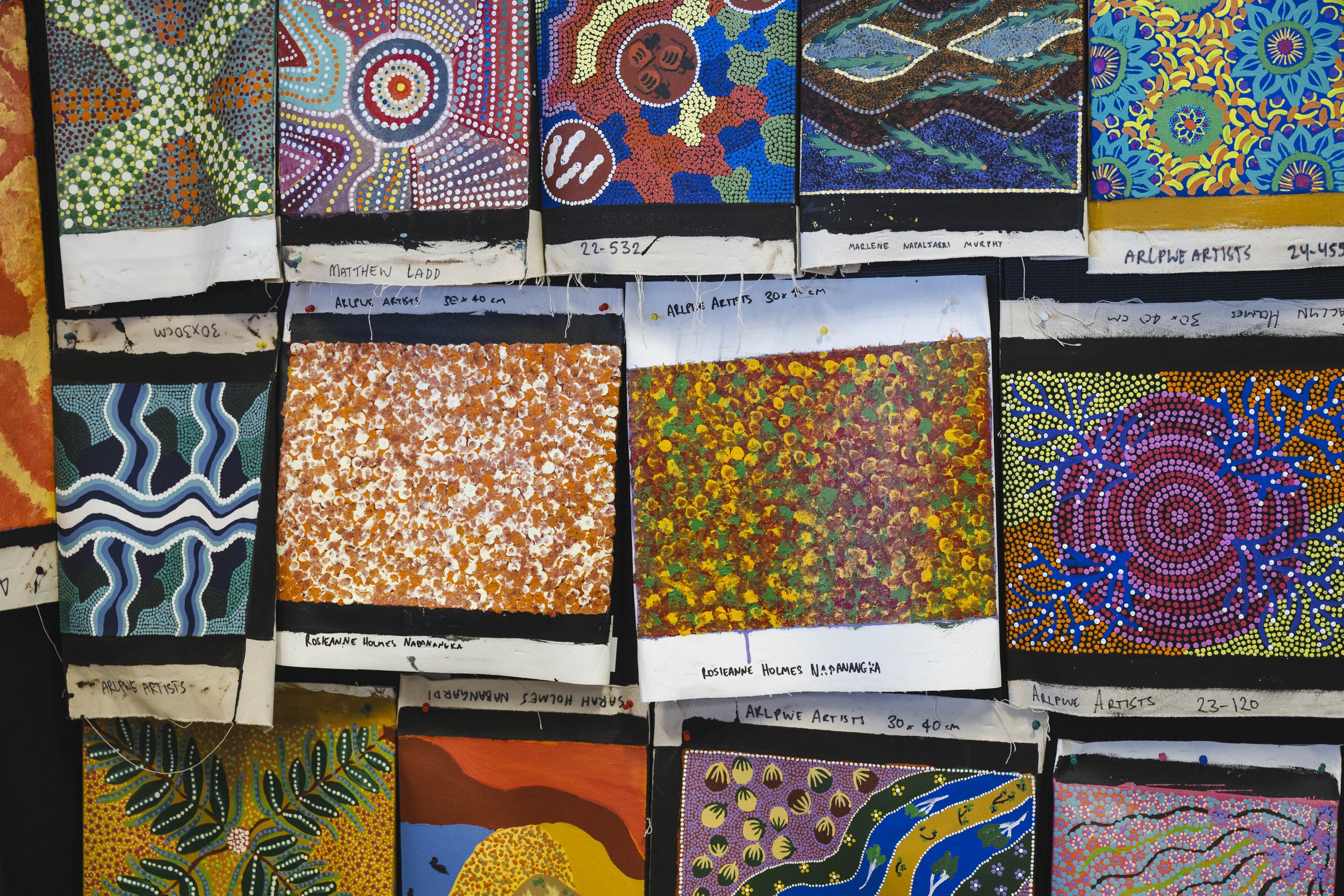
I think in recent years I’ve been interested in the mixture between contemporary and traditional. We’ve got some really beautiful art centres, APY for example, who have these beautiful dot painting artworks, usually in pinks and purples that are conventionally rarer forms of ochre but they’re using acrylic to bring new vibrant colours into the pieces. In other centres, we have artists who have been painting on buffalo skulls, you know? Being able to see how each art centre has been able to allow their artists to become so innovative using the resources and landscape around them has just been really inspiring.

Art: (Left) Kindy Kemarre Ross, (Right) Papulankutja Artists
You mentioned artists using colours and animals relative to their region - what are some other markers that you can think of that signify a region that you know of?
Yeah it comes down to the art research behind it. There’s a lot that goes into it. Certain regions will repeatedly carve the same kind of bird because that’s the spirit animal of that region. Or you can see how the landscape is different in a piece from Barkley as opposed to a piece from South Australia based on the flowers they use. There are lots of little indicators, and I think the more time you spend going to art fairs, investing in Indigenous art, you will start to recognise them. To the untrained eye, a lot of it might look similar, but it’s the tiny details that set each artist apart. I think it’s a real testament to how diverse Australia is. Learning all about that has been the most joyous part of being a curator for sure.
How important are the art collectives for Indigenous artists?
Yeah so by people investing in these art centres by buying a piece of art, all the money goes back directly to the artists and community centres. These art centres are usually a hub for remote areas for artists to operate out of and are really pivotal in being able to provide resources and also connections to the art world. There are a lot of language barriers; these are really remote areas, you know? They also provide the artists with the connection to technology to sell their pieces on marketplaces to be able to make money from their art. For these artists, these collectives allow them to tell their stories. They are really important. I think there’s also this really beautiful relationship between communities and these art collectives that allow customers like you and I to support not only the artists, but their families and know it really is making a difference.

Image: Debbie Napanangka Beasley by Paul McMillan
Is there someone you’ve had your eye on from an art collective?
Yeah Karen Rogers is someone who I think is an incredible artist. She does these little Toyota Troopy sculptures and they are so cute. She debuted them at the 2024 fair and they just flew. Everyone was obsessed with them.
Is there anything outside of the Fair that you are doing for NAIDOC week?
I’m pretty busy with the fair and my acting responsibilities to be honest so just being present for them.
How do you celebrate Blak excellence?
I feel like for me Blak excellence is best celebrated with my grandparents. They're the OGs, you know. Everyone in Redfern calls them Nan and Pop. They’re complete social butterflies so they usually take me around to where the Blak excellence is. It’s usually at their house.
Shoutout Nan and Pop. Finally, how do you think art helps the world?
I think that art helps the world because it transcends language. Usually, that is the thing that divides us and doesn’t allow us to communicate. But you can go to an art gallery and see a French artist or someone from a foreign country and even though you don’t speak the same language, you still might be able to understand the message that they are trying to convey, appreciate it and maybe even learn something about their culture. A lot of tourists come to Australia, and they are so transfixed by Indigenous culture for reasons they can’t explain and that’s usually when they go out and learn more about culture. Art helps to bridge the cultural gap that exists between humanity. It’s very special and very important.
Brilliant. Any last shout-outs?
I think I am just really excited for this year’s fair and also for the opening night, which will be super different from the fashion parade by Billie-Jean Hamlet. This year will be such a representation of Blak excellence. We’re got a lot of brilliant curators and ambassadors, it’s been a real team effort and I’m so excited for everyone to see.
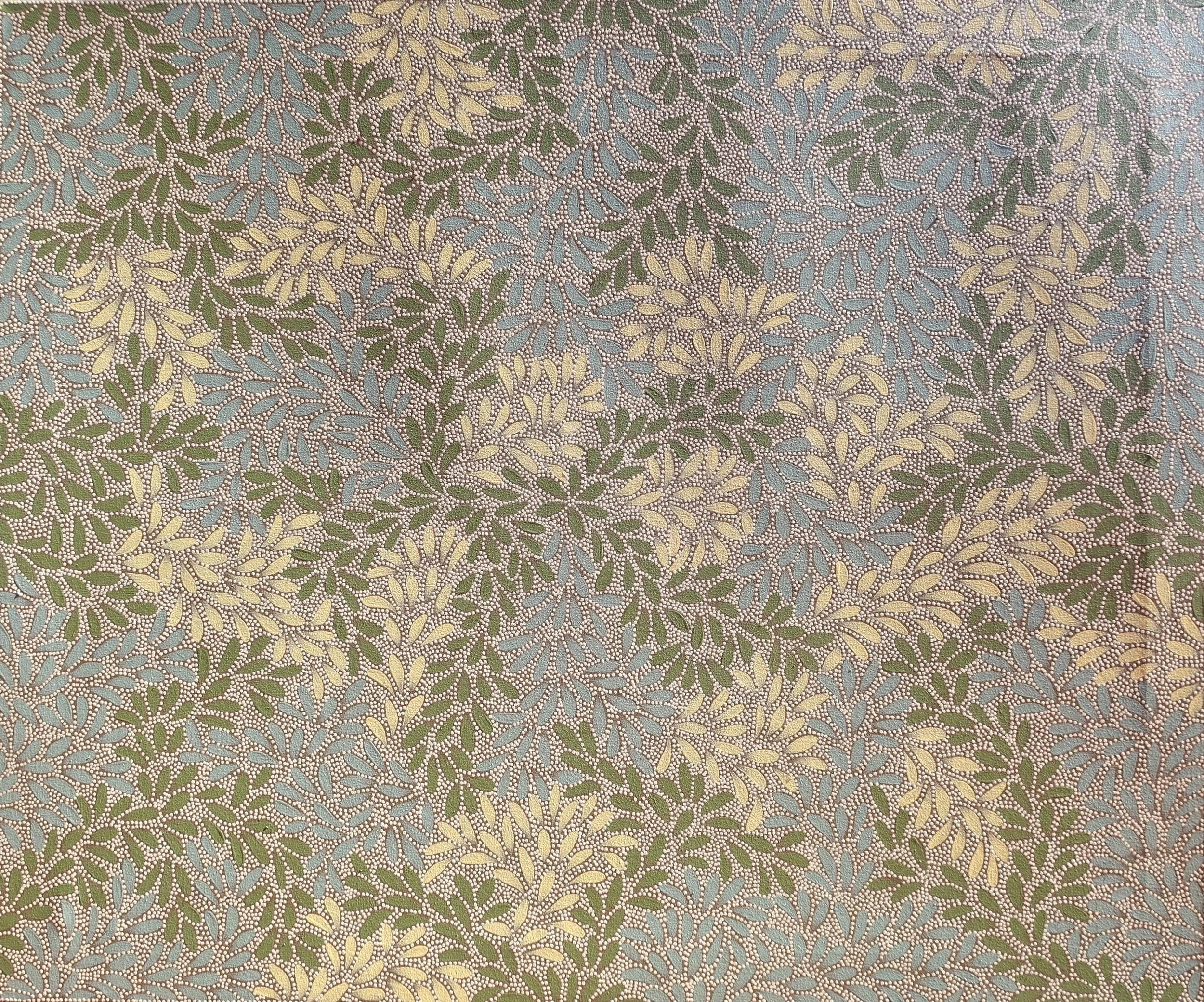
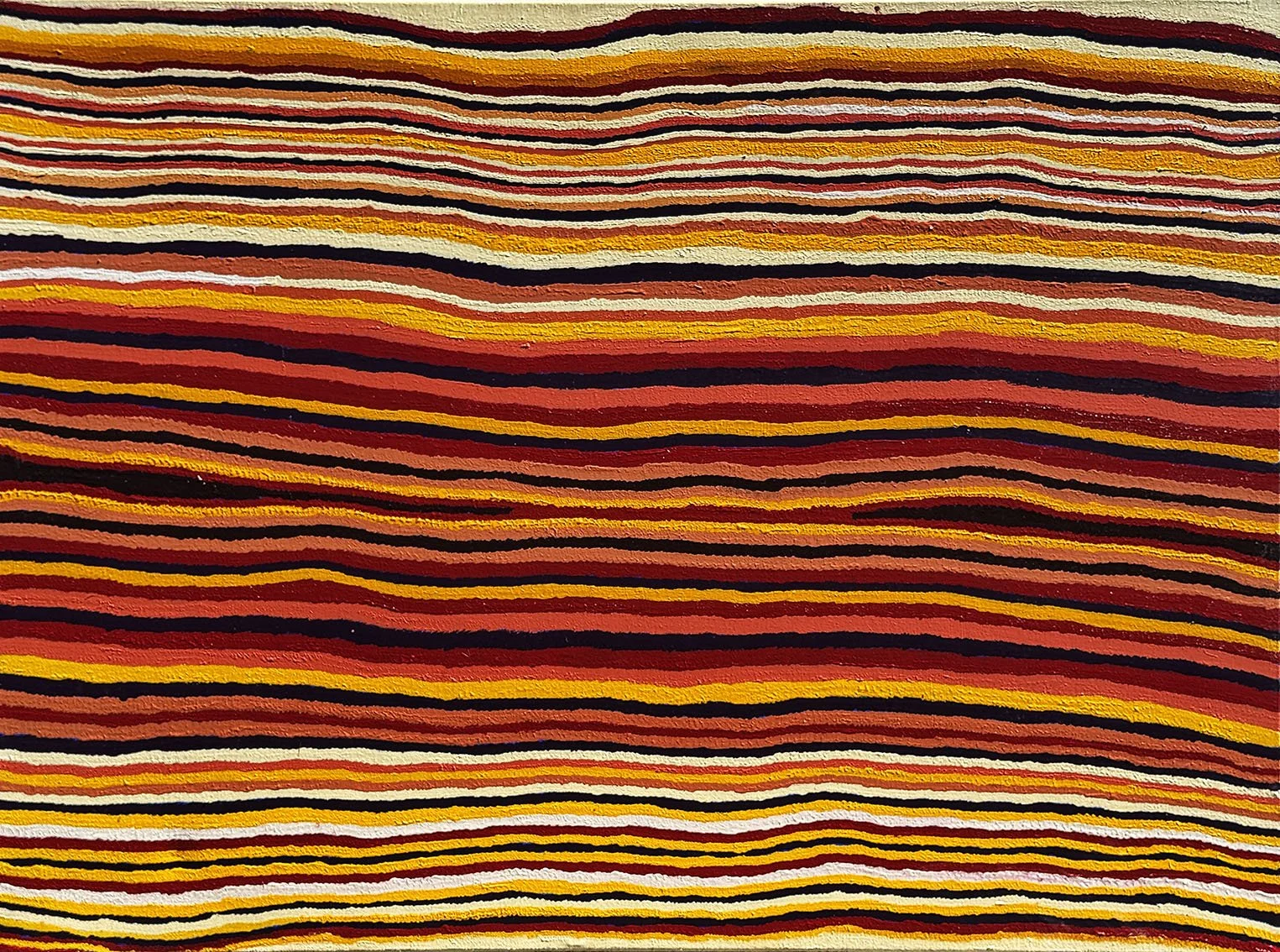
Art: Loretta Carroll / Walkatjara Art