
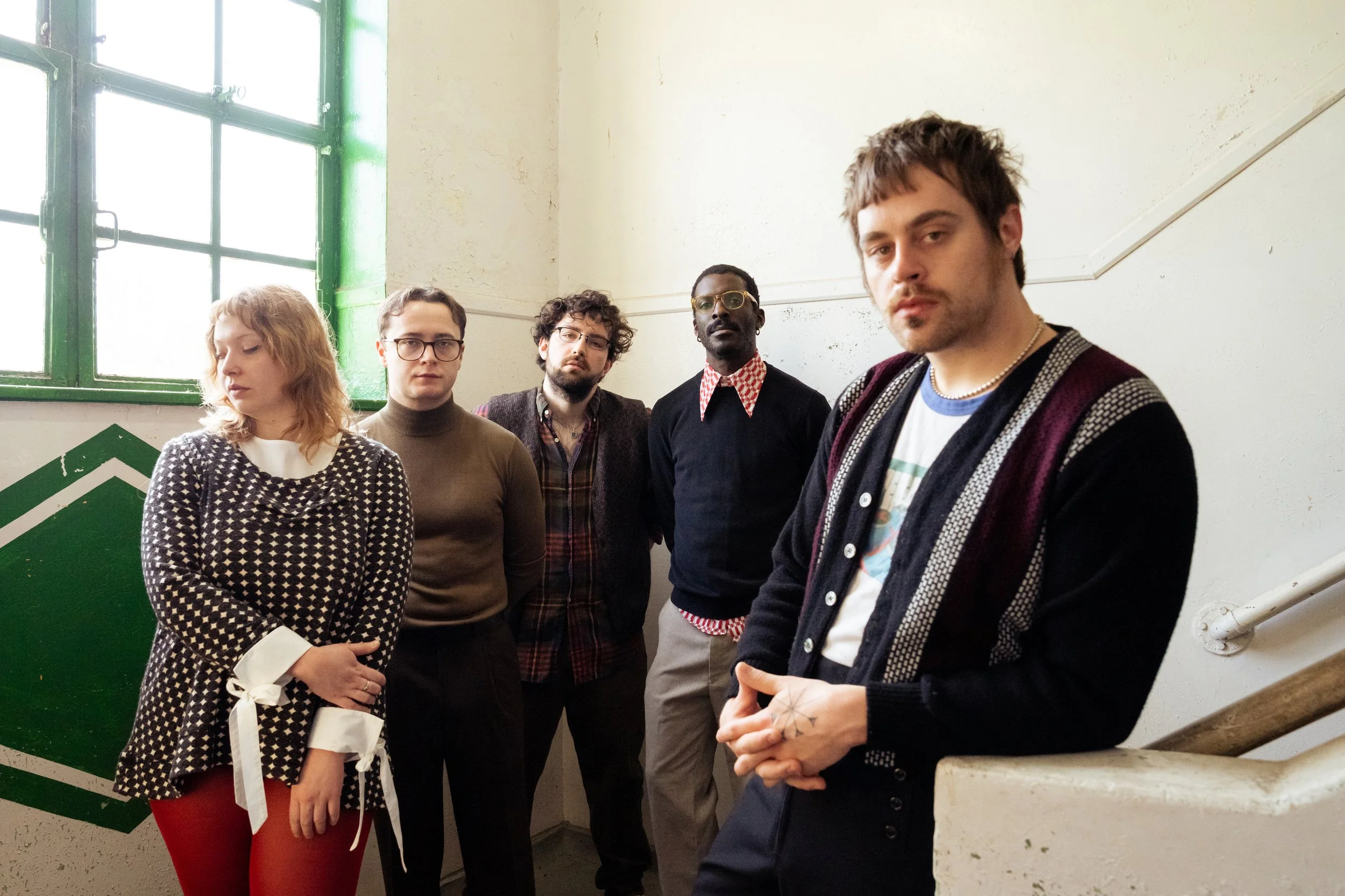
Portrait by Rian Archer.
During my final year of high school, I stumbled upon Tiger Trap’s twee-pop masterpiece, their 1993 self-titled LP.
Instantly, I was obsessed with the cutesy sounds of Angela Loy and Rose Melberg’s dual vocals and the band’s sweet, jangly melodies. Curious and wanting to know more, I tried to find out everything I could about them. Yet, barely any of my questions were ever answered, but that album from the mysterious band of four from California’s capital introduced me to the world of twee-pop. A world I’ve delved deeper into than any other.
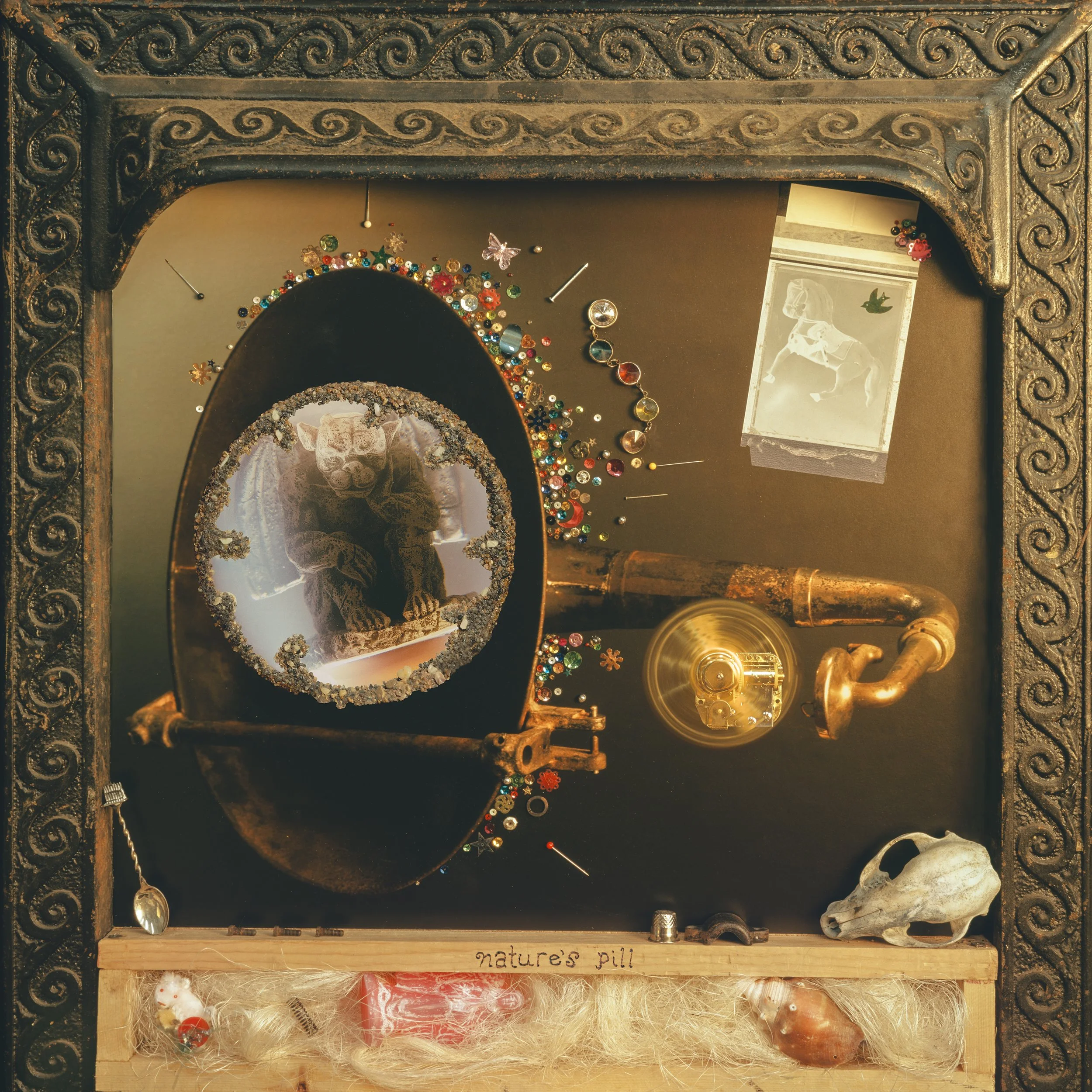
As I began listening to Wishy’s sophomore album Nature’s Pill, I was met with a familiar excitement as the jangly opener, ‘All the Rage’, felt like a song I had missed on my twee-pop deep dives, rather than something released yesterday. Its fun melodies, alternating boy-girl vocals and cutesy, matter-of-fact lyrics, come together to make an era-accurate early-90s twee-pop hit. So, it came as no surprise that when speaking to founding member and lead vocalist Nina Pitchkites, she admitted one of the biggest inspirations for her and Kevin Krauter starting Wishy was their mutual love of the genre.
With Nature’s Pill released by Winspear earlier this month, we spoke to Nina about the album, their hometown of Indianapolis, and of course, twee-pop.
I’m such a big twee fan, so naturally I was hyped when I heard ‘All The Rage’. It feels like a song that could sit seamlessly alongside 90s twee bands, which is something I’ve always felt is rare in new music; it often feels like a bite of something rather than an era-accurate rendition. I really liked that.
Thank you! We’re huge twee lovers, and we’ve been so excited by this new twee resurgence. Twee is what Kevin and I first bonded over before we even started playing in a band together. Years before we started Wishy, we were living in different cities, being like, ‘I want to start a twee pop band.’ But it was really hard logistically because we didn’t live in the same city, so it feels really good now to see that come to fruition.
At the same time, a lot of the current twee resurgence is more this Zooey Deschanel polka-dot-type 2000s twee and twee-electronica. Whereas you guys are going with the more 90s twee-pop. What drew you guys to that era of music?
It comes down to pure taste. Kevin and I were budding hipsters as teenagers, and we got into all sorts of music. I’m not sure when the twee influence came in, but a big band that we bonded over was Rocketship. He and I are just attracted to very happy-go-lucky, tongue-in-cheek music, just music that isn’t afraid to be fully itself. To me, twee isn’t afraid to be super whimsical – that’s the word of the decade right now – but it’s true. The unapologetic happy-go-lucky nature of twee has always been really attractive to both of us. It also sounds good; we both love hooks and earworm melodies, and twee really embodies that whole vibe.
It’s really cool because even listening to the lyrics, you got them so right. They’re this cutesy directness that isn’t trying to be anything it’s not. It’s just honest.
I feel like our ethos is we can do whatever we want; we don’t have to be afraid of fitting into any box. That's a big reason why we are so proud of this record and our music in general. We don’t ever want to stay in one lane, so we will have some songs that have bongo drums, some that are really heavy on the distortion and some that are super poppy. I think if you’re a true artist, that’s how you should operate or would want to operate. There are bands that stay in a box, and to me that’s not super exciting; it’s like, why don’t you want to branch out and explore your inner child?
Totally! That’s something I actually wanted to ask about; ‘Covergirl’ is a good contemporary indie rock song and bypasses all the twee talk. Do you feel like there is a balance you are trying to hit with the band’s sound?
I can’t speak for Kevin, but that was something I was more concerned about when we started going full throttle with Wishy. Before we were called Wishy, we were called Mana, and it was mostly Kevin’s songs that were heavy on the distortion and alternative rock. When I started writing for the band, I brought a lot of sweet, uplifting pop influence. It’s not that he didn’t have those, but we came to a crossroads where we were like, ‘Okay, we have these two different genres, and we don’t really know how to proceed. Let’s just say fuck it, put all these songs in the catalogue and see what happens.’ It’s not like we were trying to do that. It was just that when we started the band, it was Kevin’s band, and then I eventually started putting my influence in there.
I guess you can say it was a happy accident. Well, I mean it wasn’t an accident; I started writing more, but at the end of the day you can write whatever songs you want for your own band, and no one is going to stop you. But in terms of balance, I think that’s why we put out an EP [Planet Popstar] shortly after our debut album; those were songs that didn’t fit on the album – even though we didn’t care what fit sonically on the album. The album was just getting too long, so we were like, let's just take these five or six songs, which are the more poppy electronic songs and put them on an EP. I’m not sure if I truly believe in balance because, at the end of the day, you can do what feels right. It seems to be working out so far.
I wanted to ask about how, in ‘Mona Lisa’, there is a reference to ‘Femme Fatale’ by The Velvet Underground. How did that come up, and what was the idea behind it?
That was a Kevin bit, but he really loves putting interpolations of lyrics from other songs into our songs. He did that in the song ‘Sensational’; there’s a bit that goes, ‘You are free to do what you want to.’ That’s a reference to the Ultra Naté song ‘Free’. When he talked about it, he was just noodling around; that specific melody popped into his head, and he thought it transitioned well from the first part of the song to that. It’s also a fun bridge idea to let the song breathe a little more, and there’s a slight key change, which can be fun.
It felt like a collage, patching bits from other places together.
Yeah, that’s definitely his strong suit; it changes it up and adds a little spice. It's cool to play that live and see people in the crowd be like, ‘I know this!’
In the past, you’ve spoken about how you guys are outliers in the Indianapolis scene, as it’s a very hardcore-heavy city. Can we talk more about the city’s dynamic and the scene?
We definitely have a big hardcore and punk scene. Our drummer, Conner [Host], plays in a punk band called Pat and the Pissers, which is a big band in the city and is getting a lot of traction. We started as a band in June 2021, so we’ve been playing for over five years now, but we’ve always had nothing but support. We started playing at house shows like everyone else. Being from the Midwest, everyone is pretty humble; it’s not a high-stakes game in the city. With Indy, we’re all operating under the same ethos of we just like to play music, and here it is if you want to book us, book us. We just love playing with our friends, and then you get more opportunities to go on tour and start playing locally less, but it’s just the nature of it. We’ve been met with nothing but support and love from other local bands, and we also want to uplift our friends in other local bands.
That’s super sweet. I feel like it is also a small-city thing to really want to support everyone no matter what music you’re making. Is there anything else you’ve wanted to talk about in other interviews that you haven’t had the chance to talk about?
Not really, but for people on the rise in the music industry, just keep talking about issues that are important and use your platform for good. We’re a very vocal band about Palestine, and I personally always want to use our platform for good and to speak out about atrocities around the world. If you have a platform, use your voice.
That’s something which stood out to me about the bio for the album; you guys said, ‘Being in an indie band feels bizarre when the world is on fire.’ It’s true. That message is one that’s been held by indie bands forever. It reminded me of what Heavenly pushed; they were very active politically and heavily influenced by the Riot Grrrl scene, but listening to their music, you would never pin them as a political band.
That’s why I love music, because all the bands we know are very politically aligned in the fact that we all believe people should have freedom and shouldn’t be subjected to a tyrannical government or horrible atrocities. It’s hard to make music when the world feels on fire, but we should be making music despite it all. Art is supposed to be about expressing pain in a sense, even if your lyrics sound really upbeat and happy. A lot of the reason I make music is to put my emotions somewhere, and I think that’s something that’s mutually felt by other artists. Not that we have such a big platform, but just use your voice for good, be humble, continue supporting and lifting other artists, and don’t be so competitive. You’ll always be happy with music if you do it for the right reasons.
That’s a really sweet way to look at it. Thanks so much for chatting.
Thank you.