The Strange Power Of Believing In Yourself With David Schmitt
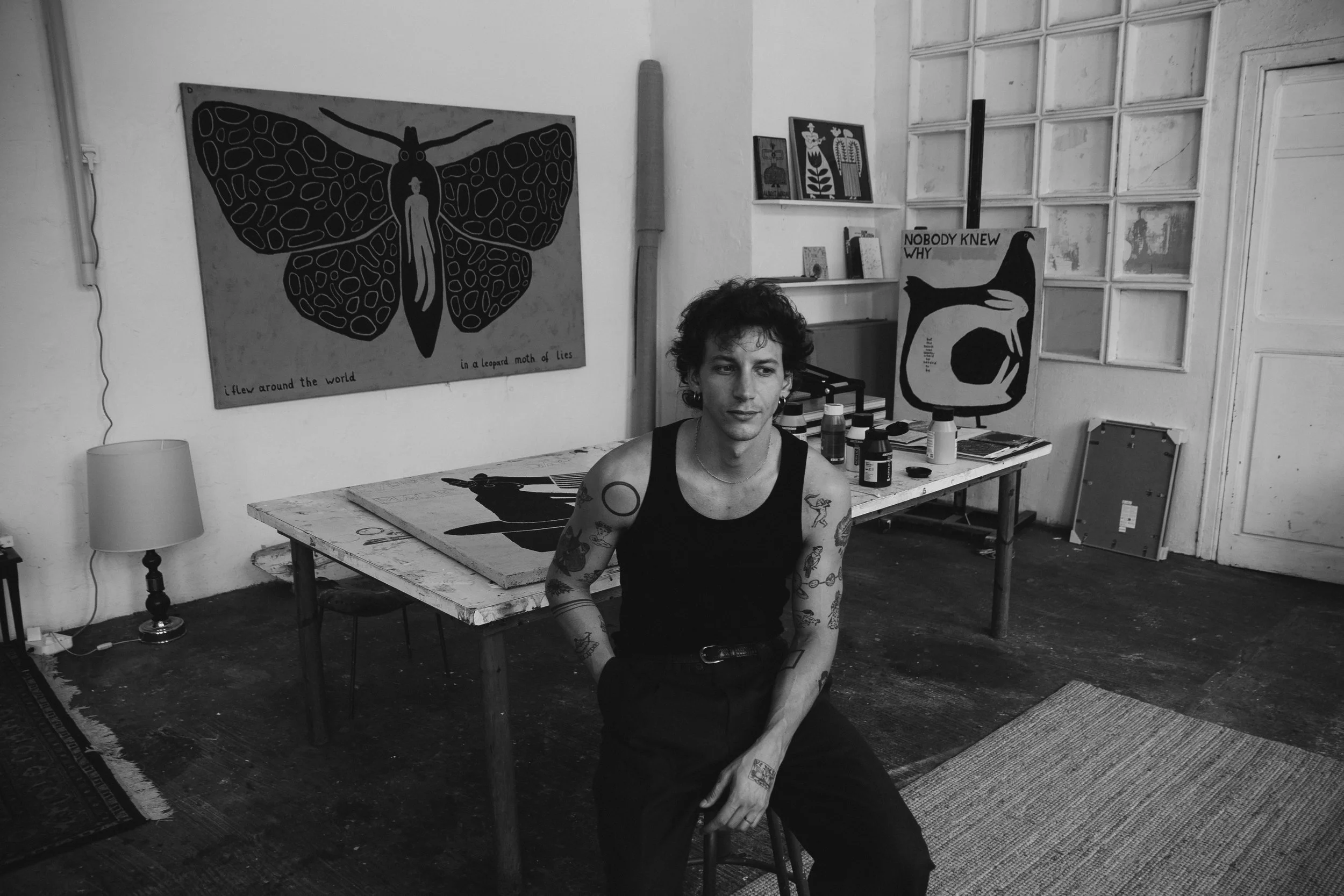
David Schmitt also known as Toyu Art is a German born, Barcelona based artist.
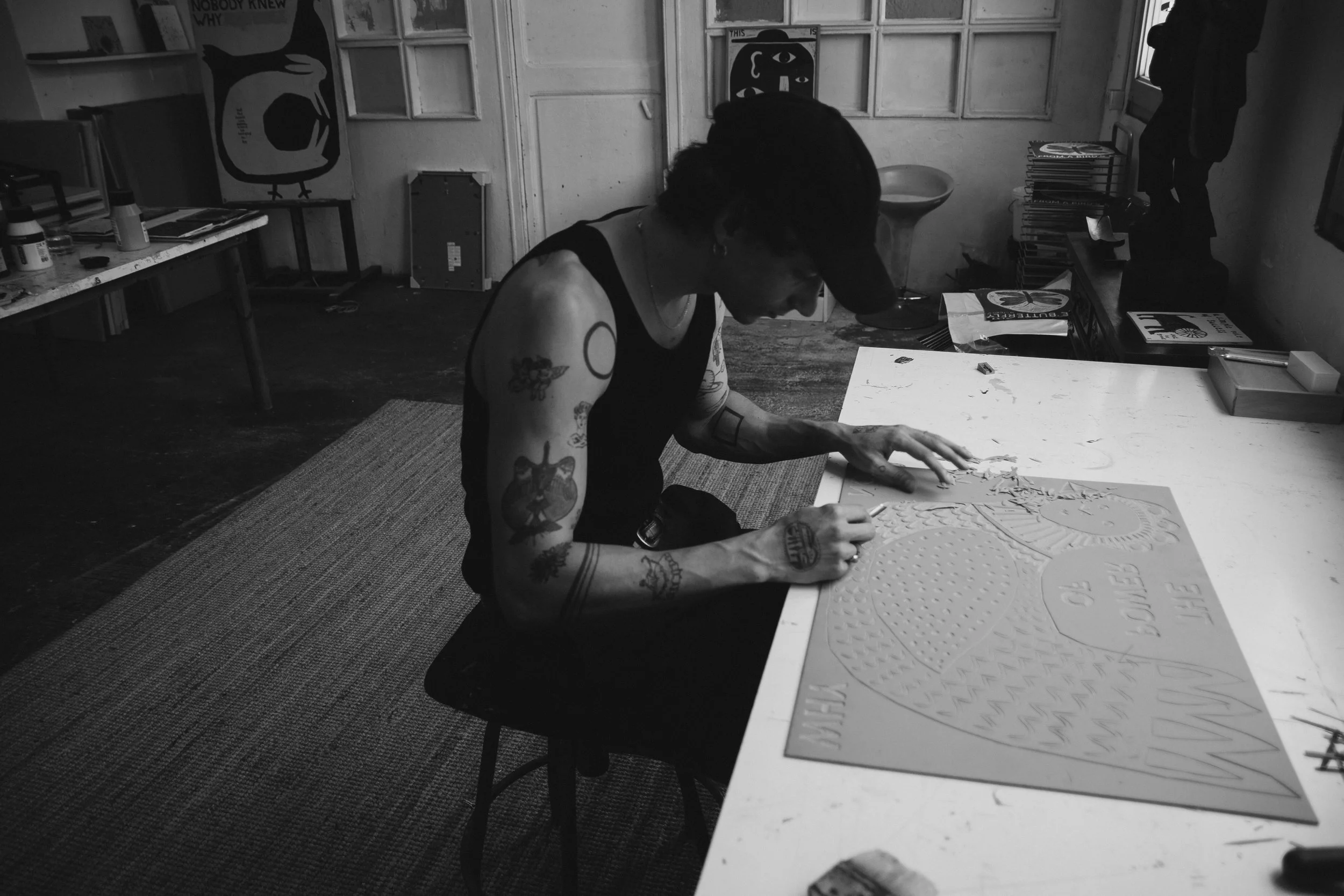
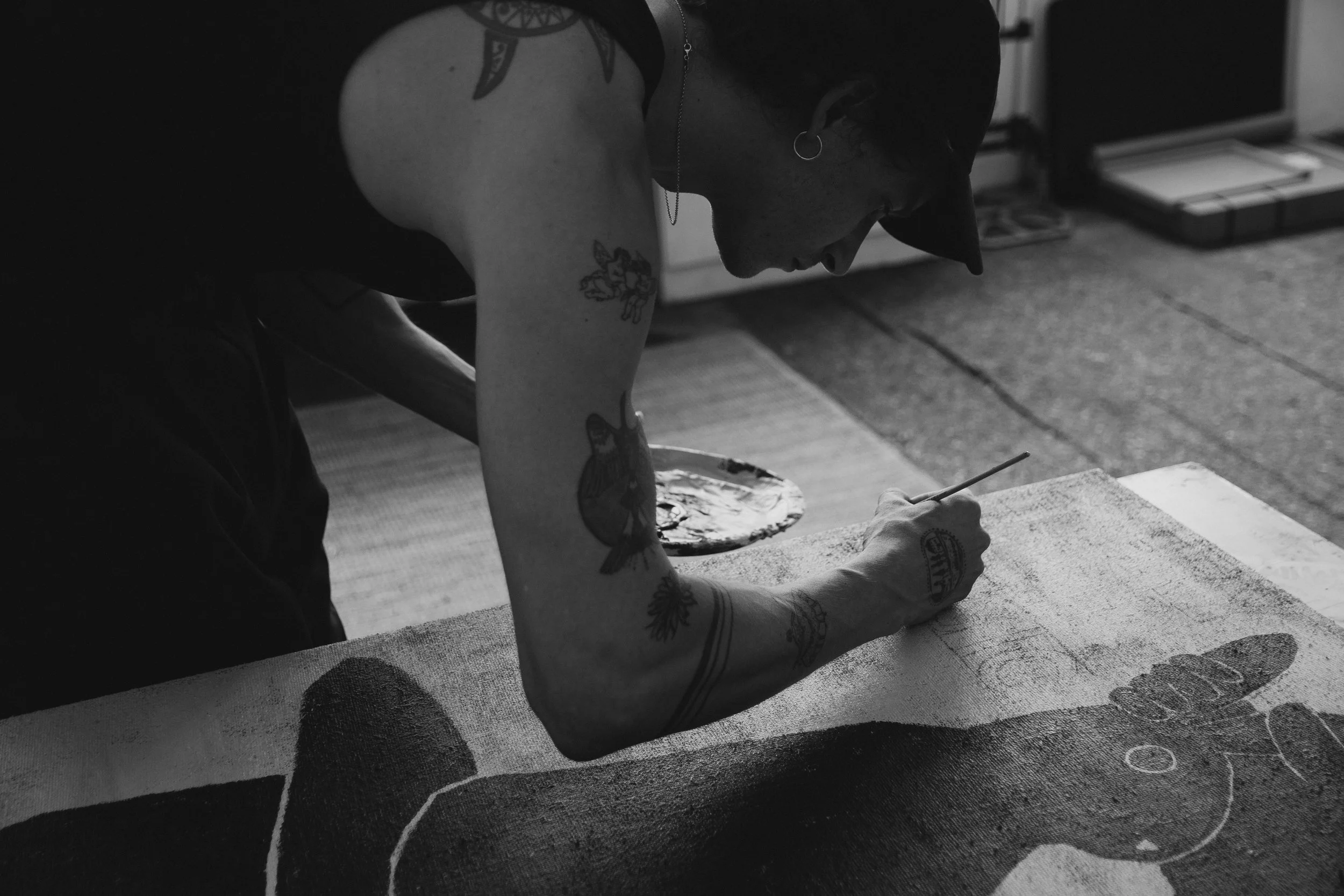
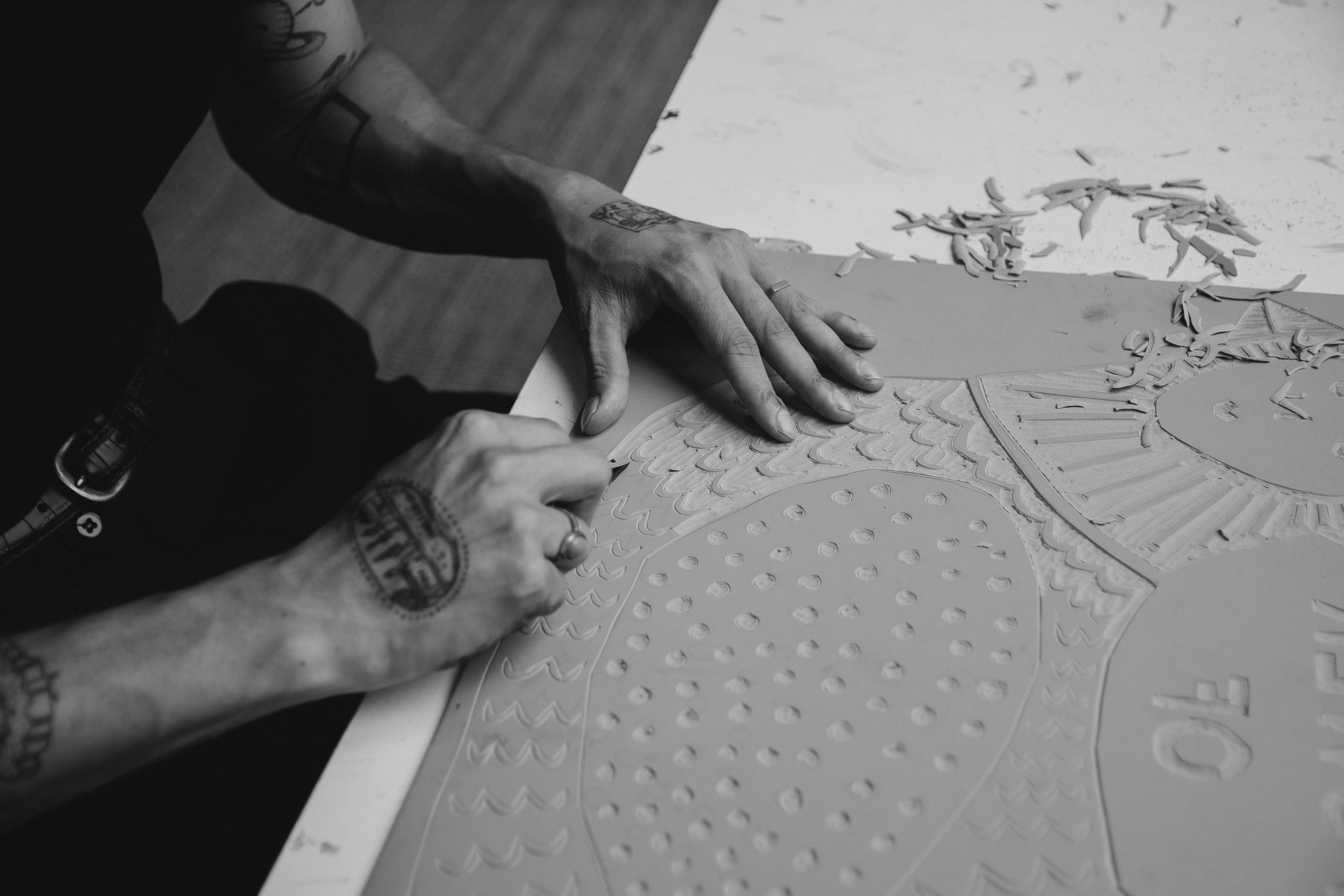
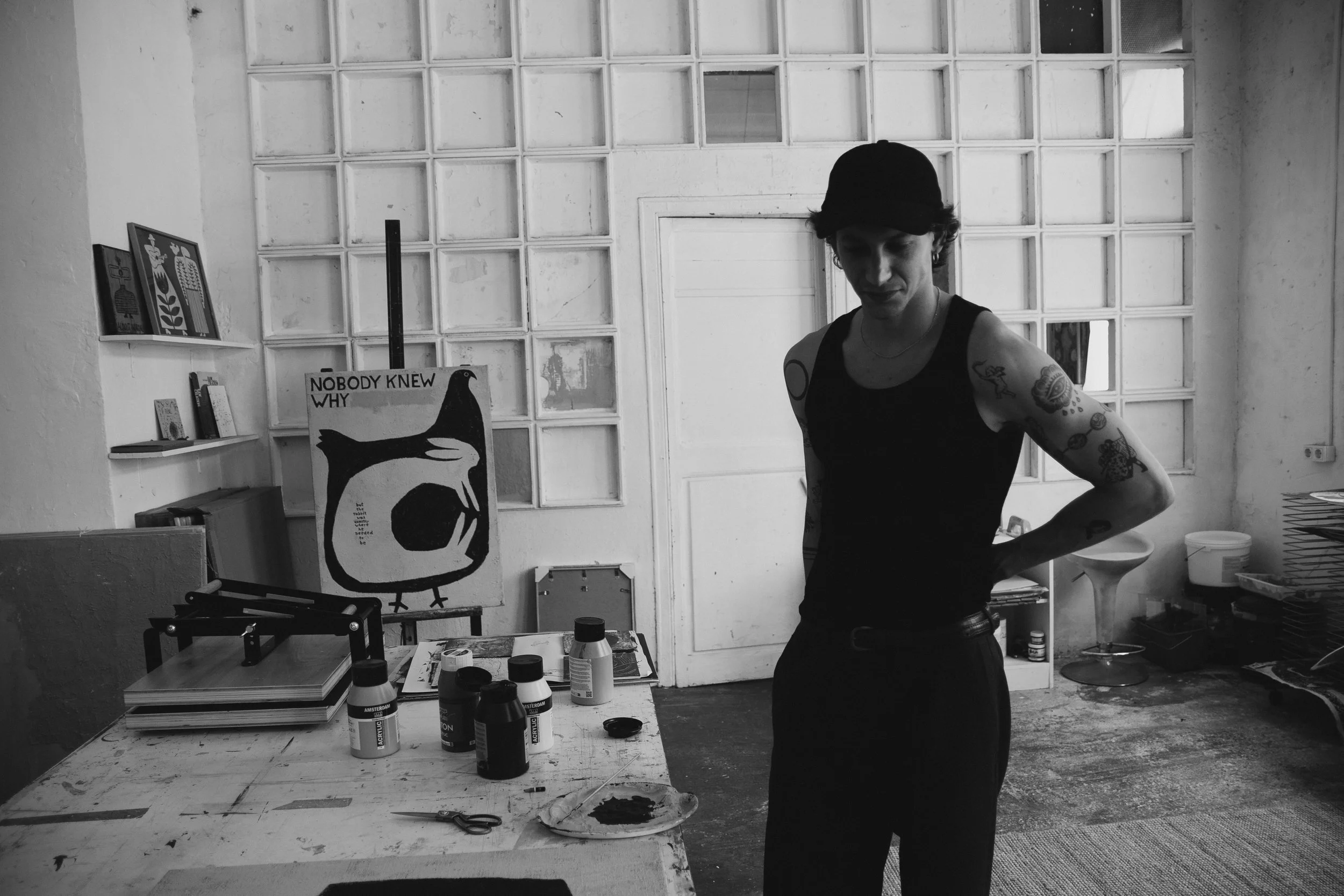
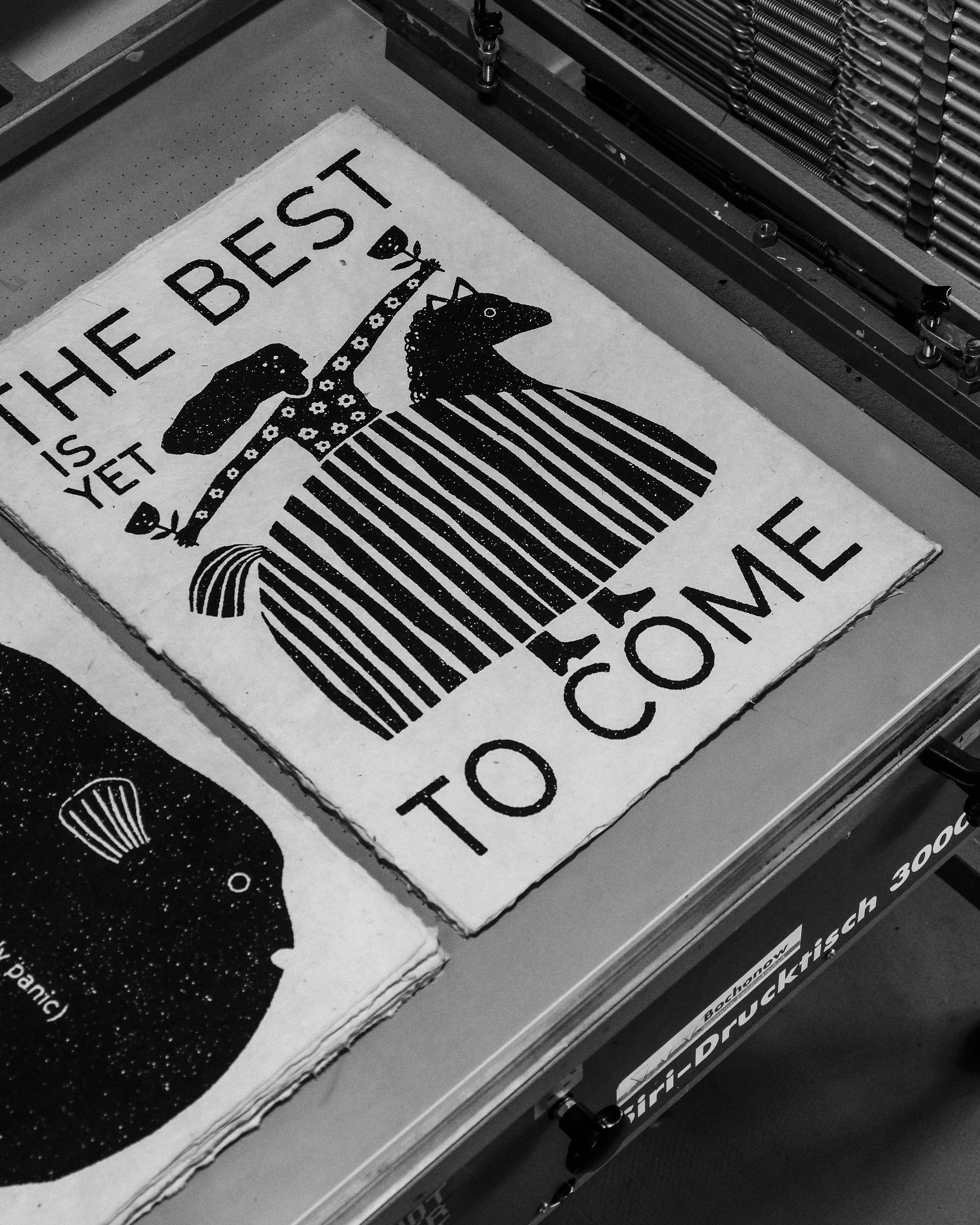
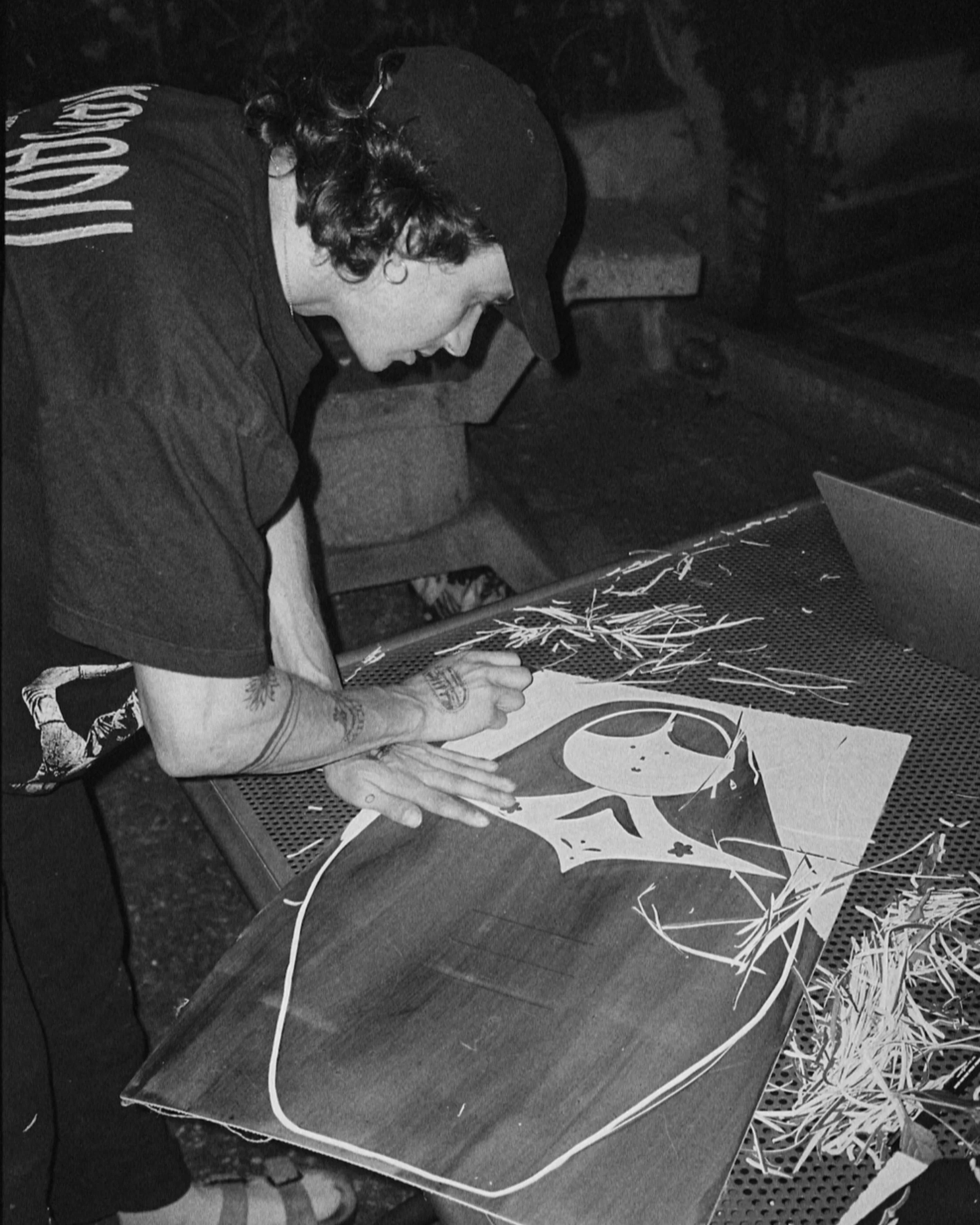
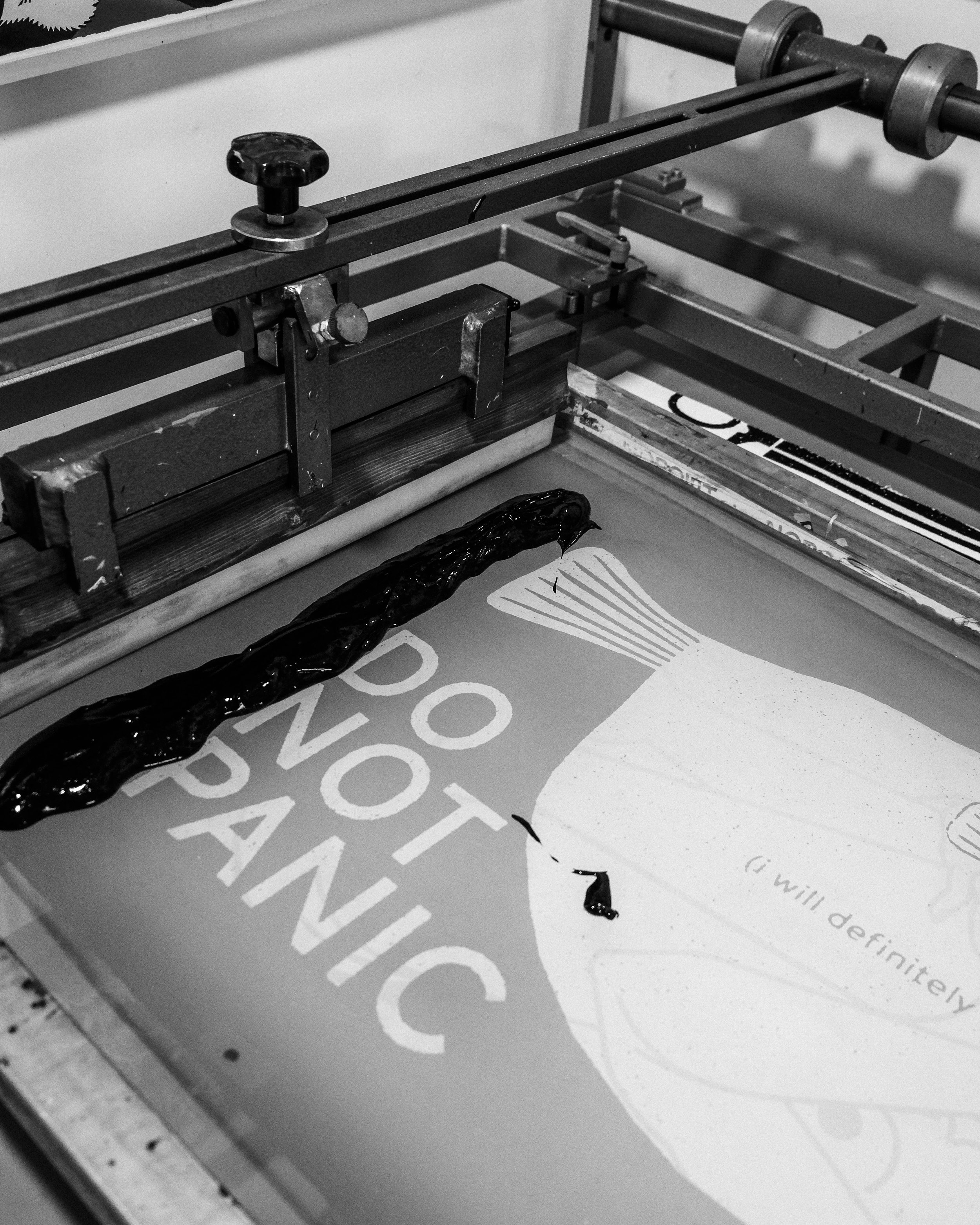
He works across print, paint, lino and screenprinting to create motifs that offer a commentary on life. Little vessels of humour and hope. As a self taught artist Schmitt appreciates the artist life he has built for himself that allows him to use his hands everyday. It is the imperfections that a human hand wields that creates the soul that surrounds us after all. Here’s our chat with Schmitt below.
Did you pick this career, or did it happen organically?
I would say both might be true. It took me twenty five years to find my own creativity and the sense of knowing that this is what I am supposed to be doing. I would say that I organically failed my way into this career. I used to play Basketball and studied sports management until injuries derailed that path, which gave me time to reflect on it. Travelling and meeting the right people also played a part. I think life guided me into position; it all makes sense looking back. We all need to live life and fail every once in a while to have something to talk about that resonates.
I know you are self-taught- but have you had any kind of formal education, even if not a standard art degree?
Well, I know the word "self-taught" is a complicated matter that carries a different weight for each person. I did go on to study graphic design, which certainly shaped my understanding of composition and the relationship between type and image. I knew, however, from the beginning, that what I wanted was to work within my own world and create freely without the constraints of a traditional client relationship. So I bought an old printing press, which I kept in my student bedroom and worked obsessively on my art, finding the right materials and experimenting with different techniques over time, so in this case with “self-taught,” I am referring to outside any institutional art environment, learning and researching from within my own bedroom.
What is it about Barcelona that drew you there originally?
There is something about the Mediterranean way of life that makes me feel I belong here. I also wanted to be closer to an active, international art scene. Two years have passed, and I can say that I made the right decision and feel very grateful. I have learned so much already from the people around me;
Do your German roots play a role in your work, and if so, how?
Sure, they do, but I first had to learn where to look! At the beginning, I was too ignorant of the elements in my own culture that interest me most today. My grandfather was from Libya; however, I never knew him. There were traces and artefacts of that history around me as I was growing up, which fascinated me. The unfamiliar always had a strong pull on me. It seemed more interesting to basically look everywhere else for inspiration. The cultural imagery of different people around the world, prehistoric cave paintings, woodcuts from Brazil, and North American folk art, all of which carry a certain spirit in their expression. Perhaps because these are ancient traditions that tell stories that transcend time and place, and rather speak to us as a human species. You don't need to study the history of art in one specific place to contextualize these works; they come from a thousand hands, each teaching the next one to continue the story with their own little twist. But they all lead back to a common source. Now, looking at German and Central European culture, the same things appear in places I was initially too ignorant to see. Something that seemed too familiar, perhaps boring, or lacking of any mystery. It has been a wonderful journey to come all the way around to end up at my own doorsteps again, looking at Early Christian Iconography and the tales of the Brothers Grimm. Their core is part of age-old mysteries that manifest differently across cultures worldwide. In a way, this made me reconnect with my own roots and appreciate them more.
What draws you to the folklore elements within your work?
As I said, early Christian art, fables, and folk tales are rooted in something much older and their expression seems rather simple or straightforward. However, these stories, and the symbols they evoke, share the ability to connect deeply depending on the person who looks at them. A rider on a horse can be a frightening sight or relief; the stars can be a way to predict the future or to find orientation, and a flower can be a celebration of life or, one day later, the reminder that all things must die. These images might be simple, but within them you can find all the stories of our shared human history.
What do you mean when you say preserving the soul around us?
When you look at the choices we are making as a society, you can argue that something is being lost around us. How often do we comment on the bleakness of modern buildings, purely functional, grey in grey? How often do we enter living spaces and encounter ourselves within one of five different Pinterest moodboards? If everything looks the same, there is hardly any value or personality left. Who takes pride in this, who cares about a place like that, and is willing to work to make it better, creating community and a sense of collective belonging. Where is the beauty in this, where the inspiration? Artisanal work has been declining for years, and practical knowledge is being lost. Craftsmanship, and with it the way of life to perfect these skills over a lifetime, is being forgotten. The person who offered wood-framing services just closed down in my street, just so we can all buy inferior-quality online. We are creating an environment suited for what we do not want to become. Producing something immediate rather than something sustainable, that can be passed down through generations, with history and soul. We should all be more conscious of how this affects us. Thinking about it, perhaps it is more about our own souls in the end.
If you were to go anywhere, what's your ideal place to create - if you had no limits, no budget, you had nothing planned… you could be anywhere in the world painting?
Probably somewhere in Southeast Asia or South America. It should have good weather and friendly people.
When do you consider something is complete?
Usually, it's just a feeling. If I like it, it's complete. It never has to be perfect; That is exactly what I am trying to communicate here.
What would you say sets you apart from other artists?
Honestly, I do not know. I do not try to compare myself; everybody has different skill sets, and we are all trying to find our own way to say something that is true to us.
Do you come up with the quote or the image first?
It could go both ways. I have a notebook of words and phrases, and sometimes there already is a clear image; other times, I just illustrate and try to see what could be fun to pair it with. Separating the two aspects helps me a lot in times when I do not feel creative at all. It provides a starting point and something I can always work at, regardless of how inspired I feel on a daily basis.
What is it an important lesson about imperfections that art has taught you?
That, at times, this is exactly what makes us and our work interesting in the first place. Being human means making mistakes and learning from them. That's what we are here for, and that is also why something hand-made and imperfect will always make us feel more understood and at home.
What else are you working on right now?
At the moment, I am experimenting with sculpture and jewelry, so I am trying to expand my little universe to different materials and techniques.