Surfilmusic: Jack Johnson and Emmett Malloy on Their New Film
‘When I think about making things - music or film - friendship is the most important part.’
We couldn’t agree more. Jack Johnson’s quote at the start of the trailer to he and Emmett Malloy’s new film, Surfilmusic, expresses a theme that is recurrent if not the distillation of the film’s essence: making things with your friends. Jack Johnson is a world famous musician whose songs have touched millions. They have been people’s wedding songs, their funeral songs, the songs that score solo trips of recovery across Bali, the songs that amplify a first date, and the songs that bring one back to earth when it all goes wrong. Jack’s success as a musician is well known, and well earned.
It would be easy to make a documentary film about a rising star - the trials and tribulations of a singular genius, the tragedies of exceptionalism, and the burden of fame, and that’s a valid story to tell, but if that is the film that you are wanting to see, you will not find it here. Surfilmusic is less a documentary about a rising musician and the challenges of fame and more about a good surfer from the North Shore of O’ahu who - between making films with his friends and rushing Pipeline as a teenager - played a few songs here and there. Surfilmusic doesn’t glorify, though it is given every opportunity; it is an exploration of a person not alone, but within a time, a space, and a community.
There is as much time alone with Jack as there is highlighting the legends he grew up with and the kids he fucked around with. It is a very unselfish film that refuses to congratulate itself or its star, but highlights instead the possibility, capability, purity, and worthiness of a group of friends supporting each other in whatever they choose to do.
We met Jack and Emmett at their hotel in Austin, Texas, following a screening of the film at SXSW Film Festival to discuss the film’s unique tone and reminisce on some old shapes.
Surfilmusic will be screening at the Sydney Film Festival. Get tickets, here.
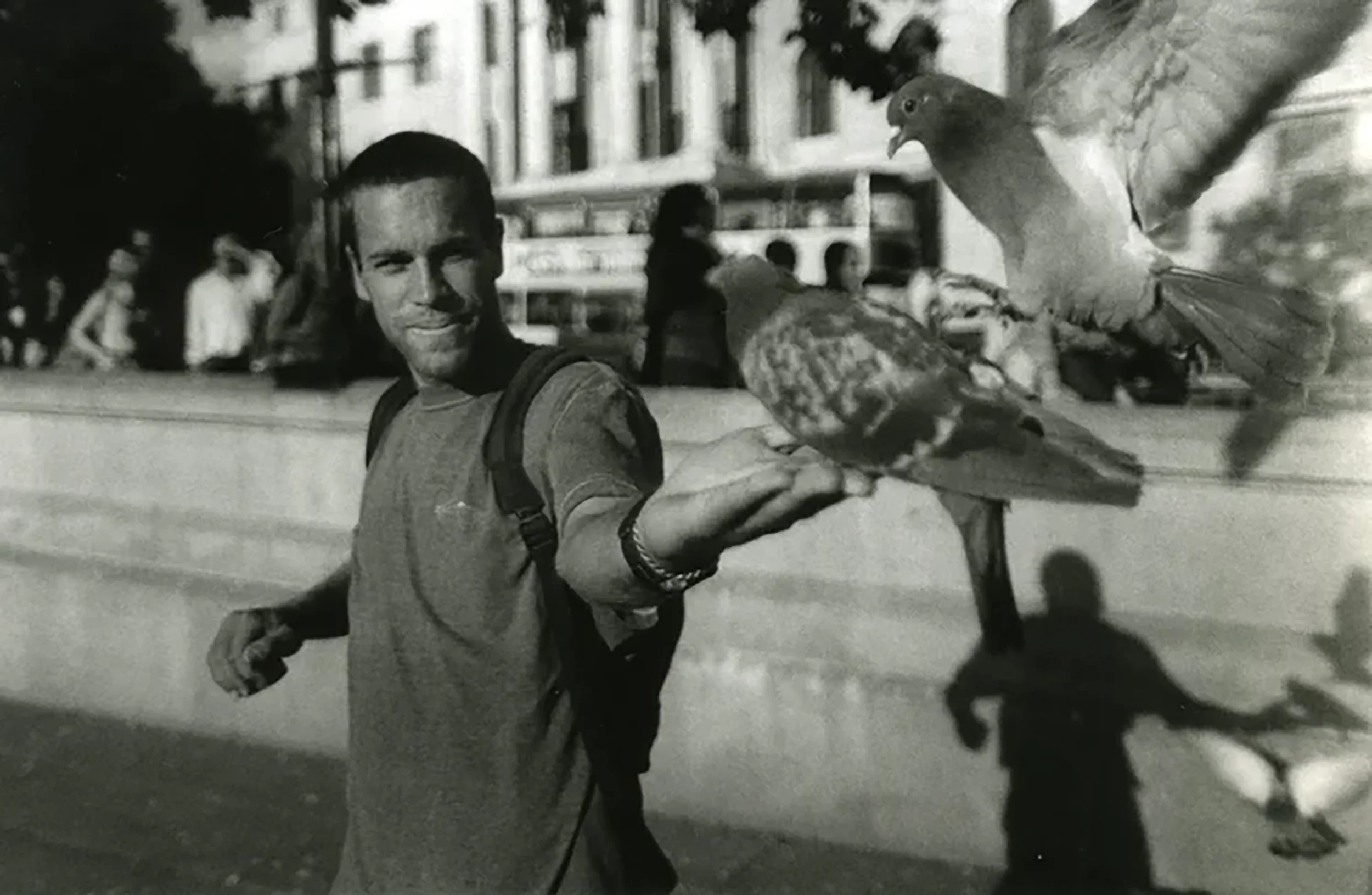
Jack traveling through Europe - 1997 - Photo K. Johnson
It’s a very specific time frame being covered and a very specific point to close on. How did you decide on that time structure?
Emmett Malloy: For the ending, he’s had such a career and got to a level of fame that a lot of people know about - they know more about the Curious George, In Between Dreams era of Jack-
Jack Johnson: Wow, did you really just drop Curious George on that shit?
EM: I just meant like, I always like when movies focus on how artists got to that point. I always like it when journeys take you more along how people got to the level of what people know. So as a filmmaker, I won’t say that that was our creative limitation, it was just what we were interested in. This started because we wanted to bring back Thick of the Water and September Sessions. They never got released, so the idea was to remaster them so that our kids can watch them. I literally carried those boxes of 16mm film around for like twenty years, because they felt so significant. Jack shot these.
Jack Johnson: One of the things that we talked about was wondering how far this film will go. The reason we began making this film - it wasn’t to make a full length film, we just wanted to have material so we could release the old surf films. It started to grow, and I remember us talking about whether it should stop with going on tour with Ben Harper? Or going on David Letterman?
EM: There was this footage of Jack on with Jimmy Kimmel and he’s holding up these surf movies and it was crazy to see how far this thing would go. That’s kind of why it ended around there - we were just focusing on that era of before. We were also thinking that we had to make the film satisfying, so we were like oh yeah this Ben Stiller stuff is kind of entertaining.
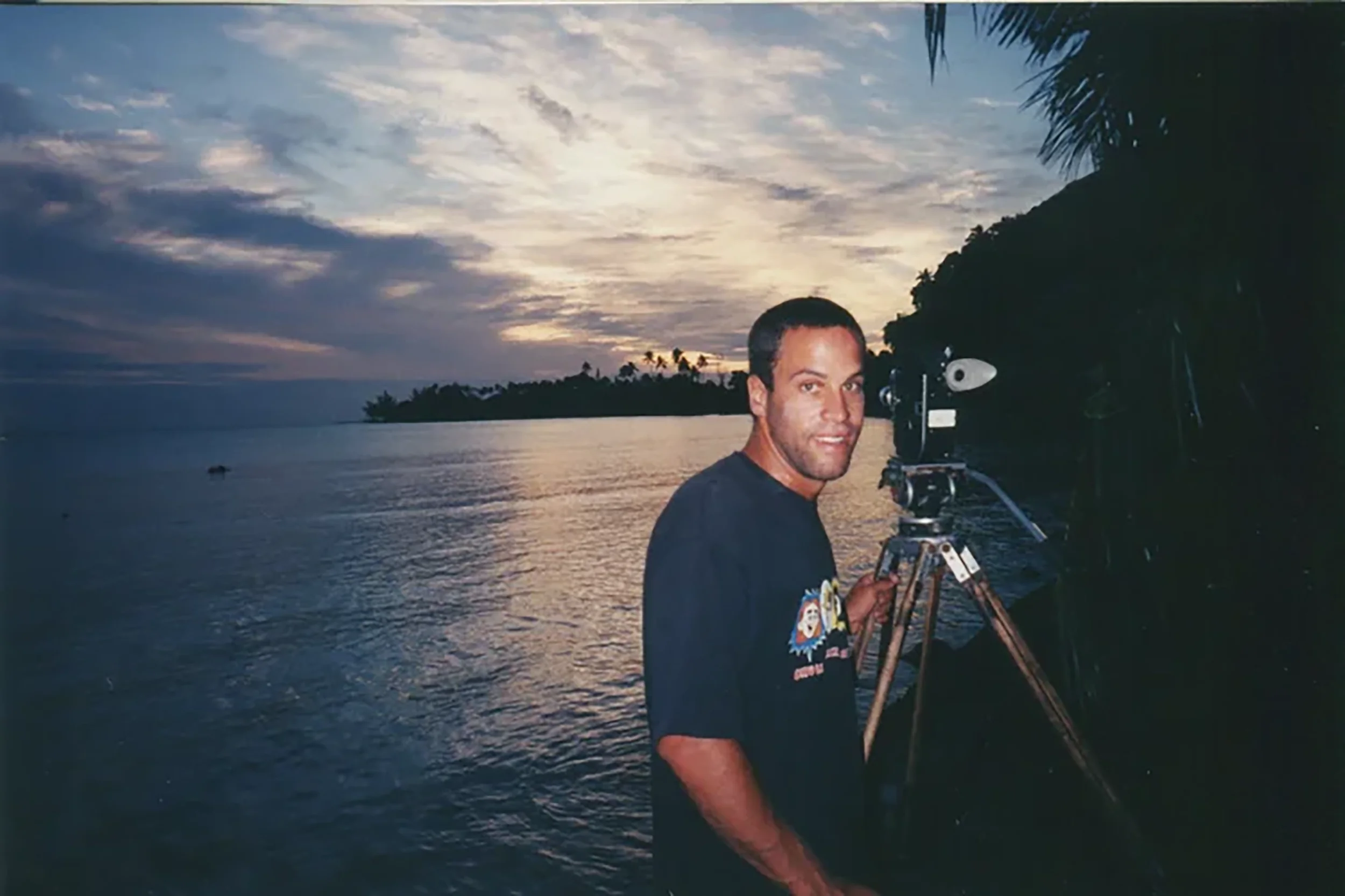
Jack on location filming Thicker Than Water in Tahiti - 1998 - Photo K. Johnson
And then it goes into Kokua Fest, it felt very deliberate. How did you get all of this footage? You just knew to record yourself when you were a kid?
JJ: No, no it was weird. Part of the reason we kept making this film bigger is because people would give us footage - it was weird, a friend of ours had shot the Pipe Masters when I was seventeen, and you can hear the guys commentating, so we when saw that we thought oh that’s pretty cool. There were all these little sections. The Super 8 footage of me in diapers, I didn’t even know I had that until my uncle was telling us to transfer it to digital because he wasn’t gonna do it. It was like 95% surf footage from the 70s and 80s - we’d have BBQ’s and watch the footage and try to identify the legendary surfer in the footage and then every once in a while the end of the roll would be me in diapers.
EM: That super 8 of you in a Fugazi shirt, it felt like one of those things - it’s why the film has the charm is because we get so into those moments.
JJ: It was not that we had a plethora of footage - that was everything that we had.
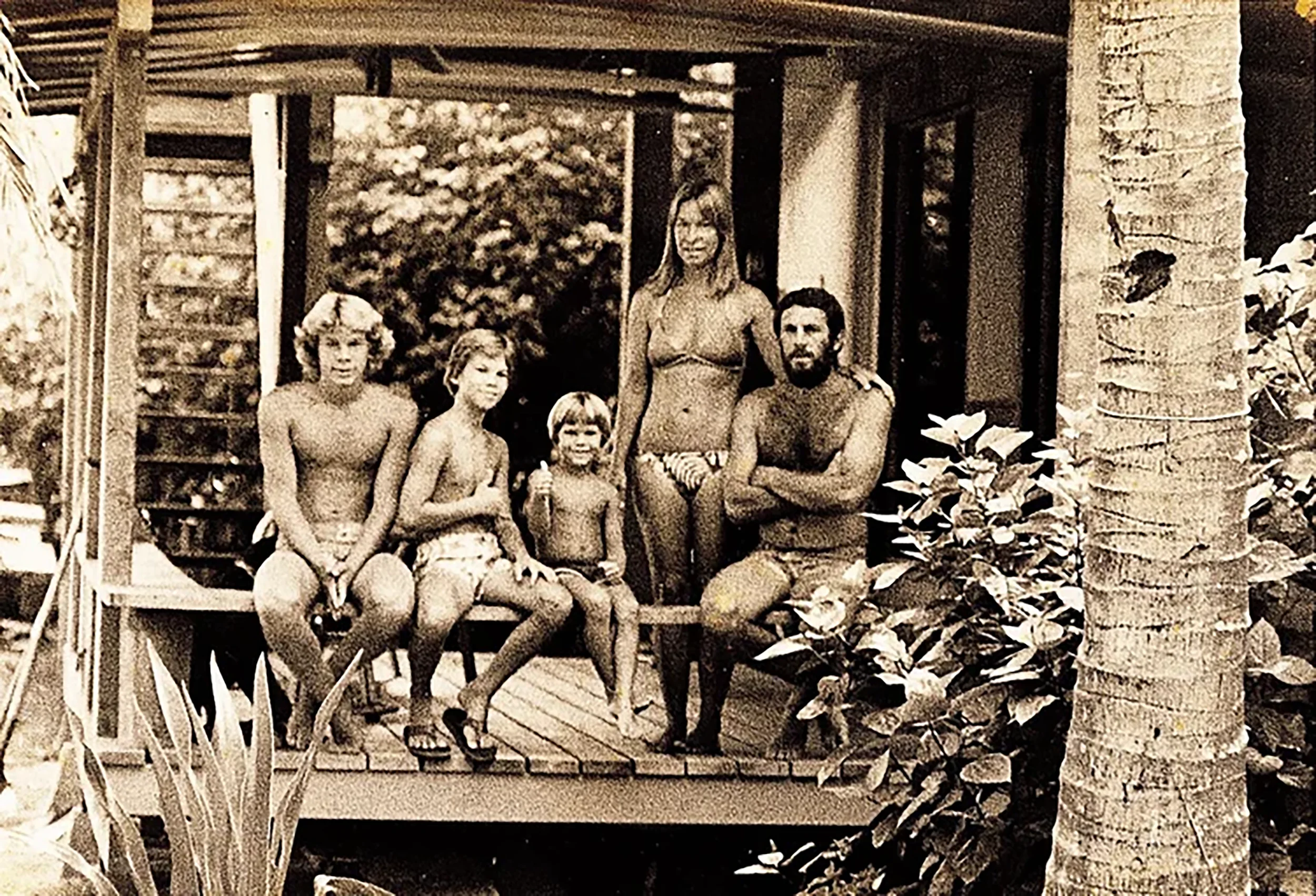
Jack and family on the front porch North Shore, Hawaii - 1978 - Photo Johnson Family Archives
It looks miraculous. When setting a tone for a documentary and the story of your life, how do you decide on establishing a tone for yourself?
JJ: I don’t know if we really didn’t put anything. Maybe things that felt too personal, but that was a little bit of a weird struggle for me is being the one in it.
EM: I think that me as a filmmaker I try to always respect that. His music is very personal, but people hear it and apply it to their own lives. I felt that in the theater yesterday - that music is so personal to people’s stories and relationships, and you could see that people were reminded of their groups of friends or their memories of these songs. I think that the way we put it together, hopefully people can see it and be inspired by it. The reaction that it got yesterday, it kind of had an emotional impact, which was great.
JJ: If I go out to say hi after a show, so often I get asked by a young singer or songwriter and they ask me for advice, and through this film, in a weird way, I was kind of trying to show the process. If you’re talking about the amount of people that come to a show, for me it was a byproduct of making stuff with friends. It’s also a lot of luck, who you meet, who you run into. I kind of just wanted to show for kids, a lot of the early stuff is not very good, but it’s friends making stuff. You just have to start making stuff. It’s not going to be great at first, but you can enjoy the process. The process is always the funnest part. Even with an album, the sketching of some songs, putting things together, working on the art work, and then being able to put it down and be like yes that’s what I’ve been working on for a year.
Are you able to do that? Like with this film, are you able to identify when something is done?
EM: I mean we got there, but we were making changes up until a week ago.
JJ: I’ve always felt that on records, every record, I’ve wanted to start over. I get so tired of hearing the version of a song and I have to step away and come back and if I’m lucky I’m like yeah that’s cool. There are other things that I listen back and think I’d do something different. Like different production choices or whatever, but that’s part of it and part of making things. Now that I’ve gotten a little further from my earliest recordings, we’re going to put them out. There’s enough distance now for me to think that that’s pretty cool.
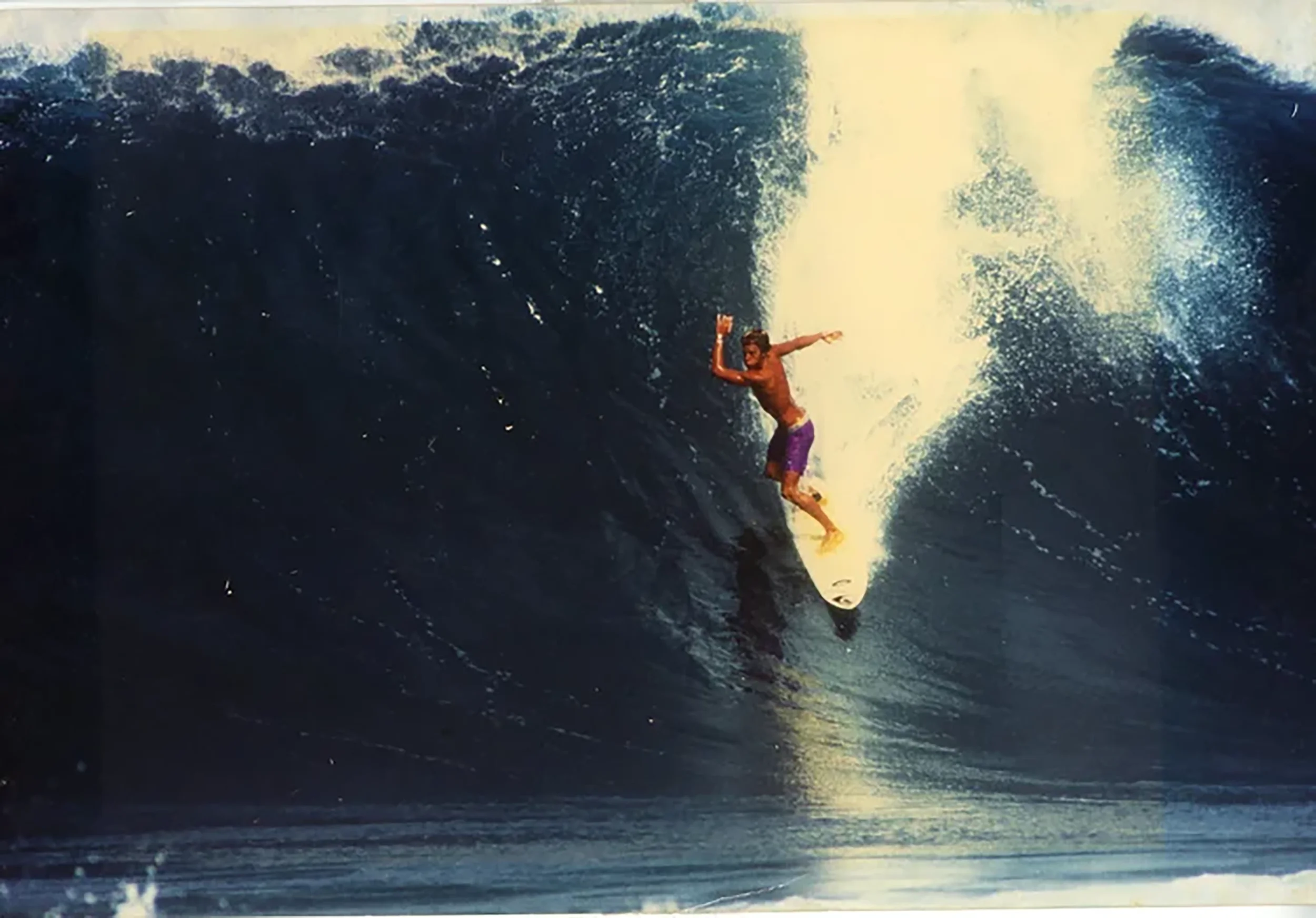
Jack age 17 surfing the world famous Pipeline - 1992 - Photo Jeff Hornbaker
Will it be put out through a four track Tascam?
EM: There will be cassette tapes! It’s kind of fun to let whatever this generation feel like how we felt when we used to have to make things. Obviously now the whole world operates through a phone. There was a film that played at the Taylor Steel Film Festival that Griffin Colapinto, and it was really interesting to hear about their process of making a film, because they get a banger and it goes right out to the world two seconds later.
JJ: Their challenge is deciding what to hold onto for longer, and what stuff they need to get out right away because there were photographers on the beach who will be putting it on the internet in five minutes. Our challenge was getting that film home after a month long trip and hoping it doesn’t get wiped in an X-Ray.
Emmett, you have to bail? Thanks for chatting. Jack, you good to answer a few more?
Yeah, of course.
Paul Hatter asked me to ask you if you’ve ever licked a leaf in the air?
Oh, wow. Ah man. Yeah, yeah. How do you know Paul?
My dad.
Paul’s one of my best friends. He’s in the movie actually, like three times. Big Hats at the end with Ben Stiller, and then group shots when we are kids, and he’s in another quick shot when we’re talking about Grommits The Movie. That’s so cool. I love Paul.
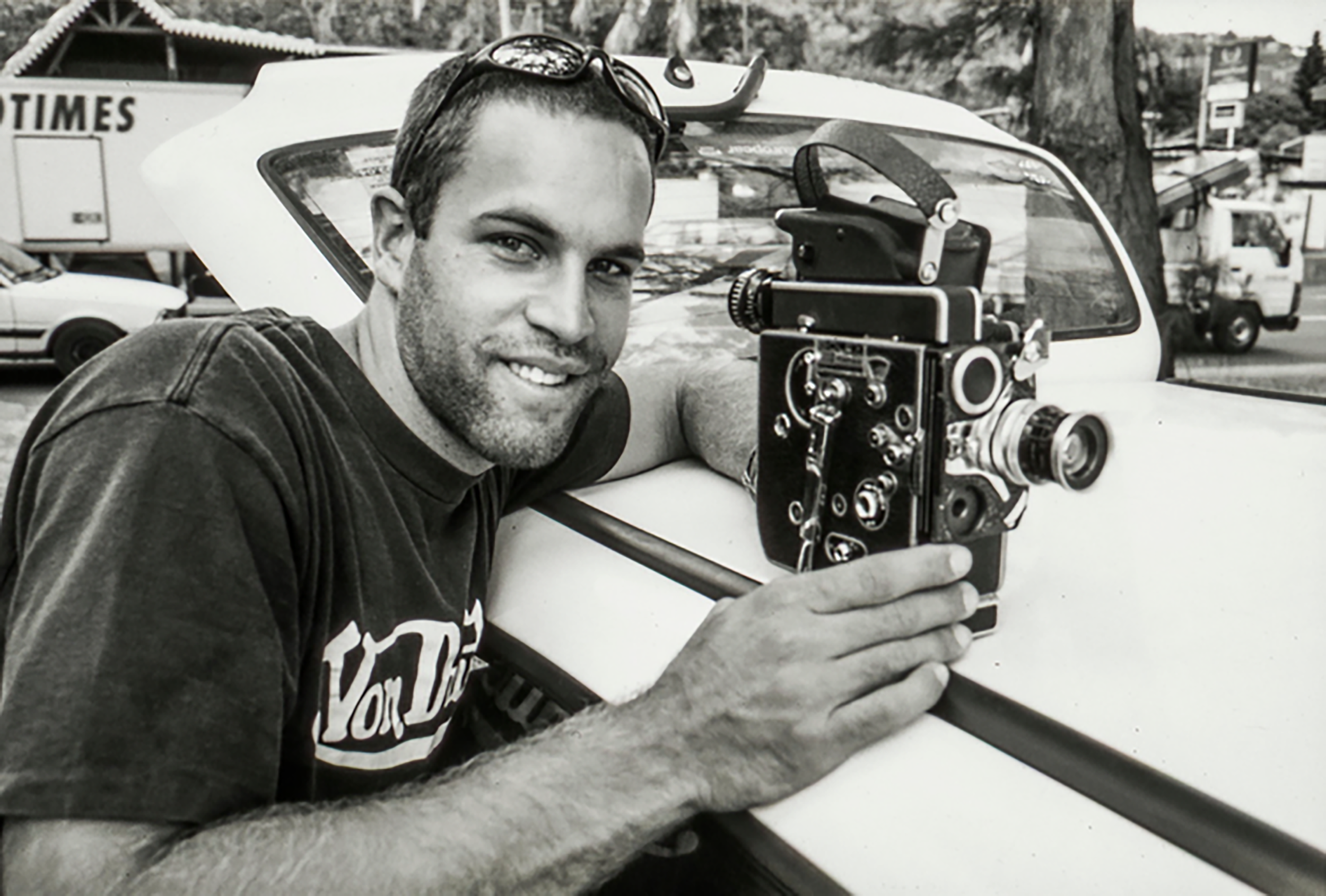
Jack and his bolex - 1998 - Photo Tom Servais
That was such a specific era of Hawaii surfing, do you think that you would have been this if you had grown up in Ventura?
Wherever you grow up, that place shapes you. North Shore in the 70s and 80s, we were bored a lot, so out of boredom comes a lot of creativity. We would make up games, jump fences - it was a beautiful time and place to be a kid. Specifically Pipeline, that wave in particular - board design is always changing through the eras, and at Pipe, guys were trying to surf it and doing amazing, but those boards are not designed for that wave.
Yeah, very narrow.
Yeah! I mean, even in the 90s we were riding very narrow boards, but back then in the 70s and 80s at Pipe, we were riding even narrower long, single fin tails. Gerry Lopez - those boards were the first boards designed for Pipeline, but before that. My generation, it was the first time that there were boards being shaped for Pipeline, and it turned into a moment where Pipe wasn’t just for the older guys anymore - there were suddenly a lot of teenagers going out at Pipeline. If you wanna call it lucky or unlucky, it was a great time but there were a lot of days where you’d wake up and look outside and think, oh no, am I really going to go out there and surf that?
You’re like damn I told everyone I was gonna do this…
Some days when I’d see it, back door perfect, I could see where I was going to chip into the wave, but then some days the lefts would be good, but you’d have to know which rights to choose and you were probably going to have to doggy door out of it because its gonna close out towards Off The Wall. Anyways, we were pushing it and felt a little pride at being these seventeen year olds going for it.
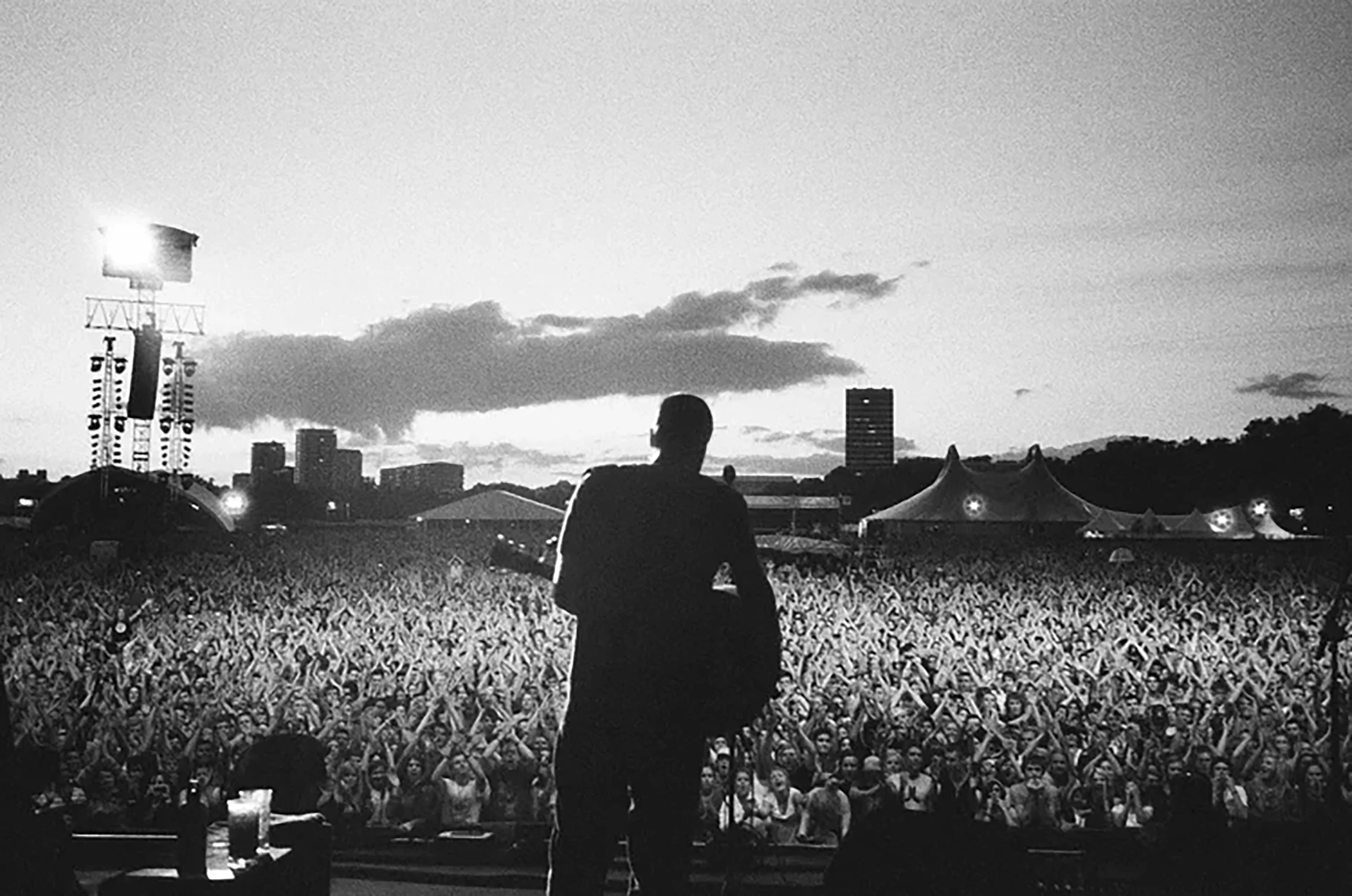
Jack performing at Hyde Park - 2008 - Photo Emmett Malloy
Yeah, you’re a kid.
Yeah! You don’t have your frontal lobe! We knew Pipe intimately, though. We’d surf it when it was three feet or six feet - whenever it was breaking. And it’s really hard to get waves out there, but we knew all the older guys. They’d be like, alright Jack, go! And nobody else would paddle for that wave. And then I remember Buttons used to yell ‘Go, Buttons!’ For himself. It was so funny.
What was your intention with this film? Who is it for? To me, this was a movie about a surfer who kind of happens to make music. How do you approach it?
I can’t really tell you what the intention was. The first intention was to put out those two surf films, so the culture was the target. Then the feedback that Emmett kept getting was to have more of my story as a through line, and so it grew into that. It developed into that idea of friends making stuff, and trusting in friendship - making stuff for the sake of making stuff is one of those things that I felt was worth putting out there. I guess I always felt like it was a weird accident that I became famous. When I got to open for Ben Harper, I thought I would get to tell my kids about how I did this crazy tour one time. At some point, it became apparent - like, at the beginning of the tour, the place would be empty while I played, but somewhere along the line, people were spreading the word on the internet, and the room would be packed before I even got there.
Everything that happens in that fast little part where I get more famous, to me is the part that people know about the most, but that’s why its short, whereas the rest of the film is about who I think that I am. You know what I mean? When I talk to someone like you, they know what I mean when I say that I identify as a surfer. I can’t remember when I started surfing, I only remember doing it. I wake up every day and the first thing I think of is where I’m going to surf, but I don’t always pick up a guitar.