Scene NYC: Live From a Bed Stuy Basement
words and only semi-fucked photos by Maya Rajan.
We start on Orchard Street.
My friend is running sound for a poetry reading. I sit with her behind the booth while a white woman lists all the types of teeth in her mouth. We leave early, dodging the spillover on Canal; summer weekends pack the street’s metal folding chairs with influencers styled by algorithms.
In Bushwick, ballet flats turn into goth platforms, linens into neon mesh. We follow the crowd of messenger bags and six packs to a Bed Stuy apartment with a line out the door. We’re here for an everlovin’ nyc show, a local promoter and manager whose bookings are always up my alley. On the bill: Lee Ho Fooks, People I Love, Branching Out, Holidays in United States. Holidays are the only band I’ve seen before, once at a kebab shop and once at a lefty bookstore.
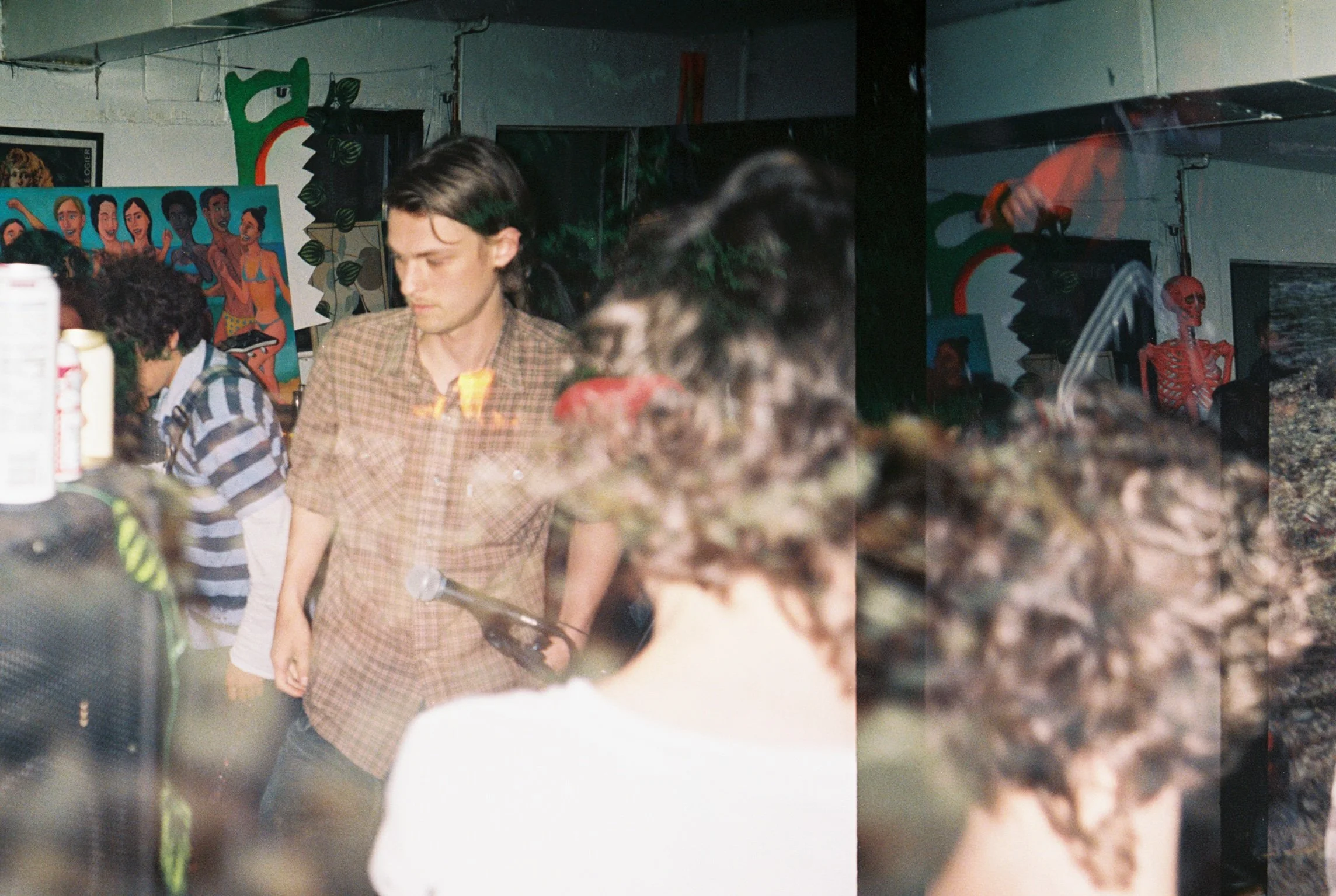
Ten dollars, a narrow staircase, and we’re inside. It smells like Modelo, tobacco, anticipation.
The young crowd wears a slacker uniform, Malcom in the Middle type swag, some bright, fringe exceptions. Emo kids are cooler now and they have way more friends. I assume everyone here goes/went to NYU or Cooper, based on vibes and encouraged by light eavesdropping. There’s a confidence about students in the city that is entitled at its worst, but really admirable at its best. Everyone here seems to know each other. I feel naked without my Freitag.
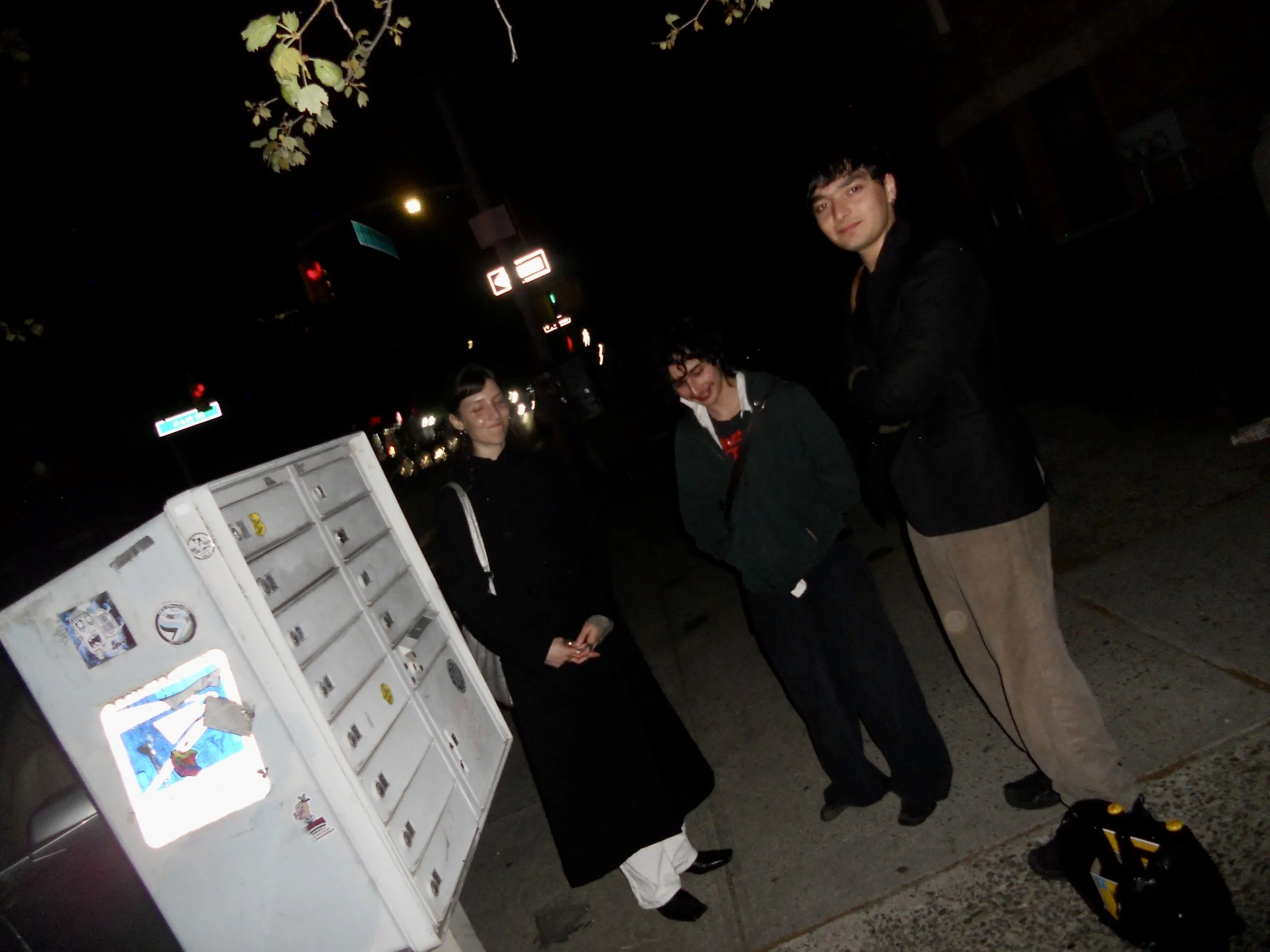
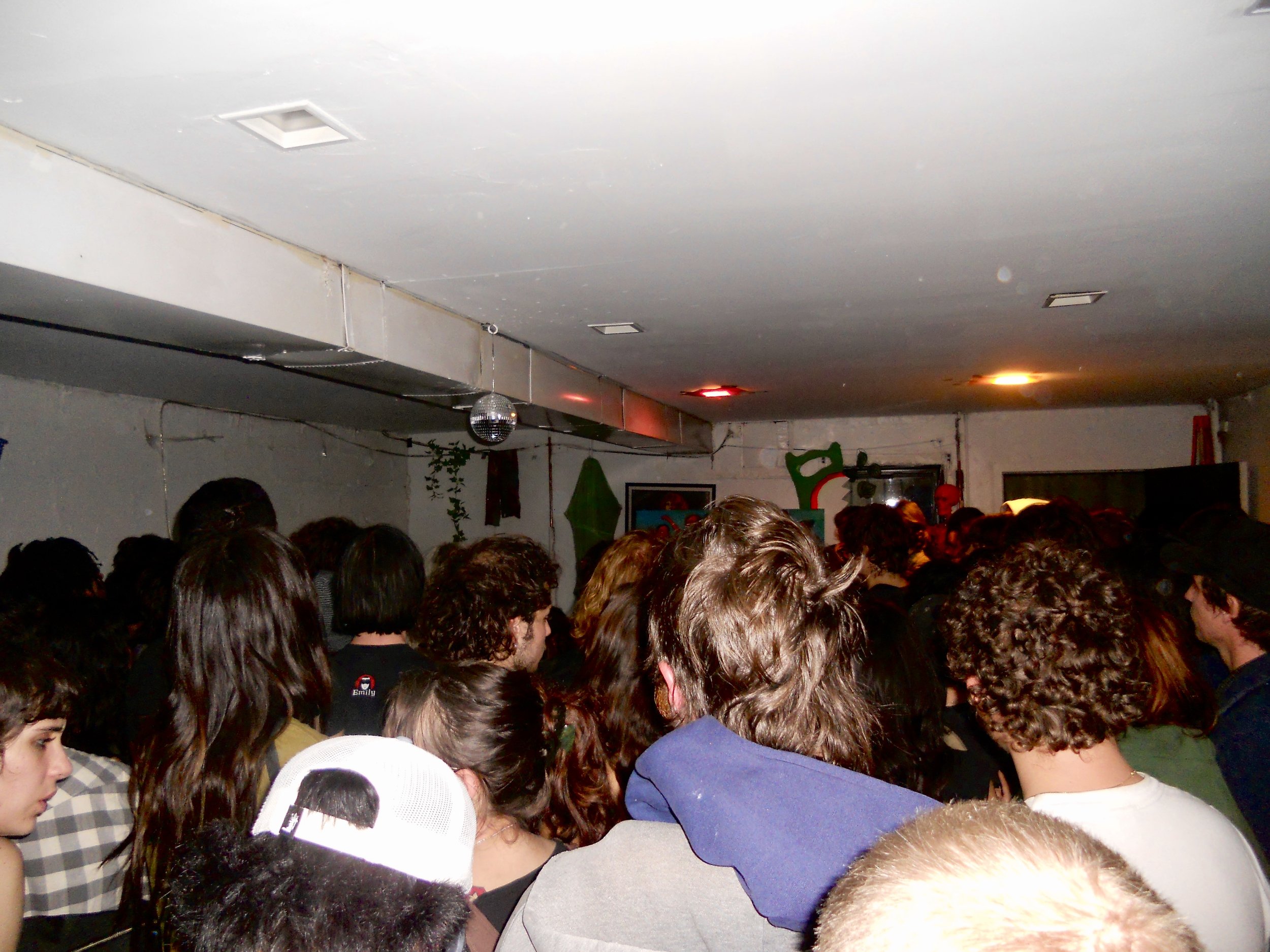
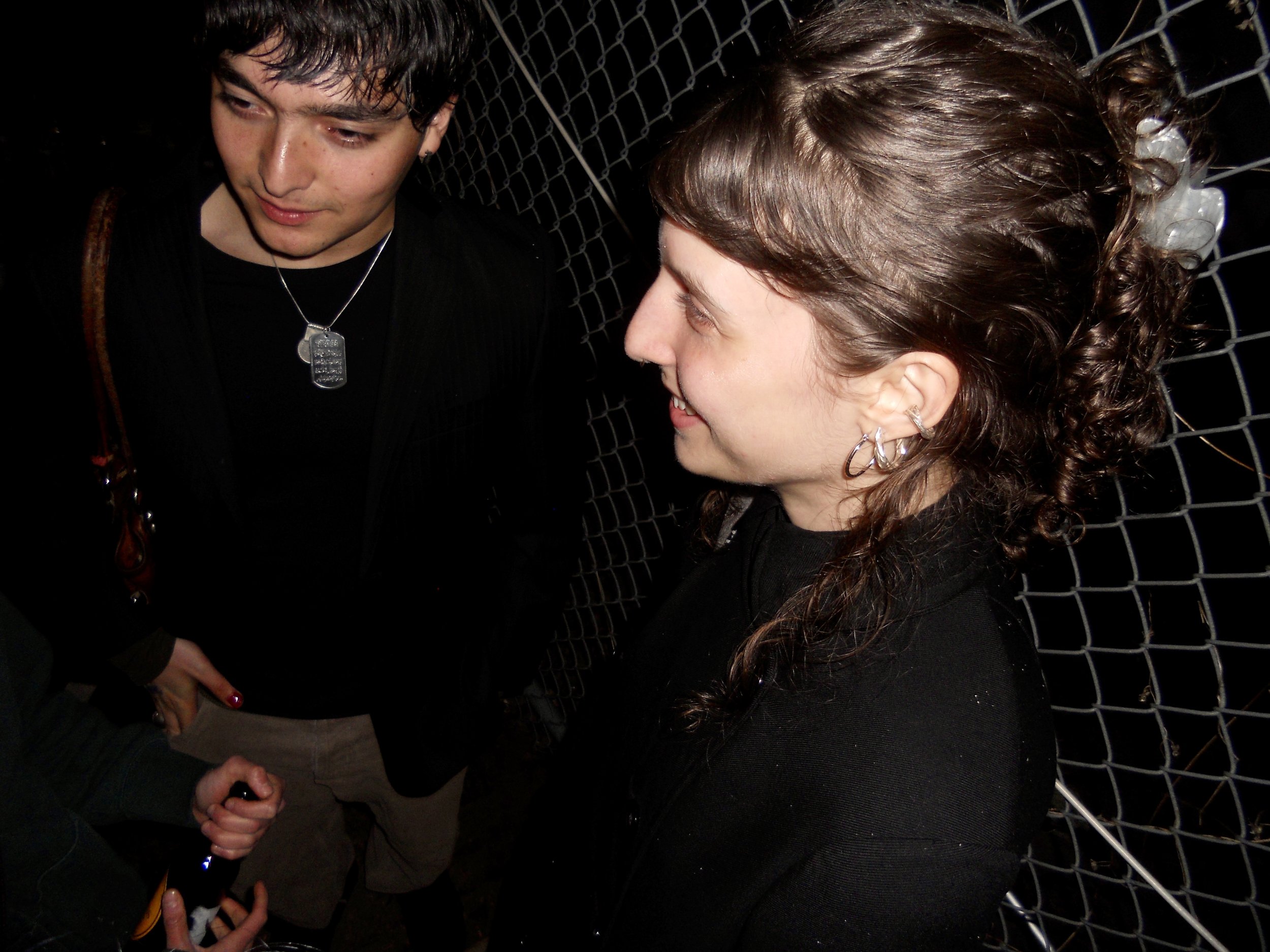
In New York, “scene-y” is tossed around like a catchall descriptor - fashion week parties, show openings, birthday dinners. When I reach for the word, it’s when I’m feeling out of place; when I don’t recognize anyone and assume no one wants to recognize me. Calling something “sceney” is easier than admitting I feel left out. It turns discomfort into critique. It protects me.
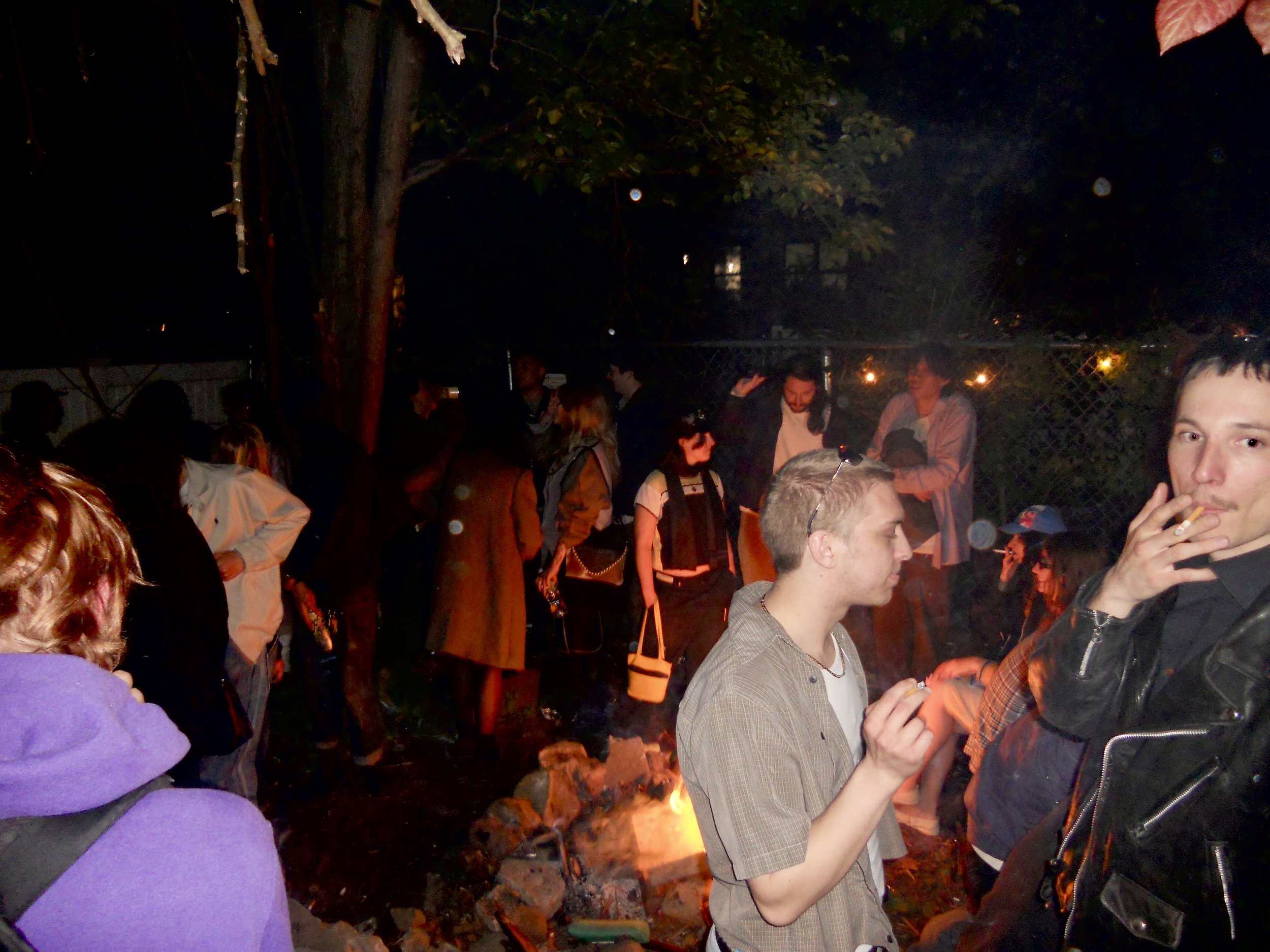
Tonight, we know no one. An unusual occurrence - in many ways, America’s largest city is a small town. Everyone here looks younger than me. Is it weird that I’m here? A tap on the shoulder: a friend. Immediate relief. We drift in the backyard talking while the flow of people separates and rejoins us. The anonymity that often feels like loneliness begins to feel freeing. Out here, the unfamiliar faces are warmer, lit by the fire and the fairy lights. There’s room to look around, to take in faces and hear voices, space to familiarize yourself before getting stuffed between sweaty bodies flailing to loud music under gelled fluorescents.
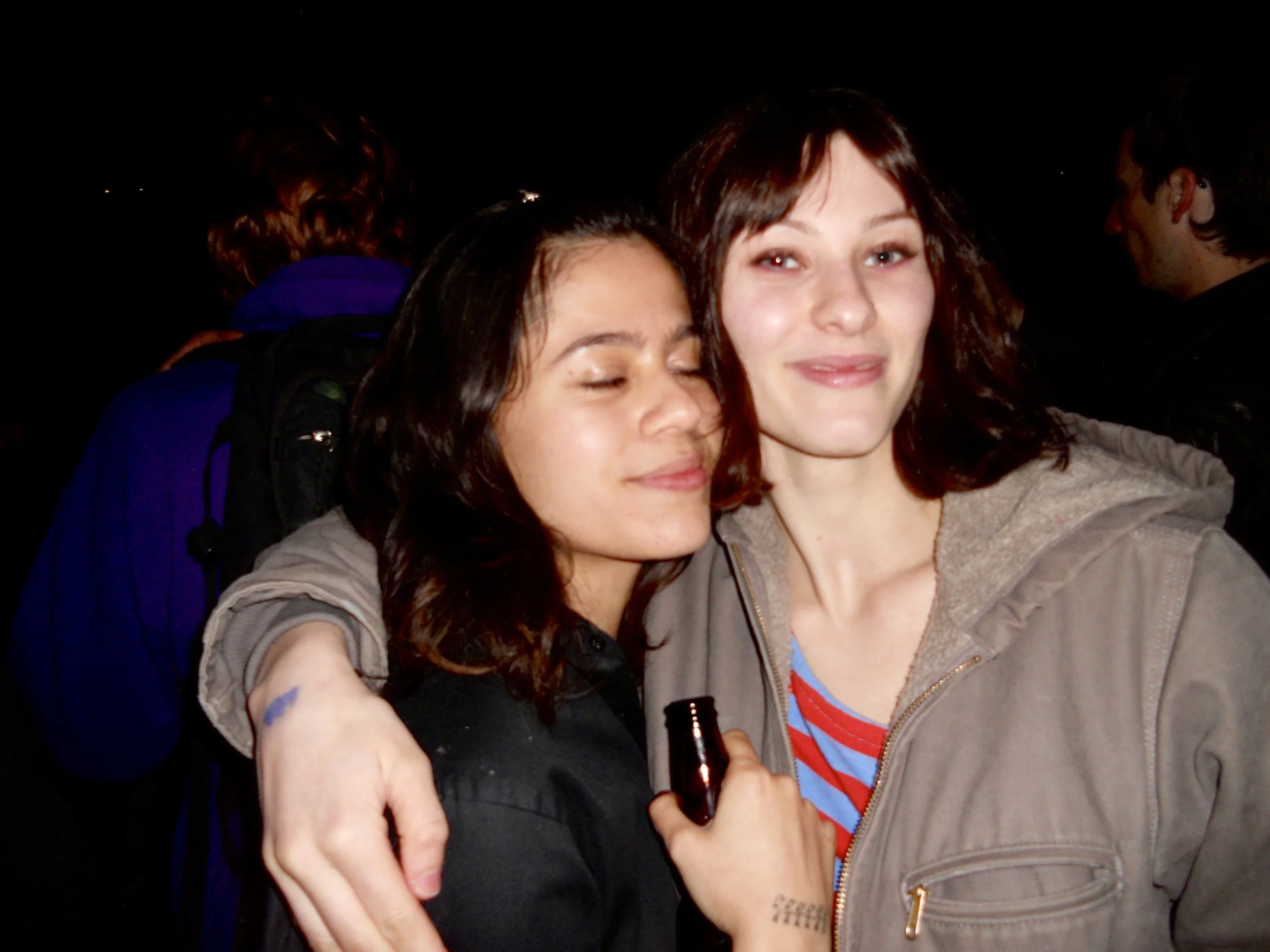
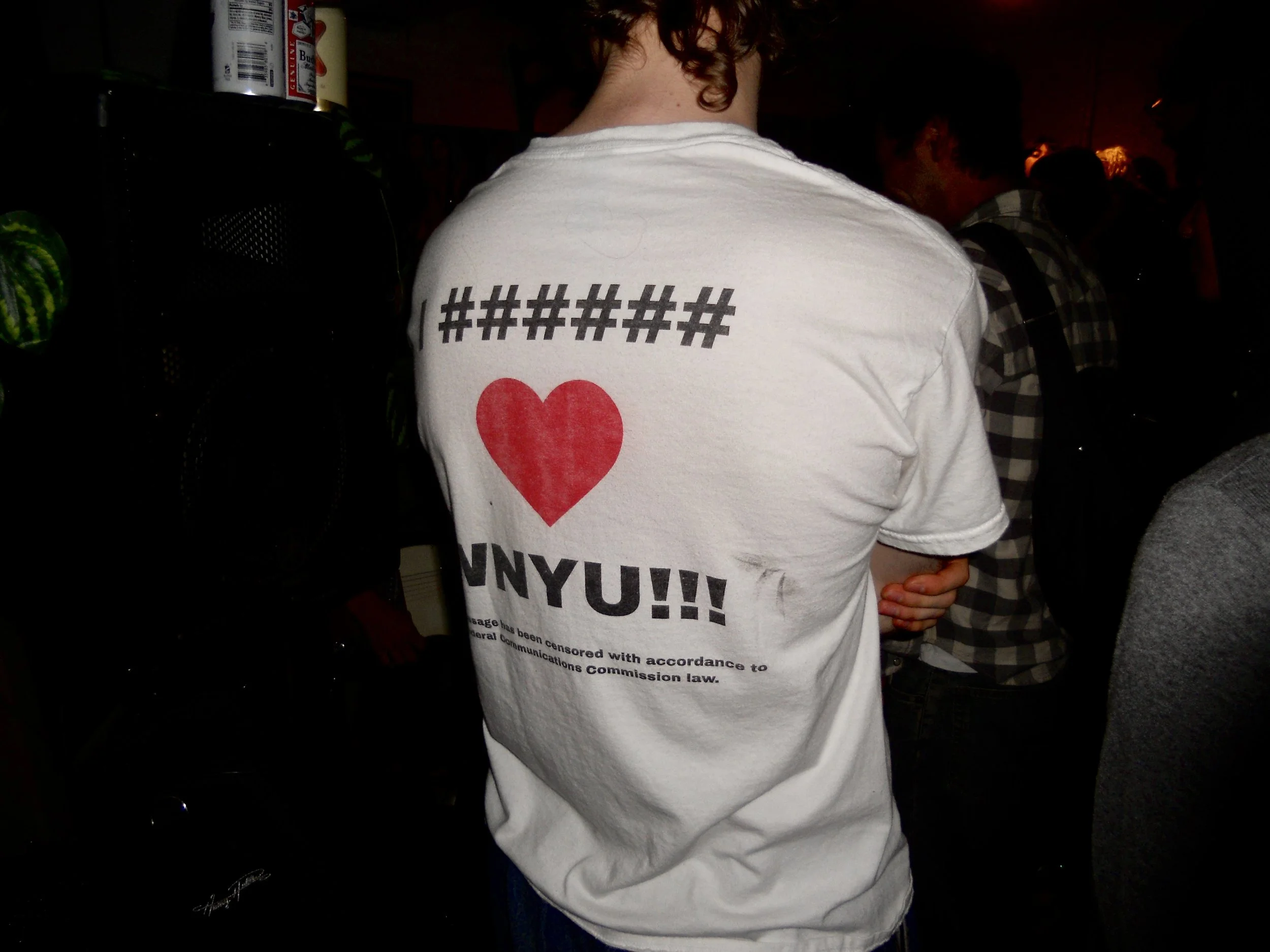
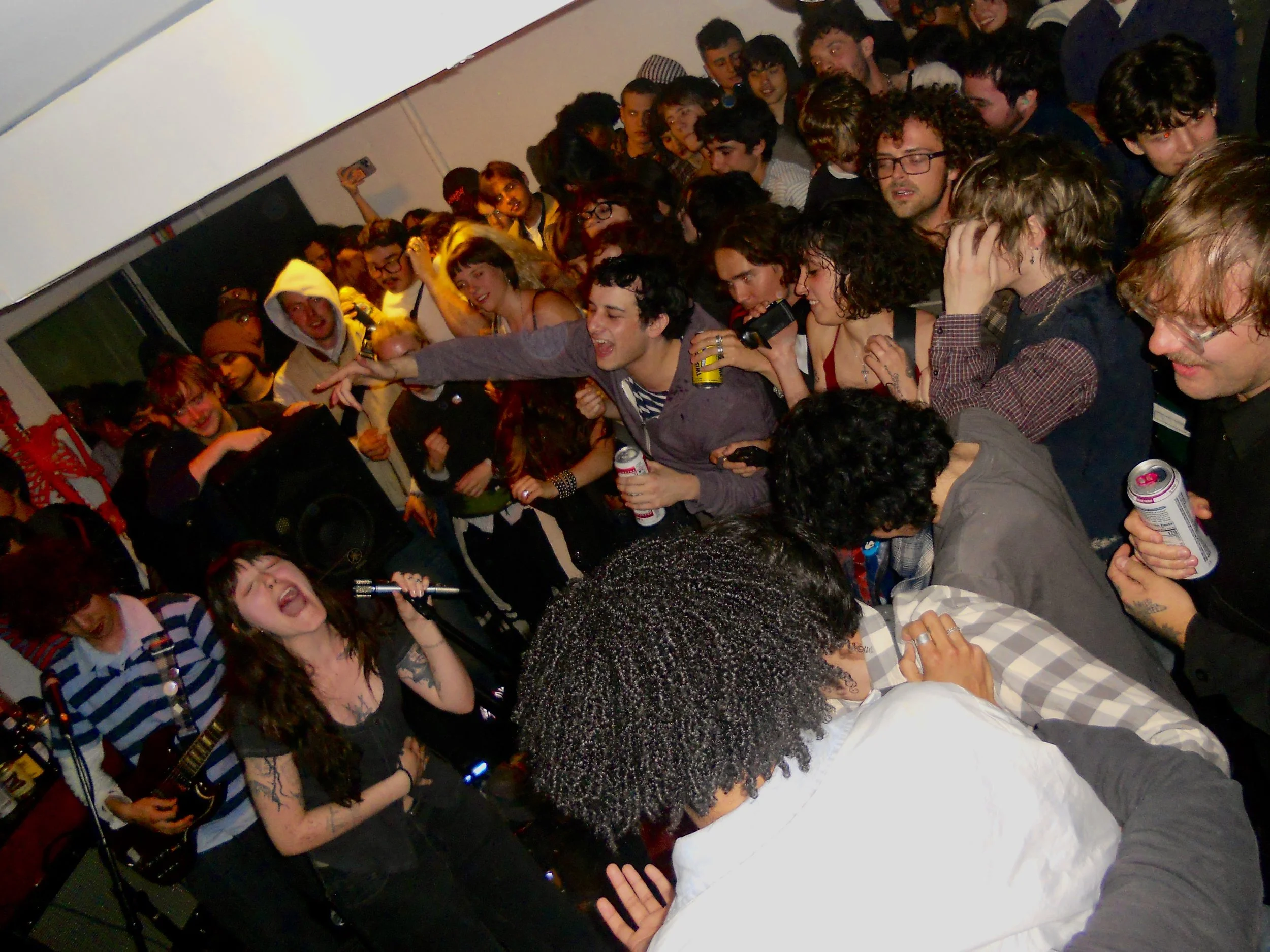
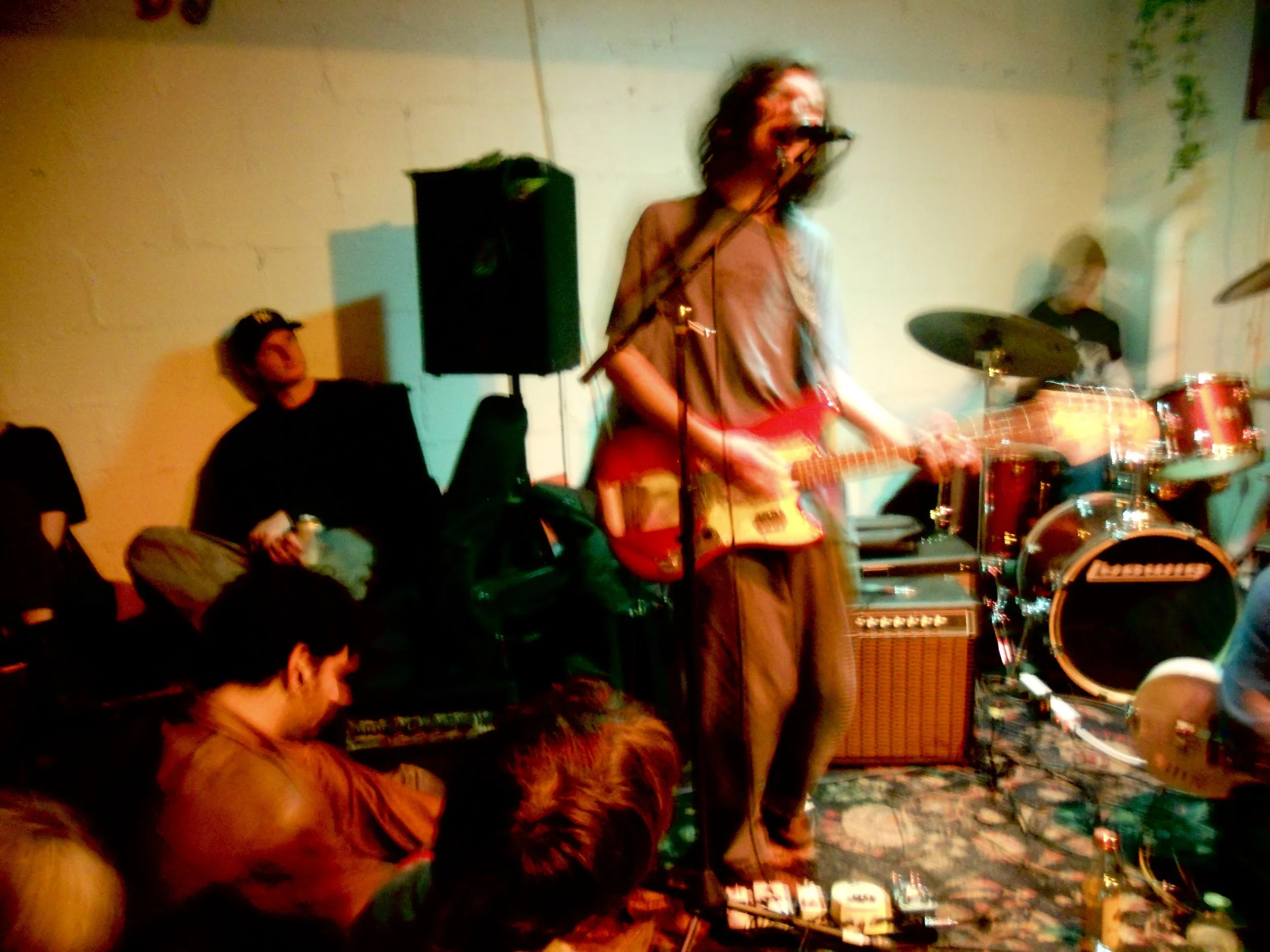
First up is Lee Ho Fooks. I’m expecting emo. Instead, they play really great country. Both singers have classic voices, and the band stretches into jammy territory, anchored by a lap steel guitar run through a wah pedal - funky, expressive, loose in the right way. Later, I hear the lap steel belonged to the player’s grandfather in the 1930s. This tracks. It sounded lived-in.
Outside again, sharing a cigarette, a girl walks up and says she doesn’t know anyone here, that we looked friendly. I beam, that’s all I ever want. We chat to her for a while and I go back inside alone. My friend braves the bathroom, a relief my bladder knows not to crave at house shows. Some mix of adrenaline, shyness, and sensory overload allows me the privilege of not thinking about my body for a few hours; my impatience saved from an endless toilet queue.
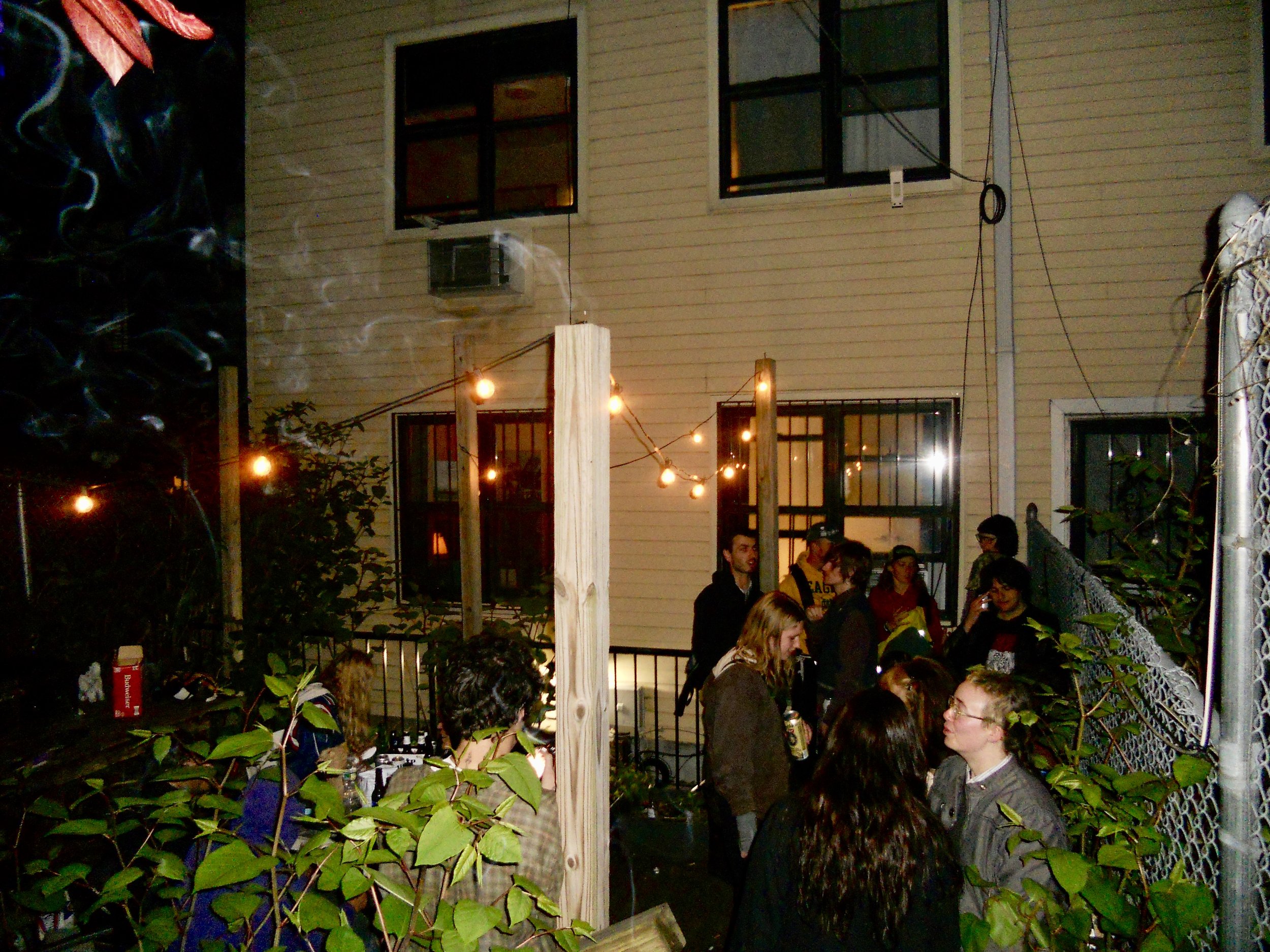
So many short girls holding tall boys. The bassist from People I Love drinks from a bottle of Tito’s during soundcheck and passes it forward. The girls next to me go to FIT; one fucking hates her advisor. The air smells like fruity vapes, seltzer, clean shampoo.
People I Love up play short, sweet songs that float between shoegaze, folk, and dream pop. Vocals stay mellow until they don’t - yells placed carefully so they land harder. The front row stays seated. A girl leans against my knees, playing with a ribbon, it feels so tender I don’t even get pressed about sitting at a show. It’s the softest set of the night but not without edge. They announce one song they’ll “never play again.” The breakdown is so devastating I hold my breath.
Backyard. Fairy lights, a fire pit that never goes out, clusters of people in varying modes of listening. I talk to a few sweet girls who ask me my major and offer me a buzzball. My sober, twenty-seven-year-old ass feels a gap open. My brain reaches for the non-incriminating explanation: This really is a young scene.
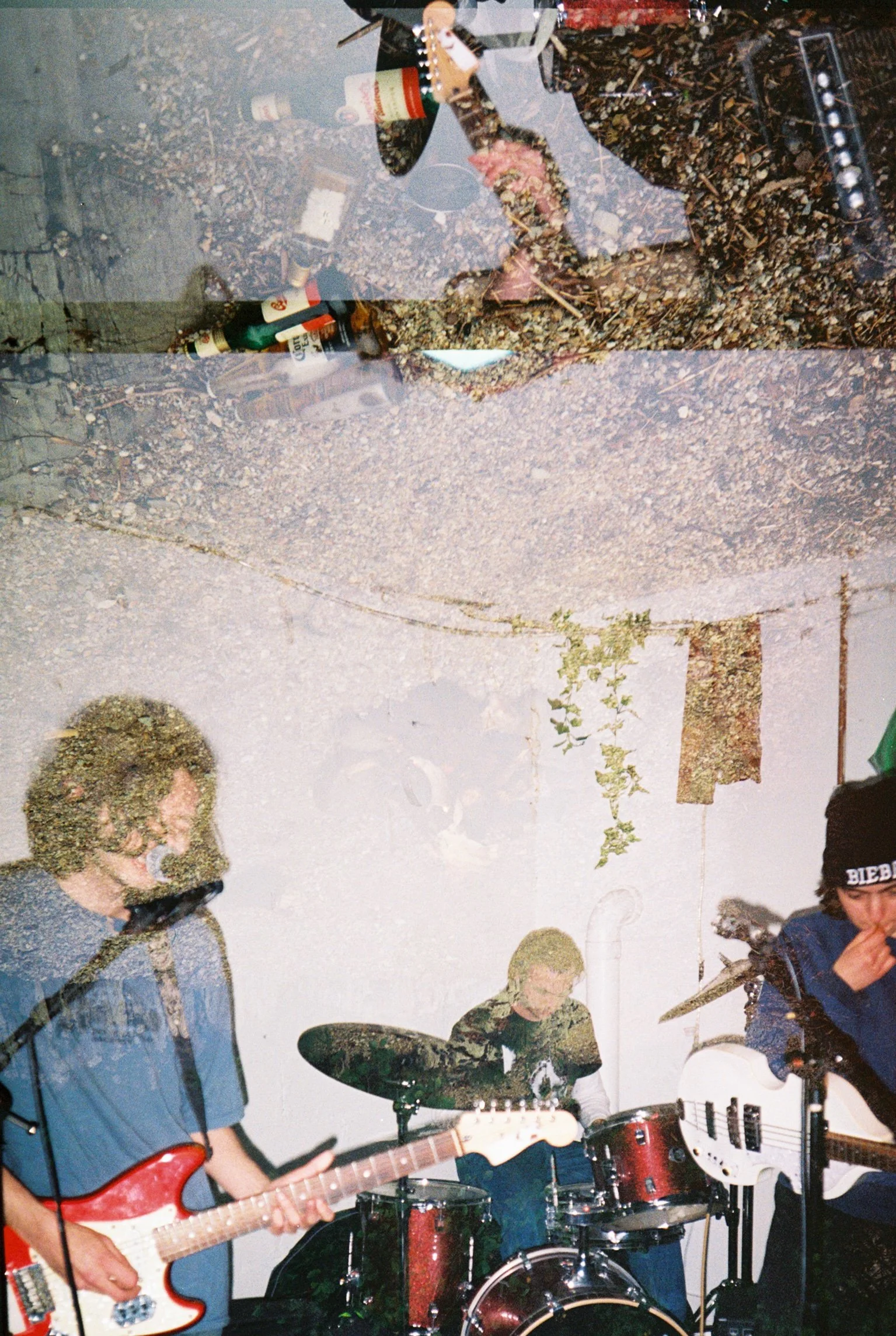
Ever since I was a little girl, I knew I wanted to be at the emo house show. Middle school memories loop: leaving soccer practice on Fridays and teleporting to a South Philly basement via house show YouTube video. I longed to be in those basements instead of at my all-girls Catholic school, twelve and riddled with social anxiety. I wanted to thrash about and scream with strangers about being so happy or so sad. Wanting to belong was inseparable from wanting to be part of the scene— and it was also inseparable from the self-consciousness of teendom. I grew up in New York with access to everything I claimed to want, and what I wanted least was to be perceived.
I move through the apartment and out to the street, where I find my friend with new people. We share lighters and stories, revelling in the kidlike giddiness of being out. The quick intimacy of strangers deciding to be familiar. Two cops show up, pour out a couple beers, shine flashlights in our eyes, say, “not in my neighborhood,” and leave. Cops are so bored and random. Something small and strange belongs to the night now.
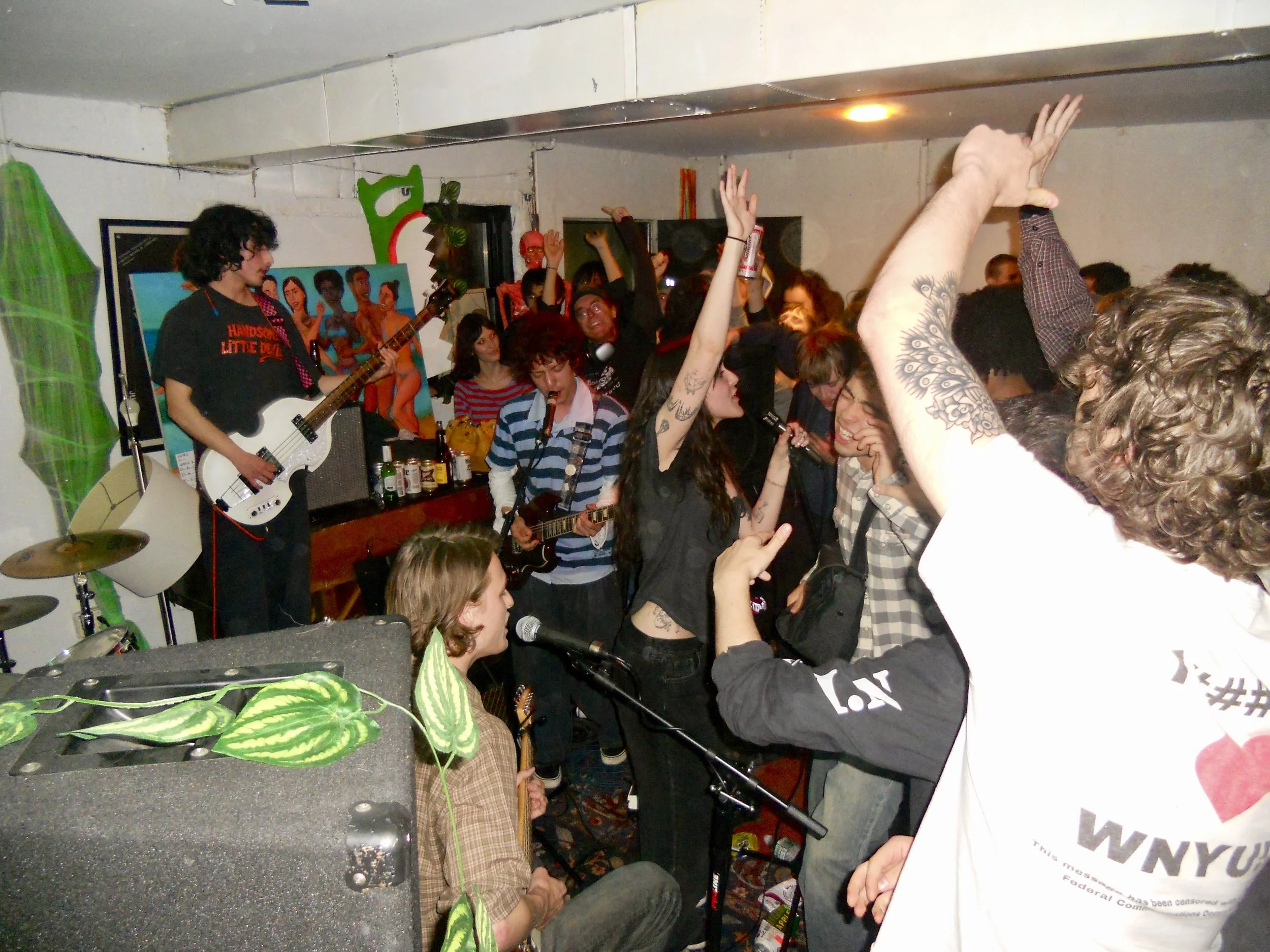
Inside, Branching Out has started. The room is so packed I can’t see them. No sightline at all. I close my eyes in the back. Their sound is anthemic, nostalgic— raw in an easy, unforced way. I imagine how the room must look from the front: bodies moving, voices pushing forward, a collective energy.
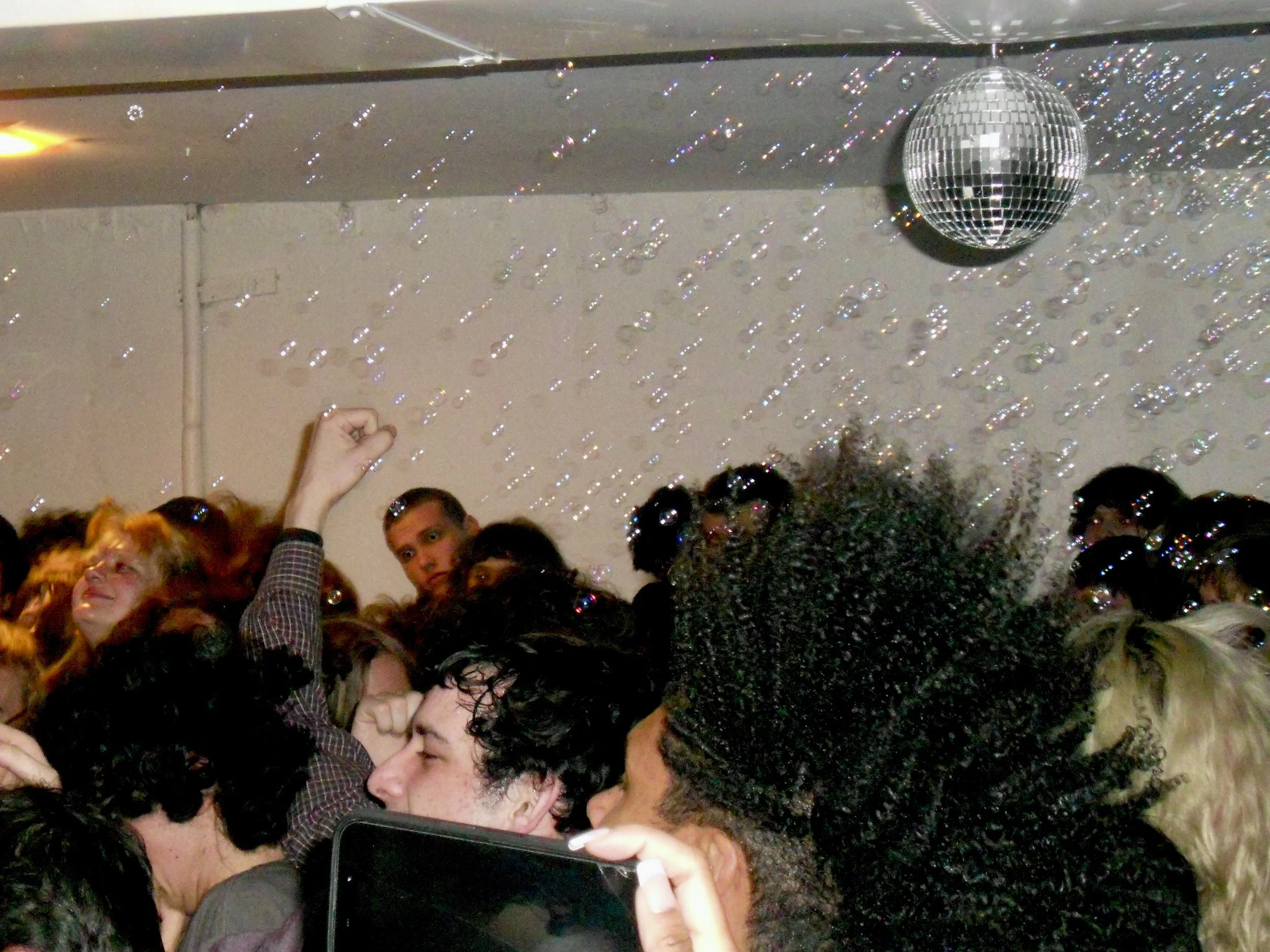
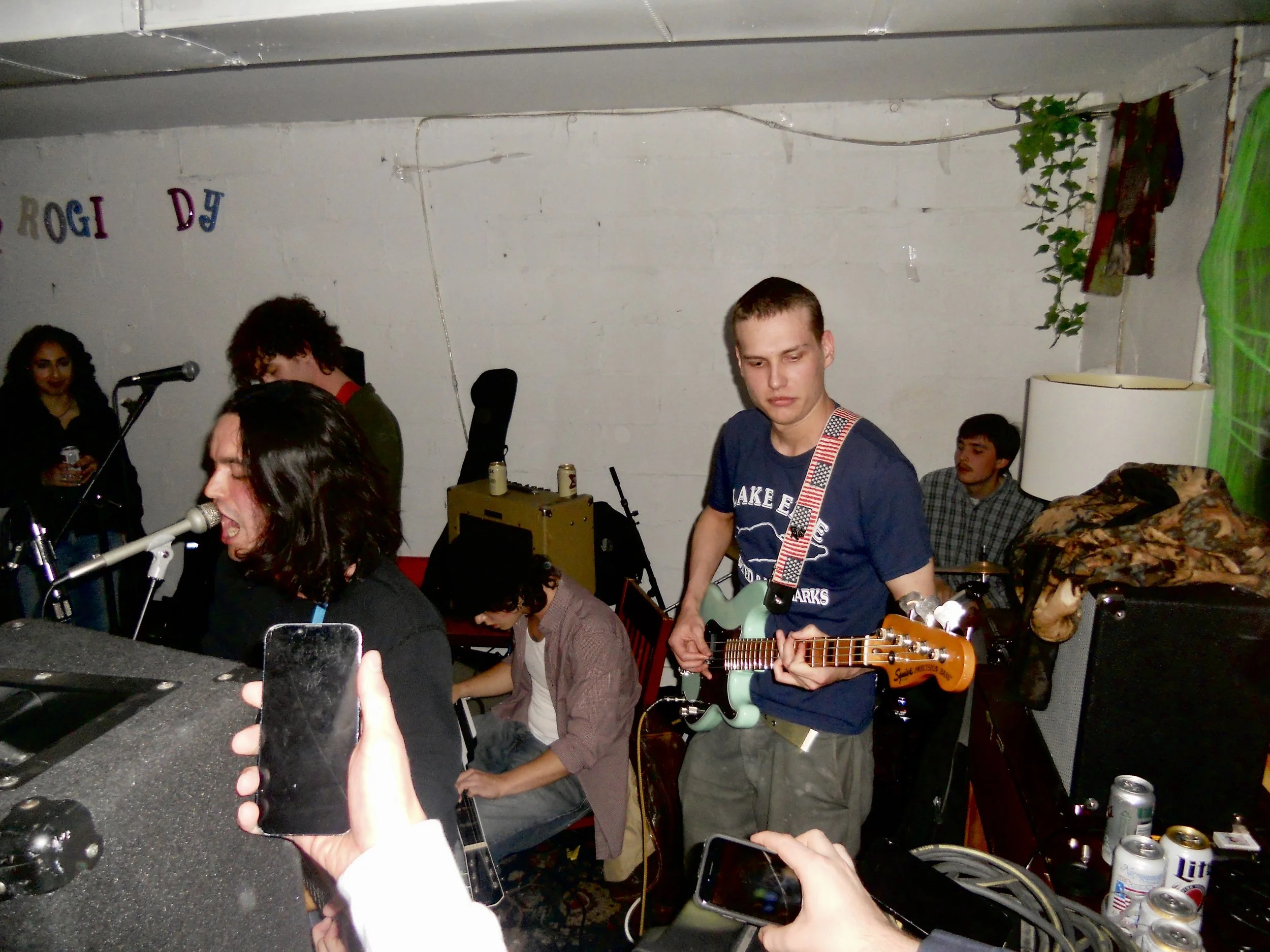
There’s no shortage of criticism about Gen Z’s concert etiquette— I notice the occasional iPhone raised, the odd annoying drunk. But everyone is awake and aware here. When someone’s being obnoxious they get shoved back. Phones come out sparingly. What’s more noticeable is the opposite: a shared presentness, an eagerness never felt among jaded people.
The pull of the backyard and new-friend induced fomo wins. I return to the endless bonfire, to conversation that’s soft around the edges. Floating between the basement and the backyard, between strangers and friends, this is where I am meant to be.
As a teenager, I watched nights like this on YouTube. I couldn’t be called a poser from the distance of my bedroom. Even now, I catch myself on screen through my middle school eyes, evaluating my place, judging me for not knowing more people. It doesn’t matter how many strangers introduce themselves, shift over so I can see; the distance I feel isn’t coming from the crowd. It’s something that I bring, something I’ve learned to name instead of question.
“Scene-y” used to do that work for me, I think it does that work for a lot of people. It lets us choose being outside instead of being trapped there. But it’s a cop-out. There’s no single scene. Just people, music, and the choice to participate or not.
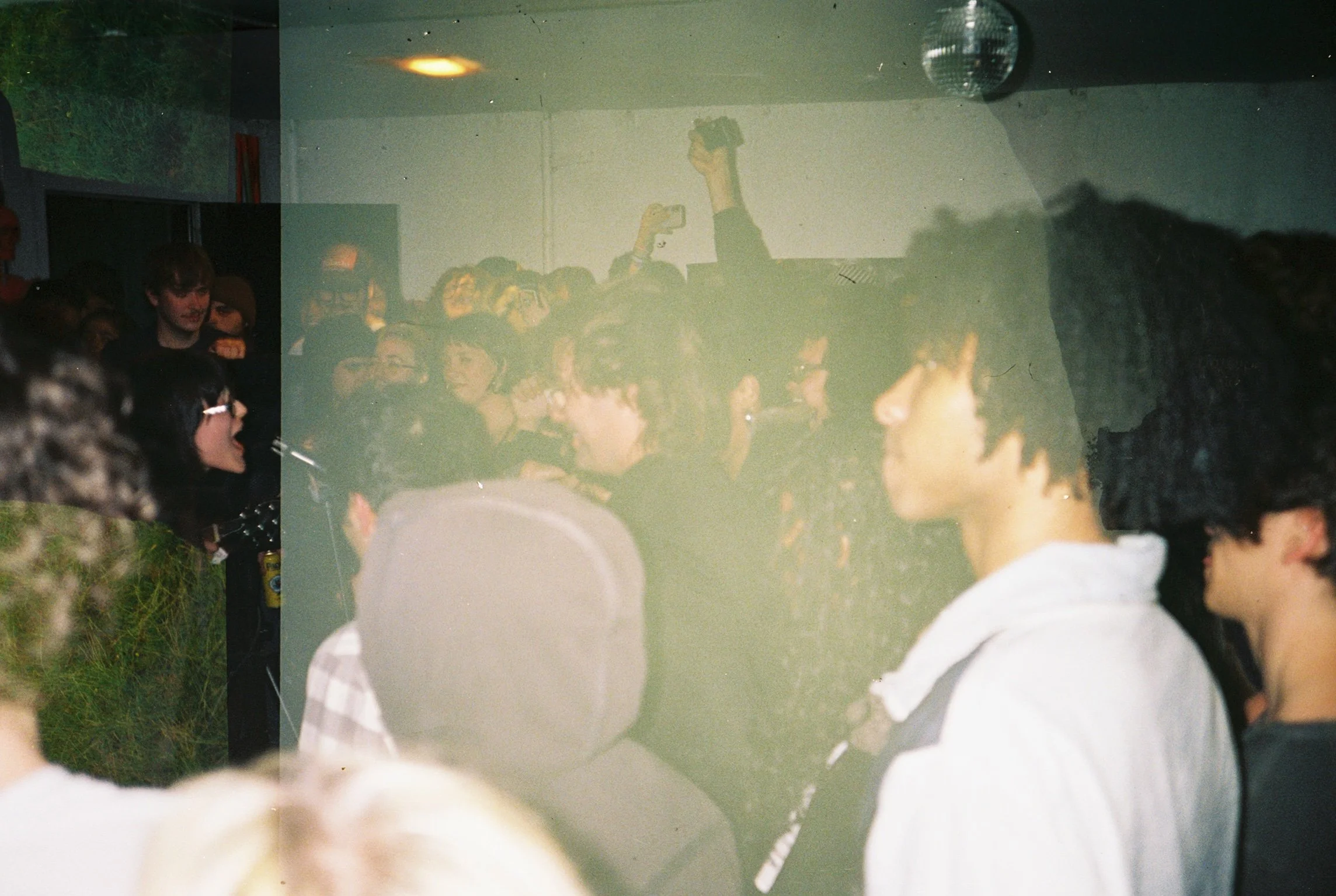
I want to be close for Holidays in United States, but I don’t want to get pitted. I test the stability of a small bench until another girl jumps on it and says, “see?” I climb up. Great view. Safe distance.
Watching Holidays feels like looking at the cool friend group from another school; listening feels like being invited in. Their set is threaded with friendship-- songs dedicated to pals in the room, the crowd arm in arm, the band singing to each other and us. They rip, striking the perfect balance between harsh sounds and stripped down, sometimes hopeful, lyrics.
They play an unreleased song and half the room already knows the words. People scream them back, bodies move with urgency. I close my eyes and I’m back in my childhood bedroom again. I open them and I’m here. The joy remains. The yearning shifts to being.
Across the room, a girl points - at the band, then towards me - mouthing, “this is all for you.” Even when I realize she’s talking to her friend, it feels transferable. Like it could be meant for anyone ready to accept it.
You can stand at the edge of a night like this and call it scene-y. You can watch it through a screen and imagine all the ways you might be lacking, or you can decide that it’s all for you; I’m glad I finally did.