Plummeting Down A Volcano On A Plastic Sled
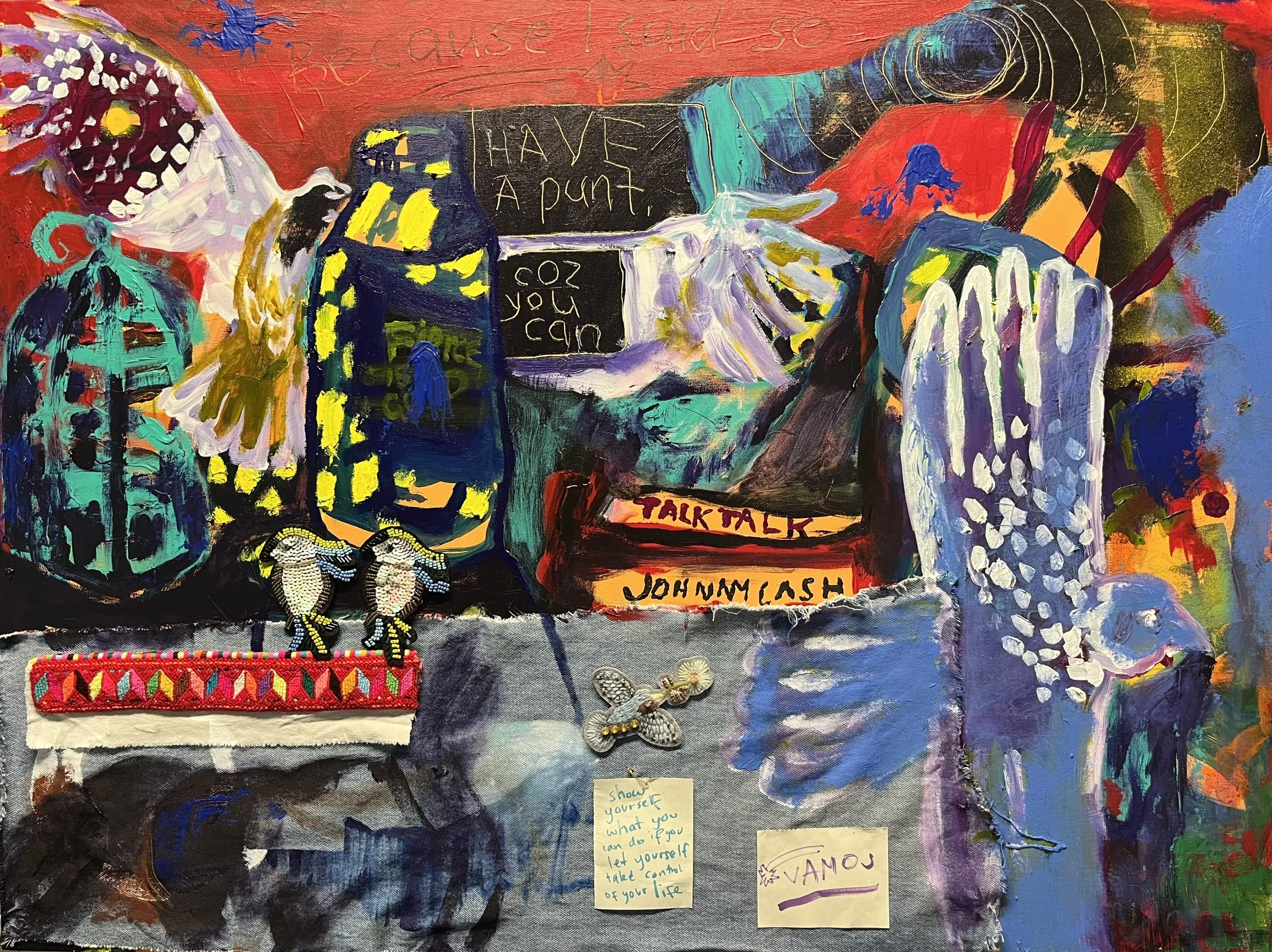
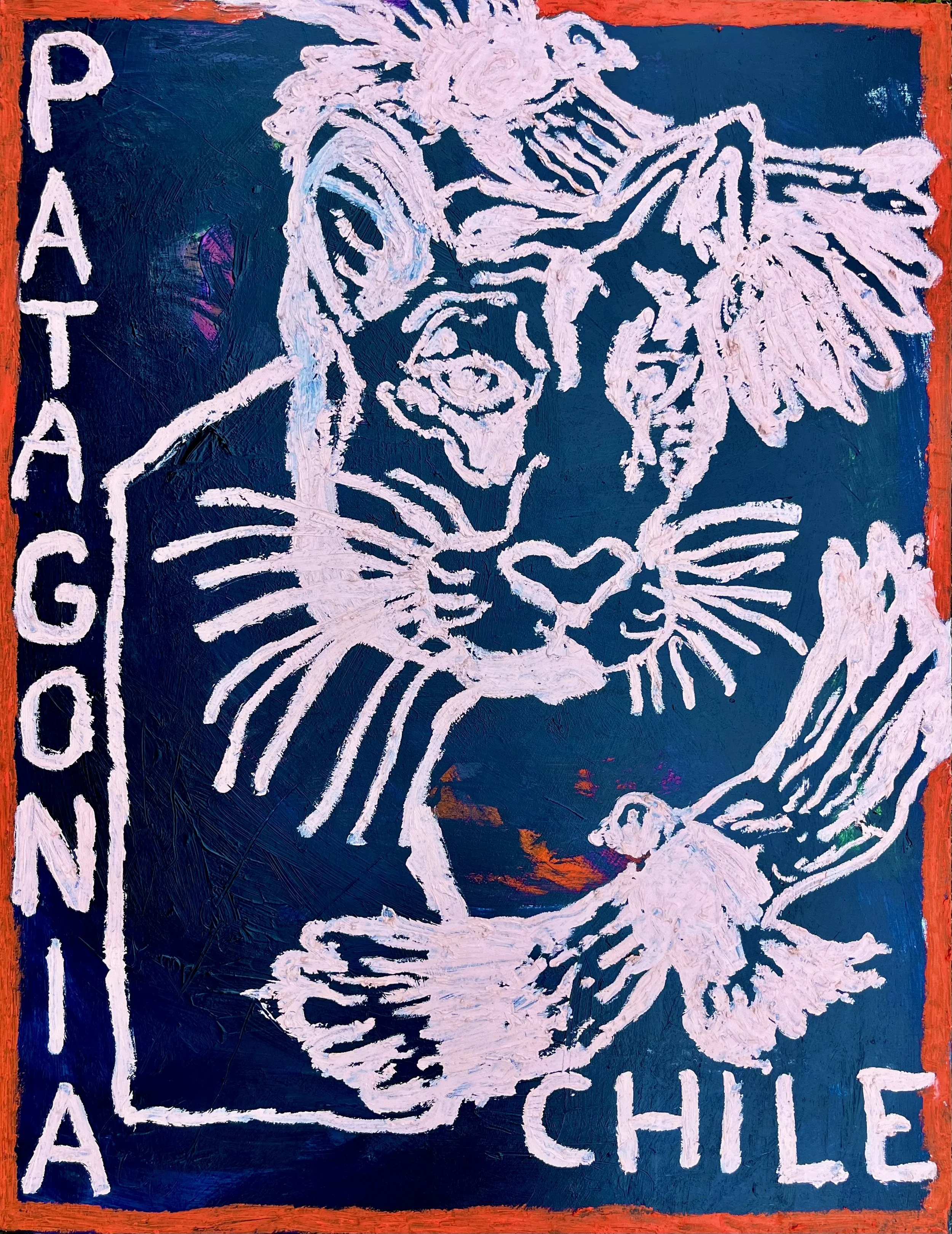
words, photography, and artwork by hayley biddulph.
Four hours into the climb, we were somewhere around two thousand metres above sea level, running on very little sleep, and a steady diet of eight-dollar steaks and undercooked broccolini.
As our Chilean guide, Osio, demonstrated how to self-arrest with an ice axe halfway up Villarica volcano, I had the very clear thought that this could all go spectacularly wrong. I was wearing crampons for the first time in my life, a helmet that made me safer than I actually was, and a gas mask because the volcano was active enough that breathing the air wasn’t technically ‘safe’. Naturally, I had Johnny Cash’s Ring of Fire playing in my head and I was gripping onto my ice axe, definitely not the way you're supposed to. It was all just unfolding in a way that was quite funny, and probably a bit dangerous.
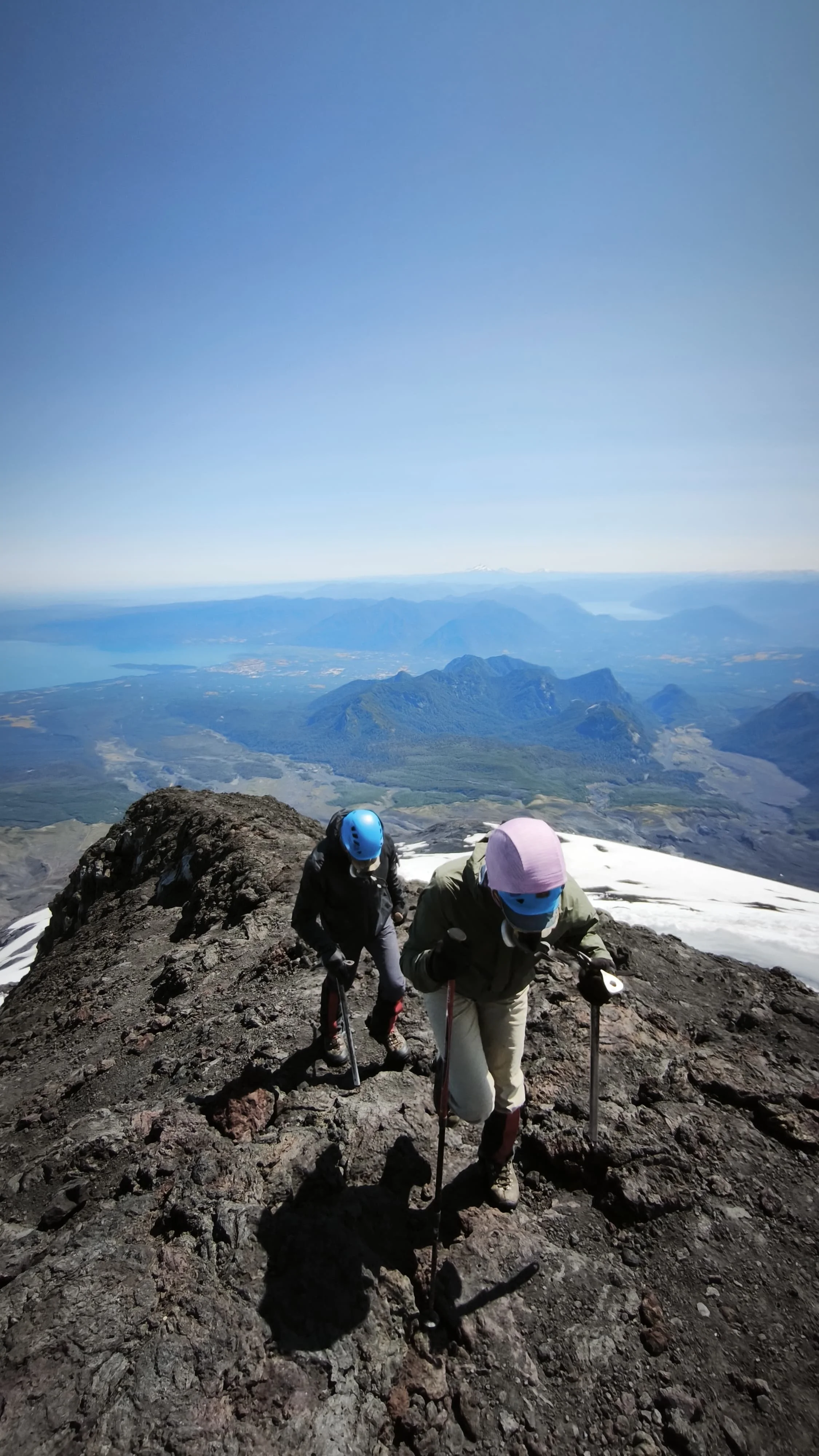
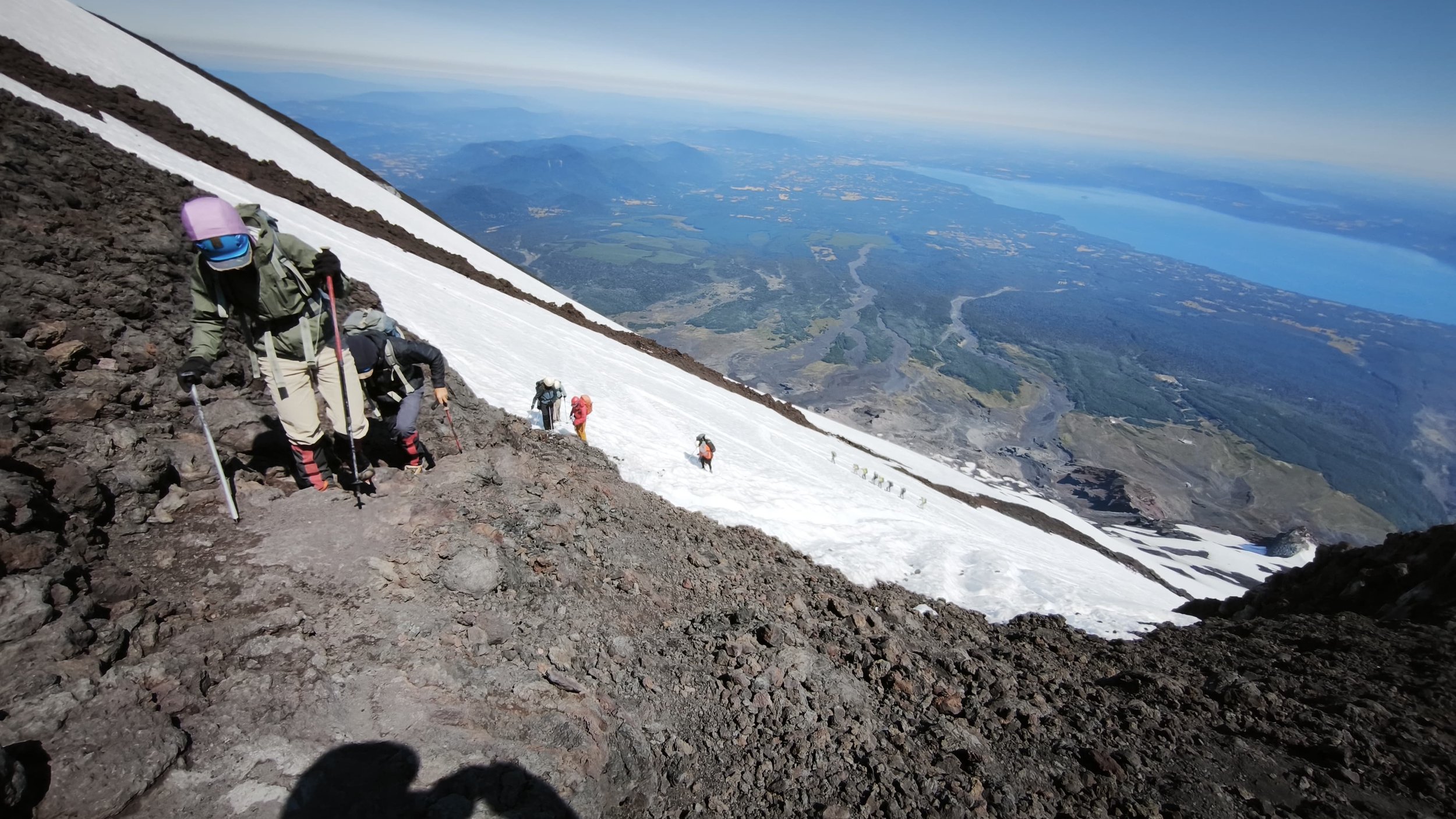
The wind had picked up so violently that I couldn’t hear the song playing in my head anymore. Every step became shorter than the last. Every zigzag got more awkward and the snow more steep. I began at that point, to think more rational thoughts: ‘What am I doing? Is this a good idea?’ Between volcanic dust, sulphur and sweat, I couldn’t tell what was making my eyes sting anymore, nor could I answer my own thought-provoking questions.
I told myself that this was going to be my last hike for a while. ‘I’m out of steam,’ I concluded. Darcy and I had spent the previous months hiking around the Americas, climbing whatever seemed sturdy enough – with bear spray, which came in handy when we wandered into a mother bear and her two cubs. For some unknown reason, the bears chose berries over us, and we came out of it unscathed. (Incredible win). They were ten metres away and hungry before hibernation. You’d think that would've concerned me, but somehow it never did. I’m not religious, but we prayed to God. We were so close to being ripped apart but it was the most beautiful thing I’ve ever seen. Things are arguably more beautiful, digestible and calmer, when you stop negotiating with fear.

Before the final push to the volcano’s crater, we dropped our heavy packs, and Osio looked at us like someone who’d seen every possible version of the mountain.
‘Many good and bad things happen,’ he said.
It sounded like advice about the climb, but it landed somewhere else.
‘I’ll tell you the bad things when we get back down.’
I laughed nervously, ‘Good idea.’
At the summit, the Andes stretched around us in every direction. The sky became deep blue, and the sun wrapped the mountains like cellophane. We walked to the crater and peered straight into the volcano’s throat. It was like a scene from Alice and Wonderland. Otherworldly. Like a forbidden place that shouldn’t exist.
There was the unmistakable smell of rotten eggs coming from the steam rolling out of fumaroles. Lava moved slowly somewhere beneath us. Wild, untamed, and so mysterious. Then came the descent.
Plastic sleds.
You spend hours clawing your way uphill with an ice axe, scared of slipping, only to throw yourself downhill on what is essentially, a child’s piece of plastic, controlling your own speed and steering with the same axe you’d just been taught could save your life.
I laughed the whole way down.
If you stripped the whole adventure back, that was the reason why I climbed the volcano in the first place; to come back down on a plastic sled. The descent was the best part. It was a joyous celebration. Sort of like the feeling when you arrive at a gig for one of your favourite artists, and the support act changes your life instead.
A couple of weeks earlier, I put on an eighteen-kilo pack and followed my friends into a Chilean valley full of pumas, for absolutely no reason that I could then or now identify. There wasn’t a waterfall on the way. No incredible viewpoint. Just a lot of trees and tree stumps that blocked too many paths. Multiple ten hour days of pure exhaustion, trying to locate a lake that one of us found on Google Maps. It’s safe to say, I didn’t really enjoy it. (And I normally enjoy everything, even standing in line at a post office).
Later, trying to make sense of why I’d willingly done it, I saw a handwritten note taped to the bathroom wall of a cafe in Pucón.
‘To have a rich, sexy, full life, you need fifty per cent fuck off and fifty per cent this is good. Life is balance.’
The puma hike could definitely fuck off.
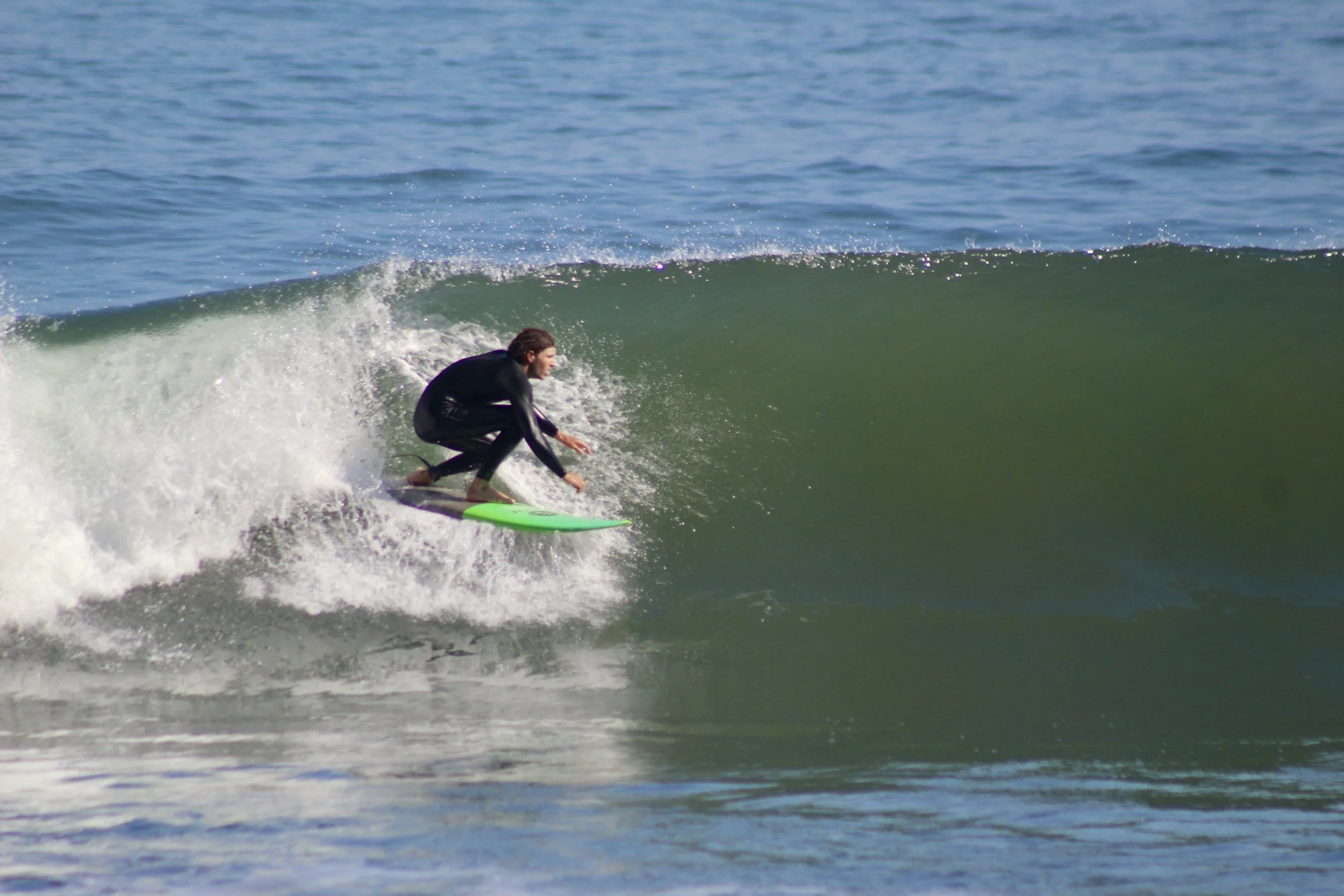
Sitting outside the rooftop tent a few days later with a beautiful river running beside our car, and Villarrica in the distance, I felt accomplished. I looked around where we had set up camp: there were piles of asbestos laying on top of the dirt, someone’s abandoned underwear hanging off a tree, and a local had casually mentioned there were hitmen who just left half a body on the airport strip.
How’s that for balance?
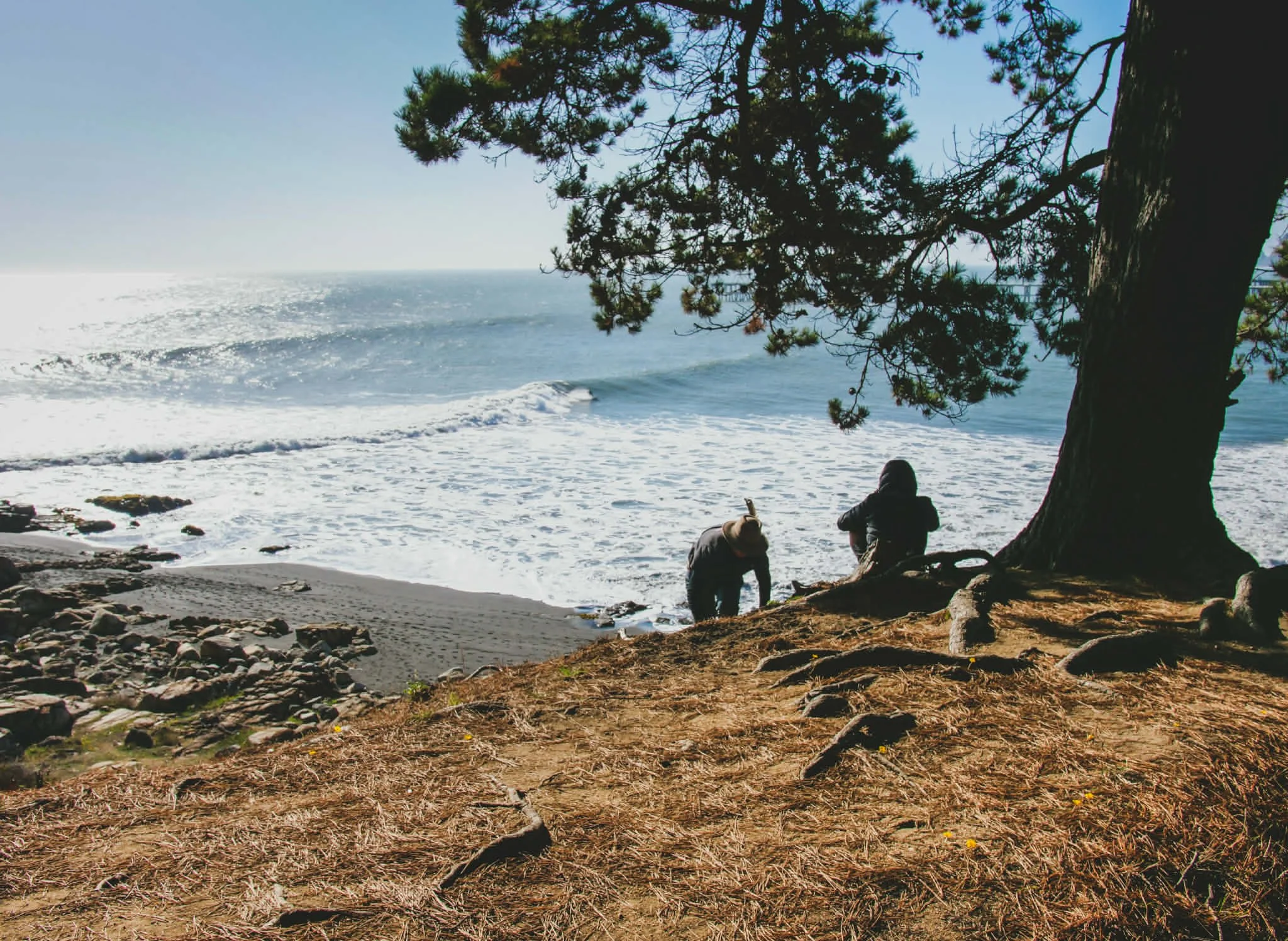
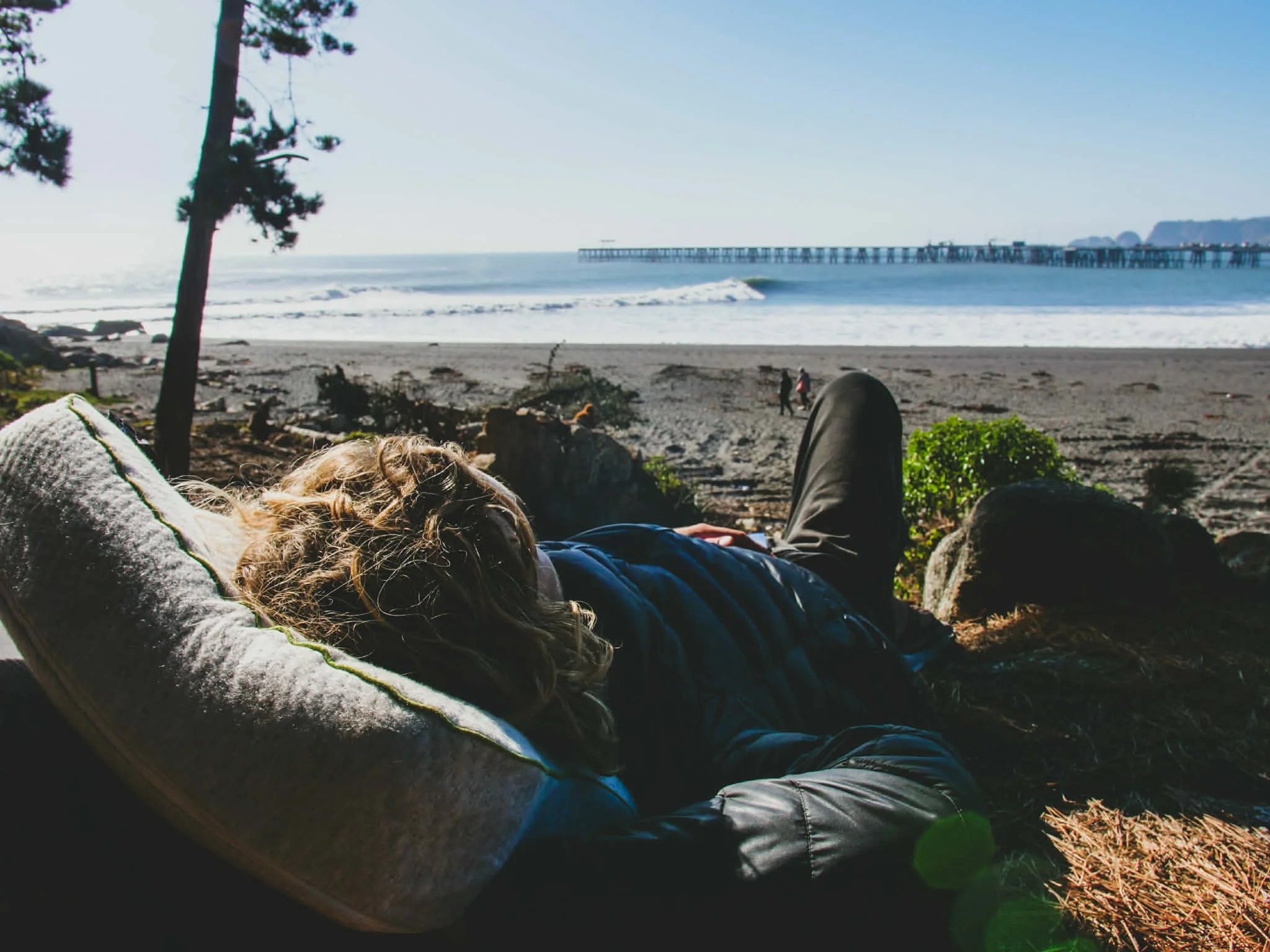
We eventually drifted toward the coast and ended up in a place called Maguillines. Fat sea lions reeked of fish. Ceviche was fresh. Crab limbs got tangled in my hair every time I went for a surf.
The beach wasn’t perfect. There was a load of plastic along the outskirts. The water was almost unbearably cold. Half-naked locals stood around bonfires blasting reggaeton until four in the morning. Still, people lived there, in the bushes and behind big trees.
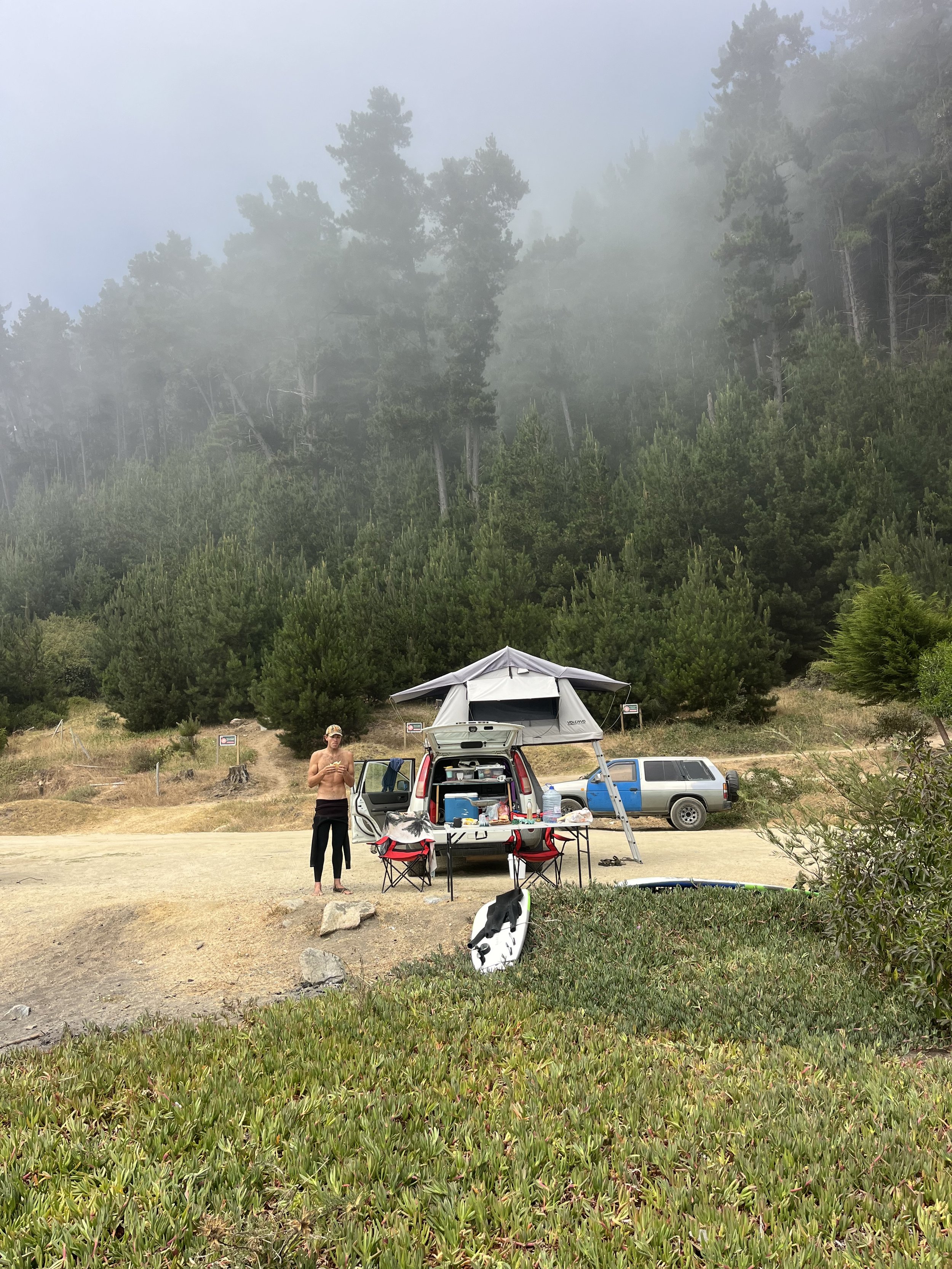
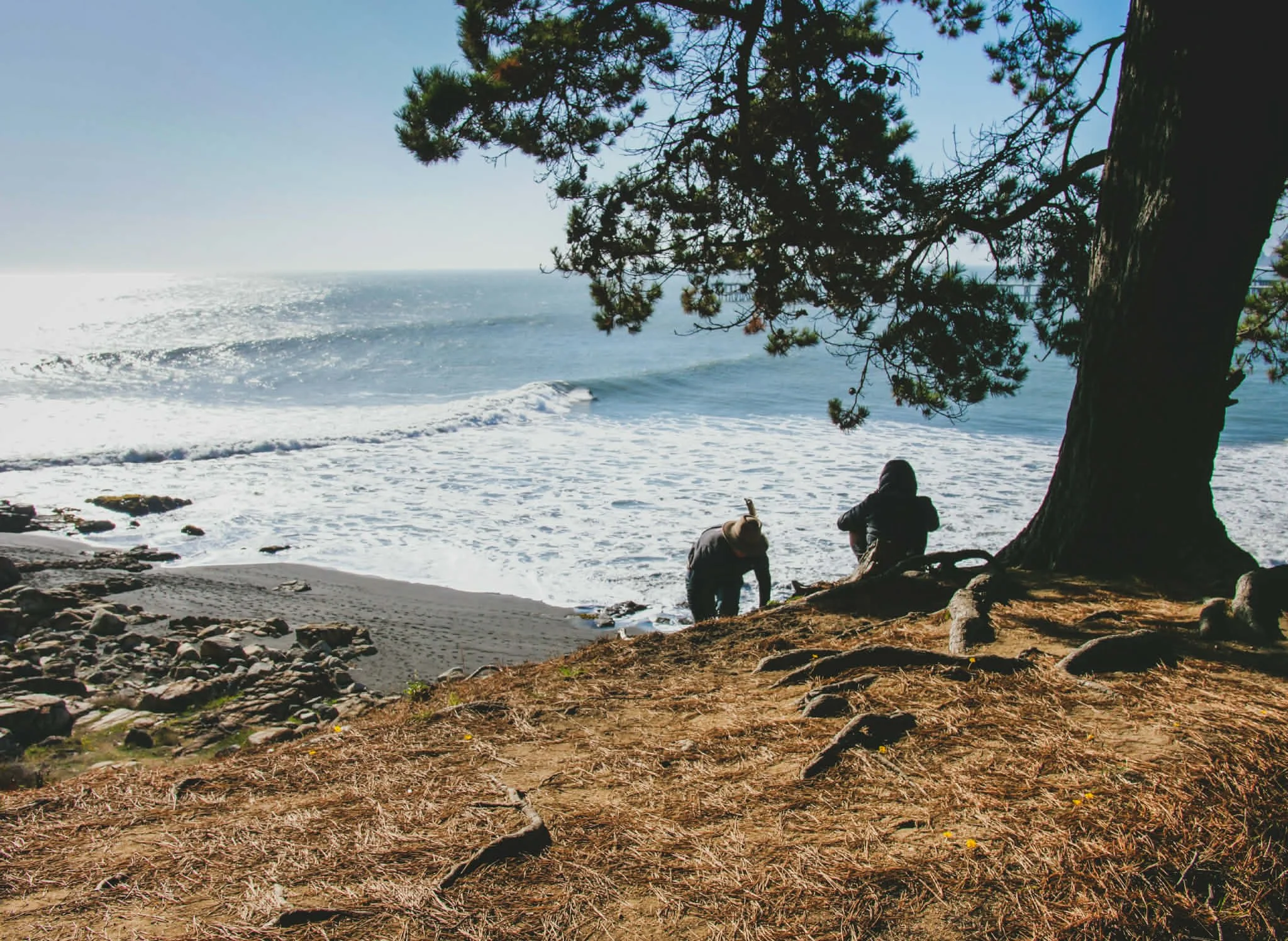
The surf was always good, and the people who floated around the area were transfixed on one thing: the waves. We made friends. Chilean families gave us enormous dulce de leche cakes. Old couples insisted we take hot water. It was a nice neighbouring system, and slowly, I found out that one surf can change your entire perspective.
I started to have fond memories of the hike through the valley that I hated, and I realised that climbing that active volcano was a big achievement.
Something about sitting in cold water full of crab limbs, surrounded by other people who were also content with sitting in cold water full of crab limbs, created a sort of unity. Although we didn’t speak each other’s language, we had found paradise, maybe a refuge for a while.
You know the lyrics, ‘Where’d all the good people go?’ by Jack Johnson. They were all here, bobbing up and down in the water. My personal favourite was a fisherman called Boris. He wandered the rocks every afternoon at the exact same time, wearing the exact same outfit, with the exact same smile, carrying an esky that was full of beers, not just-caught fish. He taught me how to sort out the edible seaweed on the sand from the non-edible seaweed. Together, we ate fresh seaweed most afternoons on the beach.
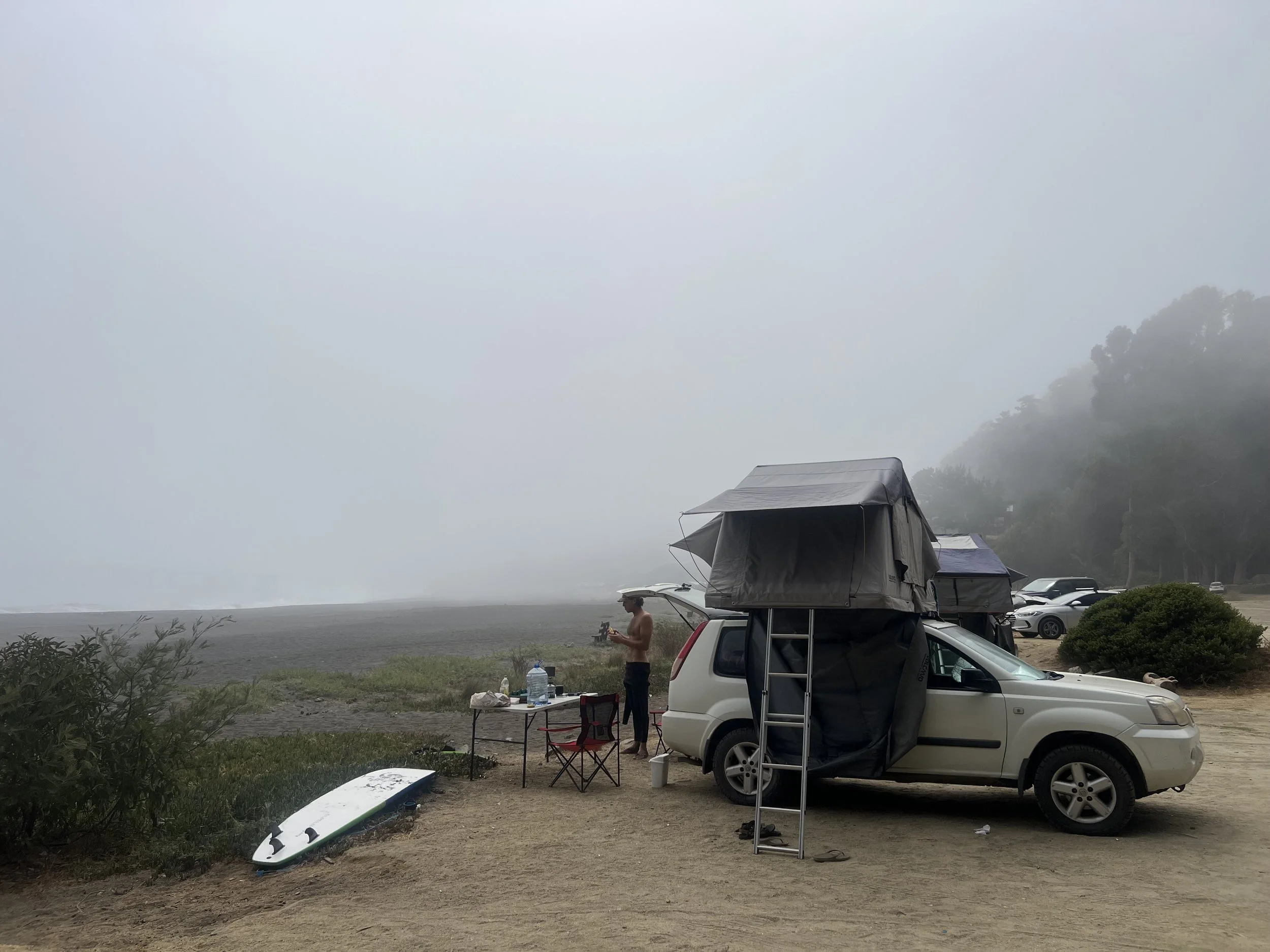
On our last night, as we suffered the impenetrable loudness of reggaeton from our tent, I noticed Boris in the car park, trudging back to wherever he was destined to rest his head. He looked up at us, made the sign of the cross across his chest, kissed his fingertips and blessed us from a distance, over and over, before we lost him to the night air.
I glanced next to our neighbours beside us: three eighty-year-olds crammed in the back-seat of their Hilux van sitting in a cloud of cigarette smoke, playing Candy Crush full volume. ‘Go to bed, you crazy old people.’ I thought. It was one in the morning.
The imperfectness of that night, was actually pure magic. People just letting loose. Candy Crush and all.
People ask what the key to life is. Maybe the answer was on that handwritten note taped to the bathroom wall of that cafe in Pucón. Or maybe there’s no key at all, you’ve got to shove the door open, full throttle. See what’s on the other side. Whether that be on a stupidly long puma hike, sifting through seaweed with a guy named Boris, or staring directly into a volcano’s throat.
It’s funny how good and bad things are usually happening at exactly the same time. The trick is to not avoid either one.