
Author Jamie Fisher On New Elliott Smith Biography, ‘Nobody Broke Your Heart’
Photos provided by Jamie Fisher.
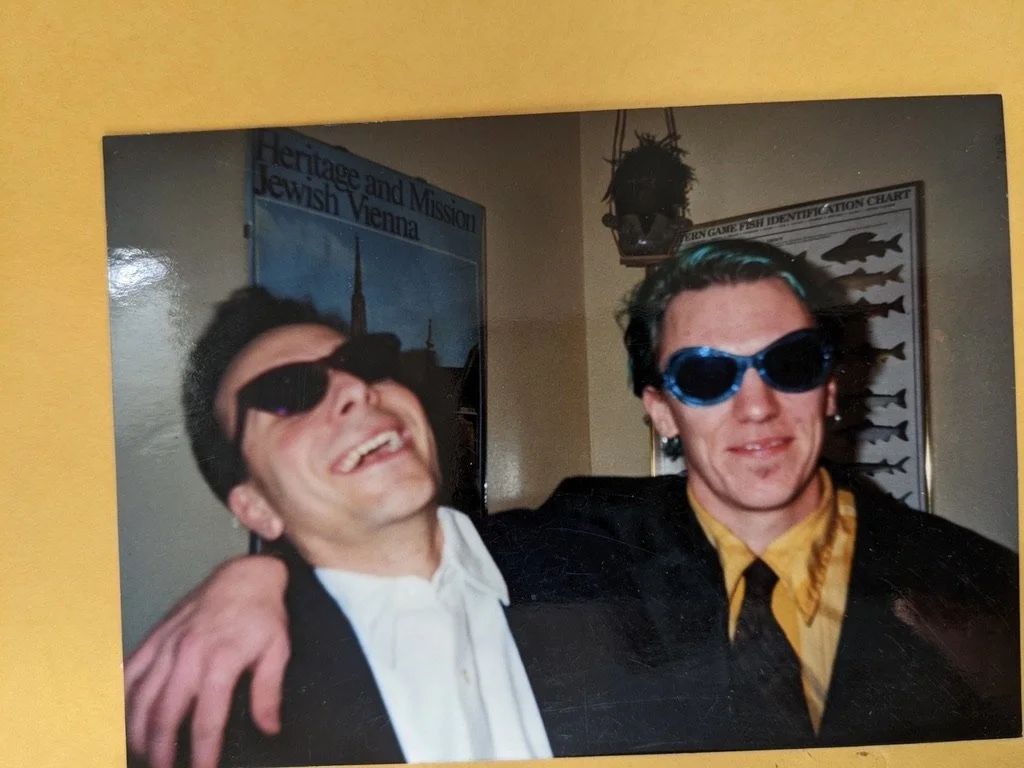
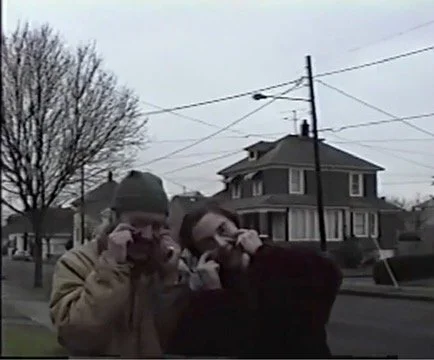
‘Elliott and his friend Garrick Duckler in the early nineties.’
There is a video of the Jon Brion show, where Elliott Smith is the guest.
It is a video that is spent meandering through many of Elliott’s songs, performing versions of them live together. It is beautiful. They are friends. They make their way through songs like ‘Everything Means Nothing To Me,’ and ‘Son of Sam’, among many others, Brion accompanying him as best he can. The two endeavor to cover a few of Elliott’s favorites, like The Kinks’ ‘Waterloo Sunset’, and John Lennon’s insecure classic, ‘Jealous Guy’. The songs are ill-prepared, and at times, almost improvisational.
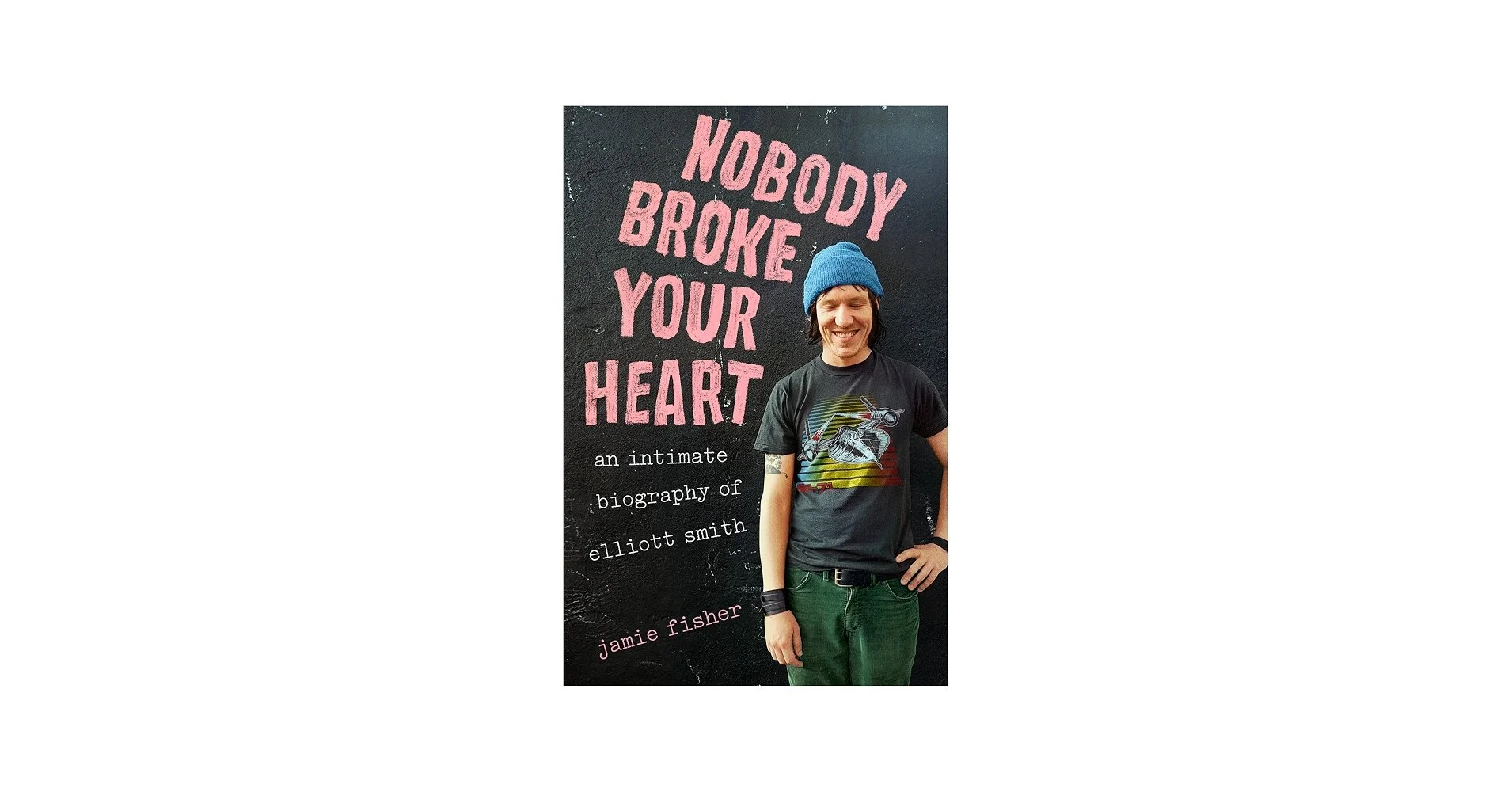
At the start of ‘Jealous Guy’, Jon asks if Elliott is ready, before laughing and saying, ‘by the looks of things, no, but I’m going to force you to play it.’ Elliott plays and sings the first measure, but stops himself, saying, ‘I’ve gotta start over, sorry, if it doesn’t start right…’. There are smiles and laughs from the crew. There is a deep sincerity in Elliott’s words and expressions. He isn’t stopping because it is imperfect - the rendition sounded lovely by my ears and surely by Jon Brion’s - but rather that it didn’t feel right to him. Elliott wanted it to be just right, otherwise it’d bug him. He cared deeply about what he put out, what he created, and his friends. The new book, Nobody Broke Your Heart, by Jamie Fisher, is a biography of Elliott’s life that explores that care, what he created, his friends, and what they all mean together.
The title is a reference to a lyric in the song, ‘Alameda’, a much beloved track from Elliott’s 1997 album, Either/Or. This was Elliott’s third album, and one which has inspired much devotion among his fan base. How much devotion? It is this writer’s favorite album, proven by the tattoo on my right arm. The album is deeply listenable but not in an easy way. It is not easy listening, it is deeply affective listening. Tracks like ‘Alameda’ and ‘Between the Bars’ are compelling and undeniable like a riddle your given the answer to, and as Jamie fisher would attest, they reward repeat listening.
I have been trying to describe the importance of this music for the sake of this introduction so as to try and articulate a context for someone who may not understand or be familiar with Elliott Smith’s music, and have not been able to. I asked another fan, Skyler Knapp of Been Stellar why he likes his music and why it is worth caring about. He replied, ‘it's like tapping into a different frequency of the world… everything is there exactly because it needs to be. He points at the obvious that everyone looks past and goes, ‘take a peek here, that’s pretty crazy, right?’ When my life feels difficult, his music tells me that I’m only looking at a a pinhole of the picture.’
Myself, I feel that his music makes me feel singular and attested for, as though I’m being spoken to by a friend, and that friend is telling about all of the things that are felt - hatred, angst, love, euphoria, indecency, betrayal, earnestness, and softness - between us, and explained in a way that is both understood and also relinquishing; that those feelings exist plainly, but that no one will overtake another, and that in the end, everything will be alright. Twenty three years after his death, Elliott Smith is more present in the lives of his fans than ever.
Pre-order the book, here.
Where abouts are you?
I am in Portland [Oregon].
Oh, was that for research purposes?
I ended up moving here partly for that. I had lived in New York for ten years and just wanted to be somewhere different. It was really convenient to finish the book here, but it wasn’t the only reason I ended up here.
Do you find that it’s hard to conduct research on this? You’re working in sort of a strange spot technology wise where things were both so and incredibly not documented.
It’s been very difficult. There actually isn’t a ton available. When I got started I thought that there must be a written archive, and there is none. He would sometimes make things up during interviews. I ended up needing to just sort of reconstruct his life largely through oral history, by talking to people who were there. I ended up talking to a hundred and forty people, and that's just the number that I was able to talk to. The number of unanswered queries or people that I couldn’t find is much higher than that. I enjoyed it too, though, because reading documents is never as exciting as getting to talk to someone about their memories.
Do you have a favorite thing that he’s made up in an interview?
Yeah! He told Rolling Stone that he used to get into fights as a kid and he touches his nose and says how it's probably been broken more than once, and it's like, that’s an unbroken nose.
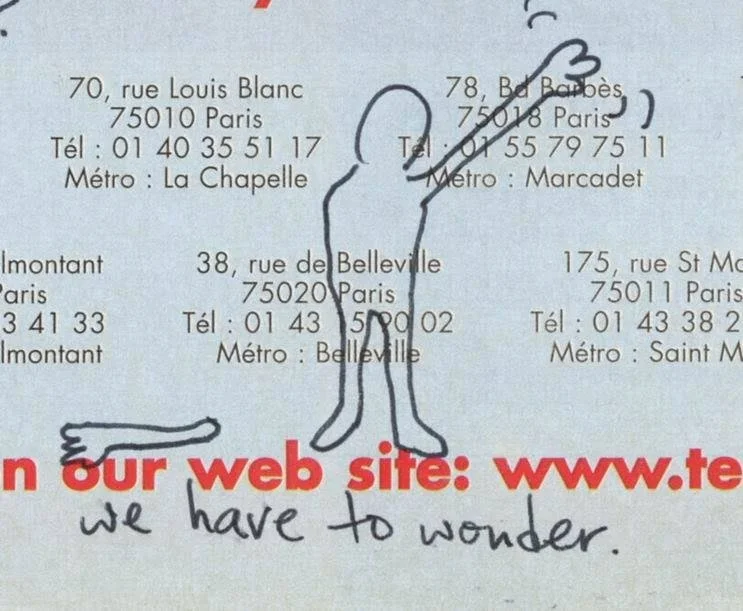
‘One of the doodles Elliott made on a receipt in Paris in 1999, which Béatrice kept’
People tend to make themselves sound better, or their memories will alter. Because you are speaking to so many people, how do you navigate the truthfulness or reliability of oral testimony?
It actually is kind of obvious when someone is trying to make themselves sound better, because if you talk to enough people, you know who’s an honest reporter and who is not. If I heard conflicting accounts of the same tour, for example, I reported that. There’s a tour that he went on in 1997 where there were three people present who had completely different memories of how he was doing on that tour. Something else that I found interesting was that on the Figure 8 tour, I talked to one member of his band who was like, ‘he wasn’t doing drugs on that tour,’ and then I talked to someone on the same bus who was like, ‘yeah he would only do drugs in front of me.’
Are you leaving it to the reader to determine? Or are you seeing it as more of a dimension of a person?
I think a bit of both. They say report the controversy. If I heard something that was patently ridiculous, I wouldn’t report it, but in the case of the story from the Figure 8 tour, that’s a great example of why it was a benefit to talk to so many people, because he showed different sides to different people. He did get involved with drugs on that tour, it's just that he wasn’t comfortable revealing that to everyone, not because he didn’t trust those people necessarily. I think that Shon Sullivan said that it was either because he was close enough or far away enough from Elliott that it felt okay.
Do you feel any strangeness in how much you are getting to know this person very intimately and developing a closeness with someone you’ve never met?
Yeah, sure, because you do start to kind of want an answer from the void in some way. I had started figuring out what his email addresses had been. Someone would remember, or I would happen to see a document that had his old Hotmail address. It was kind of irresistible to write to it and say something like, ‘hey, I’m doing the best that I can for you,’ and I knew that it would bounce back, and when it did bounce back, it hurt.
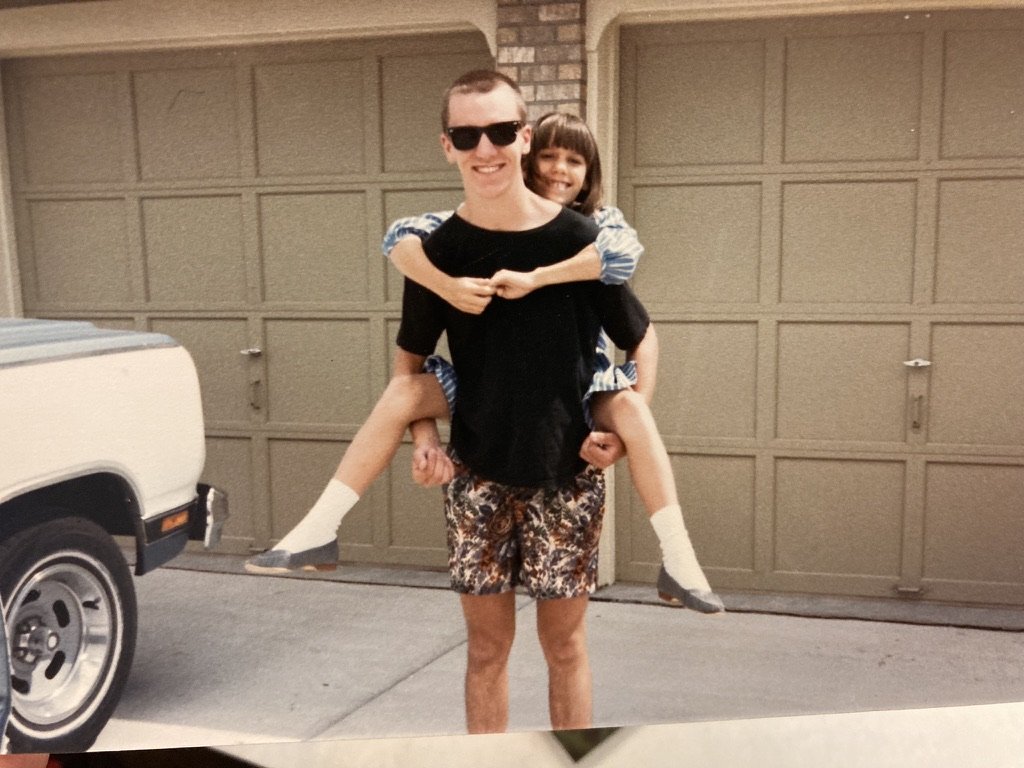
‘Elliott and his sister Ashley Welch, from the mid-eighties--I took this photo when we were going over her collection in person’
It’s interesting to me that that was the content of that email. How much are you personalizing this topic as you work on this book?
You know, I am in the book. It's a blend of biography and different techniques that you might find in profile writing which is describing for example what it is like to sit down in a room with a person. Part of the reason that I’m in it is because you need to see both sides of a conversation in order to understand what the person is responding to and to create the scene. I didn’t want this to be a book of talking heads who get one quote and then I very expertly sum up their experience as if I know everything. This is a book about lives that intersect, rather than one life with a few talking heads thrown in.
Another reason that I got involved in this book is because there are conflicting narratives, and sometimes you do need to come in and say that there isn’t one answer on this. Sometimes, with the harder parts of his life, I did come in to explain that there is a lot that I heard that didn’t make it into the book because I didn’t want it to be exploitative. Because something might be true, isn’t always enough of a reason to include it. The last years of his life were extremely difficult, and there is a version of this book that is much longer and goes into all of that, but the level of detail in that version would be too much ultimately. There’s a way to paint a picture at more of a distance that is still true, and doesn’t feel exploitative.
In the Q+A you did previously, you talked about how agents had told you that you ought to write something like this, and so I’m curious if your goals in this project had changed over time and from what to what?
When I said I wrote the email about trying to do my best for him, I had started working on the book because I had realized that I had some insight into who he was even from the distance of listening to his concert bootlegs and his music, that I didn’t see reflected in the books that were out there. I realized that those books were incomplete, and didn’t involve that many people, partly because it was really raw - even now it is still raw - so there was more that could be done.
At first, I thought that I wanted to fix this for him and his family, and as I spoke to more and more people, I began to feel that I was doing this for everybody. There are so many people who have had these very meaningful relationships with him and have never seen that reflected in the story of his life. It became something that I felt that I was trying to do for everyone. I’m not very good at doing things for myself. The book was so much work, that if I were just doing it for money or something, I would not have been able to do it, I would have given up. But now, there is this sense that it's a shame how there is this person who was so incredibly gifted and smart and difficult, and there isn’t a record that really resembles him.
Apart from obvious contrasts of reality and expose type things, what has been the most revealing thing that you’ve discovered? What has clicked for you?
There were a lot of small and specific moments that I would have when speaking to people where I’d be like, ‘oh, that’s who he is.’ I was talking to Jason Mitchell for the book, and we were at a dinner party together a few weeks ago, and he mentioned that he and Elliott would come up with obscene parody lyrics, and he started reciting the ones that they wrote for ‘Drift Away’, and I was just dying. He’s kind of an unsung Weird Al. There was another moment that happened maybe a month or two into the book, his friend remembered that his high school band was playing a party in someone’s basement and the neighbor had called the police because of the noise level. When the police arrived, Elliott was playing a punk rock rendition of the Sesame Street theme song. There were a lot of small things that built up rather than one single momentous thing.
‘Elliott and his girlfriend JJ Gonson in the spring of 1994--a still from a home movie’
I have an Elliott Smith tattoo, I know others who have the same. His music inspires such devotion and obsession, why do you suppose that is?
I think that there are a few things at work. One of them is that he was just so skilled both as a constructor of songs and as a producer that he made these albums that are addictive. A couple of people told me that their first experience with songs off of Either/Or, was sitting in the car and starting it over again while parked. His A&R executive at DreamWorks had a similar experience with the self-titled album. Another thing is that the songs are not autobiographical, but they are honest.
What do you think that that distinction is?
There’s that quote about poetry being imaginary gardens with real toads in them. The emotions are honest and real even though the situations aren’t. One of the things that surprised me is that there are all of these references in the songs to a mother smoking; his mom never smoked. The exact details, whatever people think, no matter how specific and evocative they are, aren’t necessarily true. One of his friends told me that his singing voice is like his speaking voice; there’s this honesty in it that just feels like someone having a conversation with you, very personal. For me, I’m one of those people who likes music and so I think I should learn the lyrics and if the lyrics are kind of half-assed, it's deflating. He rewards repeat listening. He thought a lot about everything. There’s this song that I'm dying to hear that’s basically finished but unreleased that he took off of XO because he didn’t like how he used the word ‘the’. He thought a lot and would hold onto songs for years and years until they were ready.
My favorite song by him is ‘Clementine’, which is a very simple song.
I had a few experiences with people where we were just finishing the lyrics for each other.
It’s such a simple, precise, almost haiku-esque song.
It’s so good.
Are there comparisons that you’re trying to make in the book? Are you approaching this as like, ‘he’s a bit of a Lord Byron’?
It’s interesting because he tends to get compared to certain people but not others. Kurt Cobain, Sylvia Plath. They don’t talk about Mozart, who was only a year older when he died. They don’t talk about Elizabeth Bishop who would hold onto poems for years and years and was very much a craftsman in that way. The other thing I was really conscious of was that Elliott hated comparisons, and he hated genres, and would hate it when people compared him to other people or artists to artists. He just thought it was this lazy shorthand instead of actually thinking about what something really is.
So you try to avoid that?
I tried to avoid shorthand like that. I mentioned someone like Bishop for example, just to try and widen the lens. People put him in one box, but they could just as well put him in another. He hated boxes, but it’s worth thinking about the definition of the box.
You mentioned that you were at a dinner party with some of his friends. Has this become your personal life? What have you gained from this project?
It’s not everyone, because people are as open as they want to be, but there are some of his friends who I feel close to now. I was texting his friend Josh - ‘Independence Day’ is about Josh - and we’ll wish each other love and stuff like that. There’s a woman that he fell in love with in Paris named Beatrice whom I correspond with and I hope will stay in touch. It’s made my life richer. I think that kind of naturally, there’s a stage at the beginning where you think about the people that you’re talking to as proxies for Elliott, like a way to hear back from the void. I remember early on telling one of his friends about how much ‘Christian Brothers’ means to me, and I was telling him because I couldn’t tell Elliott. At a certain point people just become who they are - they’re not stand-ins anymore.