
Stories from Elsewhere
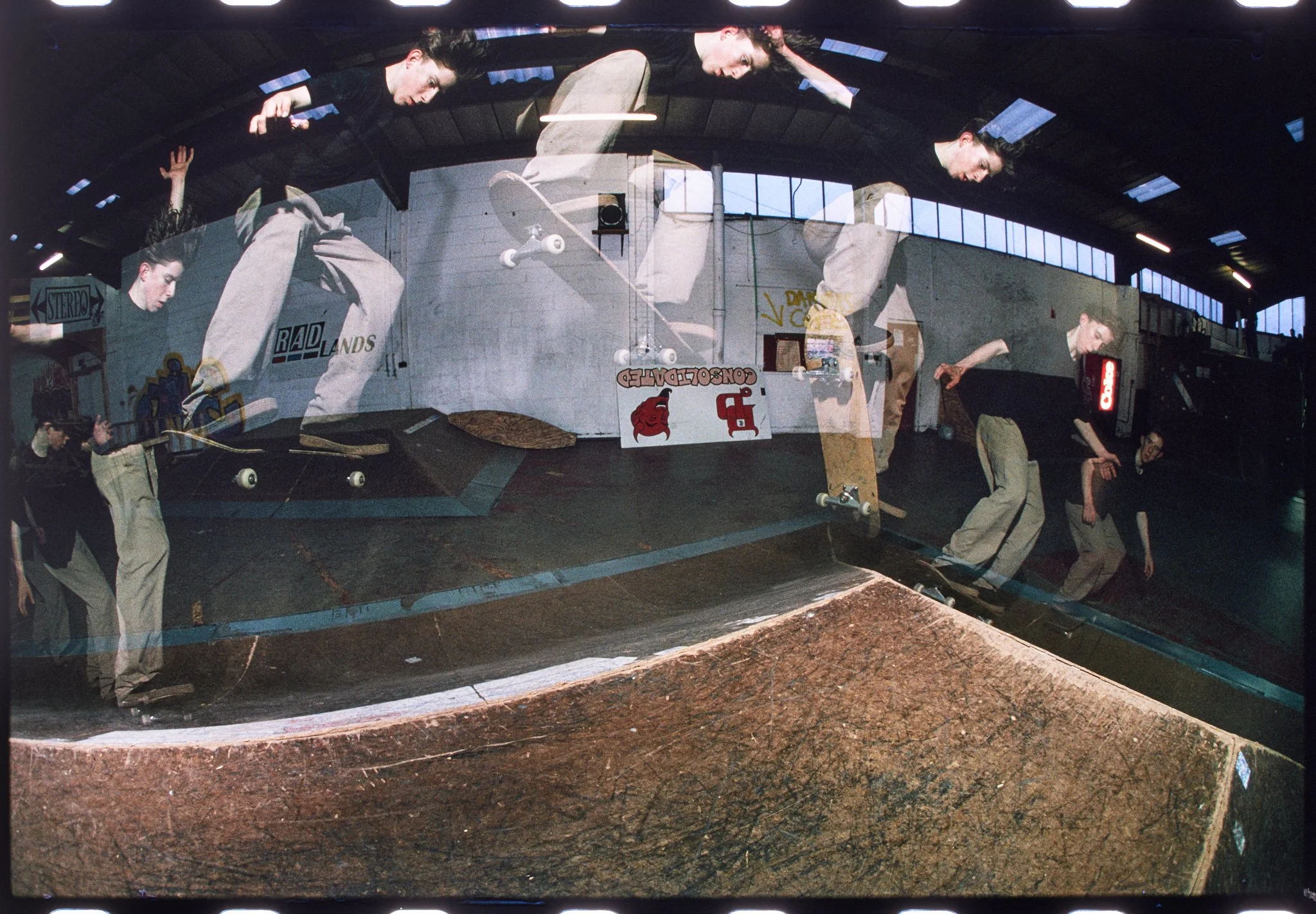
Photos provided by Neil Macdonald and were taken by Wig Worland, Nick Hamilton, Corin Casey, James Hudson, and Neil Macdonald.
Neil Macdonald is a skateboarding archivist, journalist, and writer, who has contributed to most major UK skateboarding publications and, through his Instagram account @scienceversuslife, curates a tasteful archive of mostly UK skateboarding photographs.
And now, he’s spent the last six years compiling photographs and conducting hundreds of hours of interviews to make Elsewhere, a 464-page book that chronologically tells the story of UK skateboarding from 1987 to 2002 by the people who were in it. Covering everything that happened in those fifteen years, from the shops to magazines, videos, brands, skateboarders, backyard ramps, who was doing what where, and so much more.
Speaking to nearly everyone from hometown heroes to skateboarding's most influential figures, he was able to do something essentially no one gets a chance to do: completely cross-reference stories, uncovering the ins and outs of the drama, strange happenings and funny events from all sides. Knowing that, I got Neil on the phone to talk about some of his favourite stories he learned while working on the book.
Elsewhere: The Story of UK Skateboarding, 1987 - 2002 is out now, published by Batsford Books.
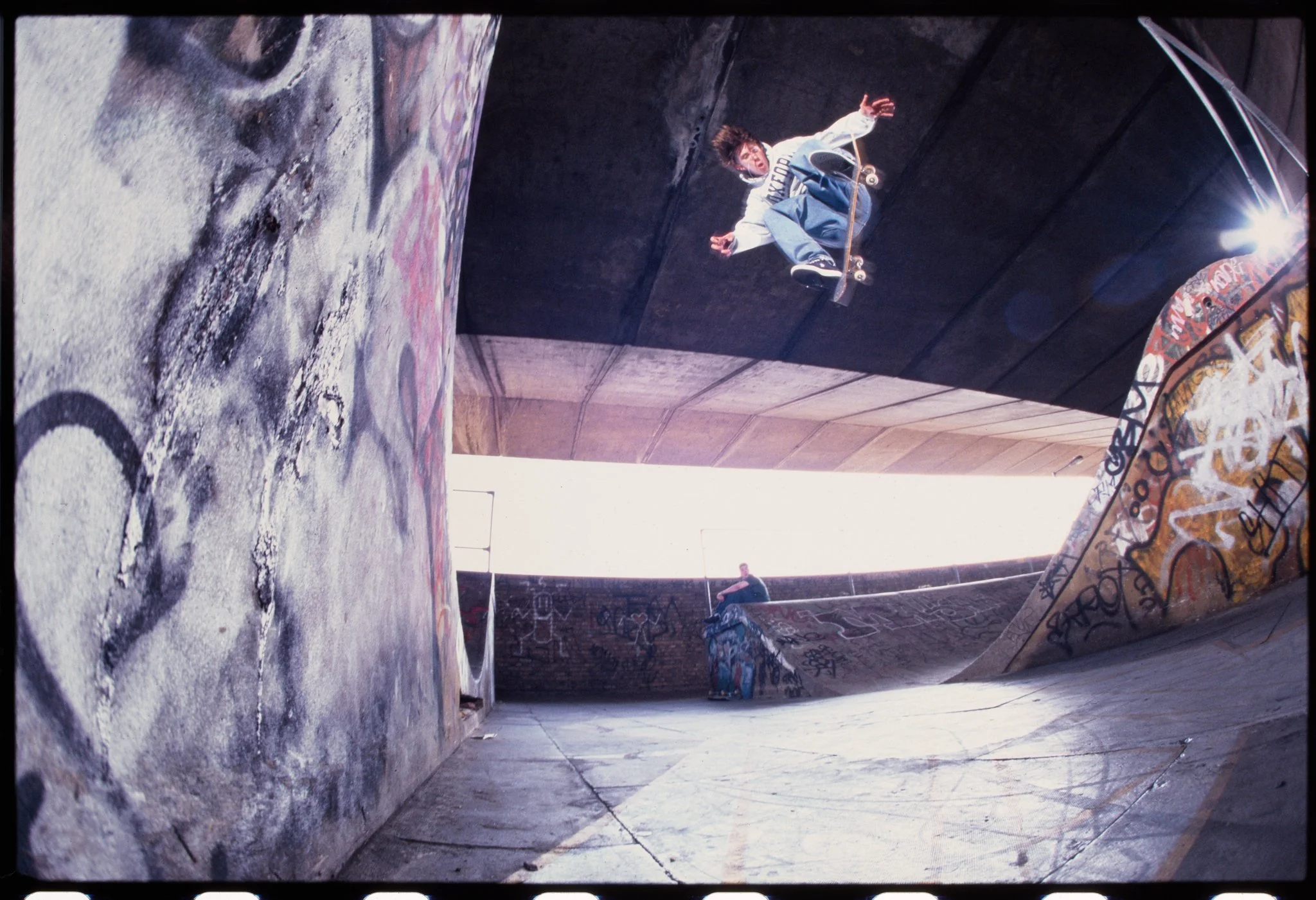
Kevin Parrot and Ian Deacon had spoken to Tom about the book and explained its intention. Tom isn’t interested in talking to the skate press, but he understood that a lot of his friends were involved in the book, and it was about UK stuff that didn’t have to do with Huntington Beach or anything like that, so he was down. He doesn’t have a phone, so he has to use other people's phones. One night, I was at my local pub having a pint, and Deacon phoned saying, ‘I’m with Tom right now, we’re not doing anything for forty-five minutes if you want to jump on.’ I ran home, got set up and jumped on the call.
Tom answered everything I wanted to talk about. I don’t think people would expect Tom to be as eloquent as he is because people know what his accent is like, and when you point a video camera at him, he doesn’t really want to talk, so he’s not going to say much. But, if you’re talking about being twelve years old in Abington in Oxfordshire, he’s got so much to say.
One of my favourite things he said was how nervous he was to go to Alex Moul’s house, because he had a mini ramp and Alex was the local and national superstar. Alex could truly do things that were inconceivable to anyone else. He was doing 540 one-foots on mini ramps really early on. To have Tom Penny talk about how nervous he was to walk up Alex Moul’s driveway to skate his mini ramp because Alex is a superstar is brilliant. It’s like the best skateboarder ever was like, ‘Alex Moul is the guy.’ Similarly, Geoff Rowley talks about the first time he skated with Alex, and he says that he could sort of lock into backside noseblunts, but Alex could lock in, slide six feet and bigspin out at the end. I showed that to Alex on Saturday, and he had tears in his eyes. It was nice hearing that the top guys want to talk about the next guy along; there is a lot of love in the book.
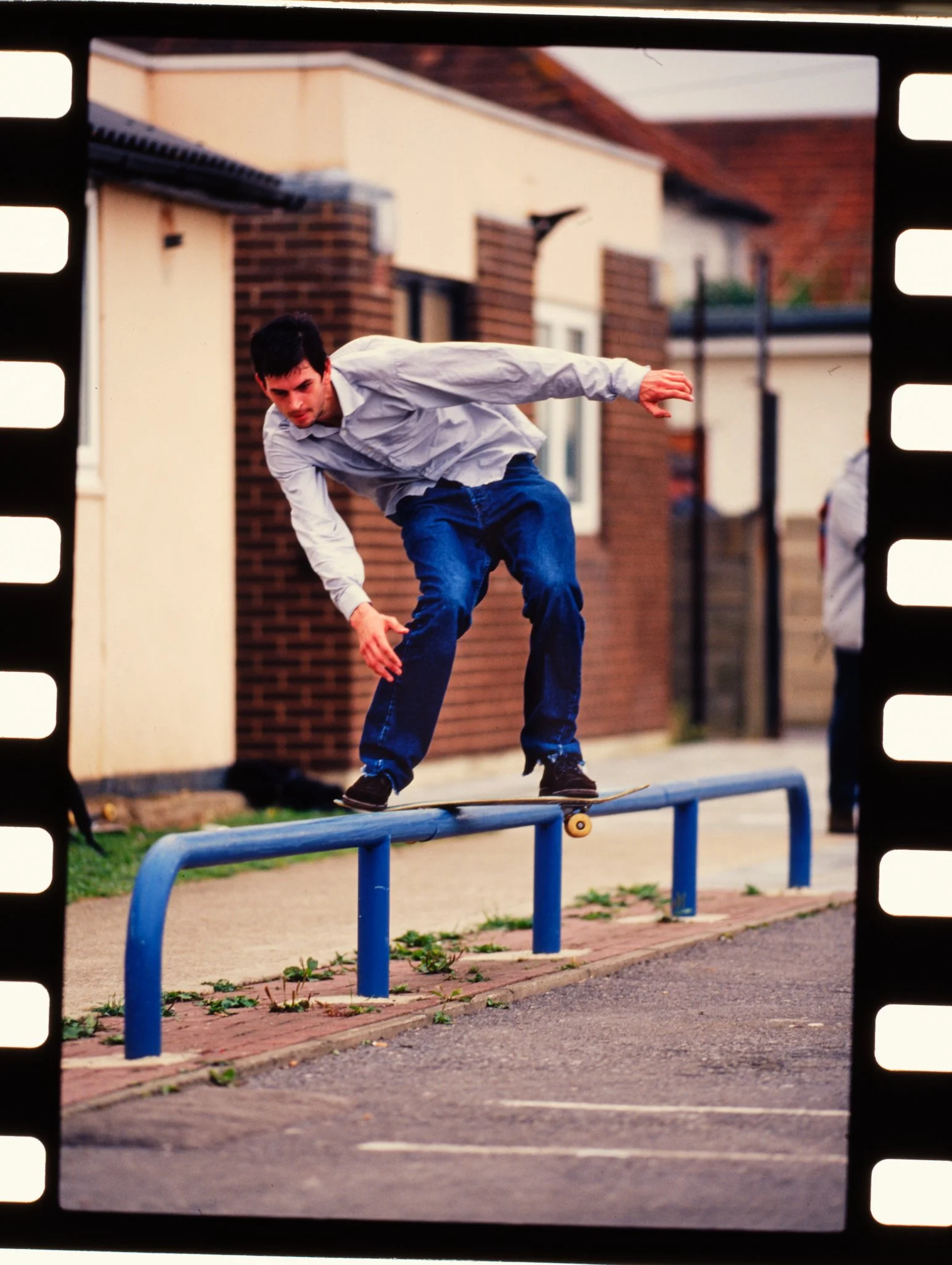
Jonny Robson, who wrote for Sidewalk Magazine, had only a few skate photos and a couple of mentions in the magazine. He had a lot to do with the magazine starting, and Ben Powell said, ‘If Jonny wasn’t into taking drugs and shagging girls, he could’ve edited that magazine.’ Jonny also started Unabomber, and Pete Hellicar said, ‘If Jonny wasn’t into taking drugs and shagging girls, he could’ve made Unabomber this massive thing.’
He convinced Paul Haynes of Rollersnakes to start a skateboard company. Jonny approached him with the idea, and Paul basically said, ‘Stop talking to me, grab these car keys, and this mobile phone and make me a skateboard company.’ So he started Unabomber. They had an office in London, and Jonny was busy living the London life. He said one afternoon, Pete and Ben woke Jonny up and told him it was over, and he couldn’t believe it. He went for a walk around London and didn’t know what to do. And I’m thinking, Jonny, they came into your office in the afternoon, and they woke you up… Why are you shocked? And he’s so matter-of-fact like, ‘Yeah, I was up all night, I was partying.’ It’s like, yeah, you can’t do that, you’ve got to be performing your job [laughs].
It's funny as a kid, seeing these brands and thinking that they’re all carefully put together by a bunch of experts who are all getting paid, and the owners have nice cars, but that was not the case at all.
When the first lot of Panic boards arrived in 1994, they were planning on introducing the brand to the world at a Radlands contest. The team was supposed to show up skating Panic boards. The boards had been ordered from Screaming Squeegees, and when they turned up, they were all fucked. There would be a pointy one, one with deep concave, and one where the truck holes were off. So, they had to get blanks, and Rob Selly hand-painted the graphics that were supposed to be on the boards. Ian Deacon and Jeremy Fox, who own Flip, had just moved to the US, and [Dan] Magee said that he wouldn’t be surprised if it was the Flip guys who did that. I asked Deacon, and he was like ‘I do remember something like that, but I wouldn’t be surprised if it was Jeremy. It was funny that as soon as we left the UK, Joe Burlo started a company, like would he have started a company if we hadn’t left?’
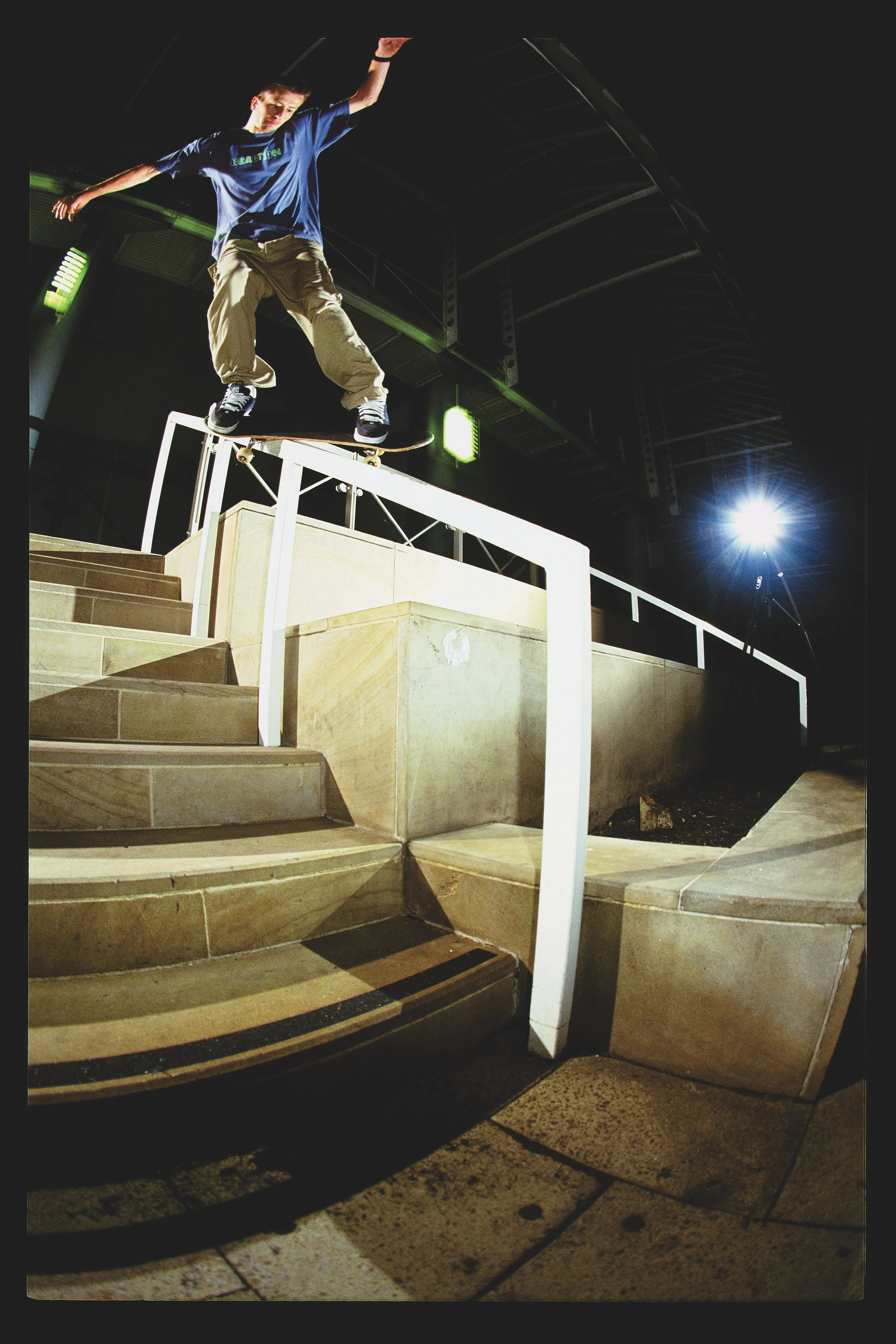
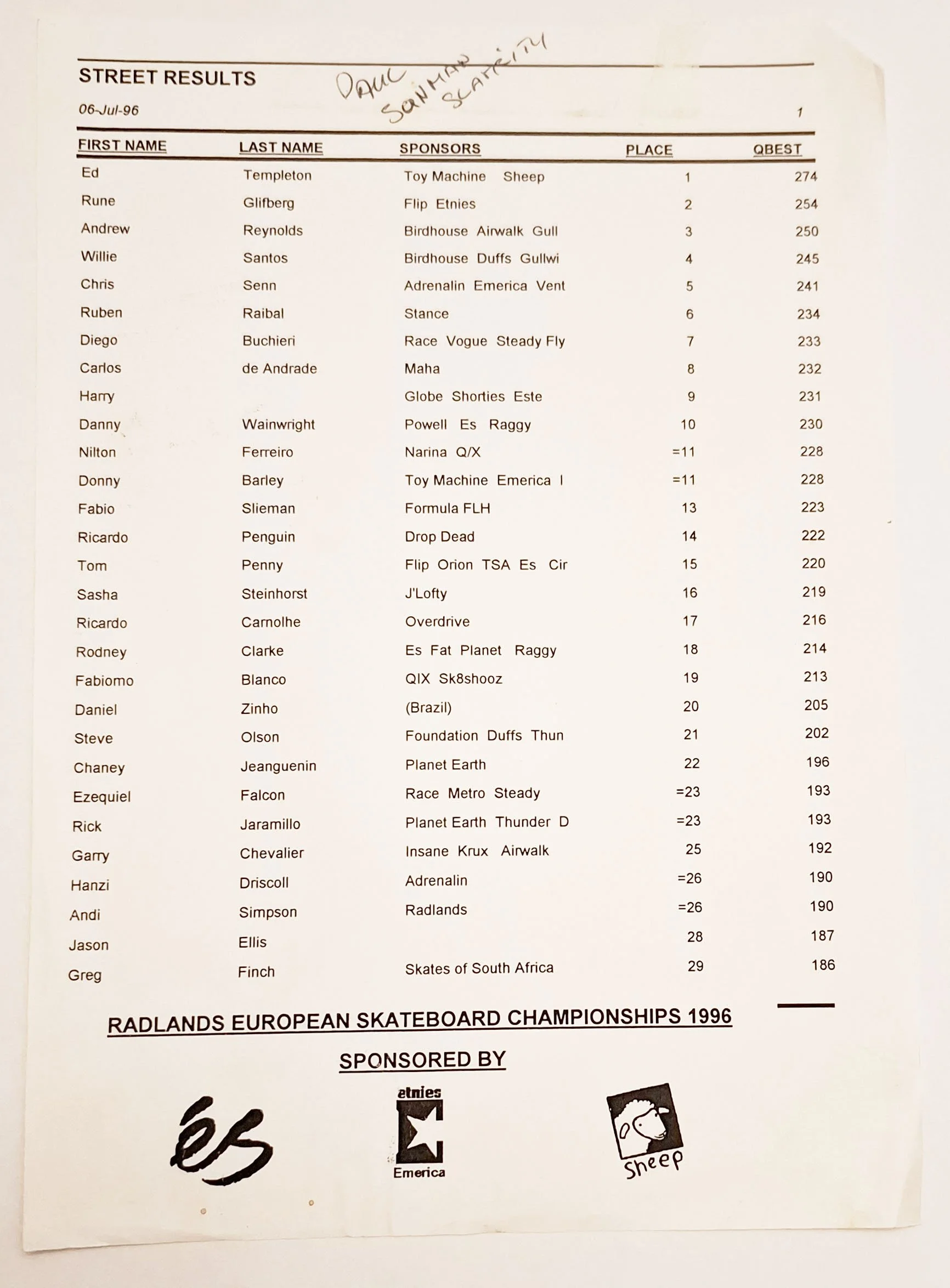
There were these two South African guys who came over to the UK in 1996 with backpacks and nowhere to stay. They were on the bus heading to Northampton from London to go to the Radlands contest, talking about how they had nowhere to stay, and the woman in front of them said, ‘Boys, I heard you have nowhere to stay. I can check with my two sons if it's okay, but would you want to stay at our house?’ So they stay at this little council house in Northampton with this lady and her sons. She looks after them for the week, and then they skate in the contest. Now, Gareth [Skewis] owns Palace and doesn’t ever have to worry about where he’s going to stay. It’s crazy to think that they came here with backpacks and no plans, and now Gareth co-owns the company, and Greg [Finch] is high up at the brand.
It was funny, when Greg told me this story, he said he didn’t remember where he placed in the contest. I ended up finding the placings, and he came twenty-eighth out of twenty-eight. He came dead last [laughs].
Gareth had never told Magee that Palace wouldn’t have existed if it weren’t for Blueprint, until Saturday at the London launch for the book. He told Magee they wouldn’t have been inspired or known that it was possible to start a board company if it weren’t for Blueprint.
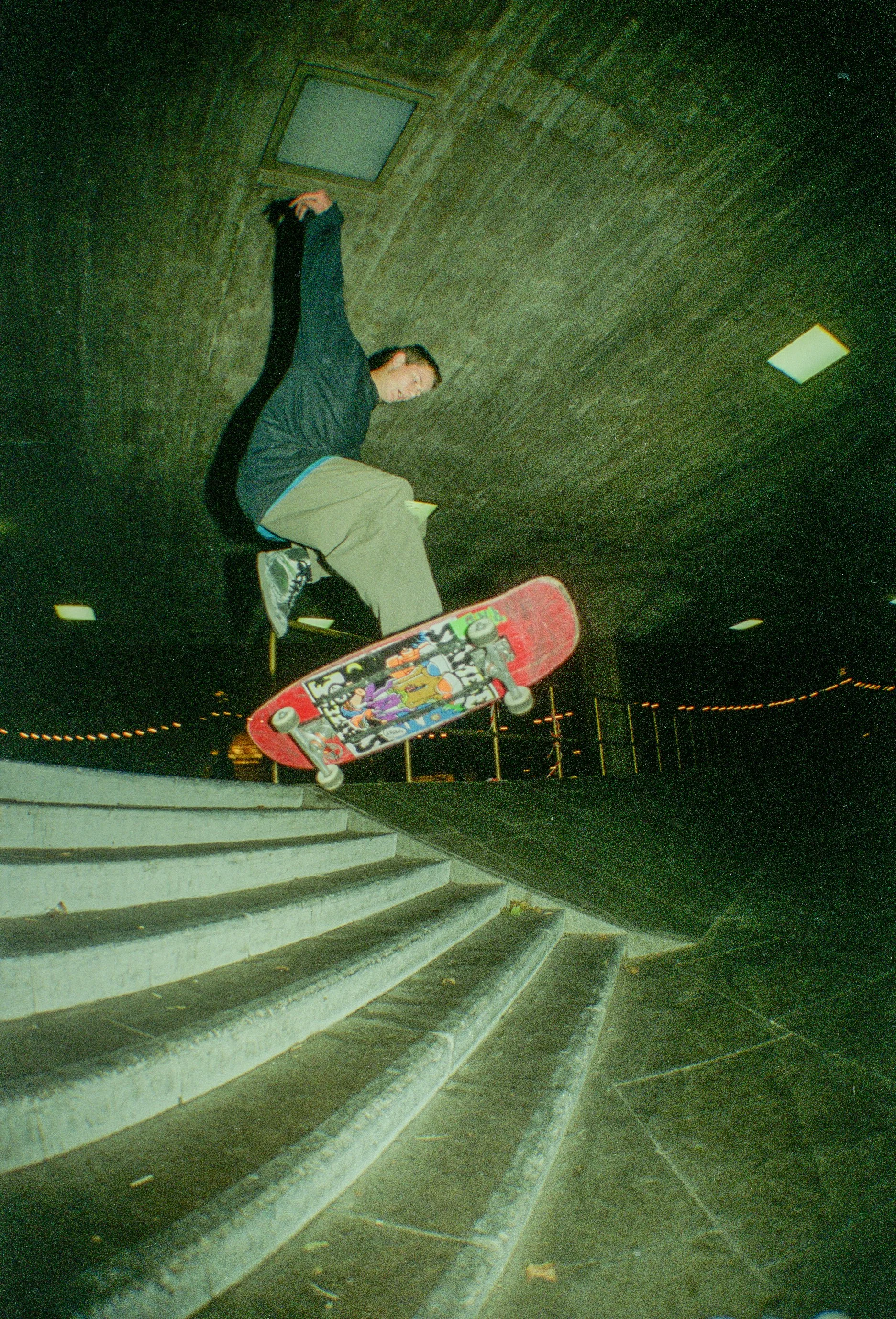
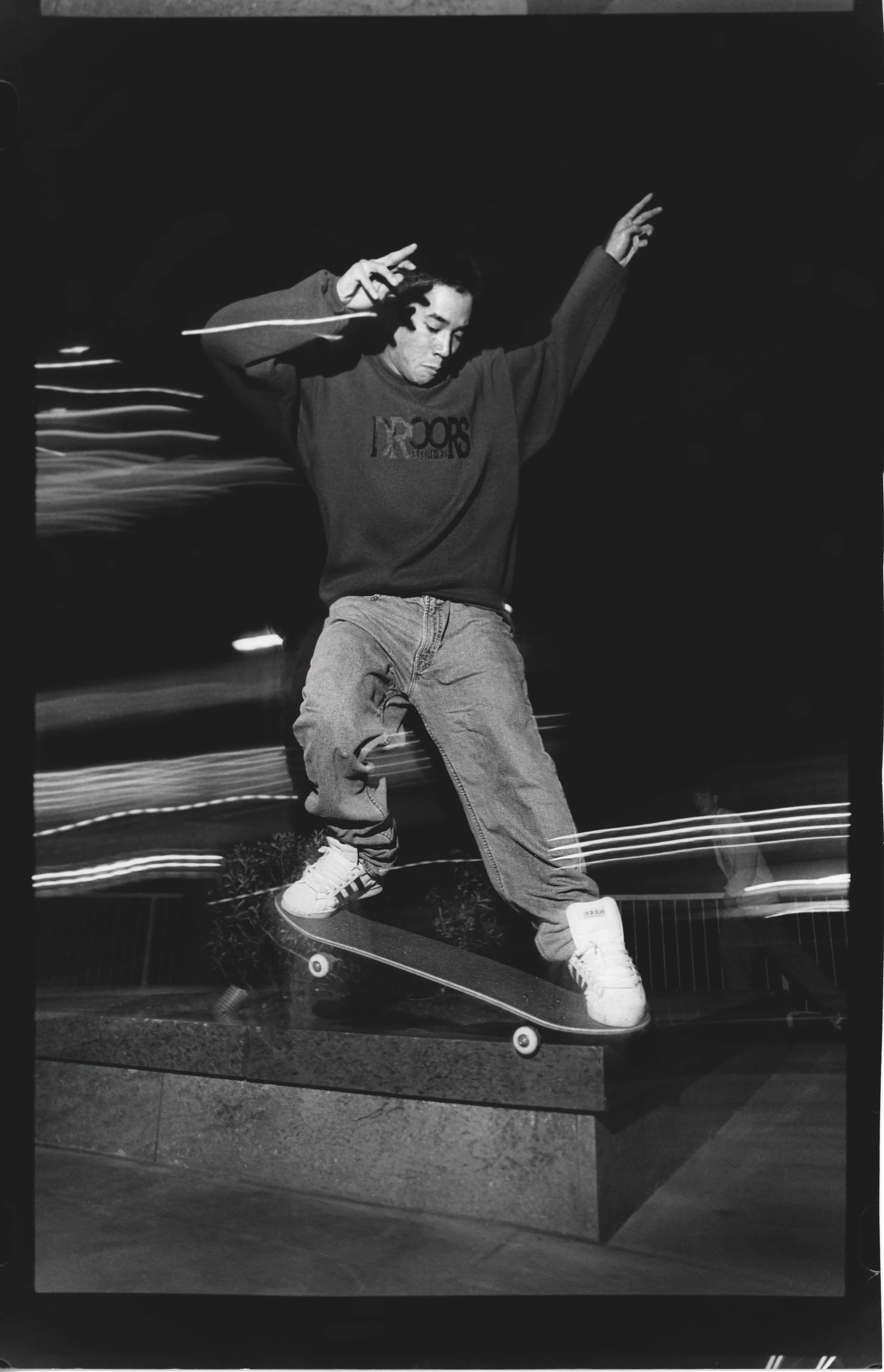
Simon Evans is the guy who introduced flat-soled sports shoes to skateboarding. He was fed up with the whole scene and didn’t want to look like a skateboarder. So, he started wearing these massive jeans that he thought no one in their right mind would wear, along with adidas Gazelles, which you could buy for cheap. Then, fast-forward a few years, and it turned out that everyone started wearing those exact outfits. Poor Simon just wanted to disassociate himself from this culture, and everyone caught up to him. He said that when he started dressing like that, his mum would cross the road when she saw him in the street.
Simon also went to America early on, but said, ‘The whole place was too warm and smelled like hamburgers,’ so he started to skate less and less. That American skate dream didn’t suit him at all. He began making art and is still a very successful artist living in New York. He said the highlight of his art career was when he got an order for one of his paintings from Mark Gonzales.
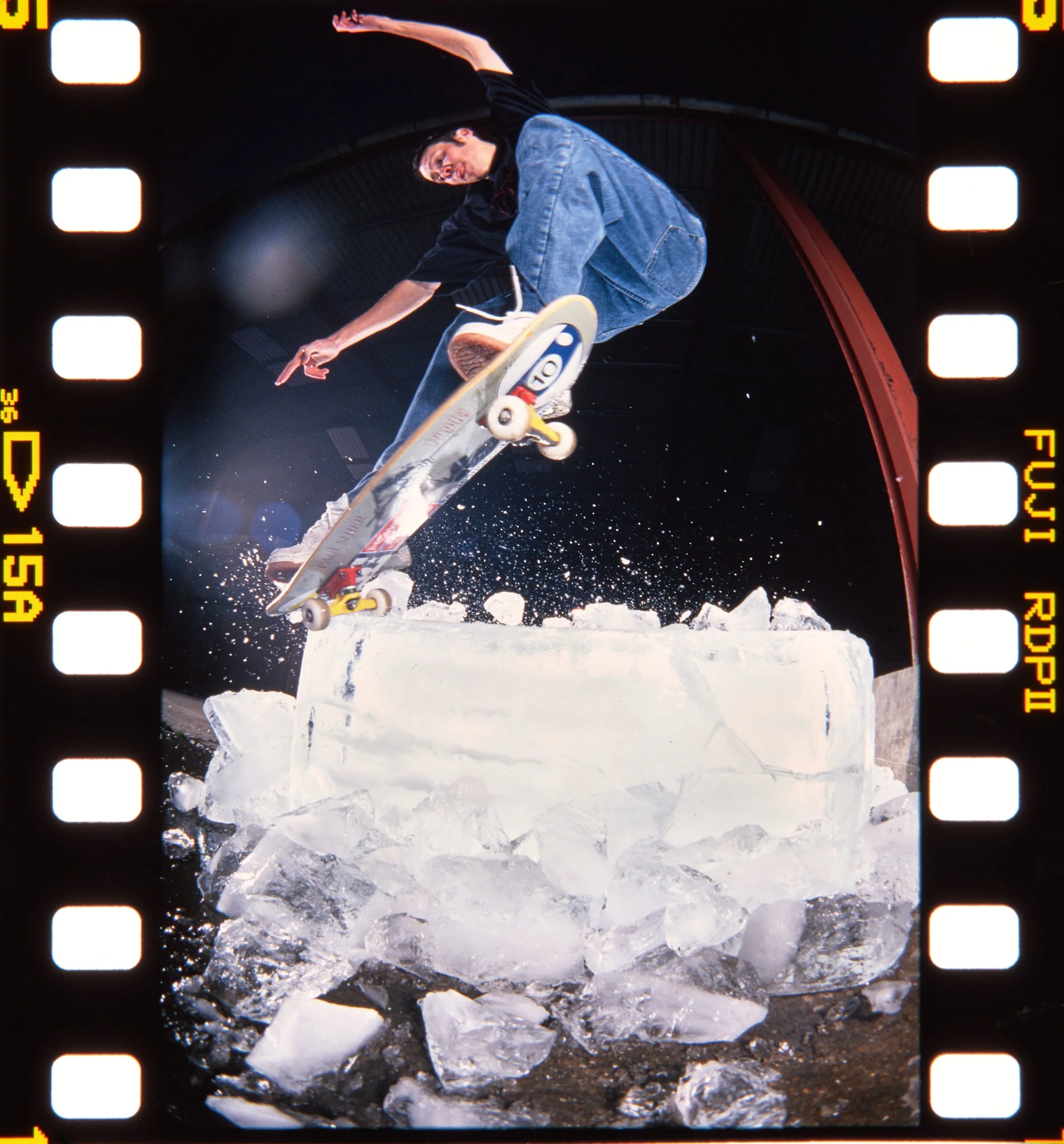
Paul Shier went to the States and stayed in Sacramento with Nick Tershay’s girlfriend. One day, he was skating at Embarcadero wearing yellow Puma Clydes with a black sole, and people were hyped on the shoes. He went back to England and kept in touch with Nick on the phone, and Nick ended up asking if he could send some shoes for him, Rick Howard, and Mike Carroll, and they’d send him a box from World Industries back. It was adidas and Puma for Nick and Mike, and Dr.Js for Rick. He bought them from a shop in Croydon, and they were all £9.99. He sent the shoes, and eventually had a box turn up at his house with a letter from Rick Howard and the boards.
Years go by, and in the FTC book, someone mentioned that story, suggesting that it was the introduction to people wearing Converse, adidas, and Puma in skateboarding. They were just buying shoes because they were cheap in the UK, and without realising, they had such a big impact on skateboarding footwear. Now, Shier works for adidas.
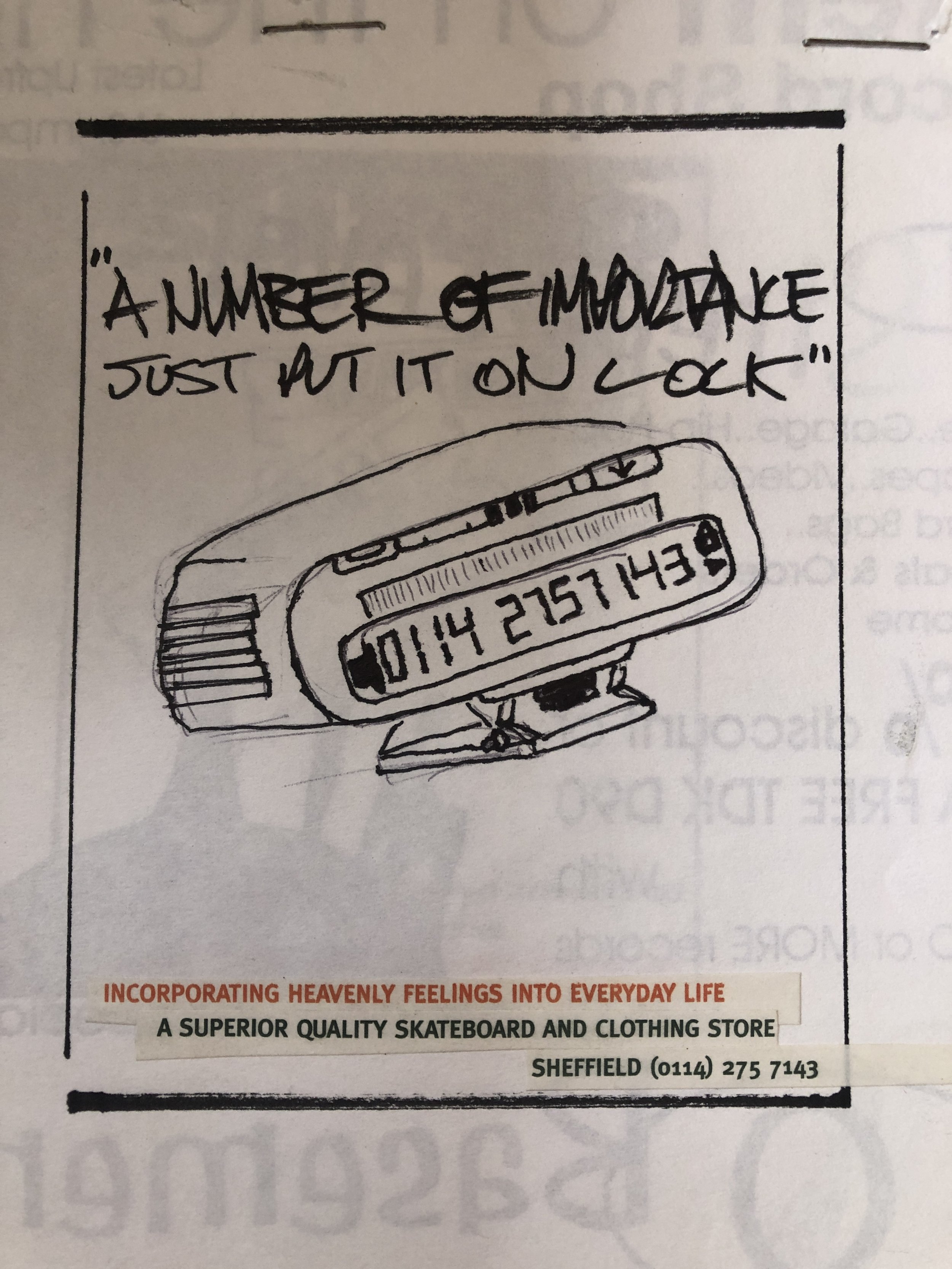
There are so many words about Seb’s [Palmer] shop, Sumo, in the book. He kept so much stuff, from all the hand-drawn ads, fliers and stickers. There was so much thought that went into the art direction of Sumo. It was a boutique shop in 1993, which was unheard of in skateboarding and to skateboarders. It was really respectful of and to skateboarders and skateboarding, and where we were at, at that point, caring about what we wore and spending a bit more money on things. Sumo really ushered in a new era of skate retail. They would sponsor club nights and have art shows; it was miles ahead in that respect. It makes sense that Seb went on to do what he has done with New Balance. He’s been such an incredible support with the book. There’s so much that wouldn’t have been possible without him or his support.
[Dan] Magee is really good at naming things, Waiting for the World, Lost and Found, etc., so I wanted him to name the book. I asked him for some suggestions he sent over a list of great names, but immediately, Elsewhere was the one. I don’t know what his thinking behind it was, but for me, elsewhere means not the US and not London. All these peripheral places that were never really covered, where skateboarding still mattered just as much. It’s where skateboarding at the time existed, on the edges, elsewhere.
He's known for his tough love; he would send you home if you were wearing the wrong stuff. He would tell you to go and get changed because you weren’t going in his video dressed like that. He called it ‘Future Proofing’, which I think is brilliant because it means the Blueprint videos are still watchable now, and no one looks like a clown; people still look cool. Back in the 90s and early 2000s, he knew that would matter. He was thinking about the future in ways no one was. He says something very much along the lines of, if you show up in shorts and neon dunks, of course, I’m not going to film you because you’re not going to want to watch yourself in a month, so I’ll tell you to go home and put on a white t-shirt and some blue jeans. He was the first person in the UK to own a VX1000, and the first person to own an MK1. Century Optics was around the corner from where Blueprint HQ was, so somehow it worked out that only one came to the UK, and he got it.