
Colours of Home: Sean Brickhill
Photography by Josh Sabini.
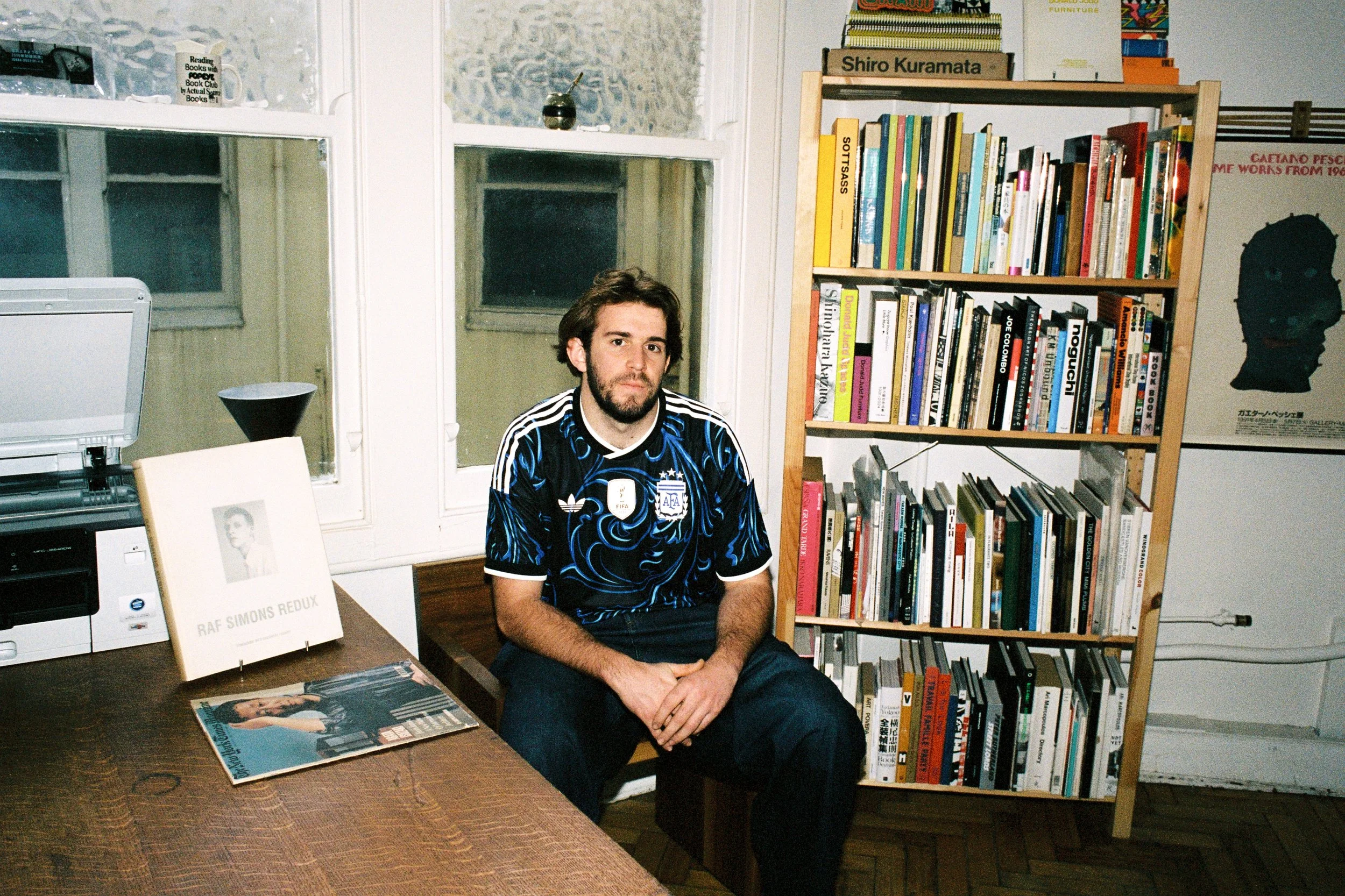
Welcome to Colours of Home, a series celebrating creative expats in Australia who love their national football team. Our first instalment is with the Argentinian-born, Melbourne-based furniture designer, curator and rare bookseller, Sean Brickhill.
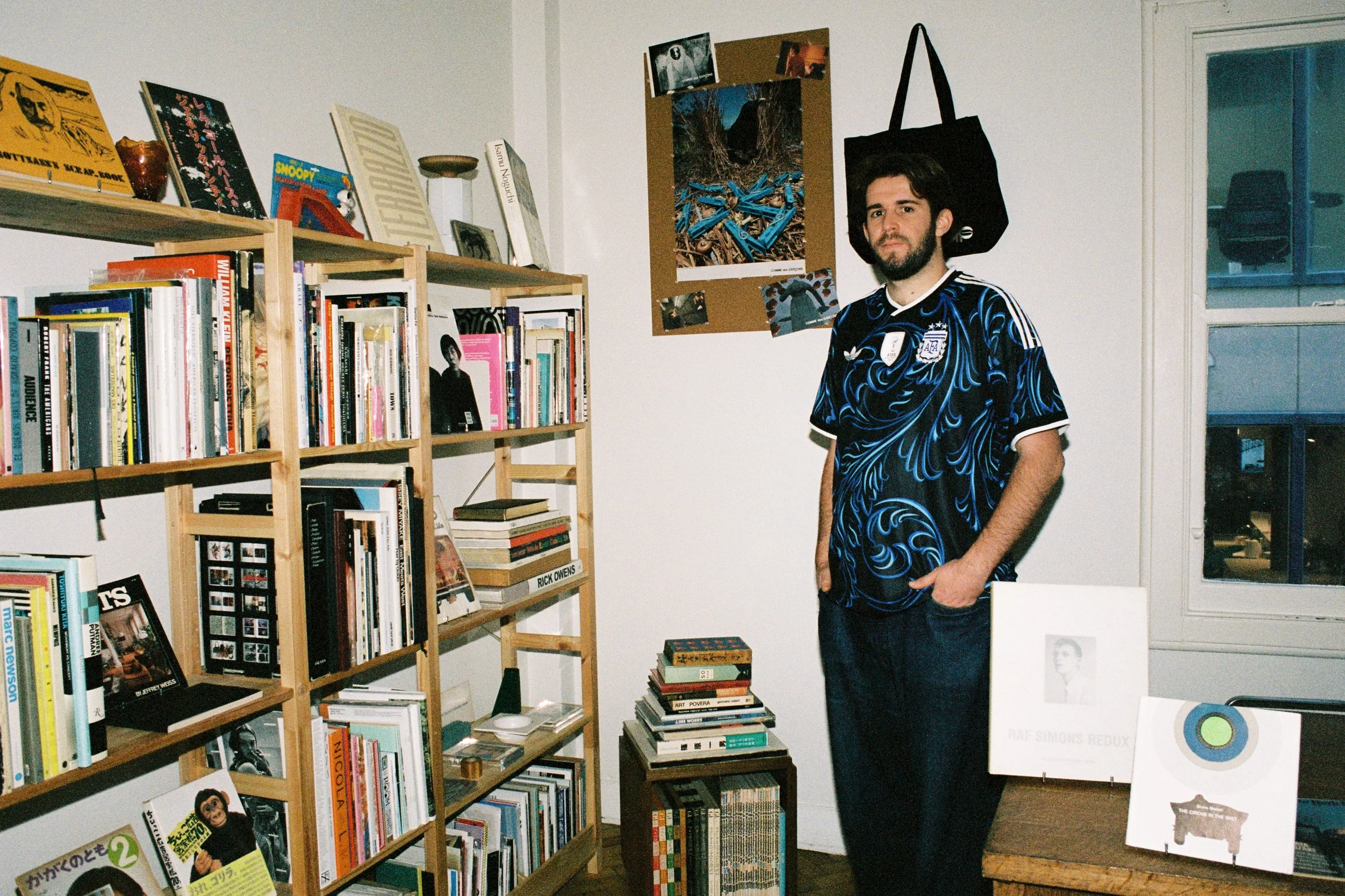
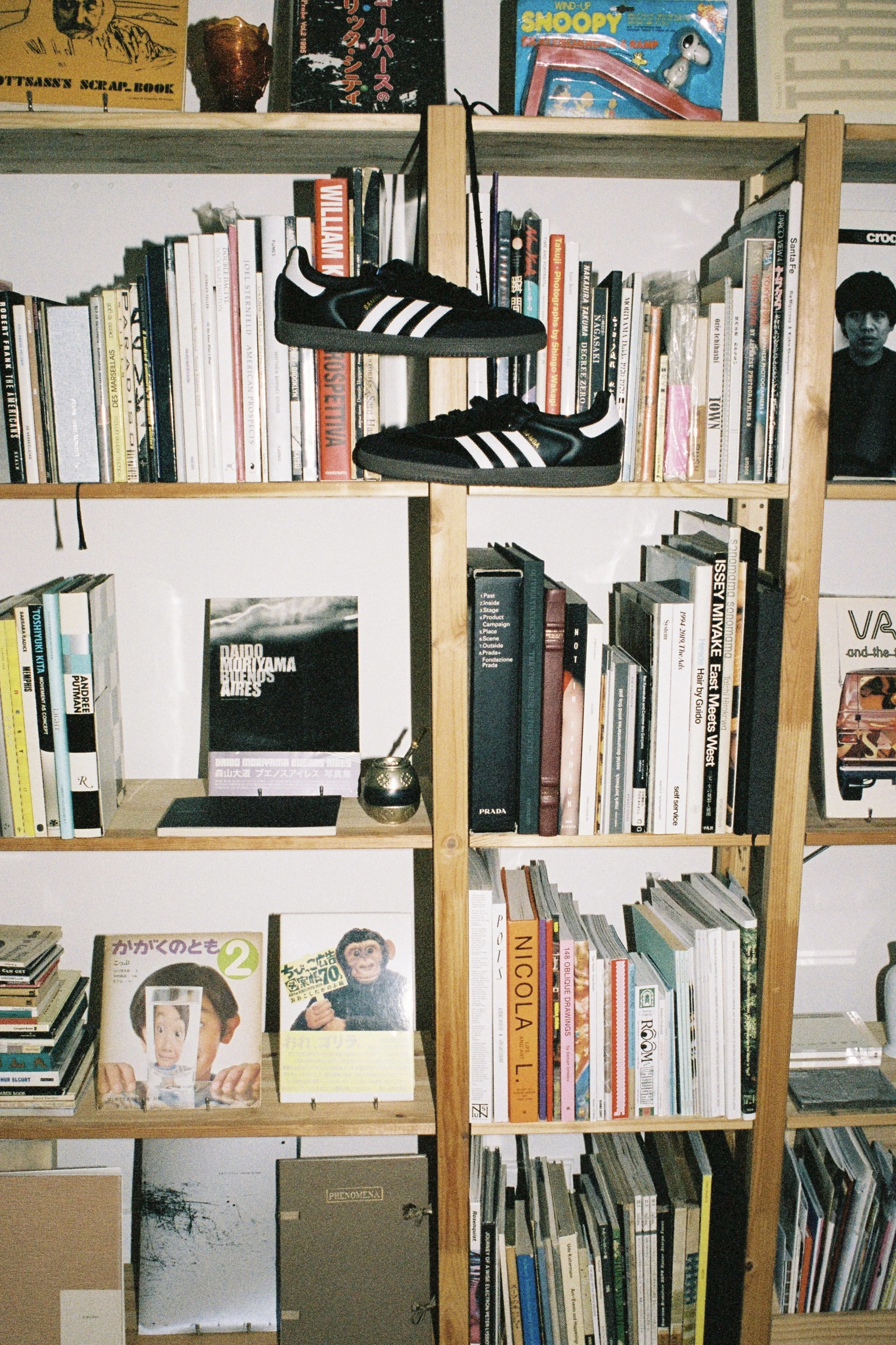
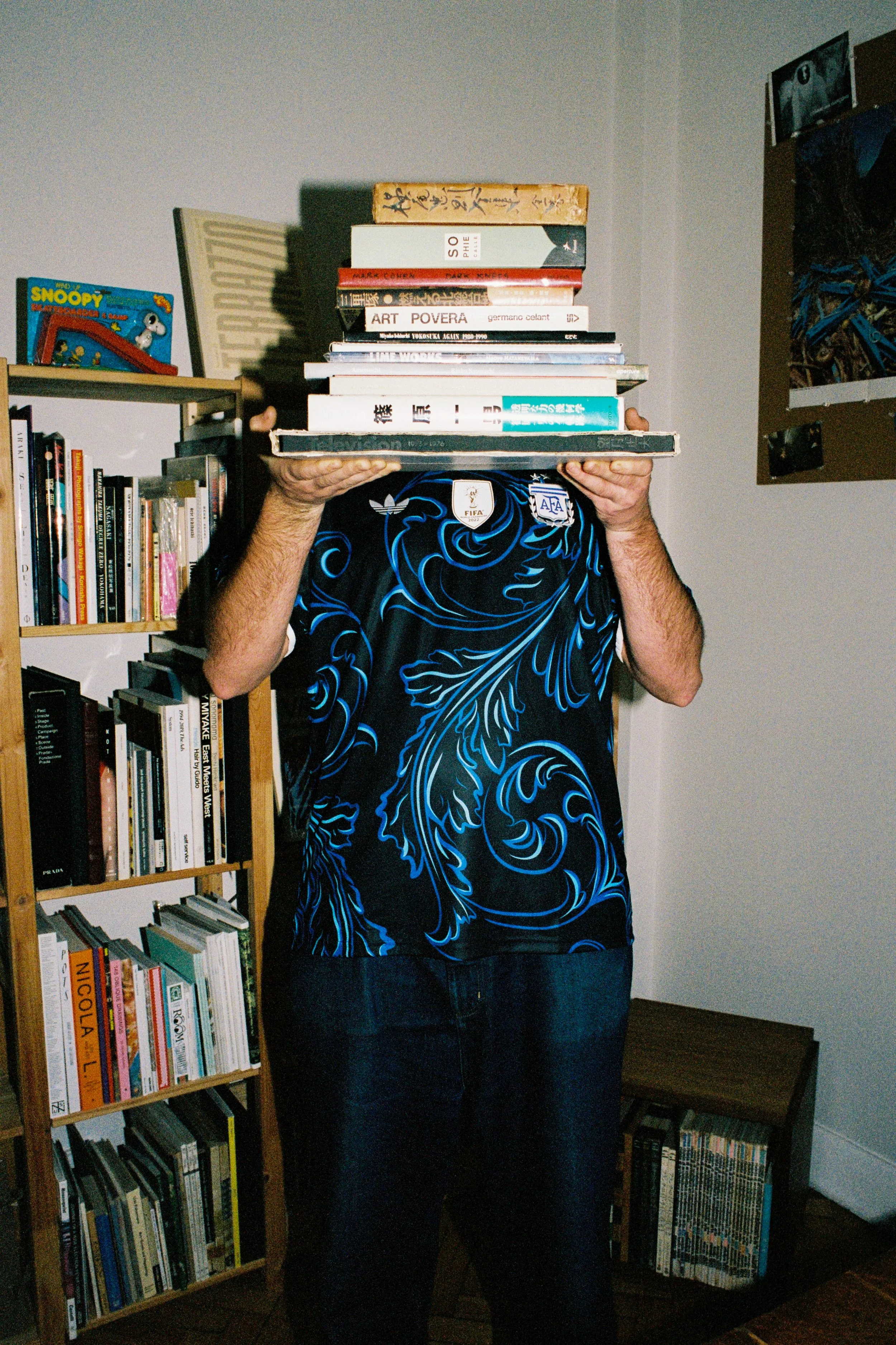
As I walk into First Edition Library – Sean’s rare book store & library in Melbourne’s CBD – he is getting ready to table at this weekend’s Melbourne Art Book Fair. He shows me the cabinet he made yesterday to display the stack of rare fashion, photography, and architecture titles currently sitting atop his desk. Along with the bookfair, he’s finalising the finishing touches for next week's mailbox-themed exhibition, You’ve Got Mail, which he’s showing in as well as curating with his partner, Anthanasia Spathis.
Sean being busy isn’t a shock. He’s been like this the entire time I’ve known him. Meeting through skateboarding in our early teens, he was always the one in our orbit who was constantly working on creative projects. Whether he was shooting photos, making zines or starting his own clothing brand, 5inco, he consistently had something in the pipeline. Seeing him in this position now, with his bookstore and furniture design, is something that only makes sense.
Amidst the busyness, we got a chance to sit down to talk about furniture design, selling books, life, and, of course, football.
You studied furniture design at university, but I know that it wasn’t your original plan. How did you end up falling into it?
Originally, I wanted to study graphic design. I ended up messing up my university interview because it said I had to bring in at least a twelve-page folio, and I thought I could just curate twelve pages. I did, and when I brought it to the interview, they were like, ‘Is this all you have?’ I ended up using that same folio for the furniture design interview, and they were into it, so I got the offer to do furniture design. The plan was to do it for one year, then defer back into graphic design, but I ended up really enjoying it. After that first year, I took a year off and went travelling in Europe. While I was there, I visited a few design museums and realised that furniture design was what I really wanted to get into.
Did you get a lot out of being able to see the work in real life?
Totally. One of the things I really got into in my first year was the history aspect of design, which is also where books came in. I was really into researching past designers and seeing what had been done. Going to Europe and seeing the pieces in real life was really cool. Also, during that year, I rented a studio for two months and just tried to make pieces on my own. That was really helpful to get a taste of that to see if it would work, and if I enjoyed it.
What were you making at the time?
I made a record player unit for a friend, which ended up on Facebook Marketplace recently [laughs]. Being able to mess around without time constraints was really fun; at university, you only get five hours a week in the workshop. It’s really split up, and the teachers are helping you through everything. Whereas, in my studio, I was on my own and had to work things out myself. I definitely made some mistakes, but it was good because I was learning.
It would’ve been nice to have the space to experiment, too. After you graduated, you worked for furniture designer Damien Wright. What was it like working within that environment with a mentor?
That was super lucky. I’m friends with Damien’s son from high school; we met at my university graduate show and made that connection. One day, he randomly hit me up because he needed help. Working with him was incredible; I got a lot out of that experience. It really taught me how to deal with clients, seeing the way he would build relationships with them and present his work was really important.
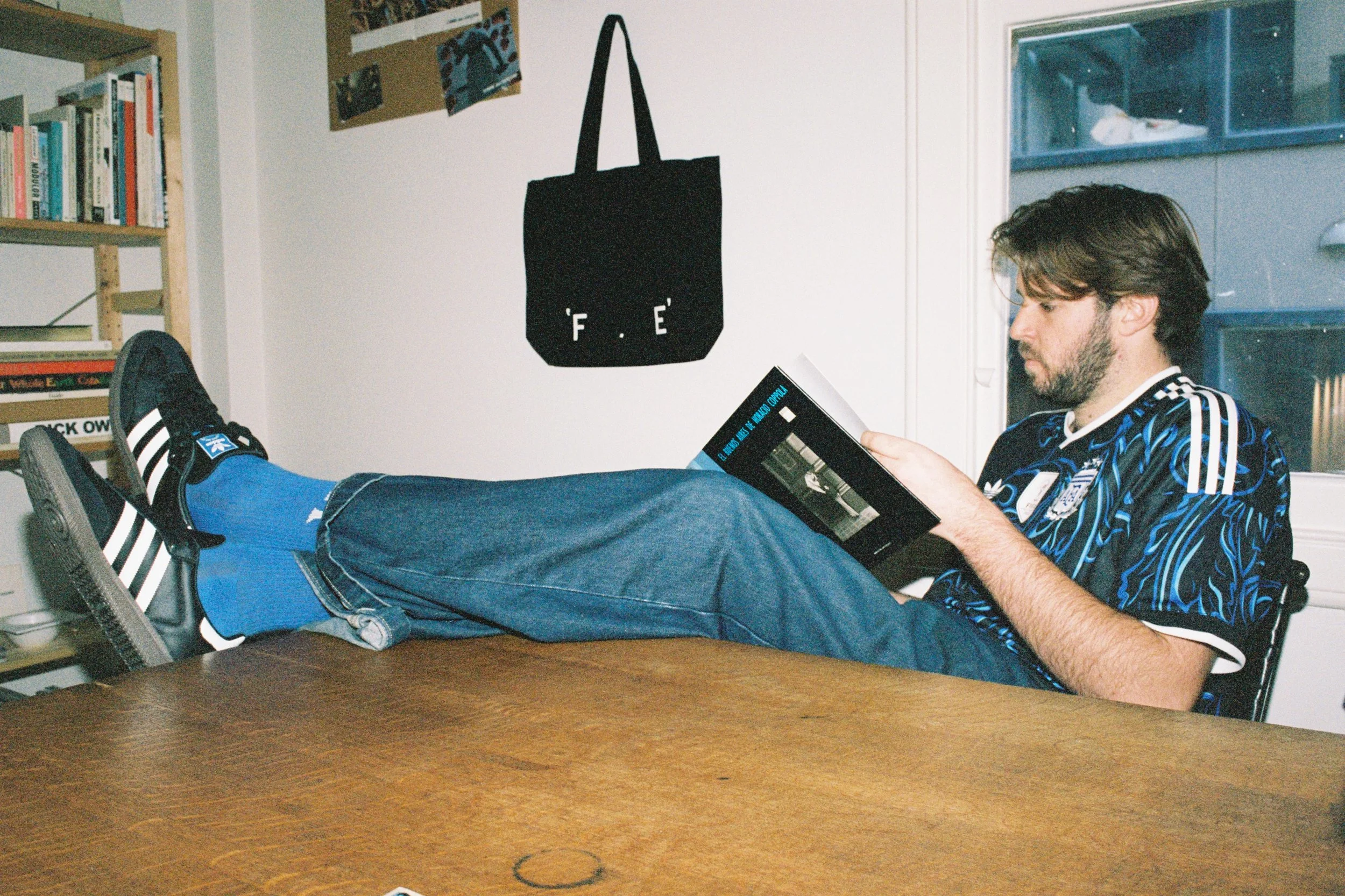
You’re focused on the quality of the wood and materials you use. What draws you to better quality materials?
Working with Damien made me appreciate certain timbers. He worked with this ancient red gum, which was a three-thousand-year-old timber. He’s super selective with what he uses and makes sure he gets the most out of it. I think it’s important to use a higher-quality material. Of course, you can just use a ply, but it doesn’t have the same feel.
One of your most notable pieces is the stiletto stool, which obviously takes its influence from the side profile of a stiletto heel. Are you regularly looking at the outside world for influence on furniture pieces?
Yeah, for sure. Anyone who asks me for advice, I always say, look outside of just furniture and take cues from other things. Observing everyday things, you get little ideas. The other day, I saw a pipe coming off the side of a building and thought it could look cool as a light. Architecture is great to take from because if you shrink down architecture, it becomes a piece of furniture. I take a lot from that.
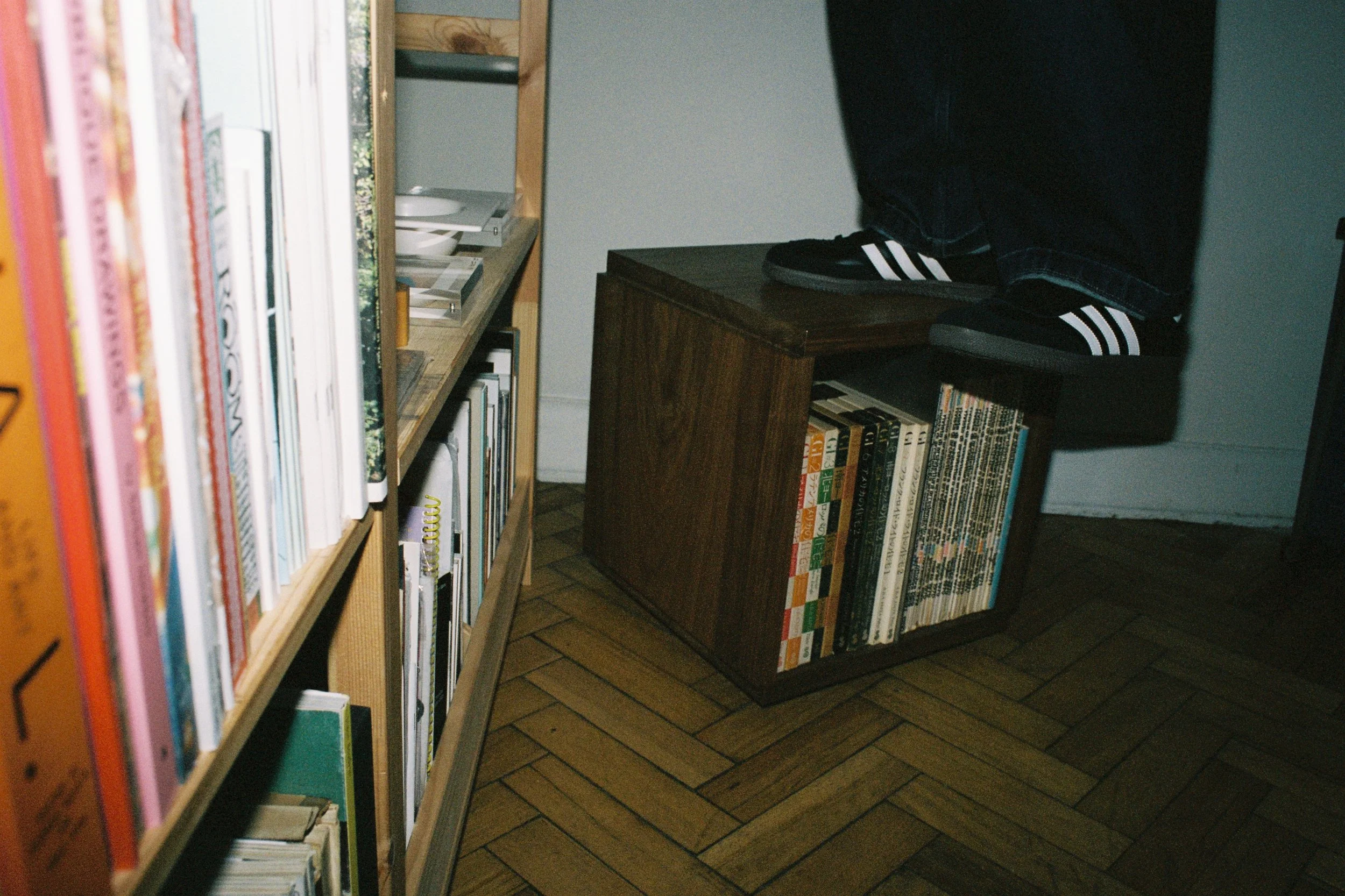
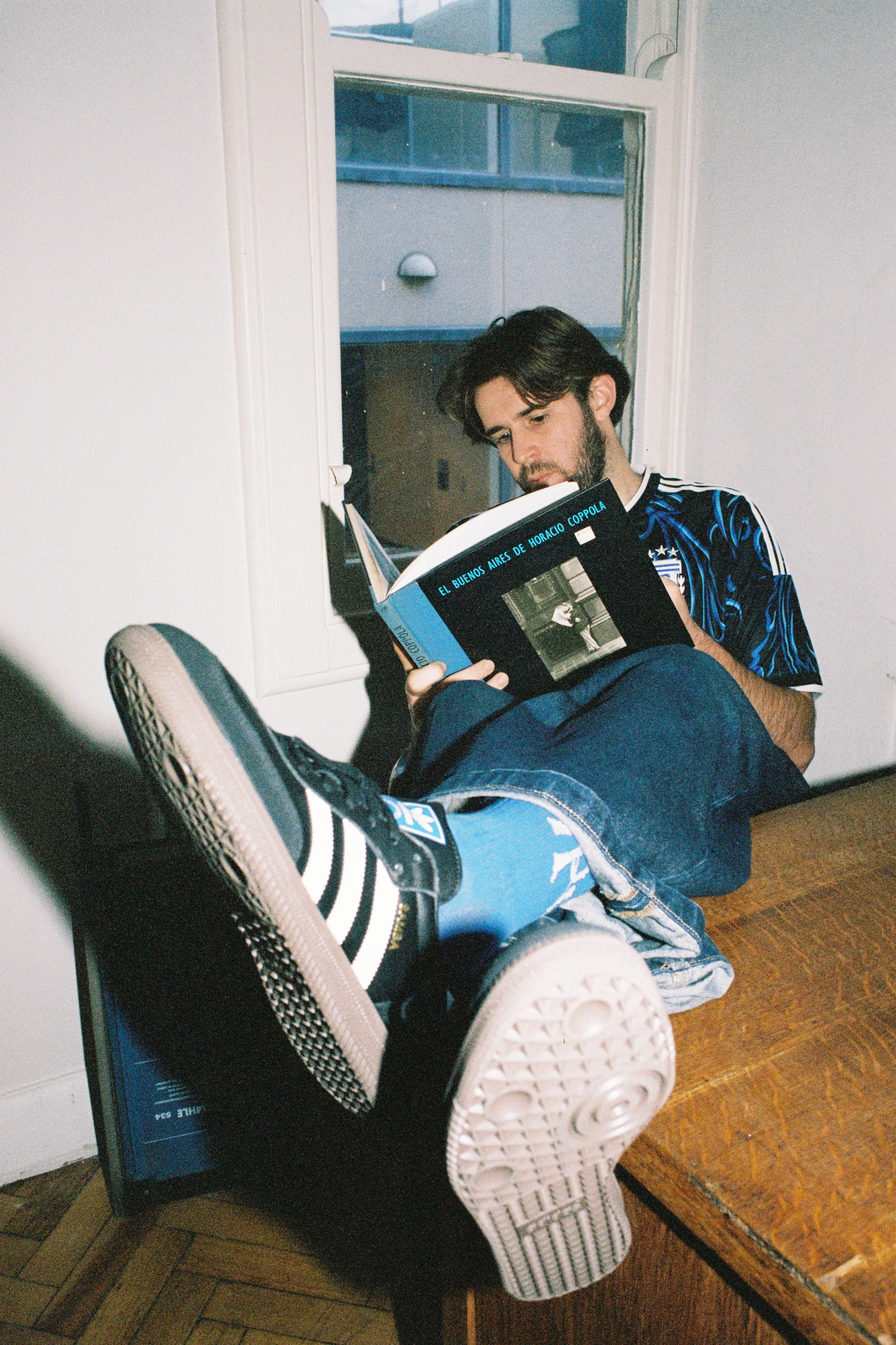
That’s such a good way of looking at it. This leads nicely into books. Earlier, you said that looking at books during your first year of university was where you got a lot of that original inspiration from. Where did the idea to start your bookstore, First Edition, initially come from?
I was collecting books, and every time I’d get something, I’d share it on Instagram. I always found it cool when I’d see other people sharing their books. I wanted to find people who also appreciate these things and build connections through that. Eventually, I had an event where I got a bunch of creatives from Melbourne to share books they like. The event went really well, and I was like I want to do more. At the same time, I started to find these websites that had books for cheaper than anywhere else. I was like, I could sell these for a reasonable price, and it would still be cheaper than other bookshops around the world. Initially, I think I spent five hundred dollars on ten books, made an Instagram and started trying to sell them. A couple of books sold, then I put the money back in and bought more books. The plan was to always do more events, but I’ve been distracted by the pop-ups and having the shop.
It’s great you’ve been able to have a physical store so quickly.
I just wanted to take the jump. I thought that if it was to grow, it needed a shop. I could’ve put that money towards a website, which I still sometimes question if that would’ve been a better move. But it’s cool to have somewhere people can come in, and you have those face-to-face interactions with people.
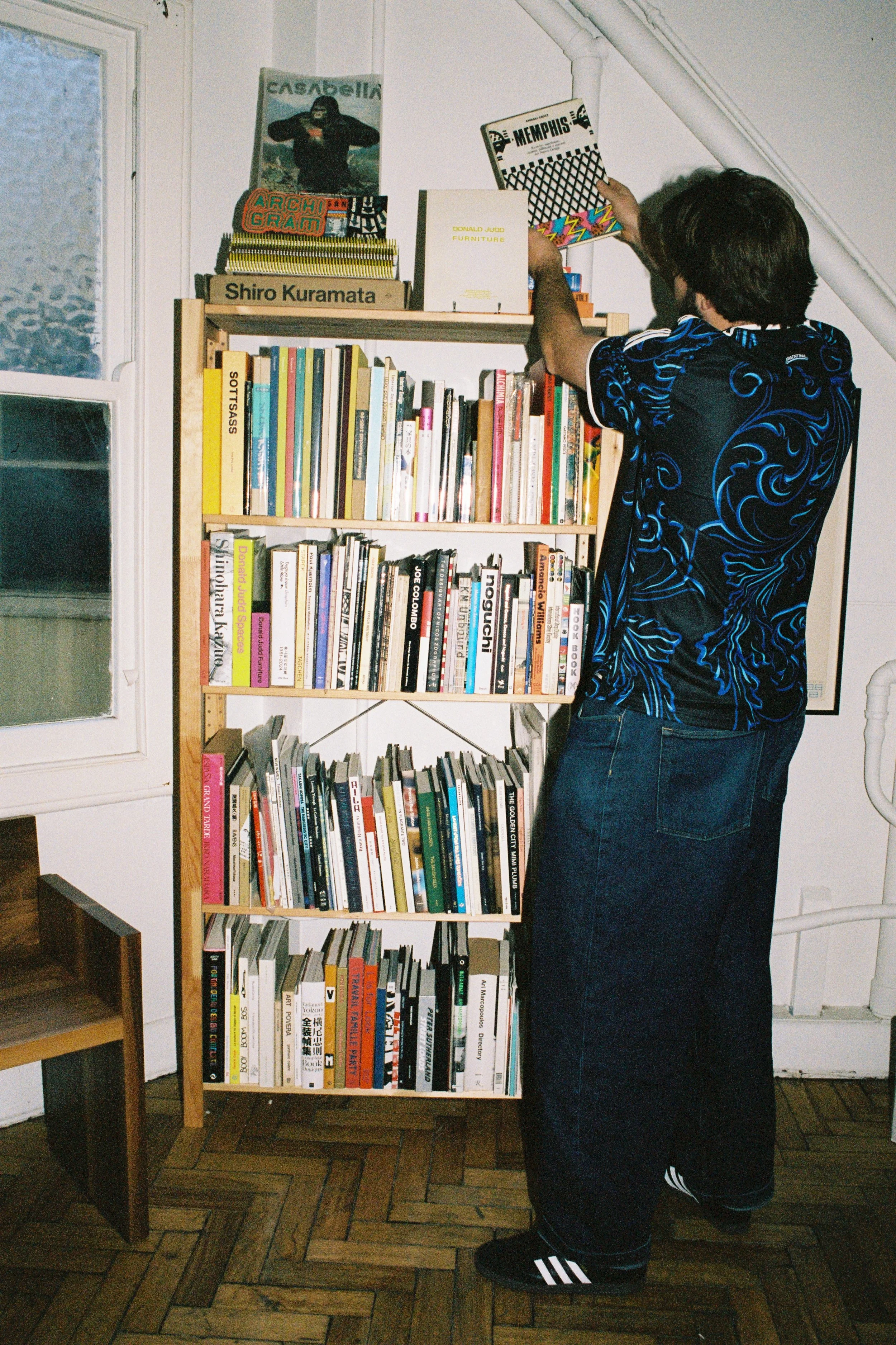
I feel like it ends up being a social thing more than anything.
That’s the biggest reward I’ve had from this: the relationships I’ve built with people from them coming in and chatting about different artists or whatever they’re into.
Oh, totally, it’s been so nice coming in here and chatting with you about books. It’s something nice that you can’t get online.
Yeah, we’ve had these conversations before where I’ve shown you books that you haven’t seen before, and you probably wouldn’t have picked up that book before.
You’ve always been really into doing stuff. Even thinking about when we were younger, and you were doing 5inco, you were shooting photos, making zines and making clothes.
Yeah, I always wanted to have some sort of outlet, where I could produce something. I always found it fun shooting photos and having somewhere to show them. I liked the idea of putting them in a physical zine rather than posting them on Instagram. It was all about sharing things with people in more of a physical way.
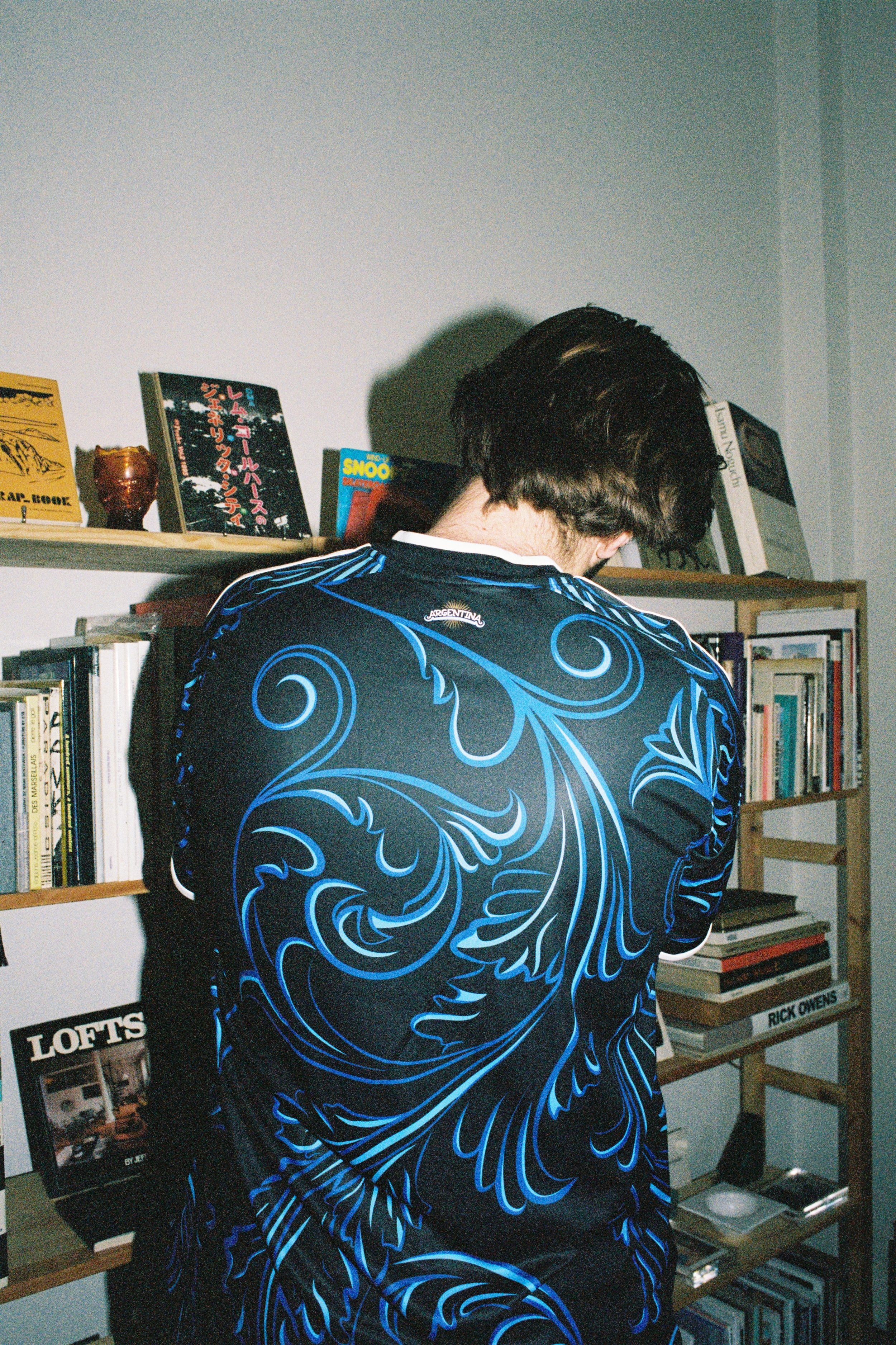
Yeah, does it feel nice now being an adult and having these platforms to share your work?
Yeah, definitely it’s cool. It really does go back to those early zines, what I learnt making them and taking it to the next thing. I remember always wanting to have a shop, just somewhere to display things. We both grew up going to skate shops and having that cool community space where you can hang out, meet and connect with people has always stood out. To show my work and have people see it, rather than just a photo, is so nice.
Oh, for sure, it's such a similar experience to the skate shop. Travelling and leaving Melbourne has been vital for sparking interest and influence; Japan for books and Europe for furniture design. What have you got from your trips back home to Argentina?
It’s been so long since I’ve been back, the last time I was there, I was sixteen. Going back was always interesting; we’d be in a certain part of the country where my family lived. I remember the last time I was there, I was still skating, and I travelled around and skated. I was shooting photos at the time and started paying attention to random little things. I really got a lot out of seeing the way that families spend time together and how tight knit family is. It’s been too long since I’ve been there, I need to go back and experience it as an adult, as there’s a lot of cool stuff going on from what I have seen and amazing architecture which I wasn’t really paying much attention to when I was younger. I’ve heard from a bunch of different furniture dealers that it’s a goldmine to get old European-designed furniture.
What are your other interests outside of collecting books and design?
Soccer has always been one of my biggest interests. It’s more of a hidden thing now, but it was all I ever did as a kid. It’s funny looking back now, I wasn’t that creative until I started skateboarding when I was twelve. I started playing soccer when I was six and played every year until I was twenty-three. I’m still playing indoor, now. All my friends I grew up skating with, I met through our soccer team. My dream was always to become a soccer player, but I never had the drive to put into it. Somewhere in my old iPod, there’s a video of my bedroom when I was twelve, and there are just posters of Messi and Argentinian soccer players all over my walls. I was so obsessed with it growing up. My grandmother got me a subscription to this magazine, called Tiki Tiki, which was an Argentine soccer magazine. It was all in Spanish, which I can speak and read a decent bit of, but I was mostly just looking at the photos of the players. Once I started skating, I played soccer for a while, but it got pushed to the side.
I forgot you all met through playing soccer.
Yeah, they were already skating, so we started going out skating together. We’d go skating on the weekends after soccer. Until we were nineteen, we spent our weekends skating and playing soccer.
Damn, everything comes back to soccer.
Yeah, I guess you can trace it back to soccer.
What’s your favourite World Cup moment?
It has to be when Argentina won the World Cup in 2022. Whoever you go for, if your country wins the World Cup, it’s always going to be up there as a favourite moment.
Do you remember where you were?
I was at home; the game was at six in the morning, and it went to penalties. I remember taking the computer to the toilet and watching them from there [laughs]. I was screaming at the computer because France came back, and I was like ‘Noooo!’ The World Cup is always funny because all my friends are going for Australia. I’m like, ‘No way, I’m going for Argentina, because we’re actually going to do well.’ It’s the one time I get to show that national pride.
How are you feeling about the upcoming World Cup next month?
I think Argentina are in for a chance, they’re still ranked as the best team in the world, but sometimes they can flop, so we’ll see. Also, being in LA for the most part, the time zones shouldn't make it too hard to watch the games. I’m excited.
++
Colours of Home is a Monster Children editorial series presented with our friends at adidas Originals.
The FIFA World Cup is happening in Los Angeles from 11th June 2026 – 19th July 2026. Shop your team’s adidas FIFA World Cup jersey on adidas.com.au