An Artist You Should Know: Murray Gain
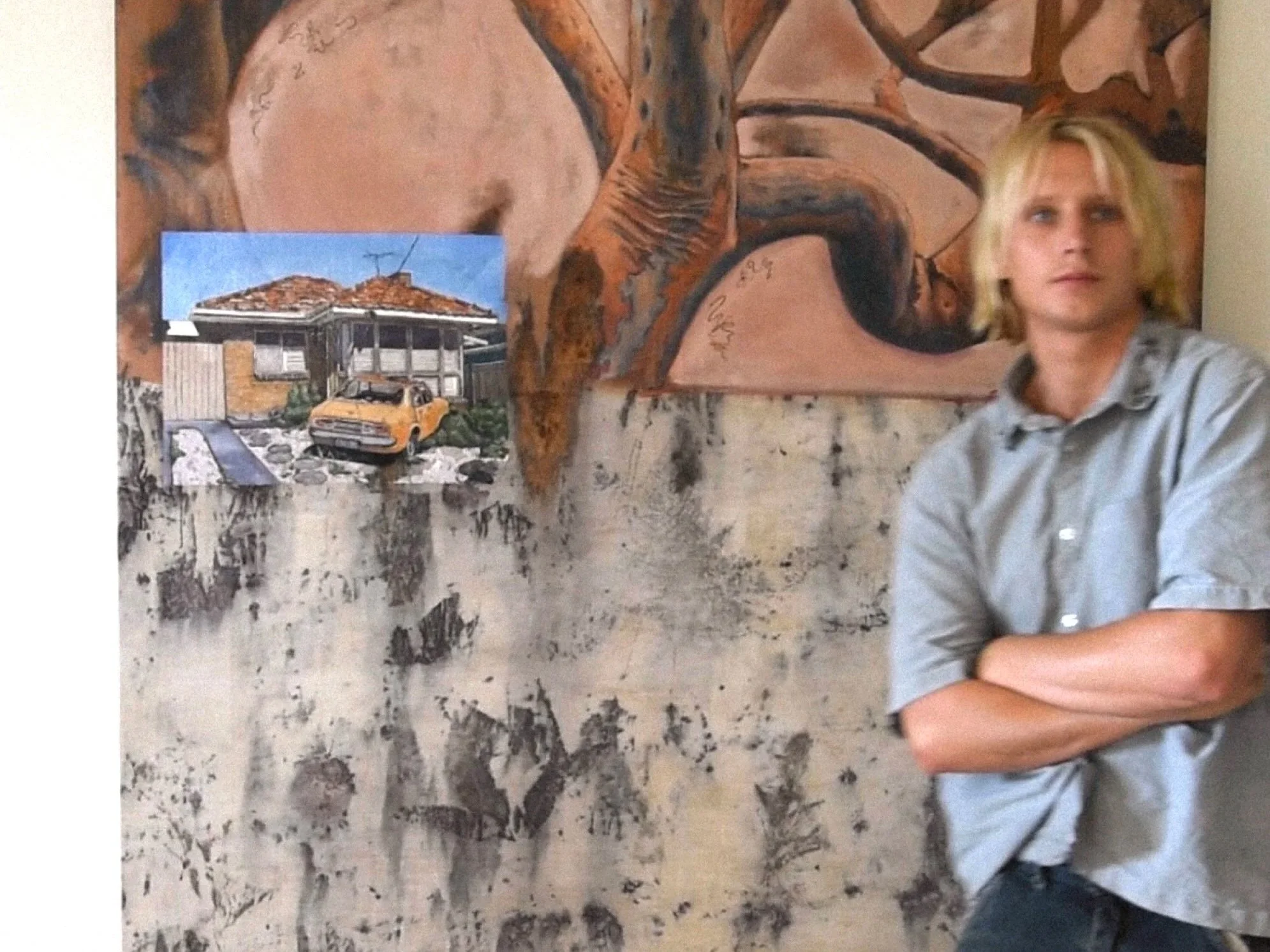
Photography courtesy of Murray Gain.
words by Hayley Biddulph.
The last time I hung out with Murray, we were busking out the front of the bakery in Crescent Head, trying to make enough money to buy a blueberry turnover.
We played Cyclone by Sticky Fingers on guitar. Now, we’re out the back of my art studio and it’s a perfect afternoon. Since then, Murray’s been to several cults “to see what’s happening there,” travelled extensively, and still has that awesome lemon-coloured hair surfers get from living in the sea.
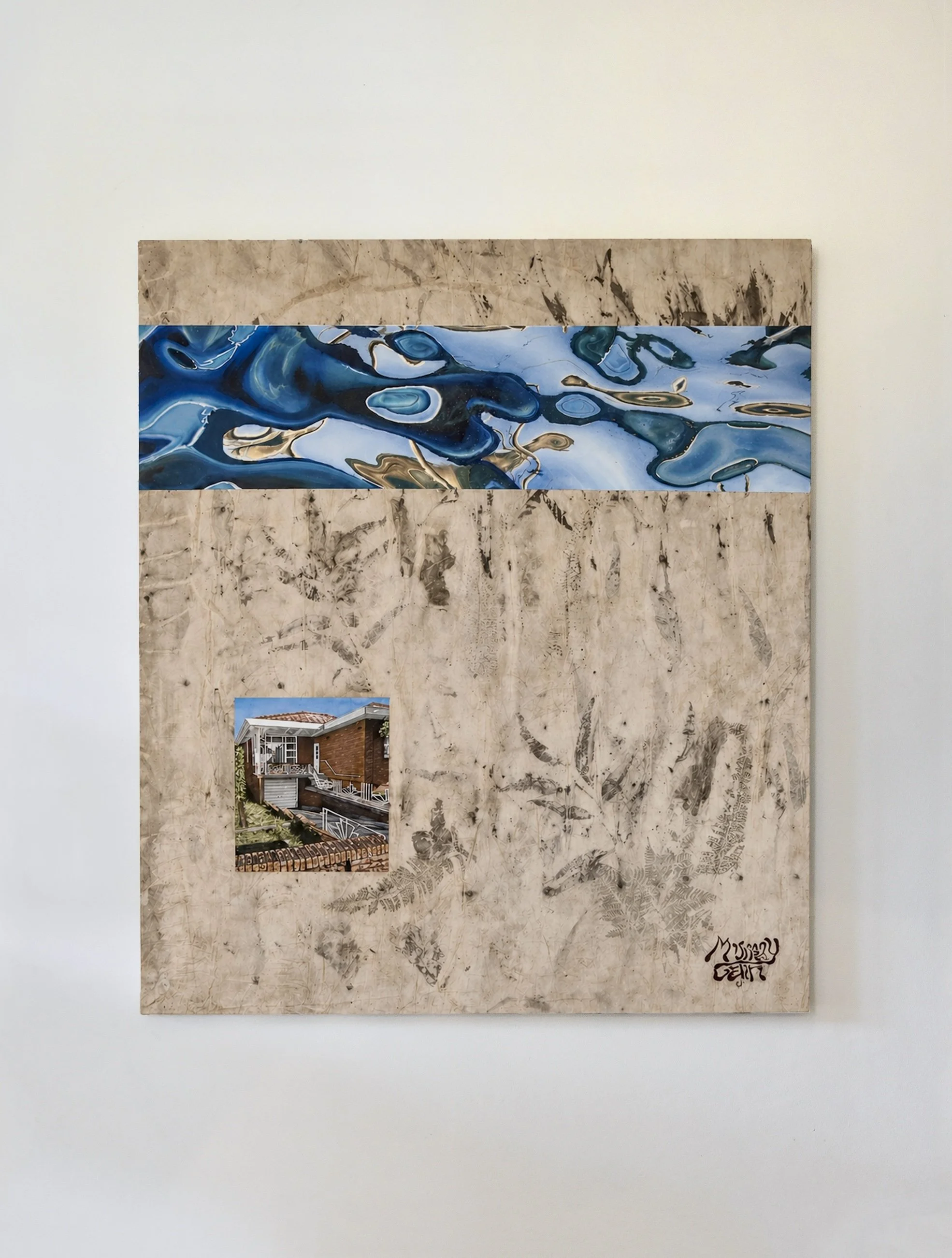
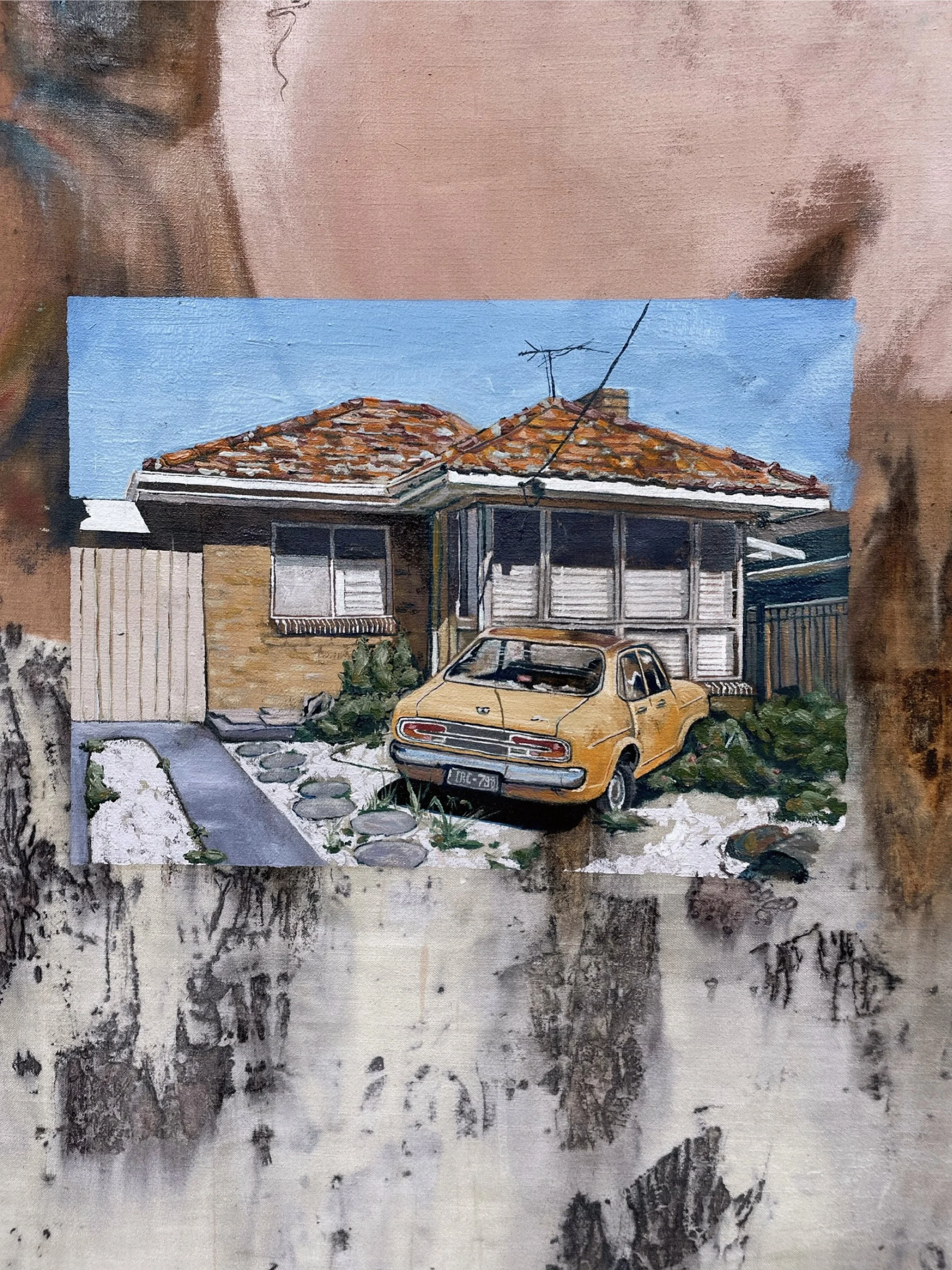
After seeing a lot of the world, he wants to represent Australia more than ever. His recent works continue his staple process of ripping posters from the street, but this time, they’re layered onto handmade, eco-dyed fabric. While still exploring memory and place, Murray spends a lot of his art process appreciating the red brick houses of Australian suburbia, the familiar street cats, the red gums that seem to turn blue as the seasons change. Living curiously and closely with nature, Murray can probably teach us all something about the art of letting go. Perhaps that’s something we can all consider – as artists, or simply as humans.
Where have you been travelling since we last spoke?
We started in Mexico and made our way down to Brazil. Five of us… the aim for the first three months was surfing orientated. Mexico, El Salvador, Guatemala, Nicaragua, those countries. Tropical vibes, you know, by the ocean, palm trees, and then it's one flight and you're in the opposite, up in Peru in the mountains, like four thousand metres. Good excuse to get the jumper on and wear a woolly beanie.
Did a particular culture inspire you?
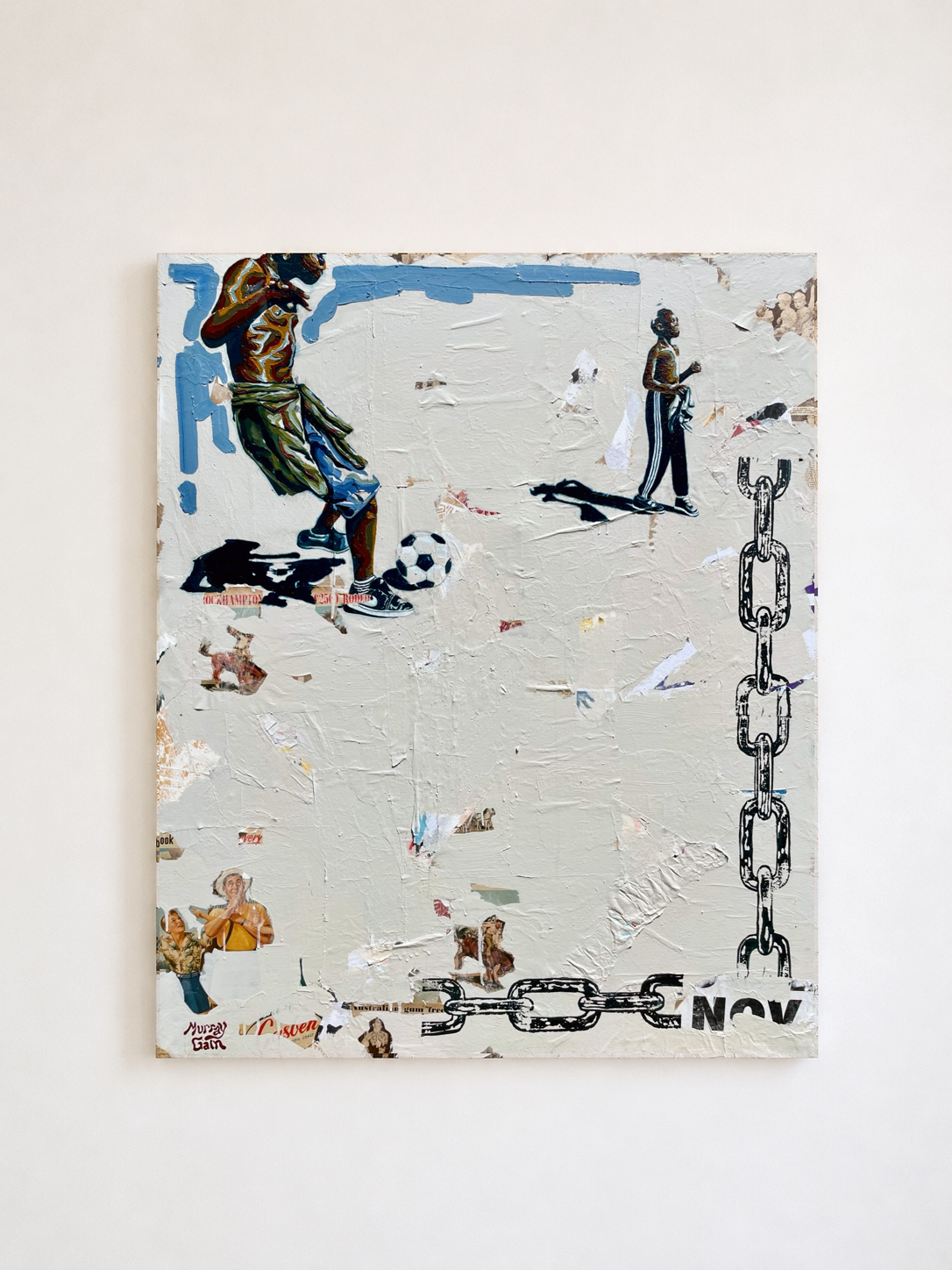
Mexican wool art especially inspired my art, their handwritten signs are always cool. And they often draw the fruit or whatever they're selling. Their culture is colourful and a lot of the architecture and older buildings have paint layers falling down and revealing its own artwork in itself. Sometimes I capture that and other times just rip the paint down and just paint it straight. Sometimes I make an effect that sort of mimics those layers, or other times when the paint was falling down enough and it had all those layers, you could just then stick it on the page and paint people that you see around.
How did you manage that?
Awkwardly, rip it down when no one's looking and then stuff it in your bag. And then when you get home, cut it into a square or rectangle.
Yeah, I’ve seen you do that. That looks so cool, it adds a culture, history and situates the work in a place. Is that a recurring process with your practice?
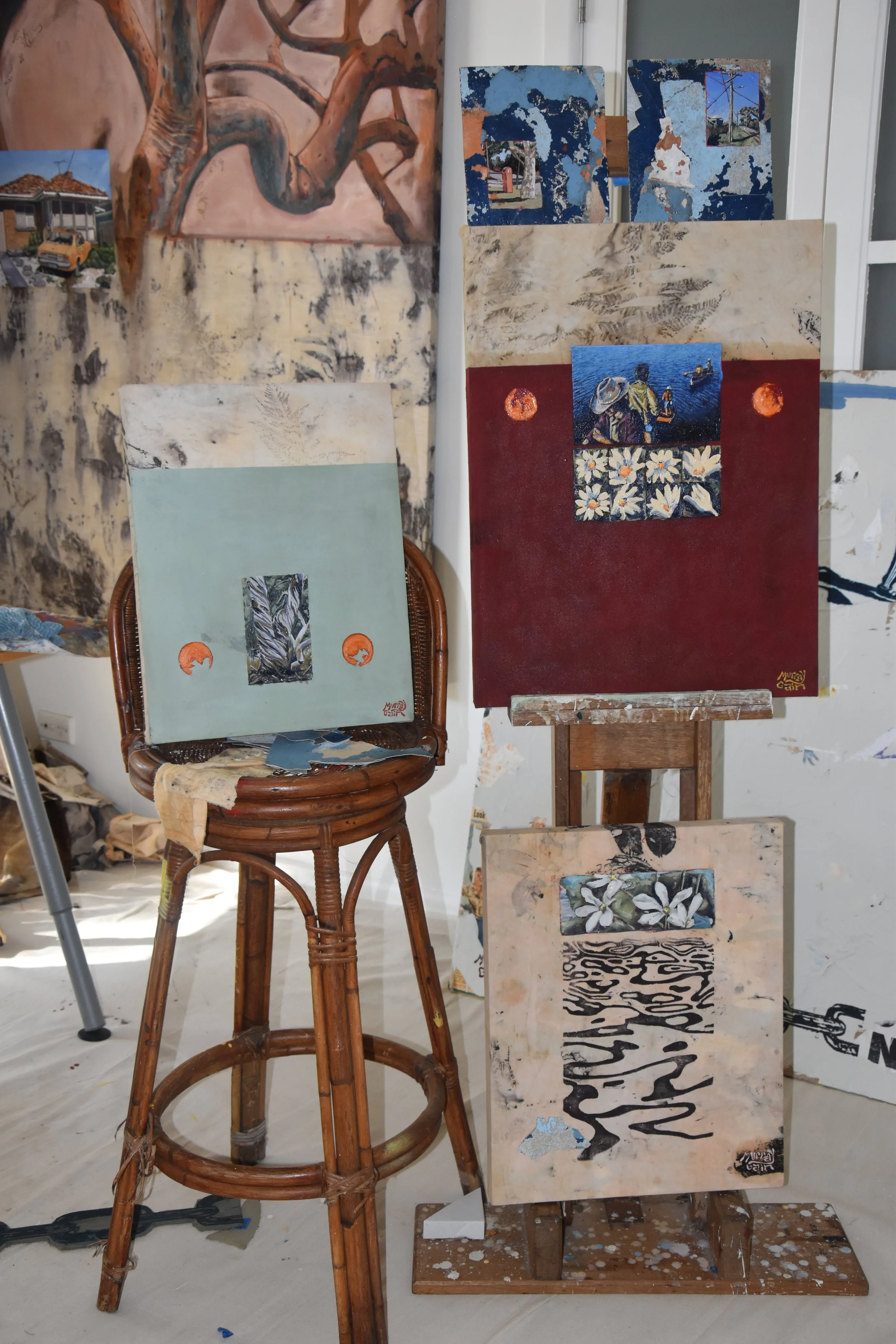
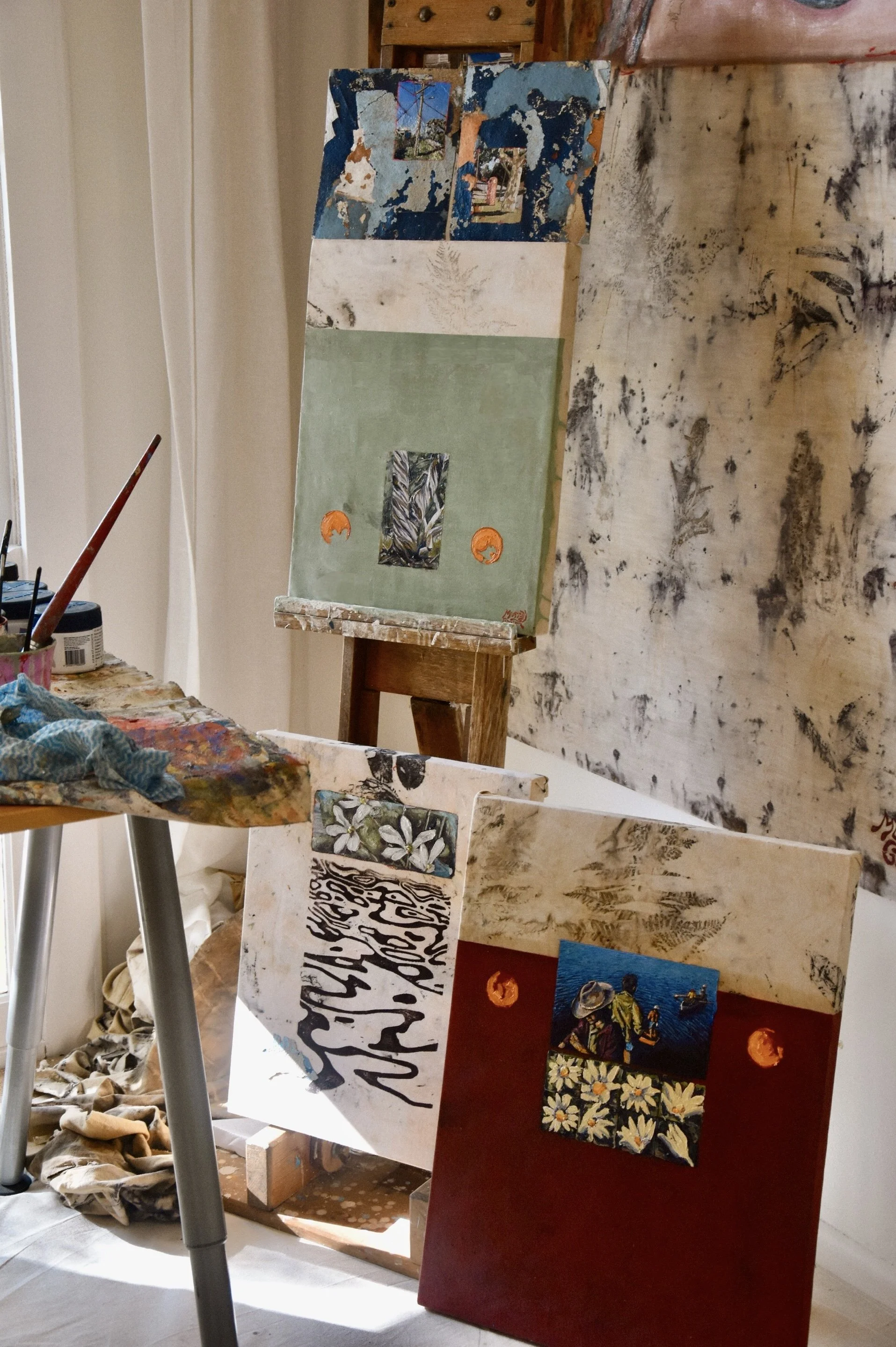
Yeah, I guess that was the whole thing with my art – combining what you can control – like the intentional brush strokes with what's by chance and what's unintentional. A lot of things you see on the street, feel like artworks – seem like artworks in their own right. So it's sort of like you're co-producing with unintentional parts of the world. Whether it's street posters or bringing in the layered paint from off the wall. I’ve also started doing eco dying.
Did you eco-dye the top you’re wearing right now?
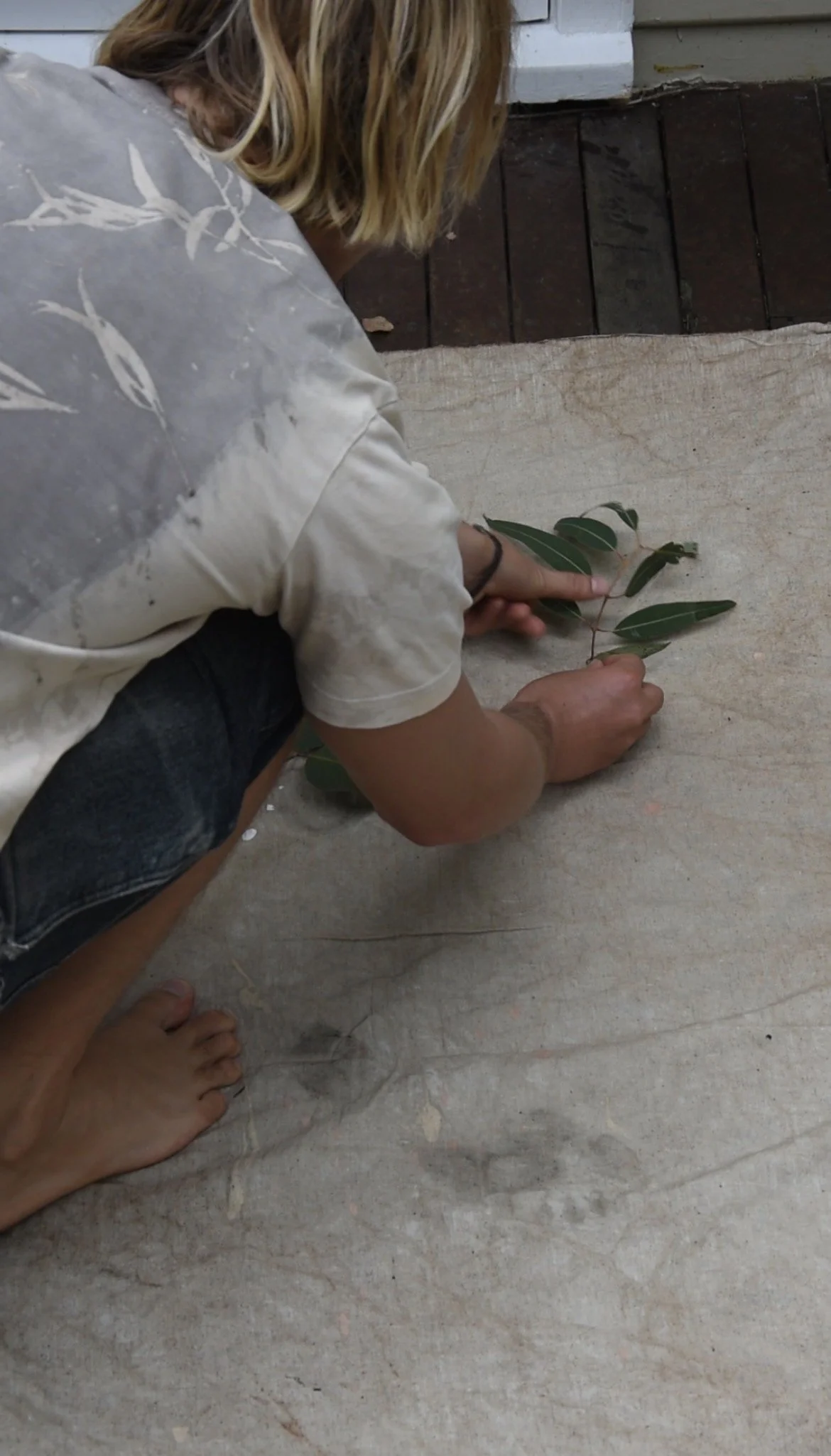
I didn't. I bought this top and then I'm like, fuck it, I want to do this and then stretch it on on canvas. So now I’m bringing nature into the art. Often, some leaves appear, some things don't. You don't quite know what you're going to get, and sometimes it's a flop and sometimes it looks shit.
What do you like about chance? Are you good at letting go?
I'm not good at that. I can get more inspiration when something's down already. It's easy to get intimidated when it's a white canvas. Daunting. It helps you see what you want to paint and also adds an extra layer of interest when you find little Easter eggs… hidden gems.
Is that a gum leaf on your top?
Yeah, gum leaves. I got this at a festival last year. I was down at a festival called Dragon Dreaming, and there was a stall selling eco dyed shirts. A lot of them were quite geometric and full on, but I liked this one. It was a bit more subtle. People do it with clothing, but I haven't seen too many people do it with art and then paint on top.
What’s that process like?
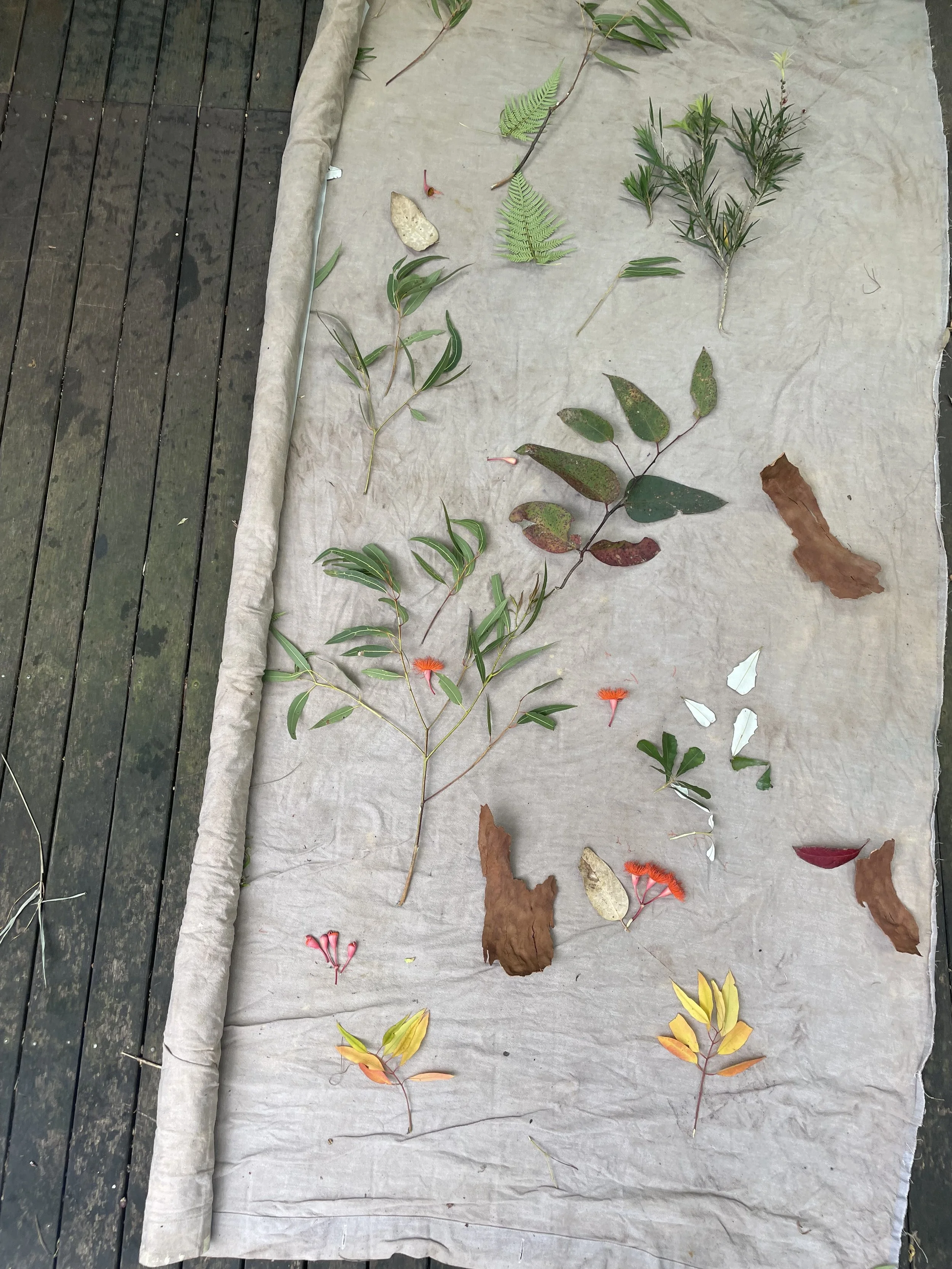
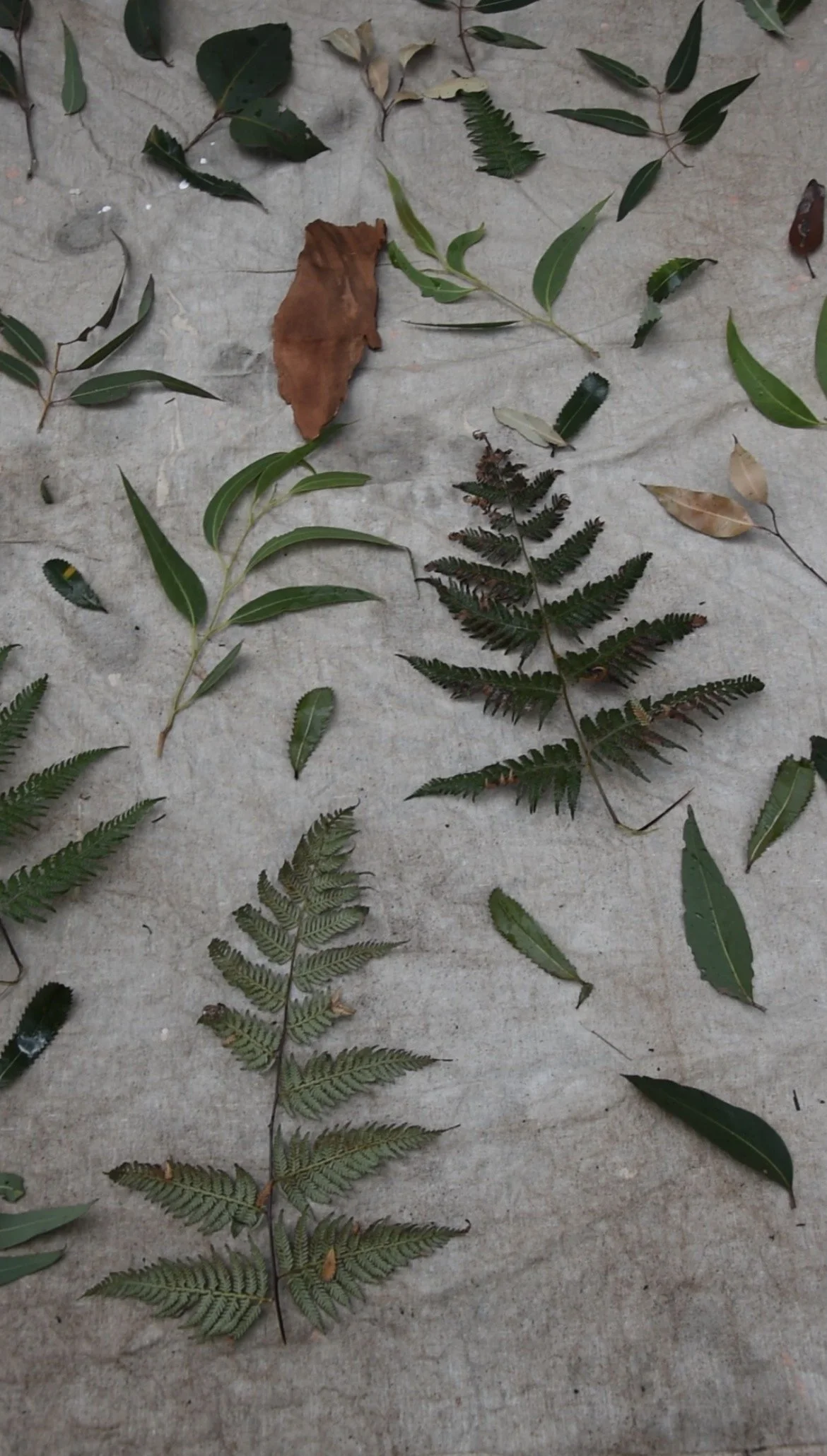
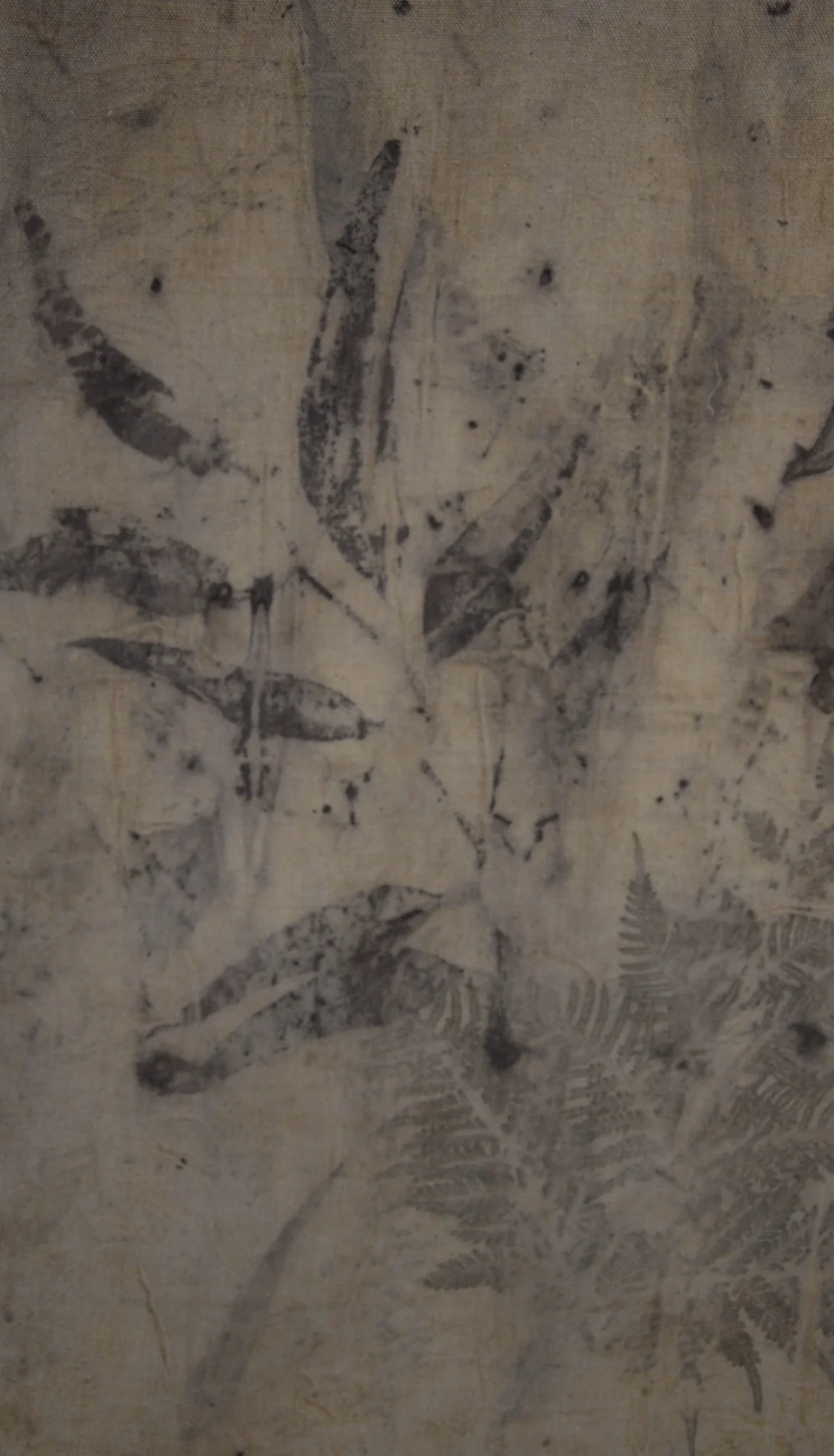
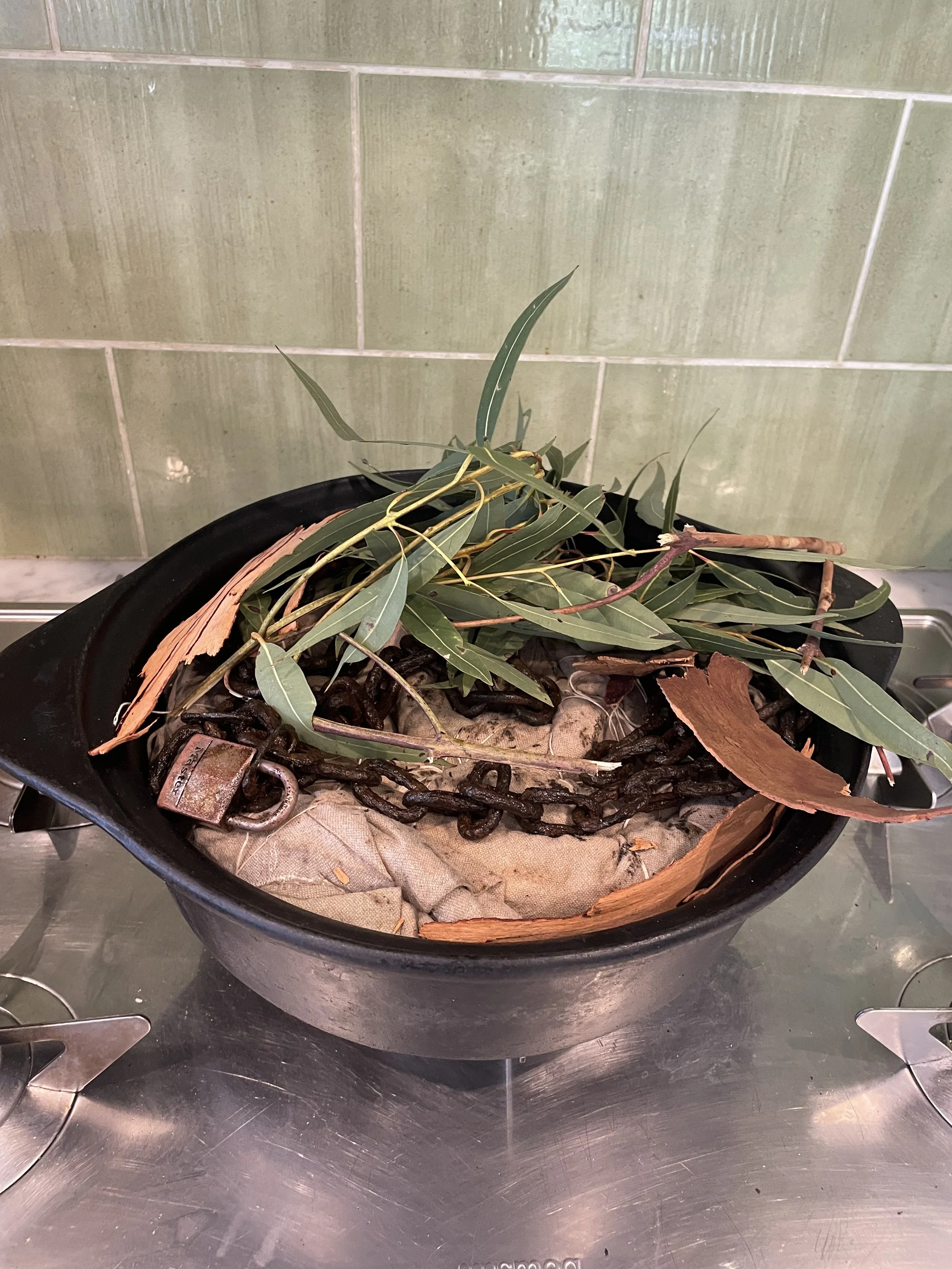
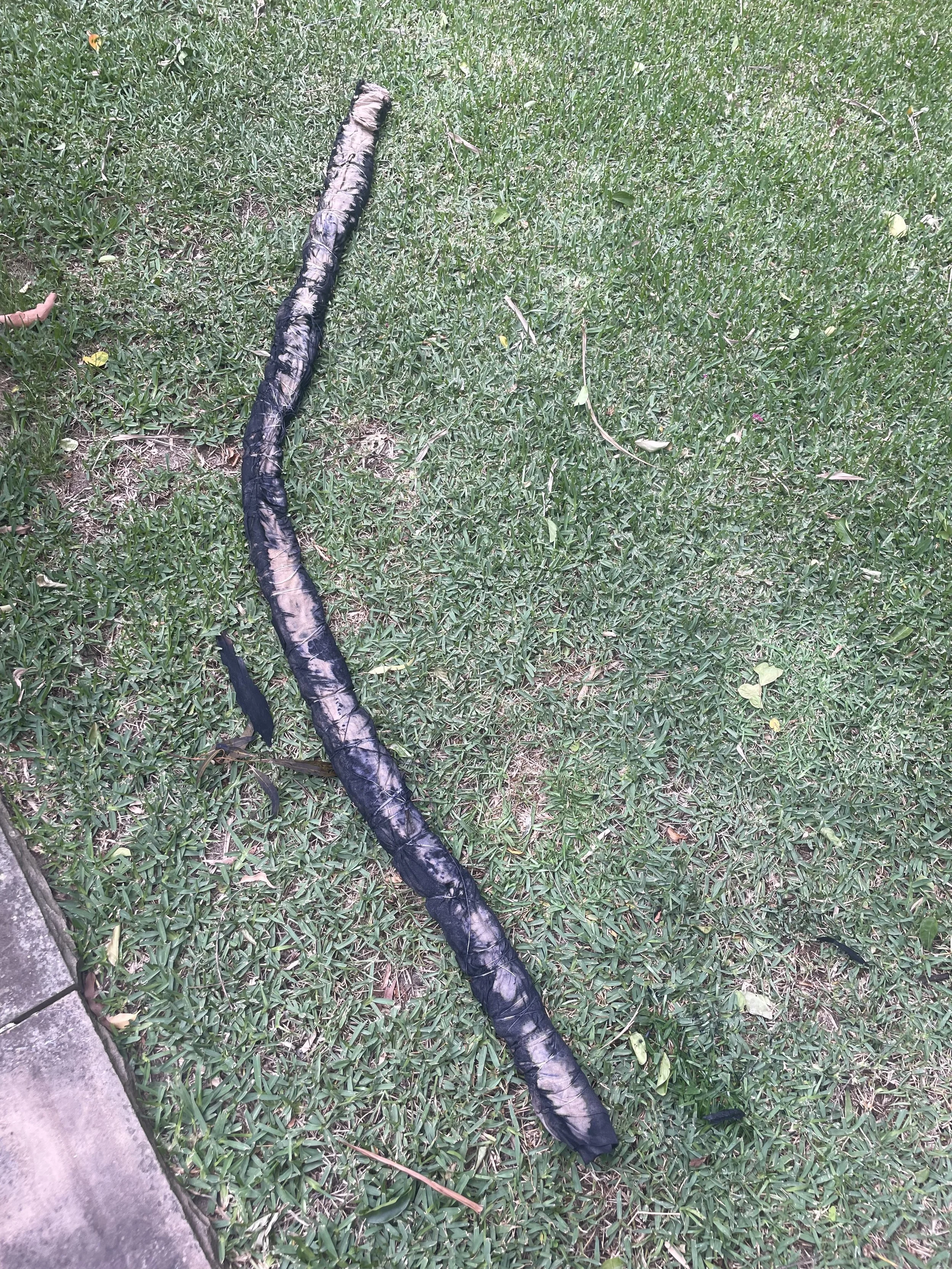
It's an interesting process. You’ve got to find rusted objects, put them in a barrel with water, leave it to soak for a few days, and then you soak the fabric in it. Then you've got to put the leaves on, coil it up tightly, and boil it for a few hours. Then it's like a weird, magic potion. I feel like a bit like a witch. You take it out and then something reveals itself. Each time it's different. You're doing the same process, but every time I've done it, the colours have been slightly different or what comes up, is different. You can put a piece of bark there one time and it's like, ‘oh, that makes a sick mark.’ But then the next time you do it, nothing appears. So, yeah, that goes back to letting the materials develop the artwork for themselves. The materials are co-producing the work just as much as I am.
Why is that important to you, to let the materials speak for themselves?
Because art exists within the world, and the world influences the artists, so the world can also directly influence the art, without going through me. It sort of takes me out the equation, partially. In taking a step back, I find that inspiration is easier once the world can create what it wants to on the page.
What does everyday or week look like for you? Do you think about making art a lot?
Surfing, music, music festivals. I'm a bit more busy nowadays. But the last year or two, my days have been very relaxed. Wake up, go for a surf, and then I'm allowed to sit back at a nice lookout and think about what I want to create. I sit there with my sketchbook, smoke a joint, think of ideas, then hit the studio. I think a big part of the process is thinking, what do I actually want to paint? More than actually sitting there and just painting a lot, I think. At least I spend a lot of time trying to actually get the idea worked out, at least a bit totally.
When did you first start making art?
I've always painted. It's sort of a condition that people enjoy art and then you just naturally feel like, ‘oh, I've left school now’ or ‘I'm not going to paint’ or like, you know, ‘now I'm a bit older, it's no point drawing’ or whatever. But I always thought, why would I stop? After school a lot of people stop drawing or whatever. Well, I enjoyed that. Like, what's the point of stopping?
What influenced you to take artefacts around the streets for inspiration?
I used to paint because I'm stingy on buying canvases and stuff. Like, I’ll paint on a piece of wood I find or one time there was a rusted mirror in a bathroom and I took it down.
From a bar or something?
From a public toilet. It was unusable as a mirror at that point. I painted on the mirror. So I’ve done it for a while. It adds something so awesome. And it brings a story into the artwork. The outside world.
Is travel one of your main kinds of influences as well?
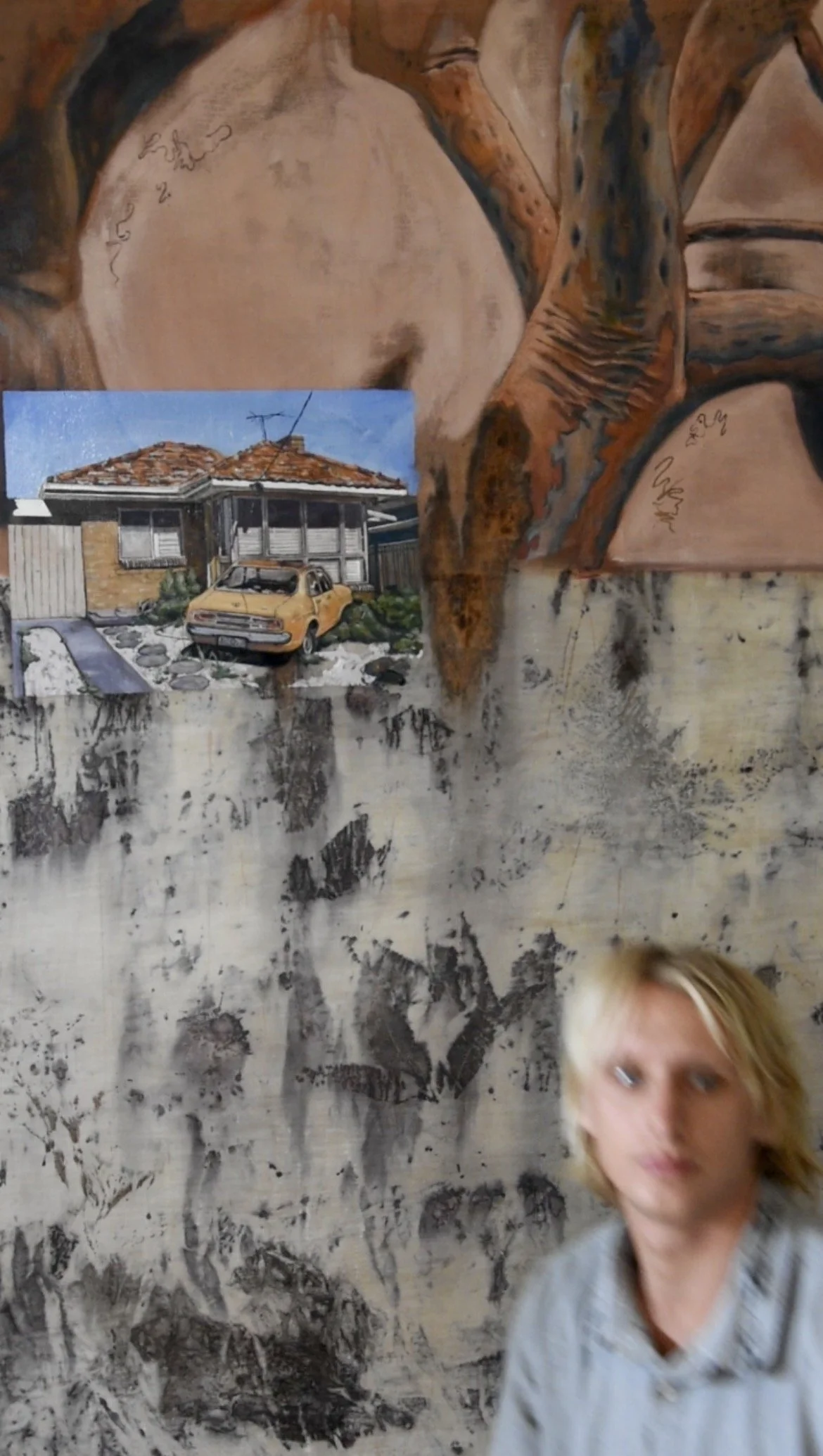
I did a lot of travel artworks and things inspired from overseas. But I was like, why am I not appreciating my own culture? Why do people not respect Australian iconography or Australian trees or anything? People often, you know, paint something Japanese and they've never been to Japan. I spend most of my time in Australia. Let's try and find the beauty in the every day. So it's since I've gotten back, I've done a lot of Australiana works and things that inspire me, that often are overlooked. I've recently painted a lot of red brick houses, which, one by one as I cycle around the neighbourhood, I see they're being replaced, destroyed. I think they're being under-celebrated. So that's one of the things I started to paint. I capture images that everyone sort of knows, but they can't put their finger on. So whether it's a house that you go – ‘oh, I know that, but where was it?’ Whether it's a telephone pole, an Australia Post box or a red brick house. A lot of people can't quite put their finger on it. I kind of like getting that reaction out of the audience. It's an intersection between memory and place. The memory of the surfaces that you paint on, and also the person that's viewing its memory of. It's meant to capture all the aspects of someone's memory of a place.
I love that sentiment around Australian red brick houses being under-celebrated. I grew up in a red brick house, and now that I’m older, I appreciate it a lot more, it’s so classic. Did you grow up in Sydney?
Yeah, Sydney. Objectively they’re great buildings. And now starting to work in the interior design industry and architecture – I’m studying a master of architecture – I see art in a new way of how art can actually fit into a space and enhance the space. I look one step further and see, where would this sit in the end? Instead of just producing something that I haven't really thought about, or hasn't been considered as much.
When you’re doing a work, are you thinking about how you want it to look?
Yeah, I try to. Sorry. I’m bullshit. This isn’t live. I can just say no, that’s completely wrong. Actually no, fuck, I don’t.
I want to keep that in because it’s funny. But seriously, I feel the same about representing Australia, especially after traveling. Are you keen on exploring that more in your own work?
Yeah, because people have such strong connections to their own culture when you're travelling. I was quite envious of that, you know? And I don't know why Australians say where their culture, or heritage is from, rather saying they’re from Australia. I think we're missing out on being more proud about our own culture and things that make Australia unique. That's why I was kind of like, I love travelling and I'm obviously very lucky to do so. But I was also sort of envious about going places and seeing people where their world is right where they live. That village, that mountain or whatever, seeing their deep connection to that one place was cool. Cool to see. I'm not saying I'm ungrateful for being able to travel.
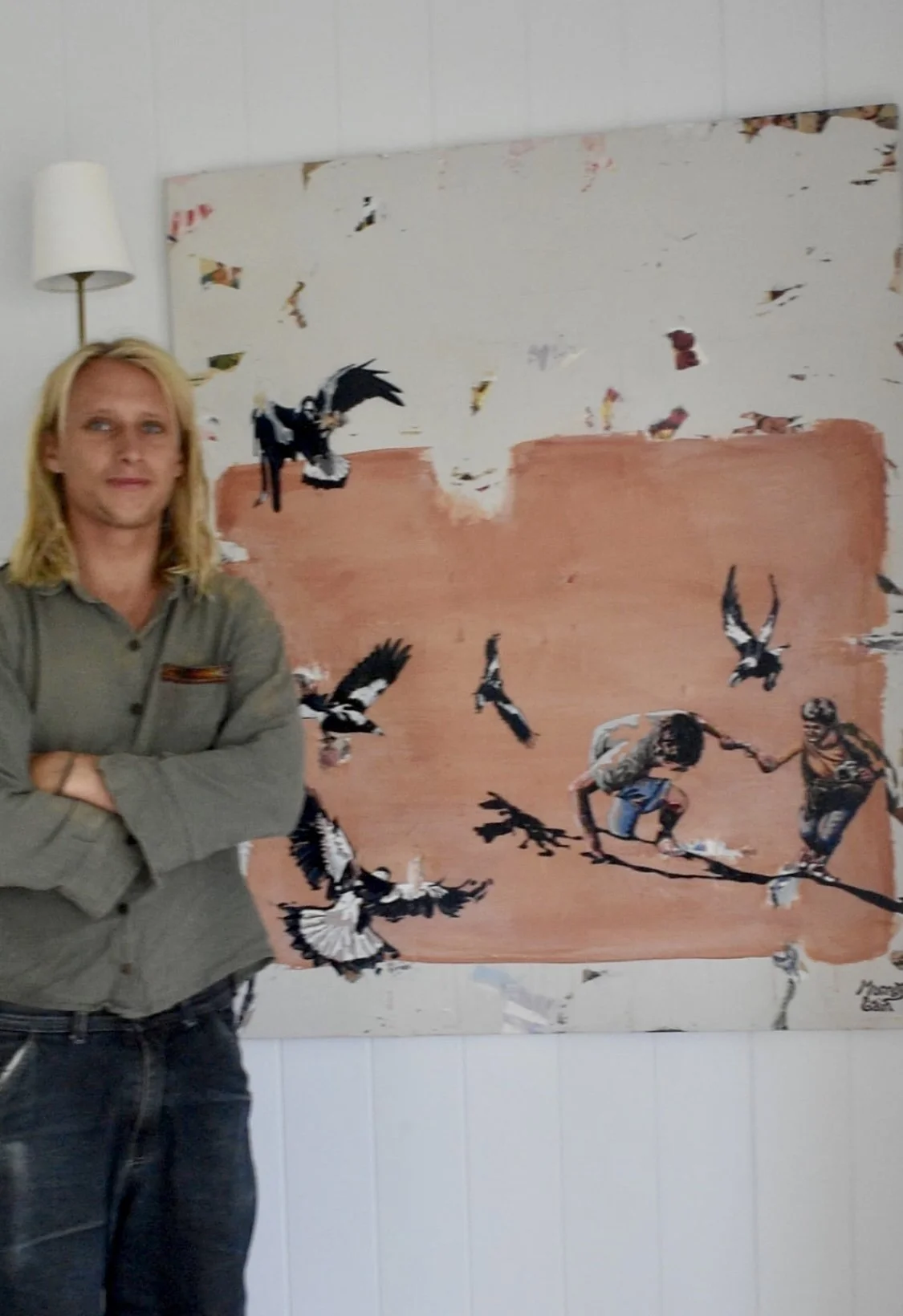
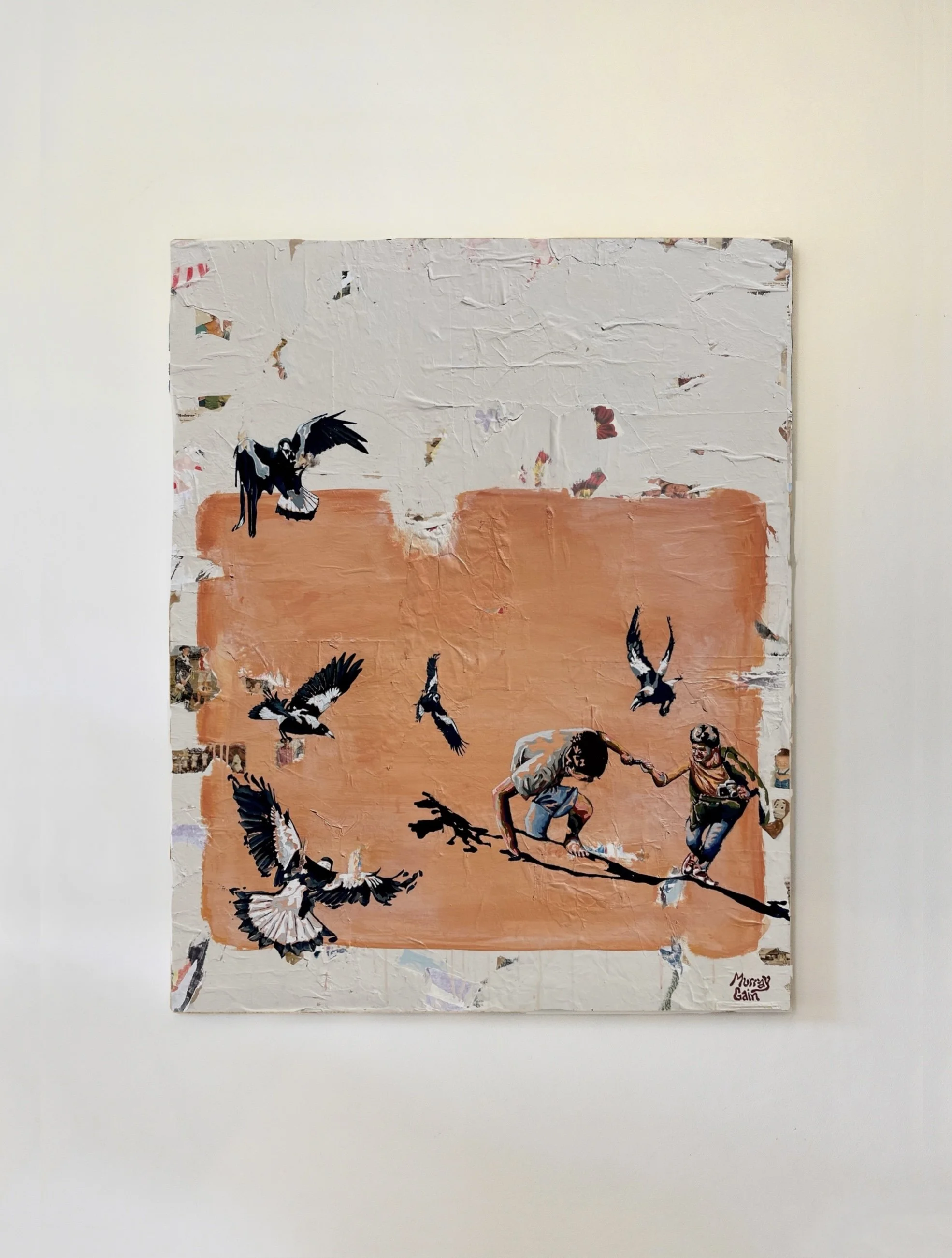
Tell me about your artwork, ‘Swooping Season.’ I think it’s my favourite.
Well, everyone has a memory about being swooped by magpies. I’m trying to capture that. That moment of terror in the hour. Something, again, uniquely Australian and often overlooked.
Did you sit with that idea in your head for a while before you painted it?
Yeah, I write ideas down or just sketch little ideas. I start a lot of paintings that don't actually finish.
How long would it take before you come back to those unfinished paintings?
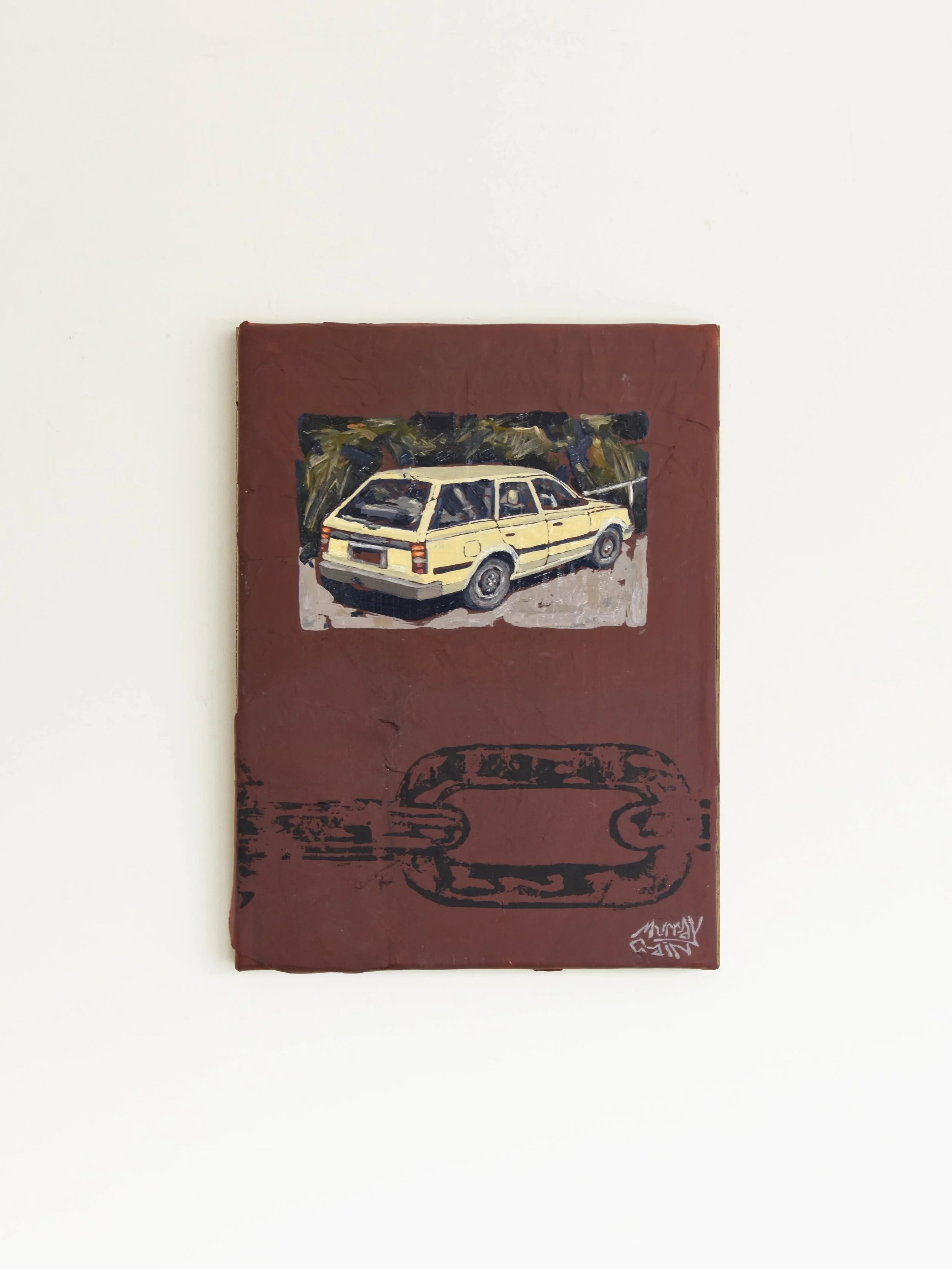
Sometimes, never. I’m just like, fuck this. I hate it. But also there's a lot of work before the painting actually starts, because I build all my bars that I stretch the canvas on top of. I’m sort of involved in the whole process. I built the timber framing behind. I have to eco-dye the fabric, or put the posters on. I just get drop cloths from Bunnings, or you can use bedsheets or… then I stretch it.
Drop cloths from Bunnings? That’s so good. Are you focused on eco-dying every time now?
As of late. But I'm still doing the poster stuff for the, you know, street drive element.
How do you stick the poster stuff on the canvas?
It's just wheat paste, so... Yeah, flour and water. It's the same technique people used to stick the posters on the street. One time, I said I could cook for four hundred people at a festival, and we had no food left at the festival, except cabbages and flour, and someone was like, ‘oh, you should make, like, okonomiyaki’ or whatever, from Japan. I've never eaten in my life – it's like a cabbage pancake – So I'm like, fuck it. I'll make it along with this other guy. I made the rice over an open flame in a giant pot. I completely burnt the bottom, and the middle was gloopy and the top was raw. And then the okonomiyaki tasted exactly like the wheat paste. It was just flour, water and cabbage, and I didn't cook it properly. I was eating it and was like, ‘oh, this just tastes like my glue, this is horrible.’ I got sick and had to leave the festival. Yeah, it wasn't good. And no one enjoyed my cooking, so it wasn’t good.
Do music festivals inspire you a lot?
Yeah, I think I just like being around that. Music's definitely like one of my main passions. I just appreciate music. I just do it for fun, even though art's also fun, but I take art more seriously, I guess. I play music every day and listen to music like guitar. I play guitar all the time.
What’s your studio space like?
Oh, my brother moved out and then I just took his room as a studio. Before my studio was just my bedroom. That’s where most of the works are actually created.
I heard a story about you getting electrocuted in a cult in India. What’s that about?
Well, yeah, I got electrocuted in India. A lot of cult stories. I sort of have a weird fascination with cults. Been to four cults.
Okay, how do you find these cults?
Well, there's a Netflix documentary about the American version of the Indian one, but I went to like the Indian one. Over in India.
What fascinates you about cults?
I don't know, it's just pretty fucked up sometimes. I just like checking out everything. I'm curious. I'm curious about everything. So I'm like, oh, that's interesting. I think one of the things in life is just to check everything out. I’m just trying to see what's happening. Like, why are people there? Like, what's the scene? I don't know.
How's your art style changed over time?
Oh, styles change. When I was learning to paint, it was the typical beachy stuff. And then I went to the more found object stuff. Then it sort of got more influenced by graffiti culture, graffiti inspired stuff. Now I hate that shit, so.
Why do you hate that shit?
I don't know, I guess your taste gets more refined over time. And you sort of look back at your old stuff and cringe.
Who are your favourite artists?
I like this guy called Yakob Morley. He does tattoo inspired acrylic paintings. That's completely unrelated as well because I haven't done anything like it. I also like Pedro Gutiérrez.
Bowie was on my Instagram. This quote kept coming up, something like, don't create art to meet other people's expectations. For me, I struggle with that a bit. I need to trust myself more. How do you feel?
That's definitely true. I think I've only really discovered that more recently. A lot of my past works, I was listening to other people more. I was asking myself, what's more trendy now? What would sell? And then you're sort of not painting for yourself, you're painting what you think other people might like instead of like, what do you like? So now I've gone to what would I want to hang on my wall? What connects to me? And then surely someone else can relate to it and has a similar taste to me. So I think, yeah, delving into that more as you progress is one of the things that artists, I think, is a challenge, but got to do. Yeah, like stay tuned. Because then it's more true to the artwork. It speaks more if it actually comes from somewhere. It's more sustainable if you're painting something you like instead of something that you think someone else would like. It just ruins the fun of it. Well, it’s like copying other people's work.
Can you tell me a bit about your recent solo art show?
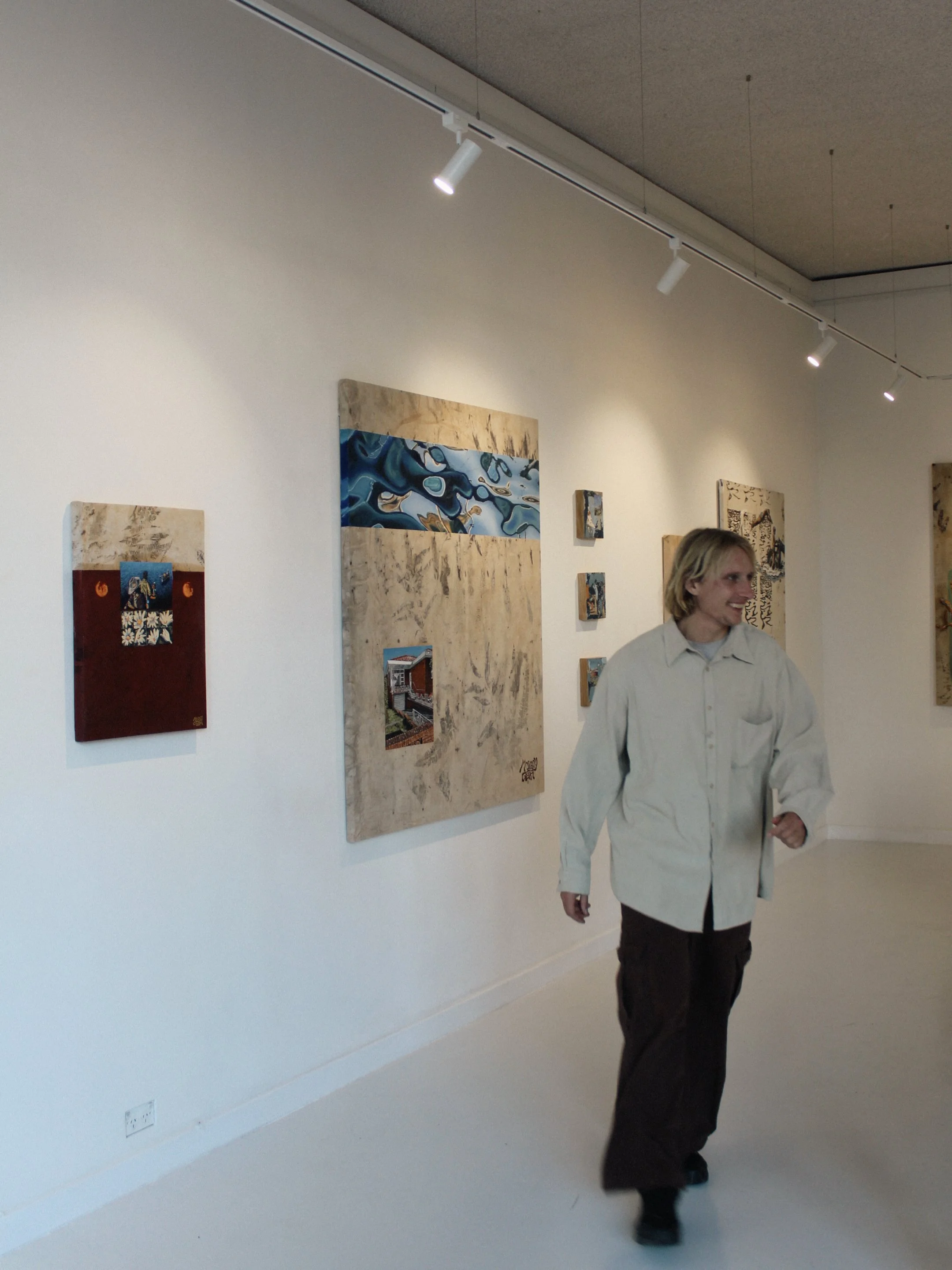
It took a while to build up the work. I had twenty pieces. Some big, some small. I was super nervous the week before. I was like, ‘I'm cancelling the show. No, I'm not doing it.’ Yeah, I left work one day. I didn’t cancel it.
What was your favourite piece that you displayed?
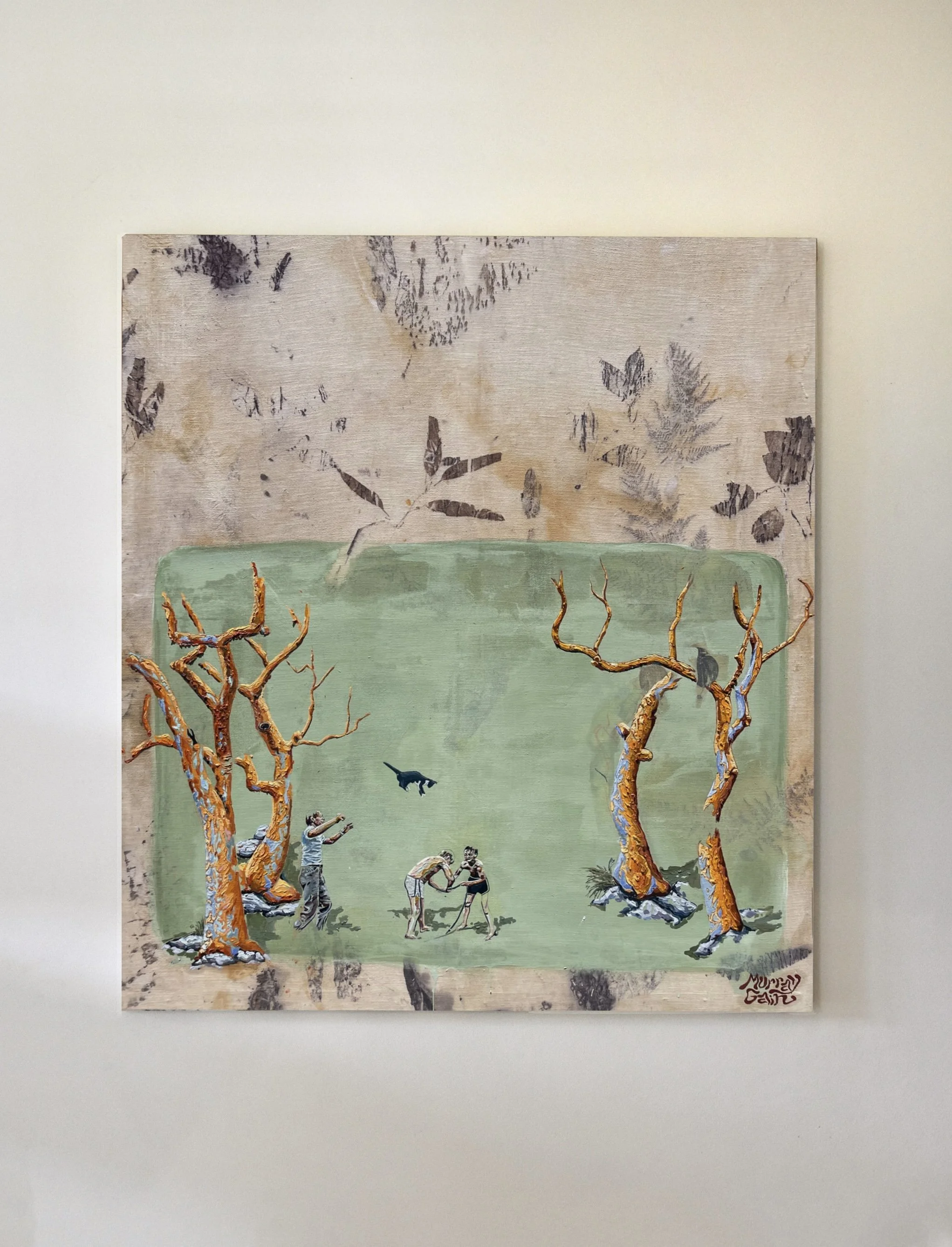
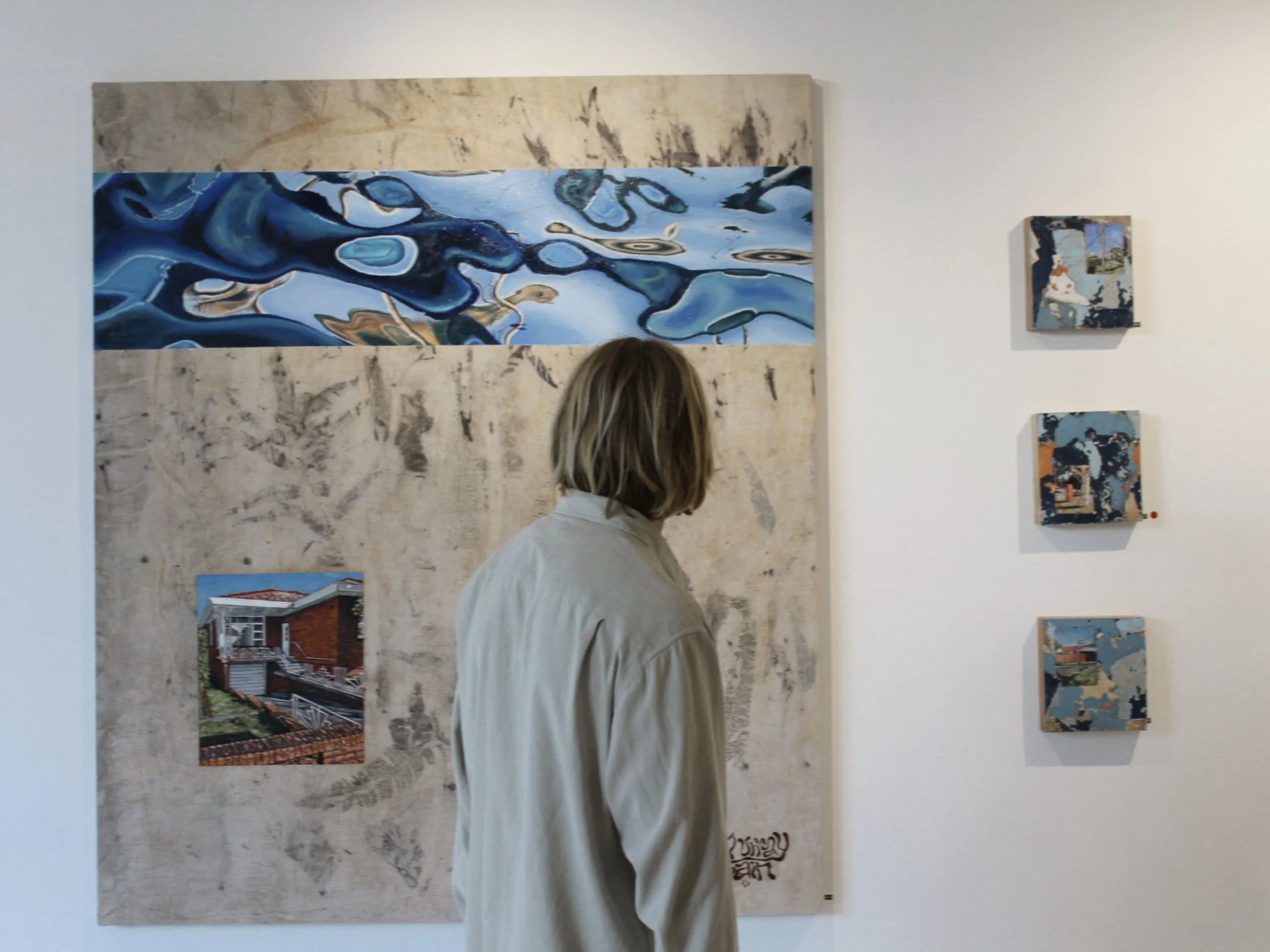
I liked this one called Bush Corner Relic. It's got eco dyed fabric and a Sydney red gum. The orange bark printed hasn't been captured like that again since. It’s an eco-dyed bark. It just doesn't come again. People use other chemicals and stuff to get more clear effects. I'm going for something more subtle and abstract. Each one just becomes different, I don't know why. That same leaf would be here and it just doesn't show up. It's such a nice effect. A bit of this leaf fell away. It wasn't rolled up.
Yeah, that's such a sick effect. What made you paint parts of the trees blue?
I love the Sydney red gums. I always sit in the bush, smoke a joint, whatever. Throughout the season they go from orange to red, to blue, to silver. And there's a stage throughout the season where the blue bark hasn't fallen away yet, but some has. So you get the bright orange with the blue. I think that's cool.
The cat, what's the deal with the cat? Do you like cats?
People get worried about the cat being thrown. Don't show that to animal lovers. They get pissed off. Again, it's something familiar. Cats are familiar, suburban experiences. I know cats are everywhere, but I thought it was cool.
What are you doing for work besides art?
Working as an architect. Yeah. I’m doing a no expense spared house. It's like ‘blow money.’ Before I got that job, I was just doing the odd surf trip or like surf coaching. Taking backpackers that come here on trips up to Boomerang. Put them in the back of the Troopie, drive them to the beach. Learn to surf trips.
I’d love your take on how you know when a painting’s finished?
Age old question. I think a lot of my work is trying not to overdo it. I like leaving elements that are unpainted. I think I've made the mistake of overpainting a lot of times. And then you try and do things to fix it, unpainting things. I think it's just a skill. Often, you put it down, you're like, I'm done, and then you don't really go back to it and say ‘I should have done that.’ At least for me, I can say, ‘all right, that's done’. I don't really think about touching anything.
Do you find yourself coming back to a recurring theme when you're doing art?
Familiarity and memory. My own memory and impressions of a place. The feeling about being in that place, that memory.