Author/Illustrator Shaun Tan on New Book, ‘Hometown’
words by Angus Sharpe. images courtesy of shaun tan.
My first tattoo was a Shaun Tan illustration; a character he’d sketched on the front page of my copy of his debut solo picture book, The Lost Thing, when I was seven years old.
Twenty-one years later, I can still vividly recall the award-winning author/illustrator’s fingers flashing over that page. It sent a wild shock through my little imagination. How was it possible to draw so fast? And with such precision? It must’ve been magic.
I took The Lost Thing home and read it front to back hundreds of times. I’ve done the same with every Shaun Tan release since. Each time I enter one of his surreal, absurd, beautifully illustrated worlds, I’m reminded of the initial, childish feeling of magic and awe that I felt as a kid.
At times, when my tattoo is noticed, other adults will approach me. They’ll roll up their sleeve, lift up their shirt, and display their own Shaun Tan emblems. Each will have their own story of how one of his books has impacted them. The Red Tree will have helped fight depression; The Arrival will have spoken to the plight of immigration; or like me, The Lost Thing will have given confidence and encouragement to be different.
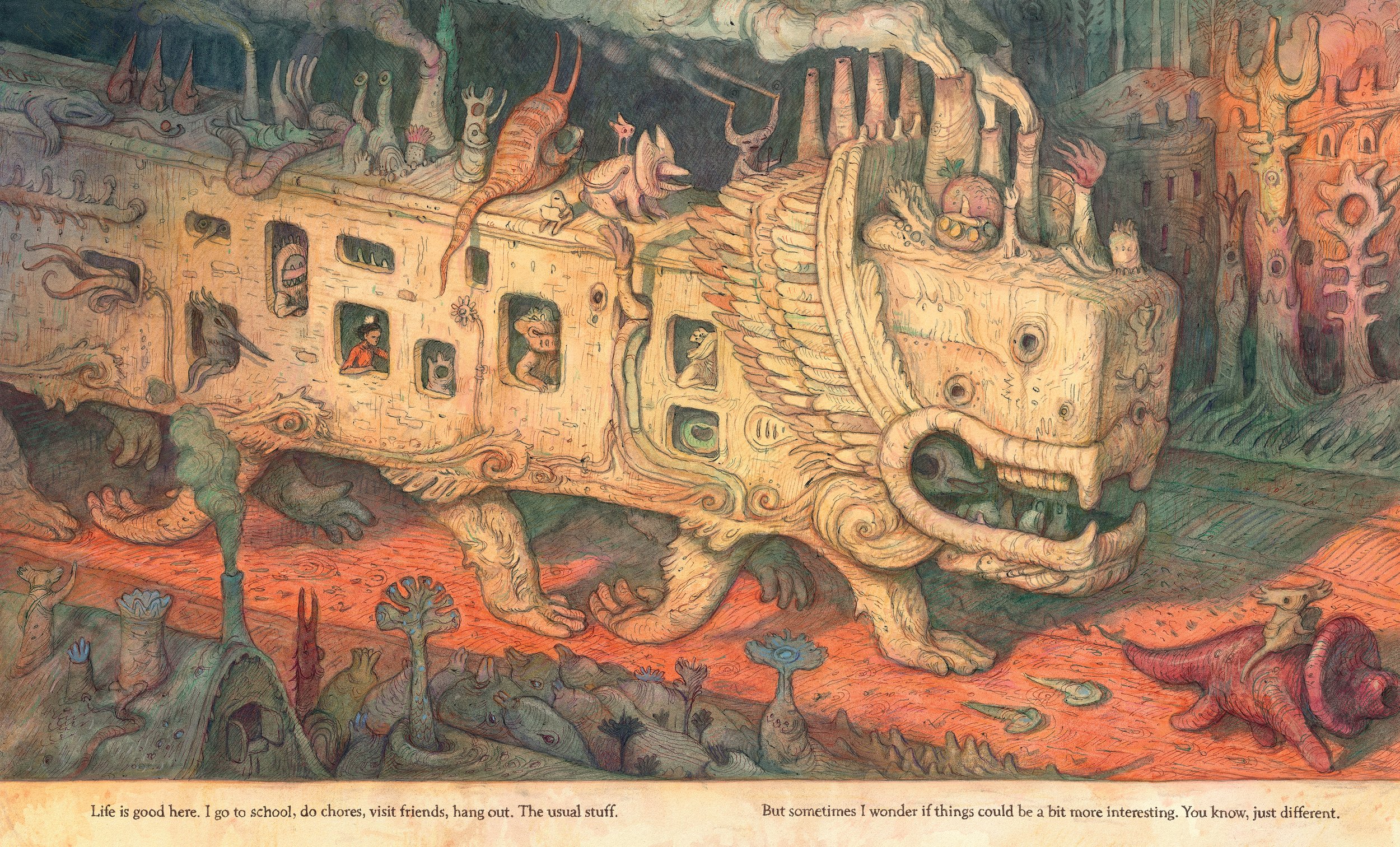
Now, for the first time in eight years – during which he’s raised two of his own kids – Tan has released a new original book, Hometown. Told through extraordinary watercolour artworks, the book covers themes from the meaning of family and home to the prejudice and misunderstanding that can arise from cultural collision.
In light of this new release, it was a privilege to talk to Shaun about children’s literature, creativity as an adult, and the development of Hometown.
Illustrated books and children's literature are often talked about synonymously. Why do you think that is? And what can adults gain from interacting more with this genre?
I think firstly, it's a cultural convention. It wasn't always like that in English speaking countries, and it also isn't always like that in other parts of the world […] illustrated books for adults were once very common, say, Dickens, for instance. You would have people lining up on the wharf, waiting for the ship to come in with their stock of Dickens, which were illustrated with all the pictures of the Dickensian characters and everything.
It also just happens that illustrated books are really great for children and children love them more broadly than the adult audience. In the same way that if you give a kid a piece of paper and say, ‘draw something’, ninety percent will need wild horses to hold them back. Whereas most adults will say ‘I can't draw to save my life.’
I think adults are definitely still interested in illustrated stories; it's just a suppressed desire. Which explains my ability to have some commercial success. I've tapped into something that has not been addressed. A certain kind of book that older readers do want to read, who are still interested in art but don't want to be caught dead with Miffy.
It's commonly expected that, as an adult, you’re meant to grow out of your childish creativity. Did that ever happen to you? If so, how did you rediscover it?
Yeah. I think to some extent that creativity has been dampened down, and I see that when I play with my kids. It’s so much easier for them. They know how to be artists already. They just start doing things and they work with the errors. Whereas when I sit and draw with them, I can feel this stiffness in my work, because there's too much muscle memory and too much technique.
I'm constantly trying to find ways to get around that and free myself up. One way is to just draw in sketchbooks, and write by hand very quickly and freely, almost in a secretive way so that I know no one's going to see it.
With adults, we have too many frameworks about how things are supposed to be or what patterns things should take. Feelings of appropriateness and inappropriateness and so on. We're filtering too much. Everyday life is like an exam, and you must pass. And to do that, you must engage these systems. Like, when you drive a car, you can’t get transfixed by the beauty of a stop sign and speculate on the kind of viridian in a traffic light. So, you switch off the creative part of your brain.
What you do as an adult artist is you learn to toggle between modes. The sketchbook is a place where you can stop the inhibition. Then you're like, ‘please give me crazy whispers, I want to dream while awake as much as possible.’ And you put it all down. Most of it’s garbage, and that's part of the beauty. You're just spewing pure creativity. Whatever little sparks are misfiring in your neurons, making connections between random things, you’re writing them down. And that's what all stories are, just connections between things that are unrelated. It’s your brain trying, in some ways, to break down the categories that you've spent all your time imposing on it.
Then after that, it's the process of going back through in a more inhibited way and thinking, as a writer or an artist, ‘now, how do I make this a story that's not going to confuse people.’
Have you read your books to your own kids?
I haven't read much of my work to my own kids. That's a really good question, because I wonder about it myself. Why haven't I? Partly, it's just too boring for me. Because I've read them a million times through their creative and editorial process and it's like, ‘oh, here we go again. Another editorial check.’
I think to some extent it could be that I don't want to influence them too much because both my kids have creative tendencies. My daughter, in particular, who's thirteen, I can see she's inherently super talented. I don't want to say, ‘look at what I did!’ unless they ask. So, I'm waiting for them to ask. And the moment they do, I'll say, ‘yeah, I'll read them to you and let's look at them closely.’
Have your kids taught you anything about children’s literature?
Through reading other people's books to my kids, I’ve realised that picture books are conversation devices. This was my intuition when I first created my books, so it confirmed my suspicions about how kids might respond to my work.
I deliberately make stories that are slow. There's a lot of picture books that are stand-up comedy routines. And it's like, ‘turn the page, turn the page.’ I'm very much of the, ‘let's sit on this page as if you'd go to an art gallery. Don't just whiz past it. Sit on it and really contemplate it and study it closely and have a conversation.’
When reading to my kids, I noticed I would be wanting to just turn the page, and the kids would be the ones that were studying it and looking for small things. They're less fixated on recognition. I think maybe because they're used to most of the world being quite unrecognisable. So, they focus on the things that interest them. Whereas as adults, we read pictures a bit the way we would look at a map. We want to categorise it. ‘What is this? What do I understand and recognise?’ Then, after that, maybe we'll have the luxury of enjoying it and thinking about our own thoughts. Kids are straight into that last process.
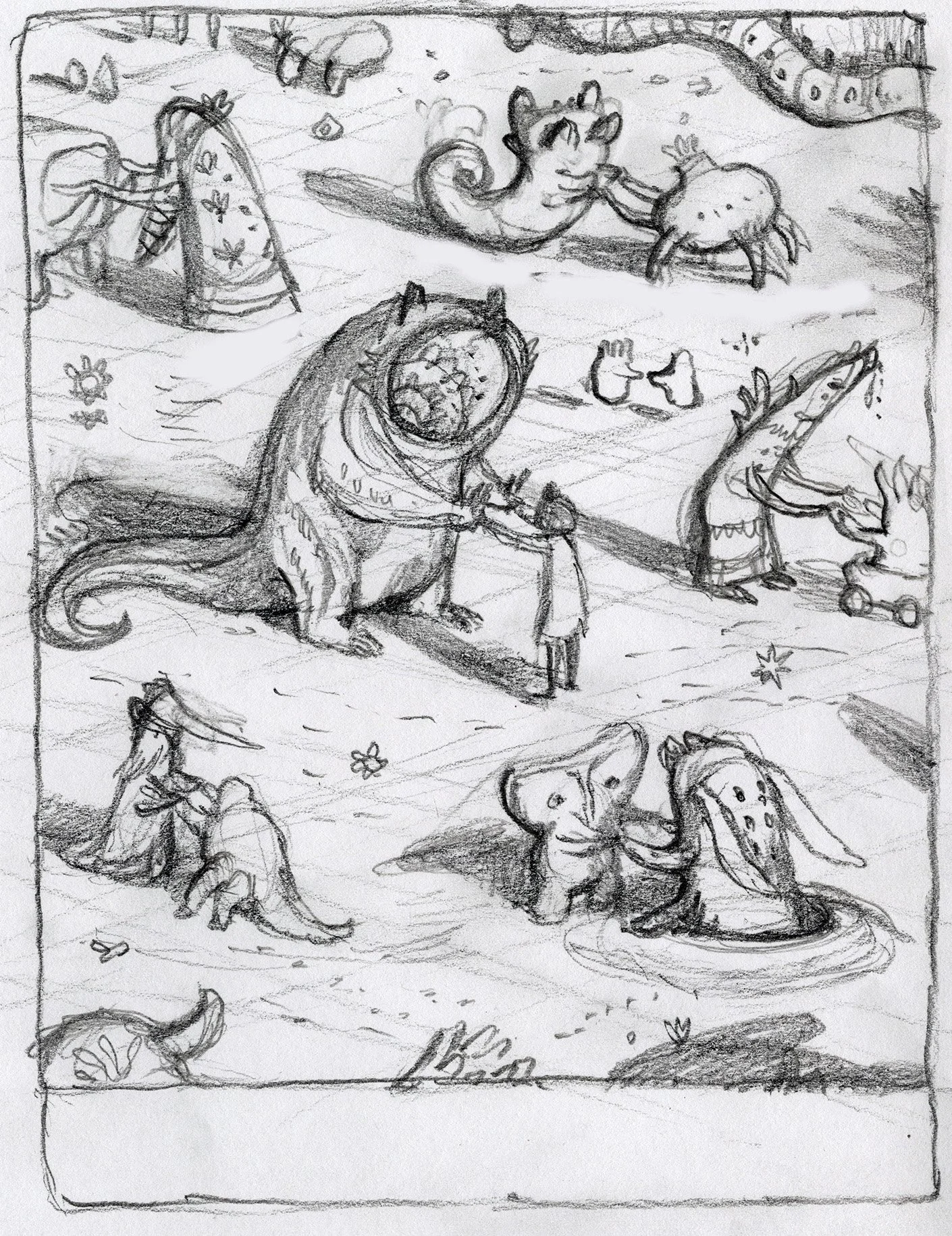
Your new book is called Hometown. What do you picture when you think of your own hometown?
My hometown is Perth. I lived in the northern suburbs, which is culturally not that interesting a place, but a nice place to grow up. Close proximity to nature, a lot of bush, and we were right by the ocean. Our holidays were very nature-based – fishing and crabbing and catching octopus and abalone. My dad’s a Chinese immigrant, so anything you can eat for free, it's fair game. And my mum's family is a working-class Australian family that were very much into fishing and hunting.
My son is super into fishing at the moment, and recently I took him to a salmon farm. I was knifing all these salmon in the head to put them out of their misery, and it reminded me of all those fishing trips.
That's why you’ve got these scenes in the book of hunting, and that kind of stuff.
What research did you do while developing Hometown?
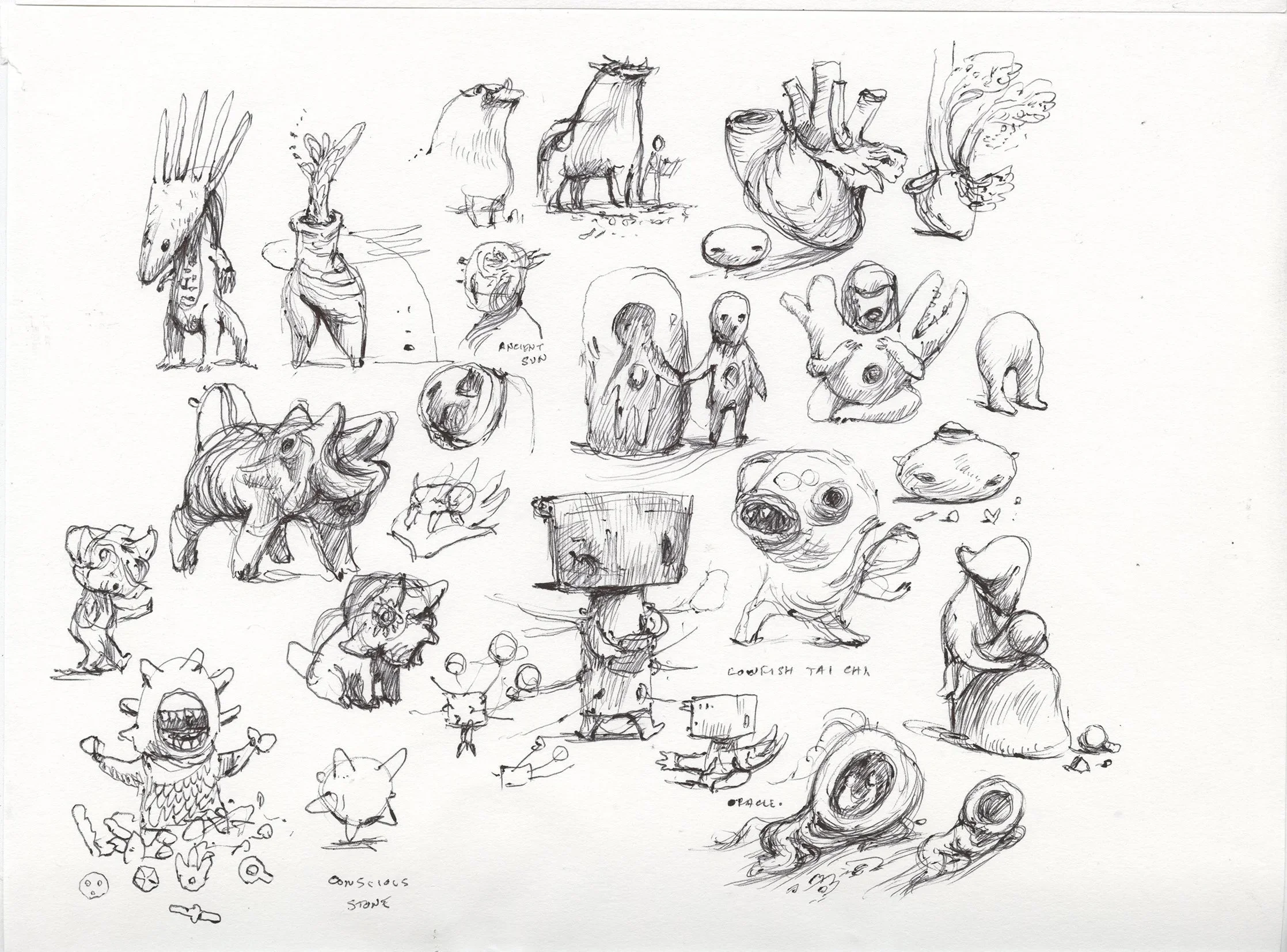
I did a lot of visual research to work out the world. Hometown is this world with a lot of variation on our world. So, you can't have a hat or a suitcase or a ladder or a window. Everything has to be different, because this land wouldn’t know those things. So, a lot of it was visual development and going out and looking at things.
I was also reading about missionaries, because the story has this feeling of a missionary visiting someone from an uncontacted tribe. I was reading first contact stories online, and there was an article about missionaries in the Pacific Northwest cutting down the Haida totem poles, which had a big impression on me.
I remember watching a movie a long time ago called Black Robe and thinking how frightening the world must have been to those missionaries. Not only as it might be to any visitor, but also because they've got the religious angle, and they see these alternate beliefs as dark and scary. In the same way we might view fascism or something like that. It's like, ‘oh my god, these people are living this way. It's unacceptable, and I have to rescue them for their own good.’ I was very interested in that motivation and how those conflicts are resolved, if they are resolved.
I also remember when my wife and I were travelling in Mexico City, we visited this cathedral built from the stones of the Aztec temples. We learned that the enslaved Aztec builders would sneak their little icons in the walls and the floor and even in the altars. You would hide your sacred objects inside the other sacred objects, so that when you're worshipping – because you're forced to worship in the church – you can still honour these gods. That was a key inspiration for my story as well – how sometimes, when you've got such a disagreement of worldviews, they cannot be reconciled. What can you do? Well, you're going to have to do something sneaky.
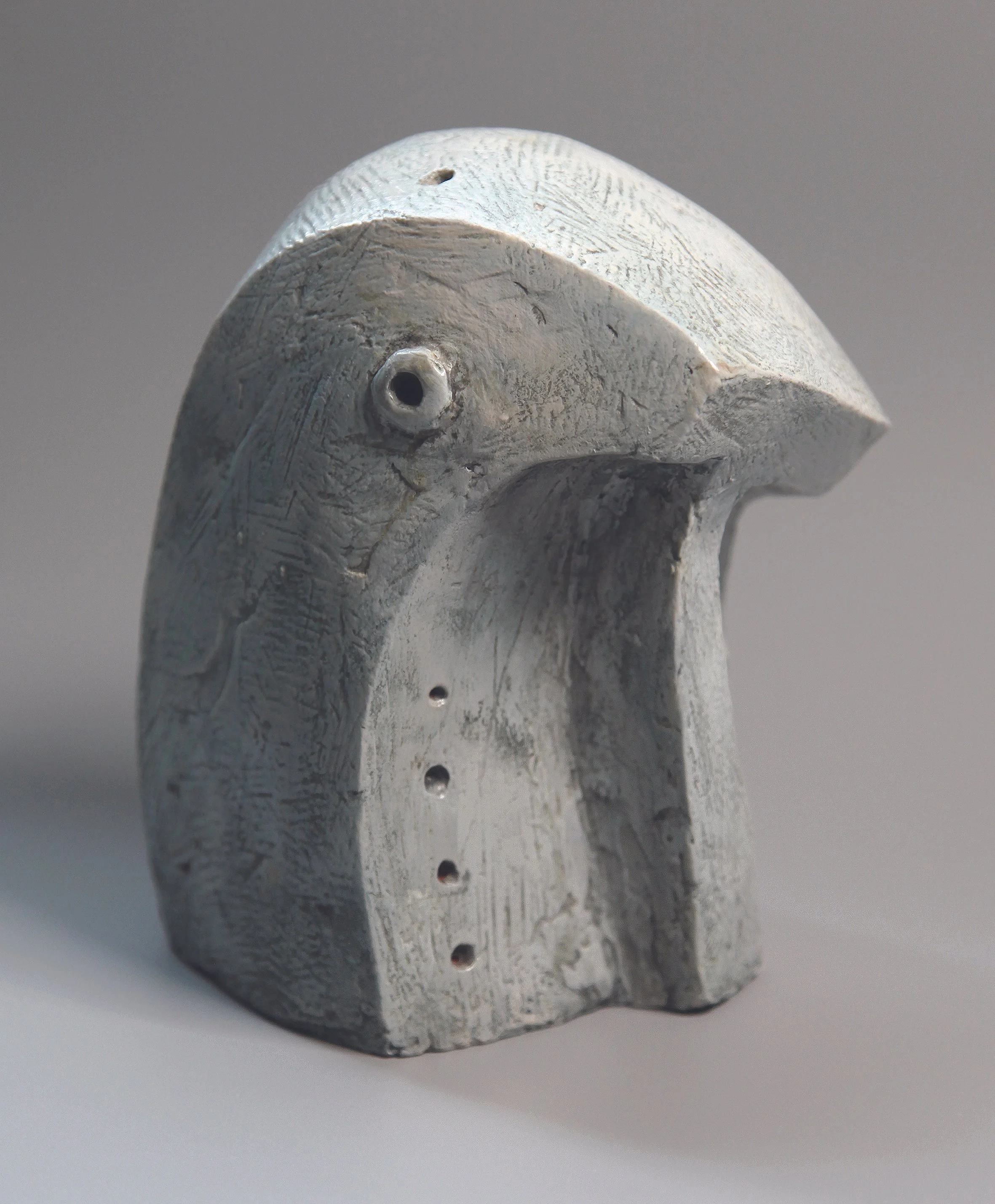
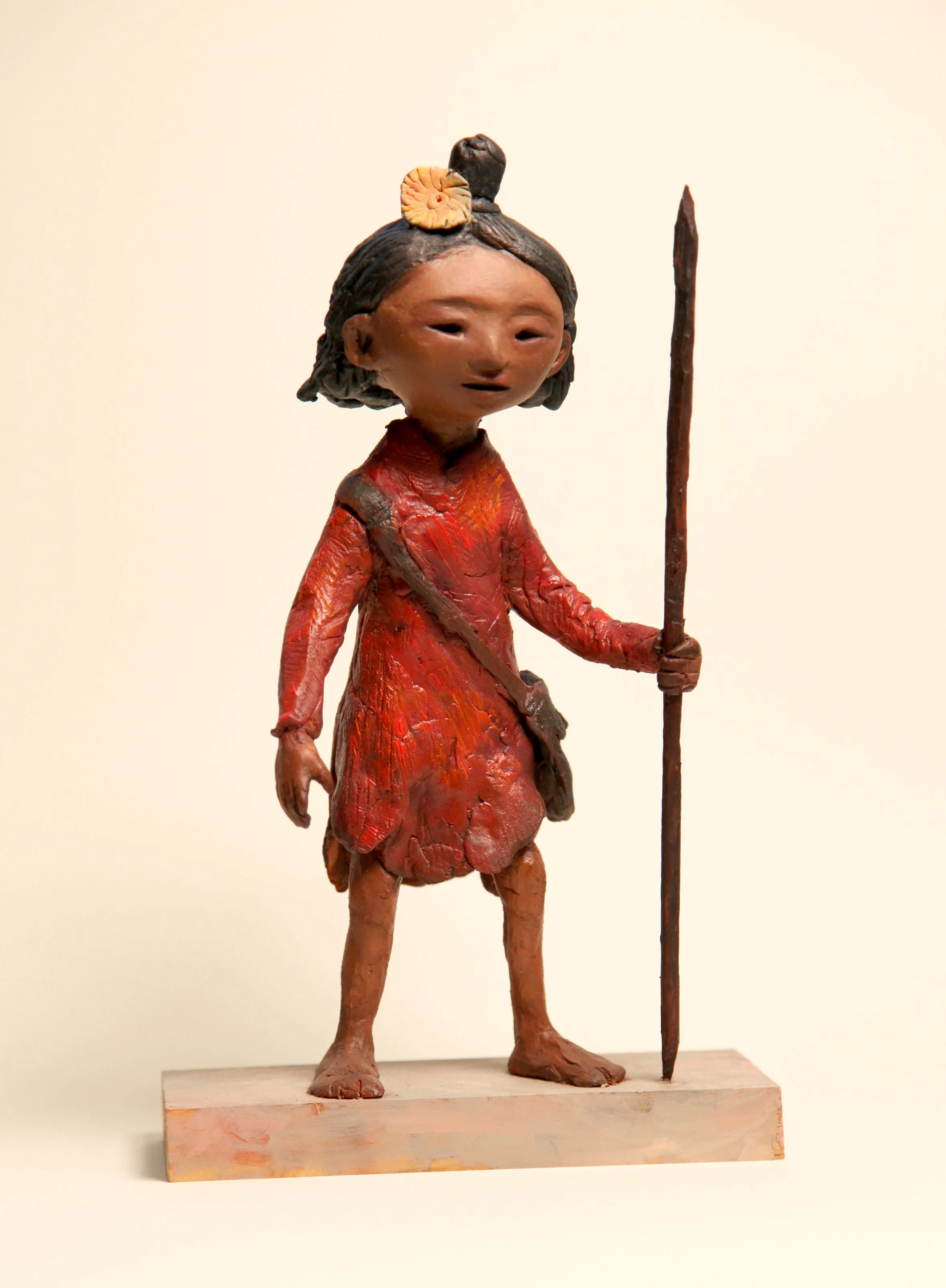
You’re quite recognised for your sketches, but you’ve also been known to make sculptures when developing a story. Did you create any sculptures for the visual development of Hometown?
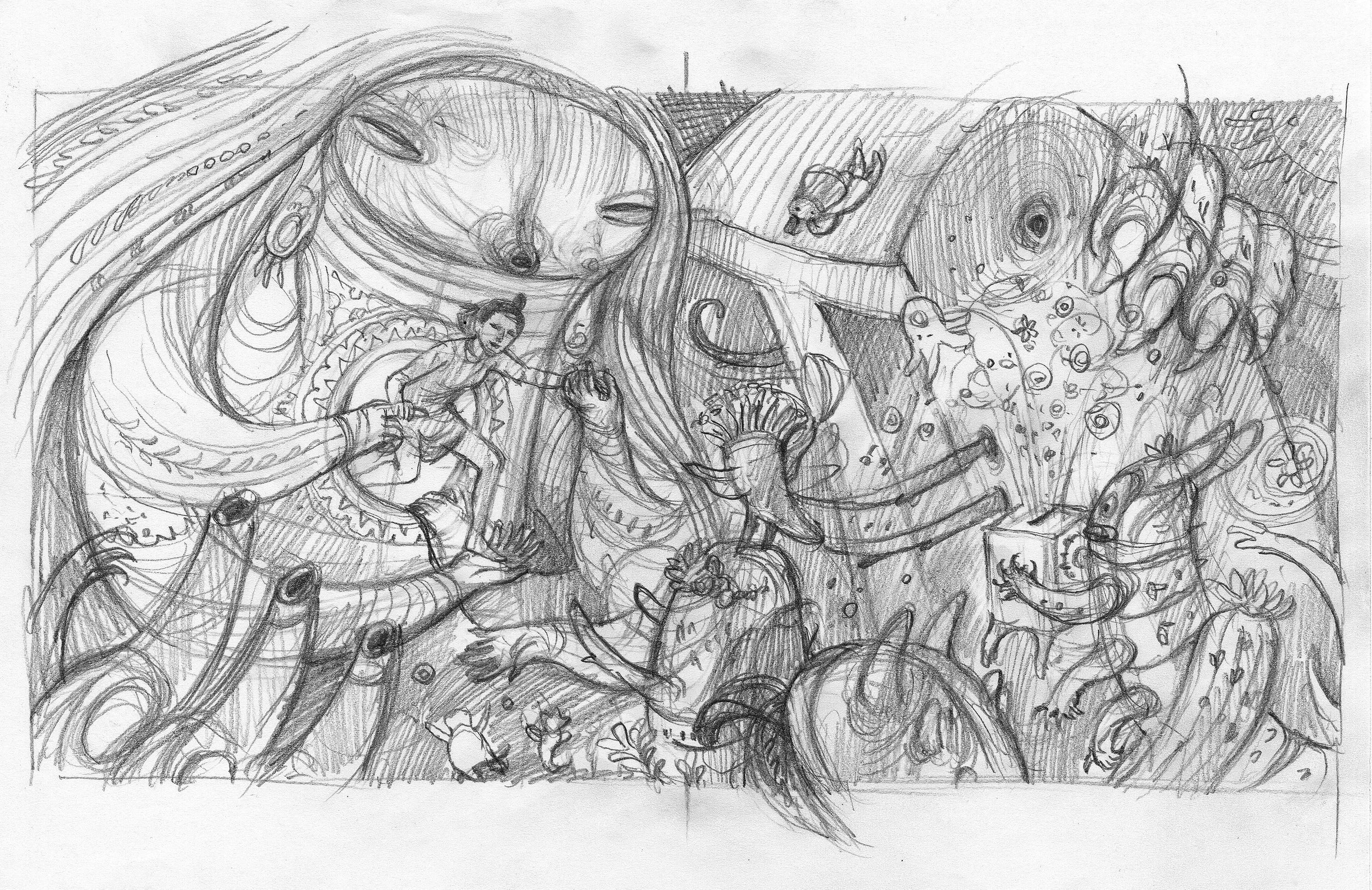
Yeah! I've got some examples here. This is the dad. (Pictured above) Sculpture #1
Because he’s such a weird shape, and you see him from different angles, and also because he's so lacking in expressiveness, lighting becomes important. I tested the sculpture out with just little basic objects and went, ‘no, it needs to tilt more like this… and tilt more… tilt more. Now he feels more paternal.’ And so, sculpture becomes really useful for working that out, and also just character design.
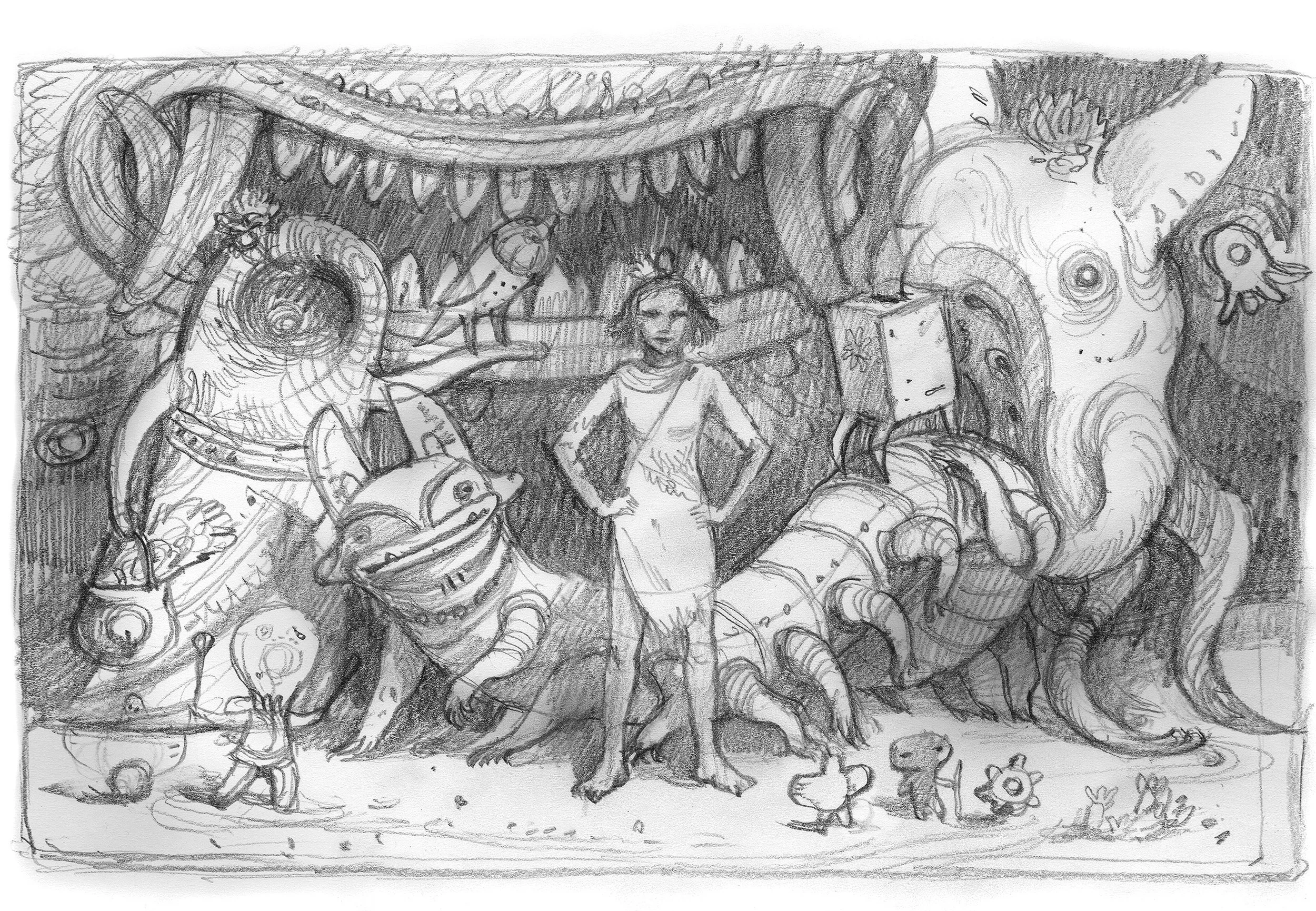
This is a super early sculpture of the girl. (Pictured above) Sculpture #2
It was just for trying to work out her head shape. You know, how does the hair flare out? The early versions were more stylised. It was more like a cartoon world. And then over time, as her head was shrinking and the body was becoming more proportionate, I went, ‘okay, I think I want a realistic human in this world.’ What I found with the sketches is that the realism suddenly made the human feel like a very isolated element.
I was quite surprised by the quotes on the front cover from directors Guillermo del Toro and Darren Aronofsky. Were you surprised by their reactions as well?
No, because I asked them for them.
Are you good friends with these guys?
No, but they had contacted me in the past. Which sounds more exciting than it is. Neither of them was interested in working with me, but they were asking about something to do with my artwork.
There were some mutual acquaintances that had mentioned, you know, ‘I was with del Toro and we were talking about your work and he knew it very well. Would you sign a copy of a book for him?’ So, I've sent him my books before… I hope it was the real del Toro. There was a little shred of doubt in my mind because I've never actually met him. Whereas with Darren Aronofsky, I think he'd read some of my books with his son and they both found them super interesting. Particularly The Arrival and Tales from Outer Suburbia.
I wouldn't have contacted either of them just because of their name, but I thought with del Toro and Aronofsky there's something about the themes in Hometown that reminded me a lot of their work. For instance, with Aronofsky, I can't put my finger on what it is, but it's something about the themes in Hometown of a person trying to find love in a strange place that somehow chimes with his characters who are always looking for love, but in really difficult circumstances.
How would you describe the world in Hometown to someone who’s never been there?
I would say, for me – because I spent so long in it – that it's a loving world. More loving than this one. There's a sense in which all these creatures and weird things – and sure, they're sometimes ripping each other apart with sprays of blood and guts and stuff – but there's some sort of binding cohesion in the world. It feels more highly evolved.
I was trying to imagine a world where the divisions between creatures are so stark and profound, there's not even species or gender groups. It's just a mess. They've had to learn to live together through real strong empathy and understanding. Humans are obsessed with similarity. Even with arguments against racism: ‘don't be racist. They're basically like us.’ To me, that's wrong. You should be loving someone for their differences. Even the word ‘tolerance’ bugs the hell out of me. You shouldn't be tolerating differences. You should be loving them. You need diversity.
Shaun’s books are often tucked away in the ‘picture book corner’ of any good bookstore. I expect Hometown will be easily found there. Otherwise, you can find it online here.