Justin Hager’s Home Is Where The Cat Is
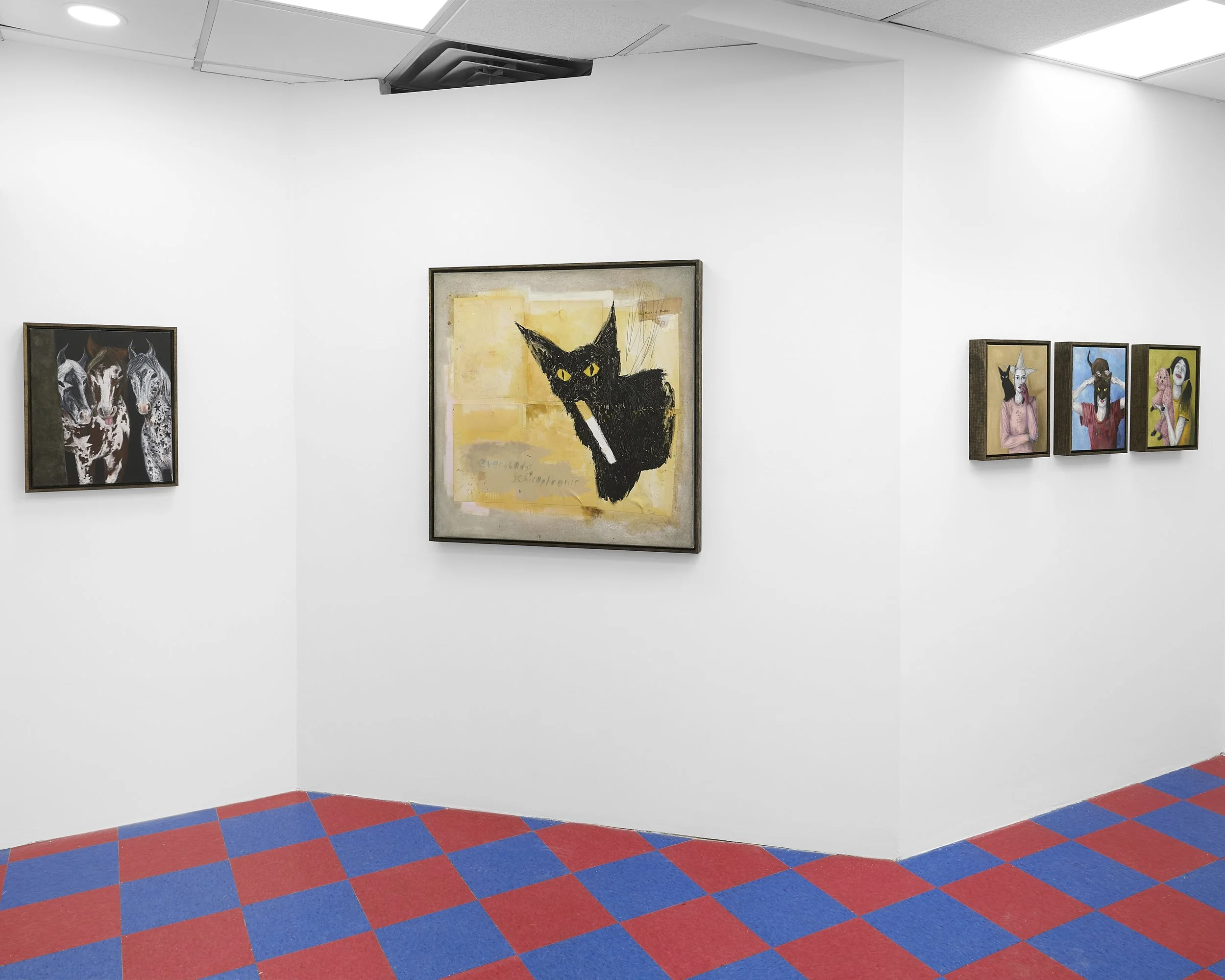
Images courtesy of WHAAM!.
In the last five years, I have spent approximately six thousand four hundred and eighty two dollars (USD) on my cat’s health and maintenance.
That is a staggering amount of money. That is a crushing amount of money. I cannot recall a time I have had that much money all at once. I have never seen that much money in my life. And yet, over the course of time, and having spent ten years together in total, I have spent an enormous amount of currency on this cat who does nothing for me in return. She cannot feed or house herself, she possesses no skills or value as a laborer. Six thousand four hundred and eighty two dollars on the being who does nothing for me in return, though, when I consider this idea further, I realize that rather than doing nothing for me, what she does for me is in fact simply imperceptible.
Trying to articulate Meow Meow Beans’ position and contribution to my life is an impossible task. It is far too layered, too scattered, too fluid exactly to pin down and yet vivid and consuming - a sort of chaotic cohesion that is both stoic and infinitely vulnerable. This imperceptible yet near-divine influence isn’t articulable, but can perhaps best be seen in the illustrations, molding, painting, layering, reapplying, and recontextualizing, and leafing of NYC-based artist Justin Hager’s most recent showcase at Whaam! in Chinatown, Manhattan.
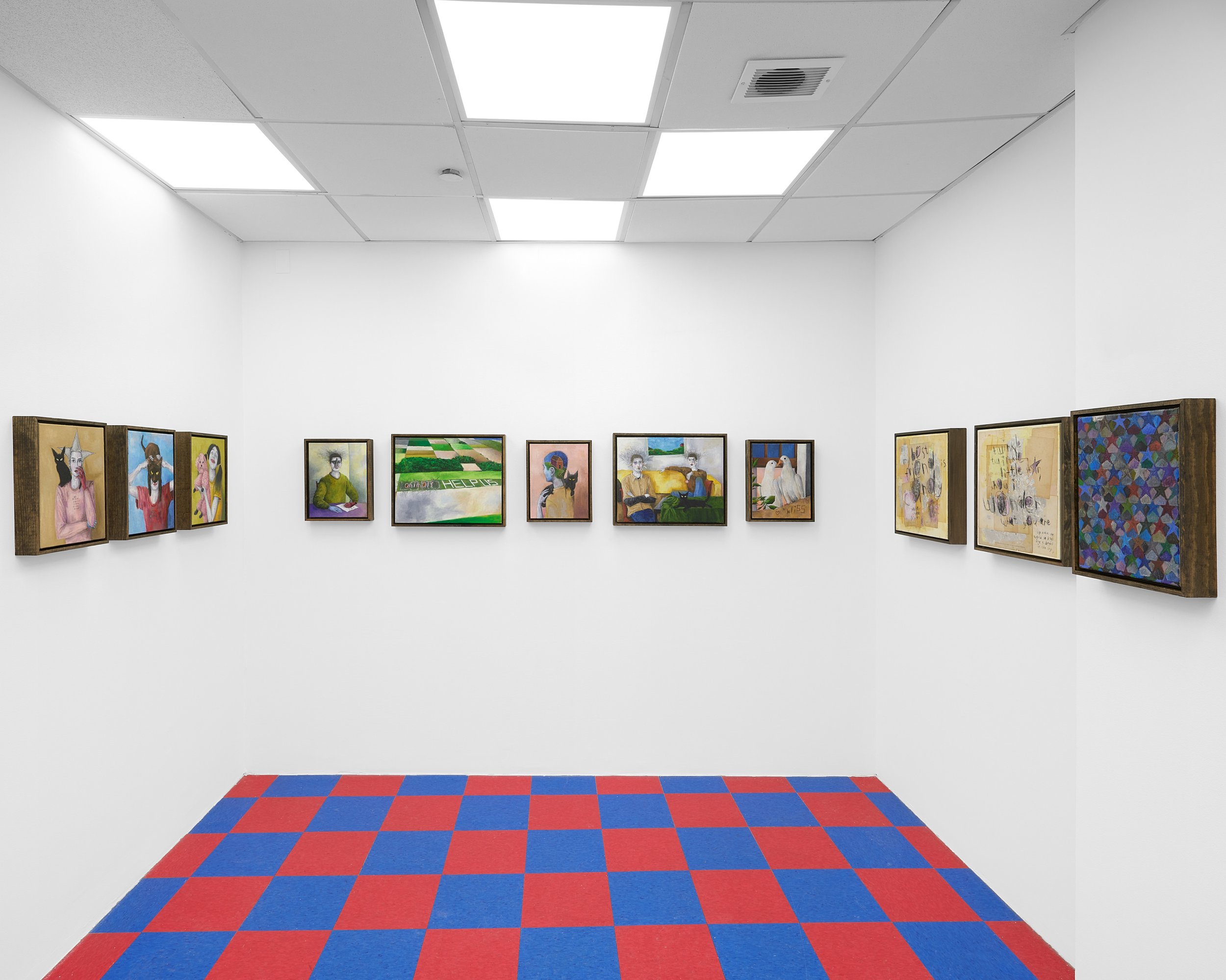
The collection honors Hager’s cat, Alaska (RIP), and uses that relationship to enter into more vulnerable emotional spaces, through which the existence and effects of deep relationships that go ‘beyond language’ can be explored and felt. The work in the exhibit - the third of Hager’s at Whaam! - is seemingly chaotic in composition but not at all difficult to adore, with clear and intuitive purpose and ultimately unified in its use of medium, application, and emotional center. The collection features works on canvas as well as the repurposing of antique story books as platforms to further narrate, honor, and mythologize emotional relationships that are so often difficult to explain but deeply impactful, both human and not.
We spoke to Justin Hager as well as Whaam! founder and curator, Anatoly Kirichenko about the pieces one day in April, the day of the exhibit closing event.
If you want to jump in, feel free.
Anatoly Kirichenko: I’m just a fan, but thank you.
Do you have favorites?
Justin Hager: Let me think. They’re all kind of in the same world. I’m not sure if I have a favorite - I was thinking about the same thing when making each one, so they kind of are in a way, one piece.
AK: They all share a visual language and world that has been created through Justin. This body of work focuses on the motifs that were seen at Justin’s first exhibit, but have developed through application and color.
Can you expand on that?
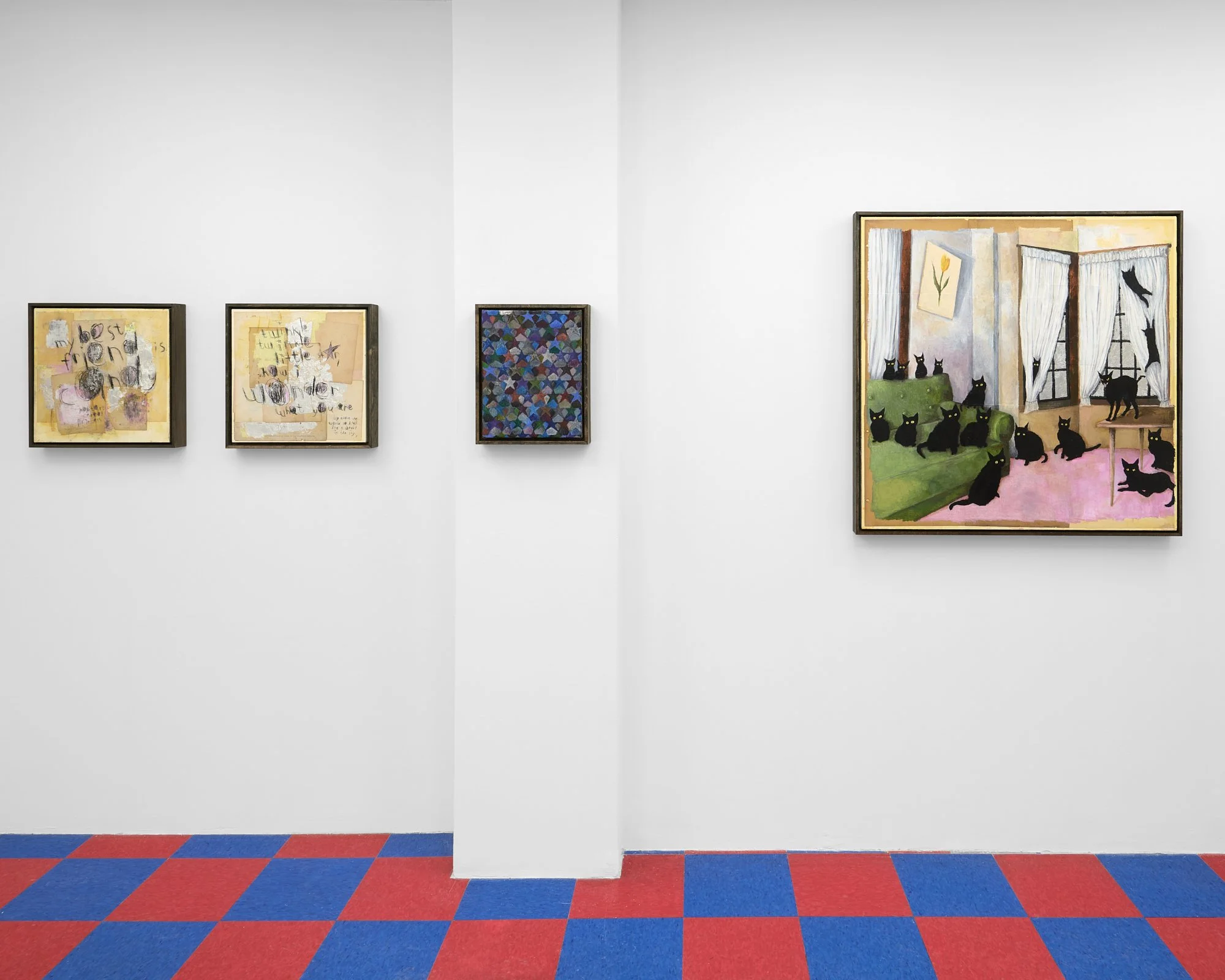
AK: I think that this third show has more unique color palette combinations. Two other features in this show are the pencil scribbles and silver leaf; each piece has a hidden accent or detail with these features, which is a common thread. There’s also I think a lot of narrative in the paintings.
Can you talk about the literary aspect? Everything has words, and narrative.
JH: The words, yeah. I used to do a lot of word play back in the day, and I had gotten away from it for a while, but I wanted to come back to it with this show. I love words and I like to read books as a source of inspiration. It feels almost like I’m trying to write poems for the first time in this show. Something important to note - like I was before, thinking about the same thing for each piece of work - they’re all an homage to my cat who passed away. I was thinking of her and the people that I love who are maybe not here with us, and trying to tap into something very personal.
These don’t look like mourning to me.
JH: No, more like celebrating.
Mythologizing.
JH: Yeah, sure. I learned so much about life through my cat, about how to be a better person, how to be more vulnerable. These are the most vulnerable paintings I’ve ever shown. What do you think, Anatoly?
AK: Yeah, they seem deeply personal, and Alaska is present in different forms, whether it’s a horse, or a dog, or an actual cat. I think that the other message in this show is just about how animals connect with us spiritually beyond language. They’re a comfort. Animals help us.
Is this Alaska? (pointing to the multi-cat room scene)
AK: Well, Alaska wasn’t black, but I think that black cats have this negative connotation or superstition, and a lot of Justin’s work - even the word play - has to do with going against that kind of thing. If black cats are bad luck, I’m going to paint them.
JH: They represent hope to me, instead of bad luck. And there are a lot of pop culture references to them.
AK: Yeah, in music, books, animation - those are all being translated through the paintings.
Do you have a favorite, Anatoly?
AK: Do I have a favorite? Hm, that’s a good question. I love them all, I love the one that has all the black cats, I like the one that has the farmhouse in the back of this figure’s head. It feels very deep to me, and I like how you can see through the linen - it feels raw to me. There are a lot of ways you can see it and I think it speaks to me.
JH: To break it down even further, this cat - she was my home base.
AK: And what is home, you know? It’s a sense of comfort and peace. That’s part of what I think resonates with people. I think also that you want something to sort of channel ‘happy’ versus ‘sad’, and there’s also something sad about happy; when its too happy its like the clown trying to make other people laugh but is sad deep down, so there’s all this makeup to cover that up on some of these figures.
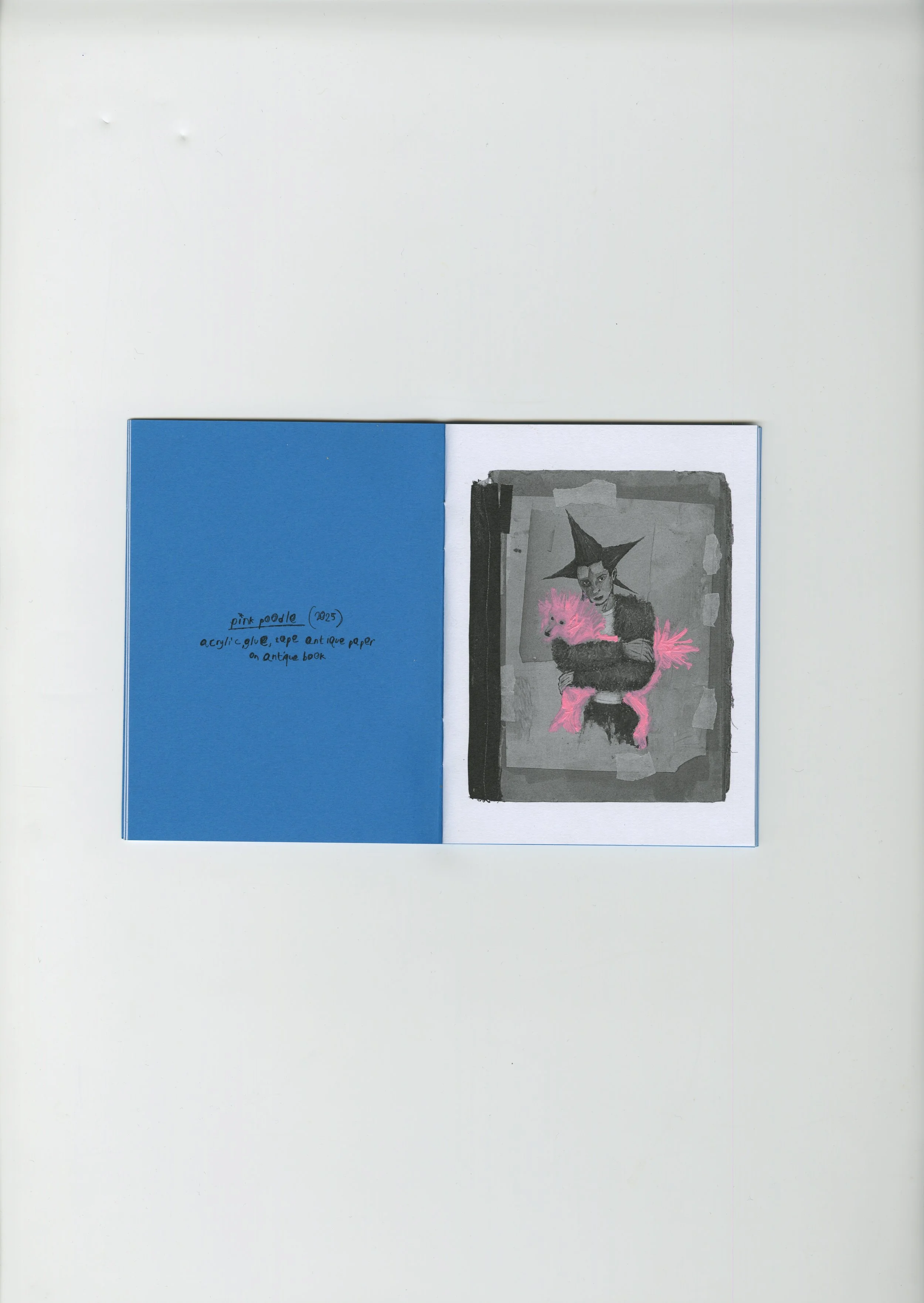
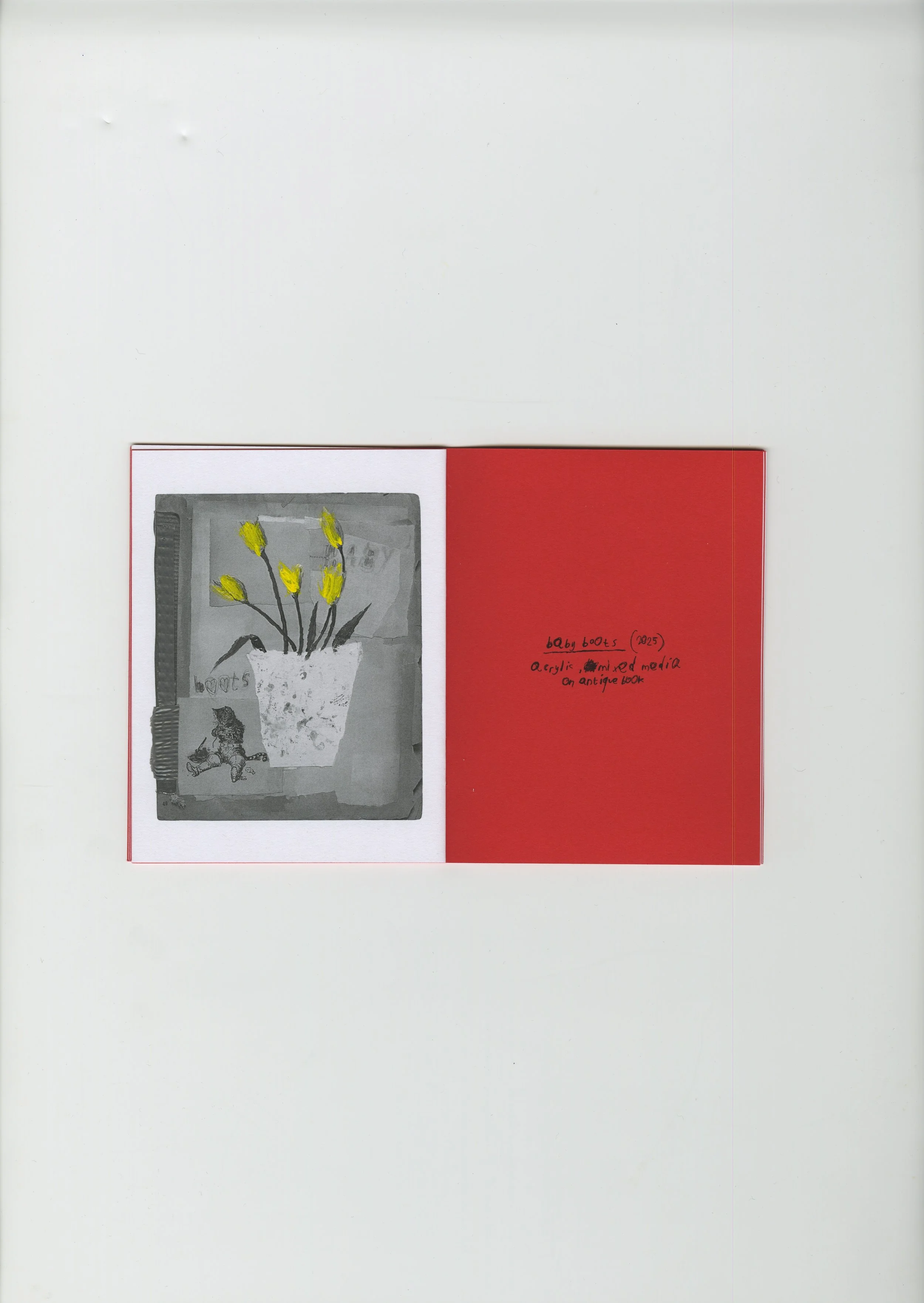
What you’re saying makes sense. I think that animals help us, and there isn’t a lot of separation between the animals and the people, they’re sort of one in the same or on equal footing, and neither happy nor sad.
JH: Yeah! I can see that.
Earlier you used a phrase, ‘beyond language’, and I can see that existing between all of the subjects sort of on equal footing.
JH: I didn’t mean to break it down like that, I just wanted to make images that I like to look at and take from a lot of different references and make my own little world that is kind of hectic but calming at the same time. It seems very scatter brained and wild, but it makes sense when I’m making it.
The painting within the painting is off center, so yeah I could see it being a little chaotic.
JH: It’s calm to me, though. I don’t quite know why.
What does your house look like?
JH: Very organized chaos. My studio is very hectic - papers and glue and silver leaf. Very hectic. My studio is in my apartment so I can just roll out of bed and start painting.
AK: But you know where everything is, and it all sort of works out. Like in the last show there was this 16x20 canvas painting that I really liked, and you told me that you used to eat off of it so there were all of these oil stains, and eventually you painted on it and left the food stains as part of the painting.
JH: I used it as a tray when I would eat and didn’t want to wake up my wife - she sleeps early and I work at night. Eventually I thought it looked pretty cool. I didn’t mean for it to happen.
How much of this do you think is circumstantial?
JH: I mean, most of the time things are meant to be the way that they look.
AK: A lot of these look like they’re aged, or storied like they’ve been sitting in a corner collecting dirt and naturally occurring-
They look earned.
JH: There are papers everywhere in my studio, and they naturally get dirty. I use a lot of antique paper, so I layer them with glue and clothing dye. This paper is amazing because it’s got a weird mesh - it's like a fiber. It’s really durable and fun to work with.
When is a piece done?
JH: Good question, I guess it’s just a feeling.
What’s it feel like?
JH: Great. I’m learning how to edit and how to do things a little bit differently so I’m not bored with what I’m making. Each time is a fun new challenge. I don’t know, I think you just know.
Do you ever get stuck?
JH: Definitely. I take a break and come back to it. I can only do one at a time, I can’t bounce between pieces, so I take breaks because if I stare at it too long I’ll keep changing it and might ruin it. If I make something, it has to kind of go away from me.
How long do you spend on a piece before you move on?
JH: It’s a range, but it's usually a few hours. Maybe a day or two.
That’s really fast!
JH: Yeah, I did this whole show in about two months.
Does that play a role in your editing? Knowing that you’re going to move fast.
JH: Maybe, I don’t know. I think that I’ve just been practicing for so long that I just know how to make things work for me. It just kind of happens that way.
If he gave you six months to make a piece…
JH: I would wait until two weeks before and then start thinking about it. It’s just the way I’ve been wired since back in the day, when I was in school I’d wait until the last minute to write a paper or whatever. I think that my favorite stuff comes out when I’m under pressure.
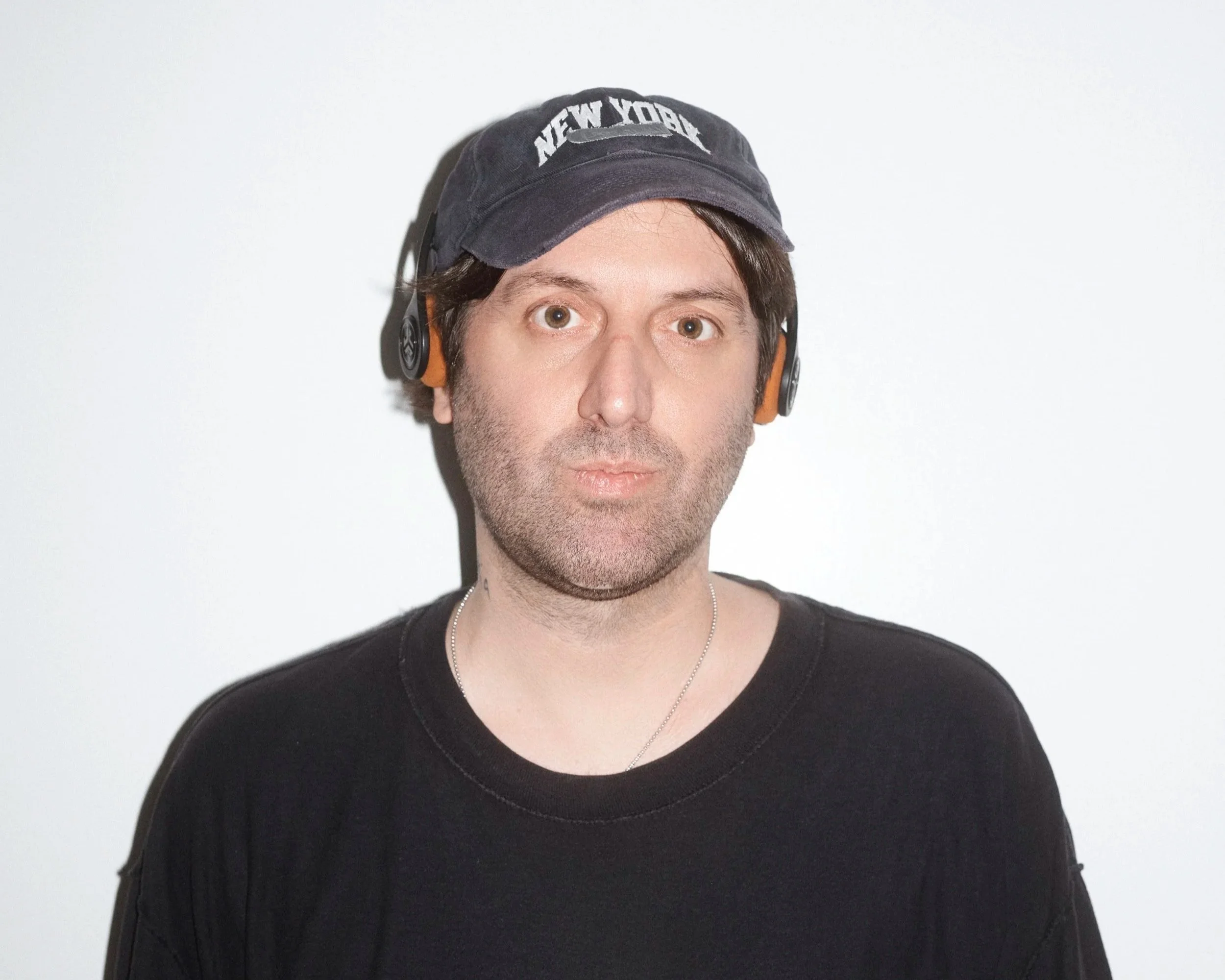
Justin Hager is a self-taught artist living and working in New York. His work strives to uncover the profound beauty that resides in the mundane, the overlooked, and the rejected. His paintings are not just representations of scenes or subjects; they are invitations to see the extraordinary in the ordinary.
www.justinhager.com