
Talking Politics, Perception, Love, and Music with John Maus
In an article I wrote two months ago, I described Bladee and Yung Lean’s predominantly Gen Z fanbase as the human equivalent of Instagram reels’ unshowered and vulgar brainrot.
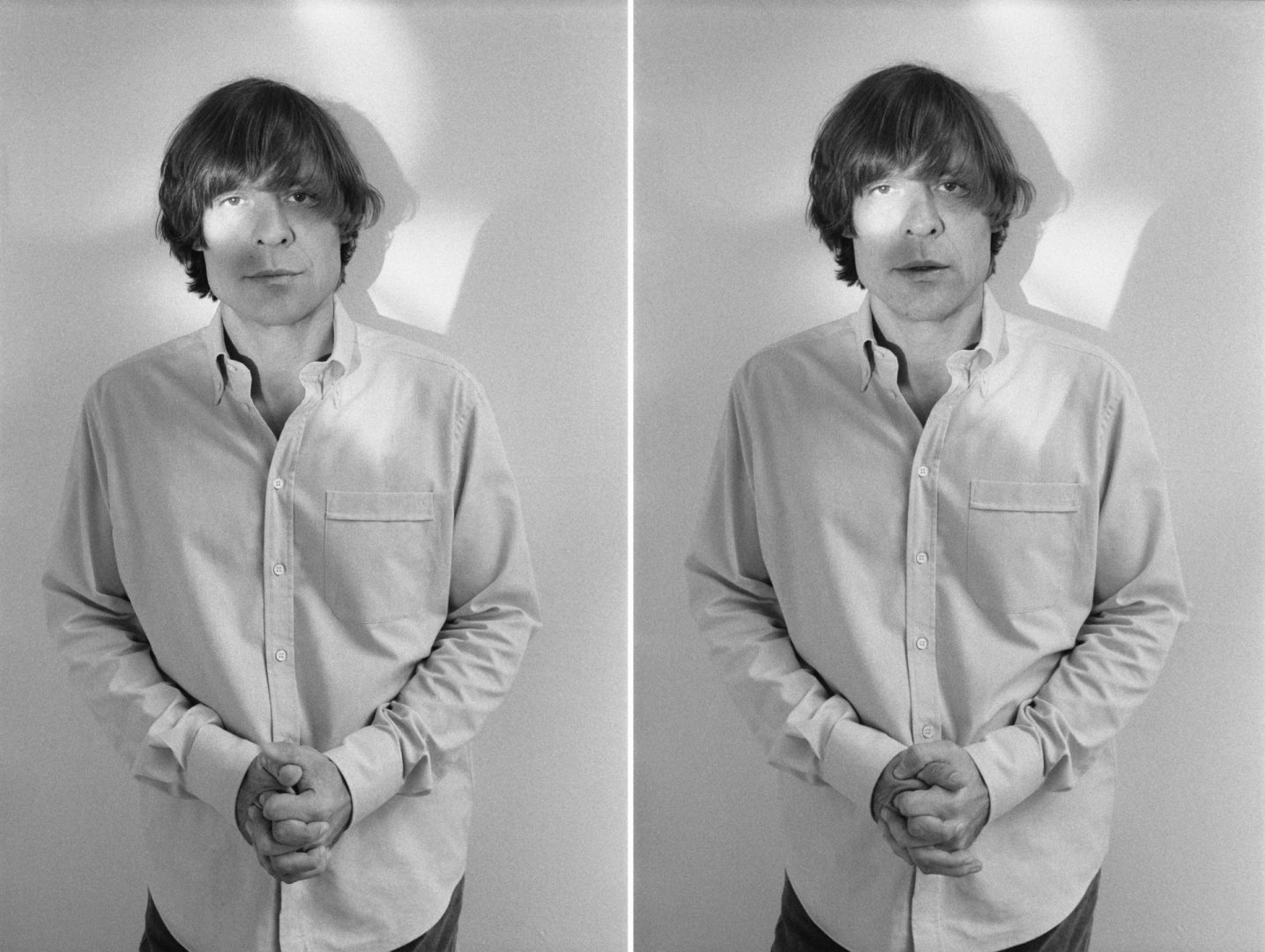
Days after writing those words I found myself on a video call with John Maus, a forty-five-year-old man, who now lives a semi-recluse life in small town Missouri – after stints of living in his home state of Minnesota, Hawaii where he worked at a university while completing his PhD in Political Philosophy, and Los Angeles where he went to college to study Experimental Music Composition and met his long-time friend and collaborator Ariel Pink. When I asked him about his thoughts on the current state of music and if he had any outside influence as to me his album 2025 album, Later Than You Think, and his seminal 2011 work We Must Become Pitiless Sensors of Ourselves, feel like they could’ve been made at the same time, untouched by any trends, he tells me he is a big fan of Bladee and Yung lean. An answer I could’ve expected, but at the same time, shocked me into a surprised giggle. I hadn’t heard anyone older than thirty-two tell me that they were fans of the Swedish rappers, not to say that he is “aged out”, but Drain Gang to the untrained and un-brainrotted ear respectfully sounds like synthesised farts.
It made me question my previous generation-based categorisation of Drainers wondering if it left me in judgmental purgatory, failing to appreciate the ageless beauty of music. Scratching my head for answers of where this leaves John Maus, a Gen X’er born a decade before the collapse of communism, with a PhD and whose synths soundtracked my year of being seventeen, in the discussion. I’ve been trying to do the math, but I still don’t have an answer. I just thought it was funny and was intrigued by what he had to say about life, attending the January 6 U.S. Capitol Riots, the girl from Bennington and of course, music, ahead of his upcoming Australian tour.
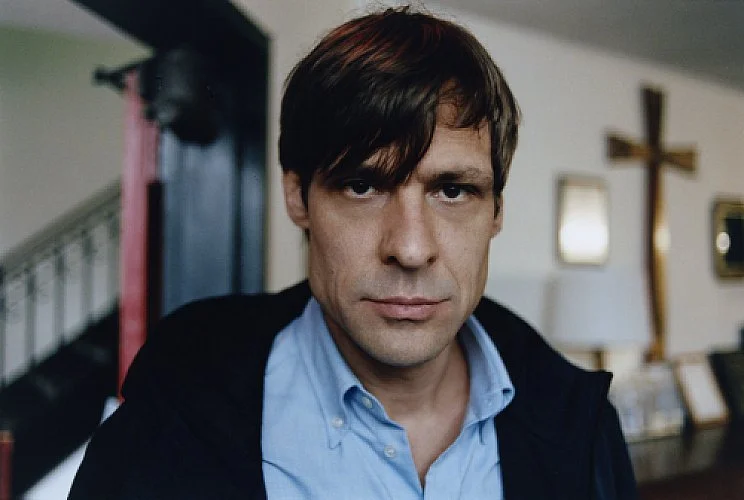
You’ve shown a lot of remorse and spoken out about your attendance at the Capitol Riots. Were you originally surprised when people had such a visceral reaction towards you being there?
No, no, I understand the reaction. In the United States, everyone hates me because, on the one hand, everyone thinks I’m MAGA, but then all the MAGA people hate me because I’m not MAGA. So, nobody is pleased; it’s the worst of all possible situations.
Well, then I guess it's people caring about what you do.
Yeah, I guess, man, it sucks. I understand it too, people think I’m a Nazi, Nazis are bad, what am I supposed to do?
Did you feel obliged to speak out about it? Obviously, people are going to think it’s a PR ploy, but how do you feel about people thinking like that when you’re just being honest?
I just don’t know what to do about it; it sucks, but I understand it. It came up even before I attended. It happened in interviews where I would talk about politics, and I thought it was pretty clear where I stood in relation to that, but it has kind of taken on a life of its own.
How does it feel when it’s assumed it’s a PR ploy to clean your slate?
Well, it didn’t clear any slates. If that was the intention, it didn’t work. All I can do is point towards everything I’ve ever said in terms of politics, and my lyrics, it’s very clear that’s not the side that I’m on.
Totally. Are you still working in universities, or are you just doing music full-time?
I’m just doing music. It comes up where people say I’m a philosopher, which I’m not really. I don’t have any credibility in that sense. I just did an advanced degree in political philosophy, and when we’re talking about music, I try to bring some of those ideas into it, but I’m not currently working in academia.
Do you have your sights set on ever going back into academia?
No, I think it would be harder for me to do that than it would be for me to become Taylor Swift. It’s a really hard field to break into in the United States, and I don’t have a CV that’s good enough for that.
I’m curious, as in a recent interview, you said that your mission as an artist has stayed the same since 2011. Do you feel as if your music has had any external influence in that time, as the music doesn’t vary too much between Later Than You Think, and We Must Become Pitiless Sensors of Ourselves? Listening to the two albums song for song, they feel like they almost come together as one and the same.
The suspicions about how the work got to proceed have remained the same. In terms of the impact, I could be just hubris, but I think that some of the ideas that the whole milieu of artists that I was around had, have found their way into the top forty tracks; some of the harmonic spaces that we were exploring were sanitised, Disneyfied, and what could be used out of them for the machine was.
Are you and Ariel Pink still sharing mixtapes as you were in the past? Are you listening to more contemporary music, and is that having an impact on what you’re producing?
I agree with you that I went back with this album, and I want to push it further. With Screen Memories, I feel like I pushed it further. I do listen to what’s going on with the Zoomers and all of that. I collaborated with Eyedress, who’s a younger guy working with some of the same ideas and pushing them forward. It’s weird because music is so fractured; there’s no definitive way forward, there’s just different dimensions that are emphasised at different times. It’s not like it has evolved as some tonality did from Hadyn up to Wagner, it’s a different beast altogether. I do still trade tapes with Ariel, so to speak. I listened to his new record, which I thought was great.
What have you been liking that’s more recent?
Eyedress, N8NOFACE, who is a synth punk guy. And of course, I really like Bladee, Yung Lean and those guys, I think there’s something really punk rock about them.
What do you like about Bladee and Yung Lean?
It’s what’s missing from the top forty songs. It’s hard to articulate; one would have to write an essay to try to tease out the concrete details. It’s somehow an affront to the Mickey Mouse Disney perfection sound; it has an unrecognisable ability to stand out against the world as it stands, there’s something dissonant, ugly, idiosyncratic, and true about it. I wish I could be more specific; maybe that sounds silly, but that’s the best I can articulate it. Even though musically it’s a totally dissimilar universe to mine, there’s something I recognise about the attitude, it’s a rebuke, there’s something in there that’s a rebuke of the world as it stands.
I can understand that. I saw Bladee and Yung Lean perform together recently; they have a similar energy and attitude in their live performance to yours. It’s this very energetic living for the music feel.
There’s something ecstatic, death to the world, that I really relate to. I’d have to sit down to articulate it any better, but you’re teasing it out as well as I am.
Do you feel like a tortured artist?
Yeah. I’m sure all musicians do and feel a little bit like an outsider, asking themselves, ‘Does it even matter what I’m doing?’
What keeps you making music?
I don’t know what else to do, and I feel like I can still draw some blood from the stone. If this configuration of the situation is what’s going on, and it won’t always be, I’ll continue trying. This is the music of the situation, so there’s some responsibility to see it all the way through, to exercise fidelity to it, to tease out the consequences of it, to push it as far as it can go.
Do you feel like there will be a point for you and your music where you’ll be like this is done now, I’ve got to that end point?
There will be a point with this music, not necessarily mine, but the type of music I make. A broad view of it is to say it’s the music that emerged after the Second World War, tied in with records, guitars, synthesisers. It's post-war popular music, from Chuck Barry and Little Richard all through to now. I know a lot of people get caught up in microgenres and want to divide that music up into totally different genres, but to me, it’s one music. It’s the music of this world order that’s been in place since the late forties and that world order is going to end probably soon, whether it’s another world war, or the tech oligarchs in Silicon Valley implement some tech fascism and then this configuration will pass away, and a new music would have to come which is a music of that situation. At that point, this music will be done.
Do you have an idea of what that music would be?
No, I don’t. I’m not a subject of the next situation; I’m a subject of this one. It’ll only be the people who are subject to the new one who will be able to come up with the music that resists it and gives subjectivity free play under its dominion. There will be a new musical truth that appears and subjects that exercise fidelity to it, but it’s impossible to foresee. The worst-case scenario is that it could be something with this AI, where they just have biofeedback, and they make something that just hits your pleasure spot. But then the musicians will figure out a way to fight that. I don’t know, I’m just riffing.
Do you still think about the girl from Bennington?
[Laughs] Yeah, I sing the song all the time. I think of it more as a warning now, a warning to guard your heart, don’t give it out until you’ve forced the hypotheses of eternity. In your early twenties you have to be careful because you’ll have a love affair that will stay with you forever.
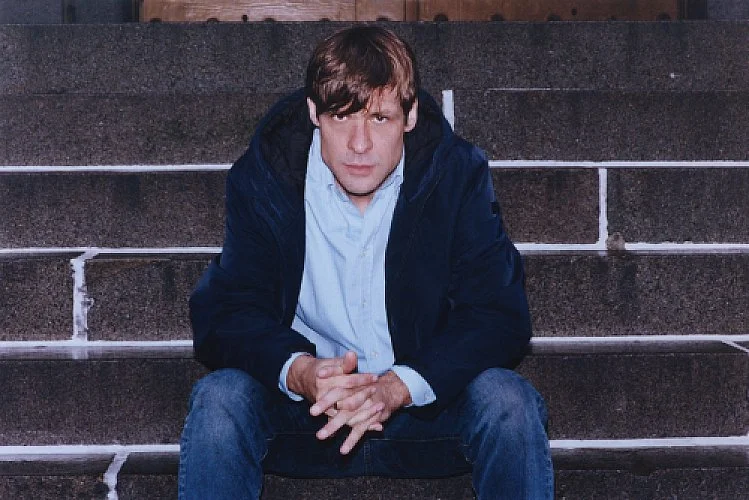
So, what you’re saying is you can’t give your heart out in six hours?
You can’t give your heart out. I’m going to sound like a curmudgeon here, but you should have the hypothesis of ‘til death do us part’ there. Then you’re protected. You protect everyone’s hearts that way; you’re not just spreading it out and opening up all these potential disasters, you’ve got the net in place.
Definitely just need to keep the net in place until it’s time.
Exactly [Laughs, manically].
Well, as someone in their twenties, I’m curious, when do you know it’s time?
Get married! Get married! That’s when it’s time, when you both agree that it’s forever, now it’s forever. Nobody’s going to get a knife in their throat, nobody’s going to be bleeding on the sidewalk trying to put their guts back in their stomach. You’ve got the matrimonial sacrament that keeps the guts in the stomach.
When do you know it’s time to get married?
If you love somebody and they love you, it’s probably time.
Thank you for the advice. I’ll keep it in mind. It’s been lovely to chat.
You too, have a good one. Thank you very much.