
INVT Stands for Innovate, Not Invite
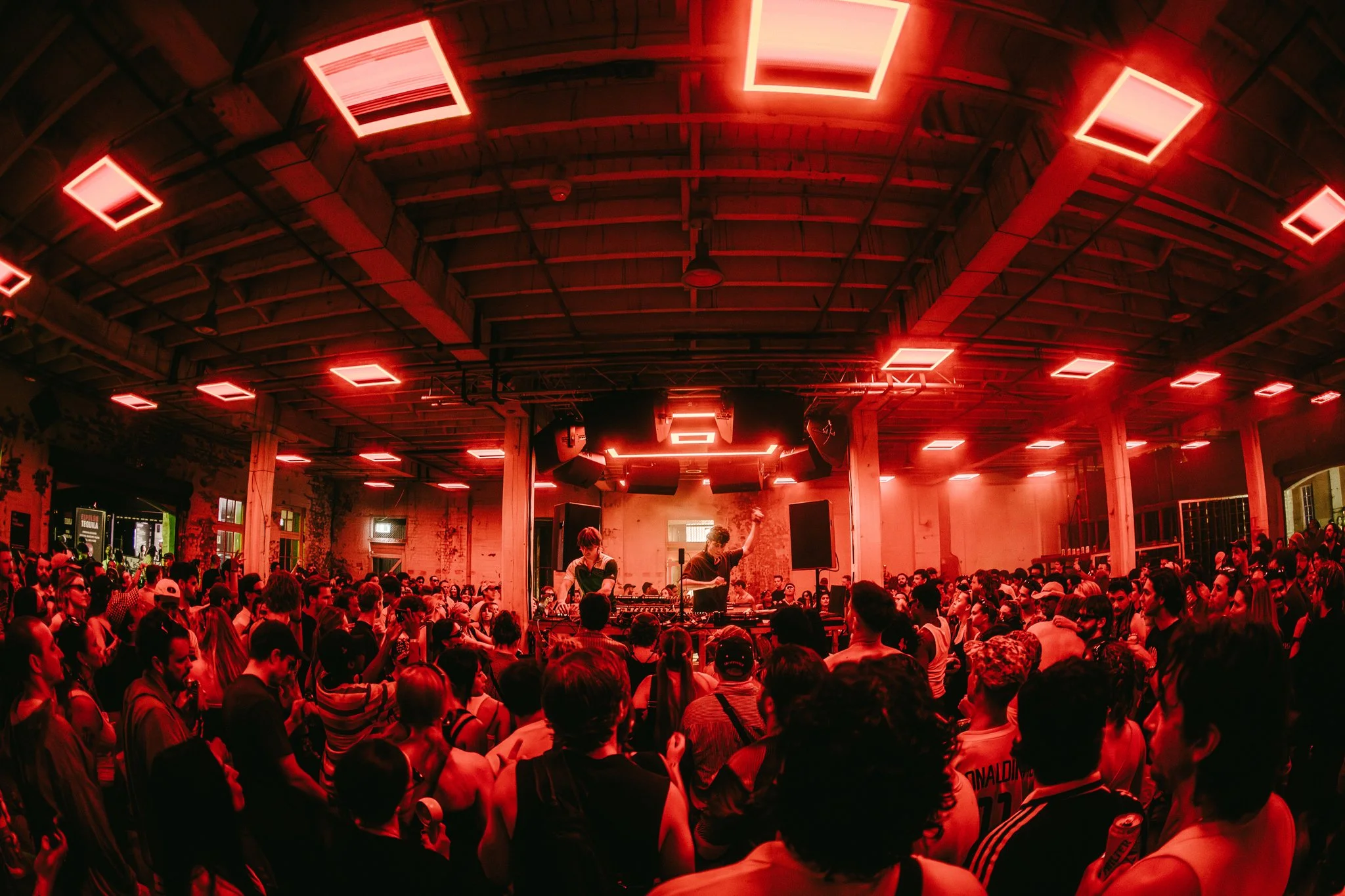
Photography by Jordan Munns.
It’s a tale of a (two) chance meeting that started with a brotherhood and led to a multi-media project that is now taking them all over the world.
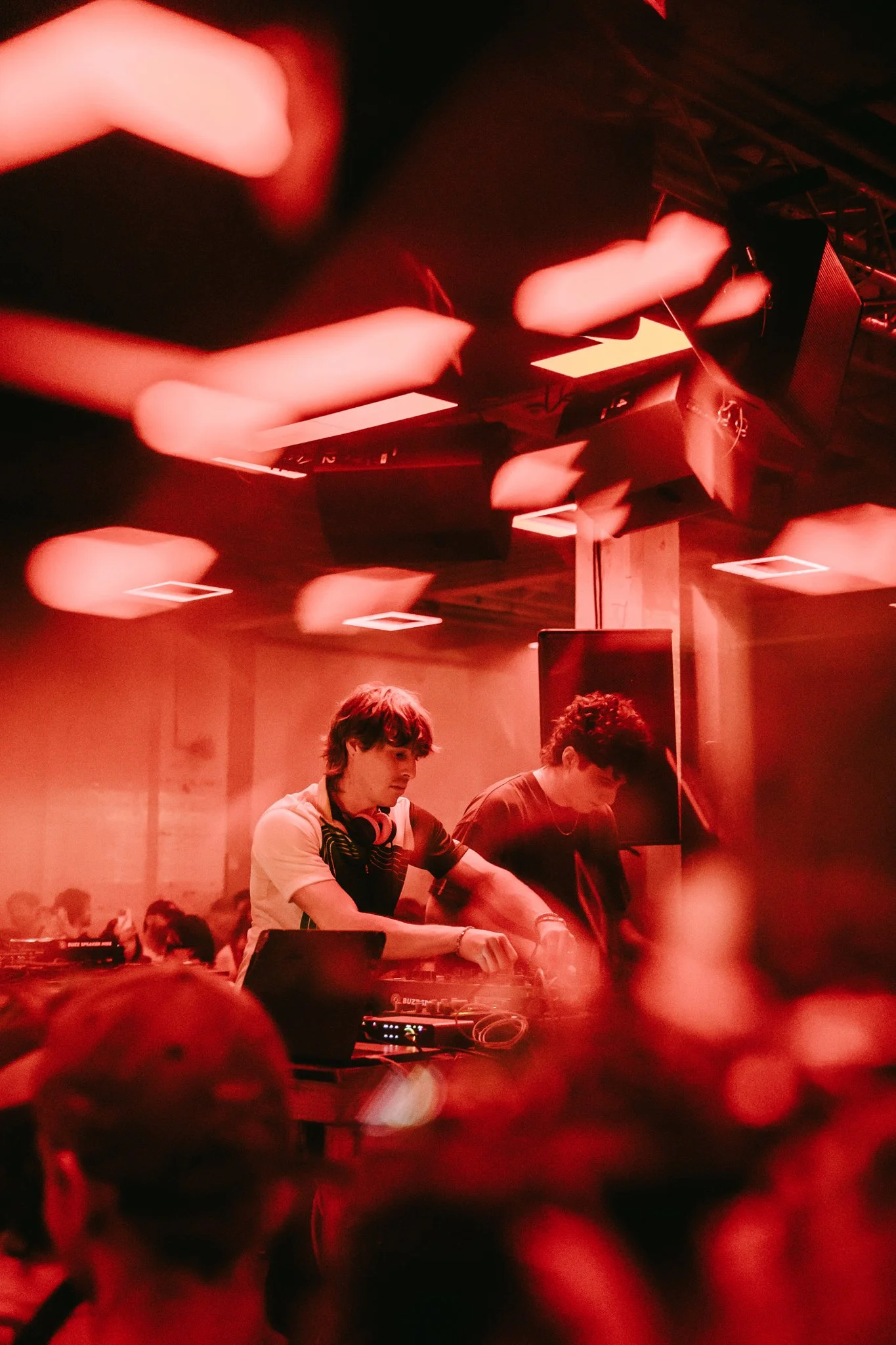
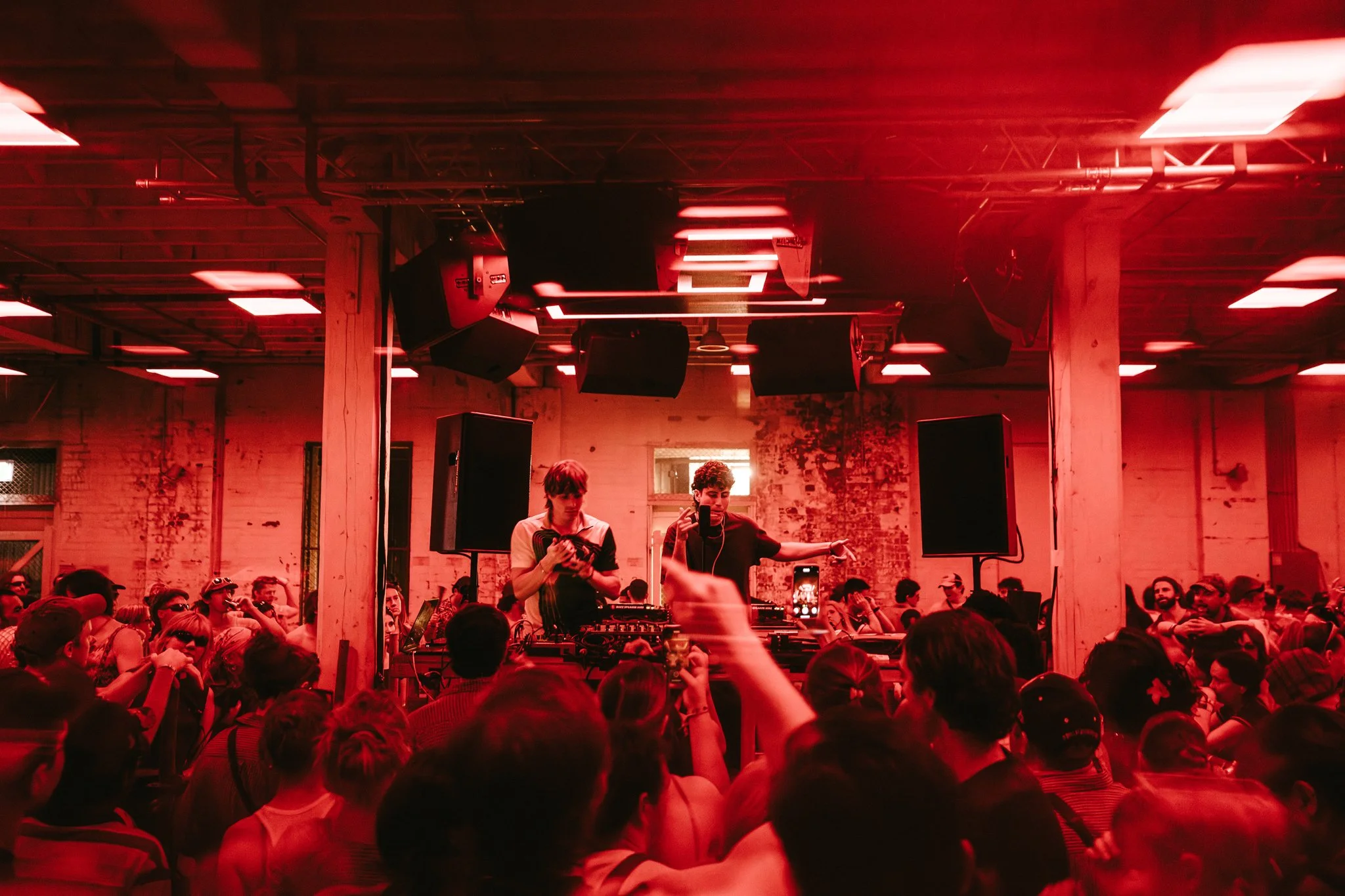
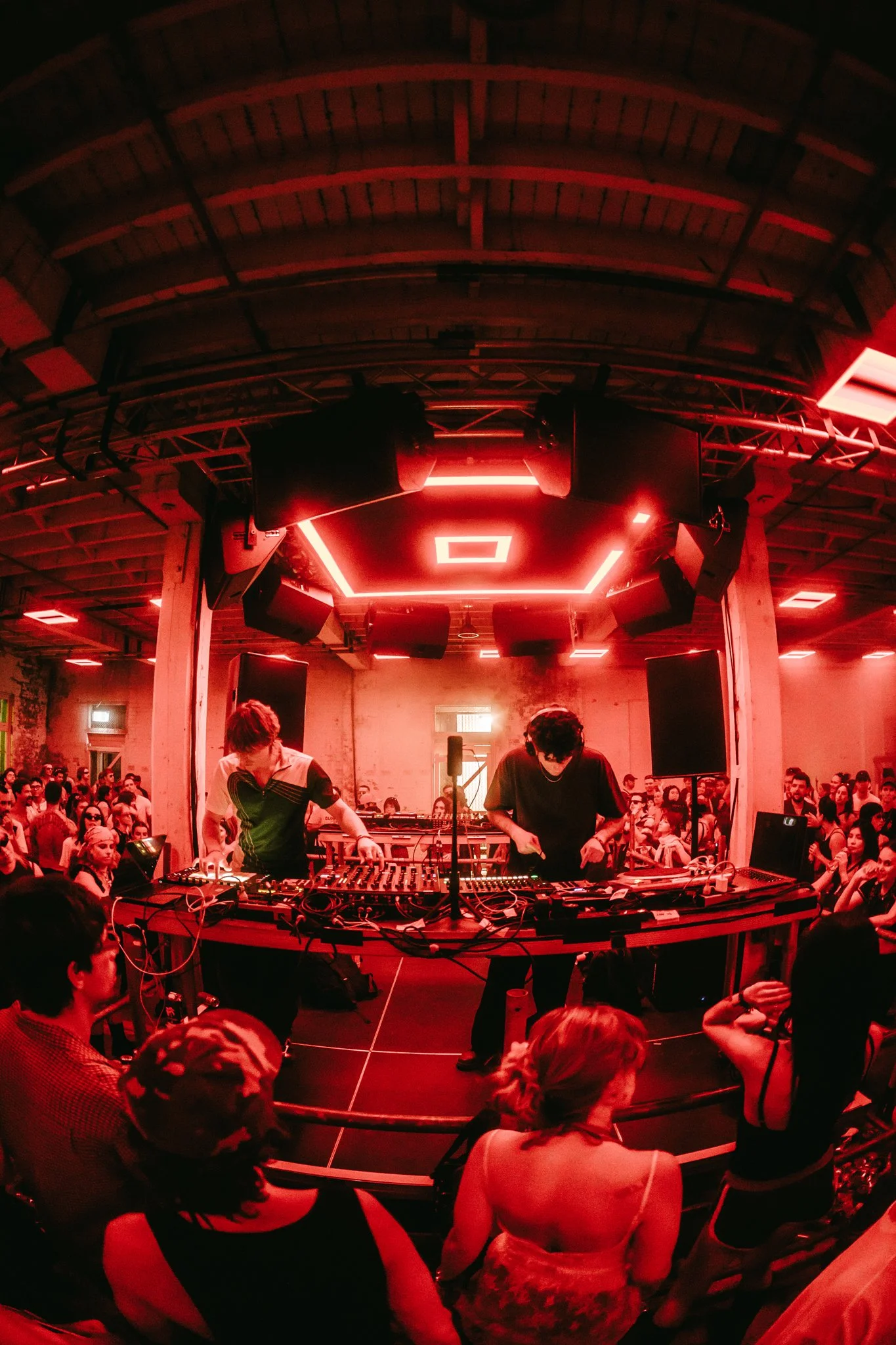
Watching Luca and Delbert play, it feels like there is a certain level of telepathy going on. You can see it, but you probably can’t prove it - it’s what I imagine twins have. A silent knowing, if you will. Delbert Perez stands at one end of an overwhelming array of hardware and synthesizers, while Luca Medici is at the other. They’re simultaneously tapping and turning buttons and controls that fill the room with an intoxicating concoction of tech house and latin beats.
Before we even had the chance to make it back to the greenroom after their set, the interview had begun, unbeknownst to myself at the time. In retrospect, of course it had. The minute a “quick cigarette” was suggested, that should have been my cue to hit play on the voice recording. And so, over a couple more cigarettes, a bottle of cocobella and one one spun joint (much to Luca’s dismay), the guys took me on the journey to that which has become INVT. Luca described their friendship to me as “a weird life thing that just kept bringing them together.” From meeting in a treehouse as kids, to re-meeting for a second time while skateboarding a few years later, to now playing back to back with their childhood heroes in just about every renowned venue in the world. I guess the moral of this story is: pay attention to who you keep running into.
So at what point in all of this did you start making music together?
Delbert: Well Luca needed a bass player for a metal band he was in. He grew up with a drum set in his garage, and there were already two guitar players. So when I came along one day, he just gave me the bass, and I learnt the songs.
Just like that? Had you ever played bass before?
D: No, but I’d played viola since I was like five.
Luca: Delbert’s a super fast learner. You’ll be like, yo, try do a backflip or something and the average person, you know might go away, take their time to learn it, but this guy will do it in thirty minutes.
That’s kind of crazy.
L: Literally.
D: Yeah, I mean he needed a bass player, and you know, we were just always around each other, like we were childhood best friends.
So naturally, you learnt the bass. I get it, I get it.
D: Yeah, and we were kind of just experiencing everything for the first time together, like clubbing, listening to dance music.
L: And in Miami, you grow up fast, you know what I mean?
I mean, I’ve never been but when I was a kid, my dad used to travel all over the States for work, and he’s always said if he were to move to the US, that’s where he’d live.
D: Oh sick.
We’re Portuguese and I think, or at least from what I’ve heard, the Latino feel to the city kind of won his heart.
L: Yeah, I would say it’s like, the only bilingual city that I’ve been to in the US. Like, truly bilingual. For the most part, people will speak to you first in Spanish. Like when you get into an uber, or get to a restaurant or just wherever.
That’s cool, I didn’t know that.
L: Yeah, yeah.
So, how do you go from playing in a metal band together to producing electronic music?
D: Well there were actually two bands, they both lasted a good couple of years. We actually put out an EP when we were in what, like freshman year? But we had a band member that was like twenty five, twenty six. All our friends were older than us. We were always the younger ones.
L: And then we were into, like, jazz and shit. We used to actually cover Hiatus Kaiyote, you know that band?
Of course.
L: We loved all that kind of shit.
D: I kept playing bass, he kept playing drums. And we just kept starting new projects.
L: A bit more experimental stuff, you know, there was jazz and hip-hop, and whatever. And then there was electronic music.
D: We started going to dubstep shows.
L: Yeah, like Skrillex, deadmau5, all that type of shit. And then you’re like oh, Caspa & Rusko, Skream, Coki, and we just kept finding more.
D: Our best friends had also gotten into producing, and just got so good. It was the same friends who were in our first band, so we were sort of always around it. Then they taught us how to produce, and we moved to New York in 2016. We were fresh out of high school, and went to college there.
What did you study?
D: We both studied recording arts & music production. We were there for three semesters, and then we got booked for a music festival in Florida called Okeechobee Fest. So we decided to take a leave of absence, and ended up moving back down to Miami. We took the following year off and were like, we’re going to focus on this full-time.
So you played as INVT at that festival?
D: Yeah. I would say we started the project, INVT, in like 2016, 2017?
L: Yeah 2016. It was weird, it had like an evolution to it though. We were kind of like figuring it out. Even if you look back at our catalog, you can see it.
Yeah, I was going to say, your sound has definitely changed quite a lot.
L: Yeah, yeah, yeah.
D: We’re very honest about our style, you know, just like in developing it. It wasn't like, ok we’re going to make INVT, and this is it. It just changed as we grew.
L: We had a lot of inspirations, and so, we were like let’s just put all of our creative endeavors under this one name. You know, and then figure out our sound throughout the course of it. We’ve really dialed it into what it is now though. Our secret sauce is just like, whatever we’re inspired by, we make. You know, we never really release with labels for that reason. We just make whatever the fuck we want and put it out whenever we want. But we have this side project that’s called SOSI POSI, it’s a Cumbia project.
Tell me about that.
D: It’s a very percussive, playful sound that we just fell in love with. It feels like an old-school Latin genre that you hear playing at your family gatherings. But that whole project is just that, it’s nothing but Cumbia. Whereas INVT is a more open project that includes electronic music, DJ sets, live sets, and clothing too.
Are you still doing Sosi Posi?
L: Sort of, we have two albums out.
D: It sort of happened in the pandemic when we lived back home.
L: Yeah, it’s old.
D: But it’s still one of our favourite bodies of work that we’ve ever put out.
Do you feel like that project influences INVT?
D: Absolutely.
L: I mean yeah, some of our songs have that cumbia vibe in it, you know what I’m saying.
It makes you move your hips.
D: Yeah, yeah, yeah.
L: And they’re both really dubby, you know.
D: Really percussive, sexy.
L: They’re hip focussed.
That was actually one of things that intrigued me about your music.
L: Yeah, I mean, I was born in Uruguay, my dad is from Uruguay and my mum’s Colombian. Delbert is Venezuelan but was born in Miami. I moved to Miami when I was like five.
Do you remember living there?
L: Yeah, yeah, definitely. I’ve gone back a bit, I was just there earlier this year visiting my grandparents. But I’m pretty much a Miami kid. Miami is interesting in the sense that it sort of feels like a newer city, a lot of kids are first-generation American, so culture is just super present. You know, you go to the beach and people are listening to Bachata and Salsa, Dembow and Reggaeton, like all that shit. You speak Spanish with your friends and at home, so you just kind of embrace your heritage.
D: In a super casual way.
That’s beautiful and, I can imagine, really important.
L: Yeah, yeah.
To wrap this up, I wanted to circle back to the clothing line you mentioned. Where does that come into all of this?
L: We were actually able to first live off our art through clothing. We come from bands and bands don’t make any money except through selling their merch. Skating too, same kind of shit, these skaters go pro and then like, make a brand or something. So for us, it was like we’re making music and have these shitty ass jobs that are just melting our brains, and because I come from a visual arts background, I sort of wanted INVT to be a medium for that too. So, I started making clothes because I wanted to look dope, and I was seeing all this shit for like ninety bucks.
And you were like I can just make this myself.
Totally, and going from Miami where no one really cares what you’re wearing, to New York which is such a fashion forward city and people are coming up to you being like, yo where did you get that jacket, like where can I buy that from. It just got to a point where I was like, I can sell one hundred hoodies for one hundred bucks, like that’s ten grand. It was just practical, you know. And then it started to go, like, we have to make an album right, so let’s make a bunch of money from clothes and then, like buy weed and food for however long the albums gonna take. So then when we run out of money, we put out the album and make another collection. I swear, it was this cycle for months, like two years.
So in other words, you’re businessmen.
L: Literally, it was like we don’t have jobs, we smoke weed all day, and make music and art, and I get to hang out with my best friend, and skate.
Just as long as this collection gets sold, right.
L: Right, right, we were hustling.
And so has that had to continue?
L: Well thanks to BandCamp in the pandemic, we started to make money off of our albums. And we were kind of like, oh shit it’s actually more work to make clothes, because you know you have to thrift the clothes and then you’ve got to print and wash them, and embroider them, then ship, and do a whole fucking marketing thing. It was a lot for two guys to be, like releasing an album and a drop of clothes every month, for years.
Yeah, that’s psychotic.
L: But then we started booking shows, and all these really important ones too. Where we were like, we’re about to play Primavera or CircoLoco, or Panorama Bar or Fabric, all these places that were literally our dream to play as kids. I mean we were listening to Fabric mixes when we were like twelve years old. And now we’re playing there.