
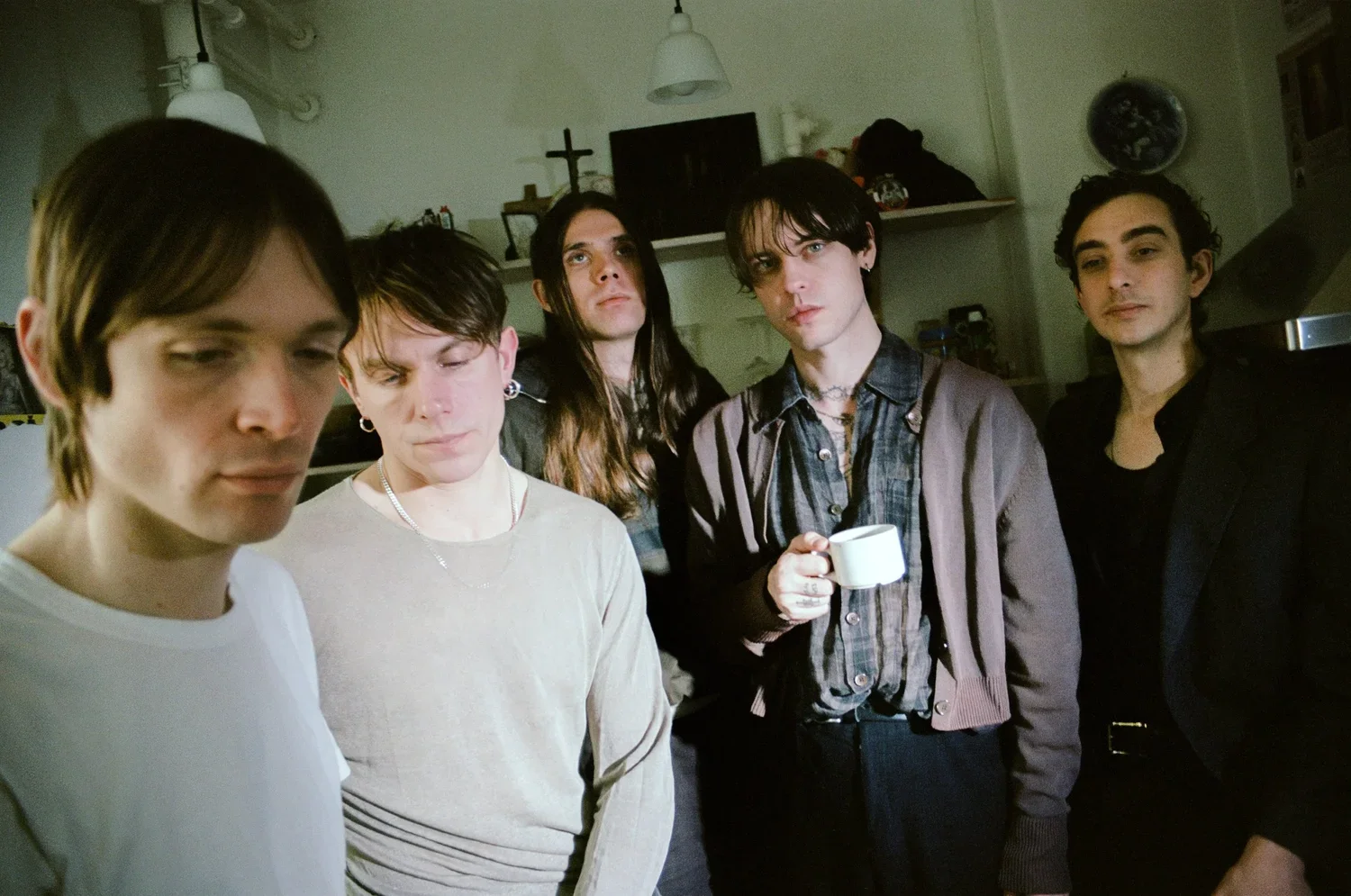
It’s been eighteen years since Danish band Iceage formed, fifteen since their debut album, and even longer since the original four members met. Now, they’re back with their sixth studio album, For Love of Grace and The Hereafter, their first in five years.
The four original members of Iceage have been friends for longer than they haven’t. Johan Wieth (guitar and backing vocals) and Dan Kjær Nielsen (drums) met when they were five years old, on the first day of kindergarten. Then meeting the band's frontman, Elias Rønnenfelt, when they were twelve, and he was eleven. ‘He was a grade below us and also into punk music,’ Johan explains over a video call from his home in Copenhagen. The three of them played shows together until they met Jakob Tvilling Pless, the bass player, when they were fifteen and started Iceage in 2008. (Casper Morilla joined the band as a guitarist in 2019 and was first featured on their 2021 album, Seek Shelter.)
In 2011, they released their debut album, New Brigade, to immediate global praise, something that shocked and confused the four teenagers. ‘To be honest, I didn’t understand it,’ Johan says. ‘We were just best friends who came together because we were all eclectic music fans. We never imagined that anyone would care like that.’ From there, things snowballed. Almost immediately, they were signed to the legendary American indie label, Matador Records, with whom they released their next three records. An outcome that surpassed their dreams of having their music pressed on vinyl.
The praise, however, quickly turned to controversy. A few months after the release of their debut, Magic Muscle Media, a now-deactivated music blog, published an essay titled ‘Chic Racism Elevates Hardcore Band Iceage to Hipster Fame.’ The essay analysed Elias’ drawings that he had done in his zine Dogmeat, accusing him of fetishising fascist imagery and promoting an agenda of hate. In a Vice article from the same year, Elias was asked about the imagery of iron crosses and hooded figures, to which he said, ‘That’s a collage drawing of different things I was seeing in the news, not a pro-race-riot drawing.’
These claims reemerged two years later, after the band wore buttons of the neo-Nazi fronted band, Burzum, and images of fans performing Sieg Heil salutes at their shows were published. The band continued to deny the Nazi sympathiser accusations, even to the point that the band's drummer, Dan, who himself is Jewish, spoke out against them. Johan says that these accusations caused him great anxiety as a teenager. ‘From the day we had a political conscience, it was clear that we were all left-wing people,’ he explains earnestly. ‘It’s everything we are against, and it was really hard that people thought that’s who we were.’
Despite being open about the issue for over a decade, the accusations persist. An Instagram reel, released in April by pop culture investigator and podcaster Sloan Hooks, rehashes them while commenting on Elias’ rumoured romantic relationship with twenty three-year-old Wednesday actress Jenna Ortega. The band continues to deny the claims, and Johan says he no longer dwells on them: ‘I know who I am, and I stand for the actions I do.’
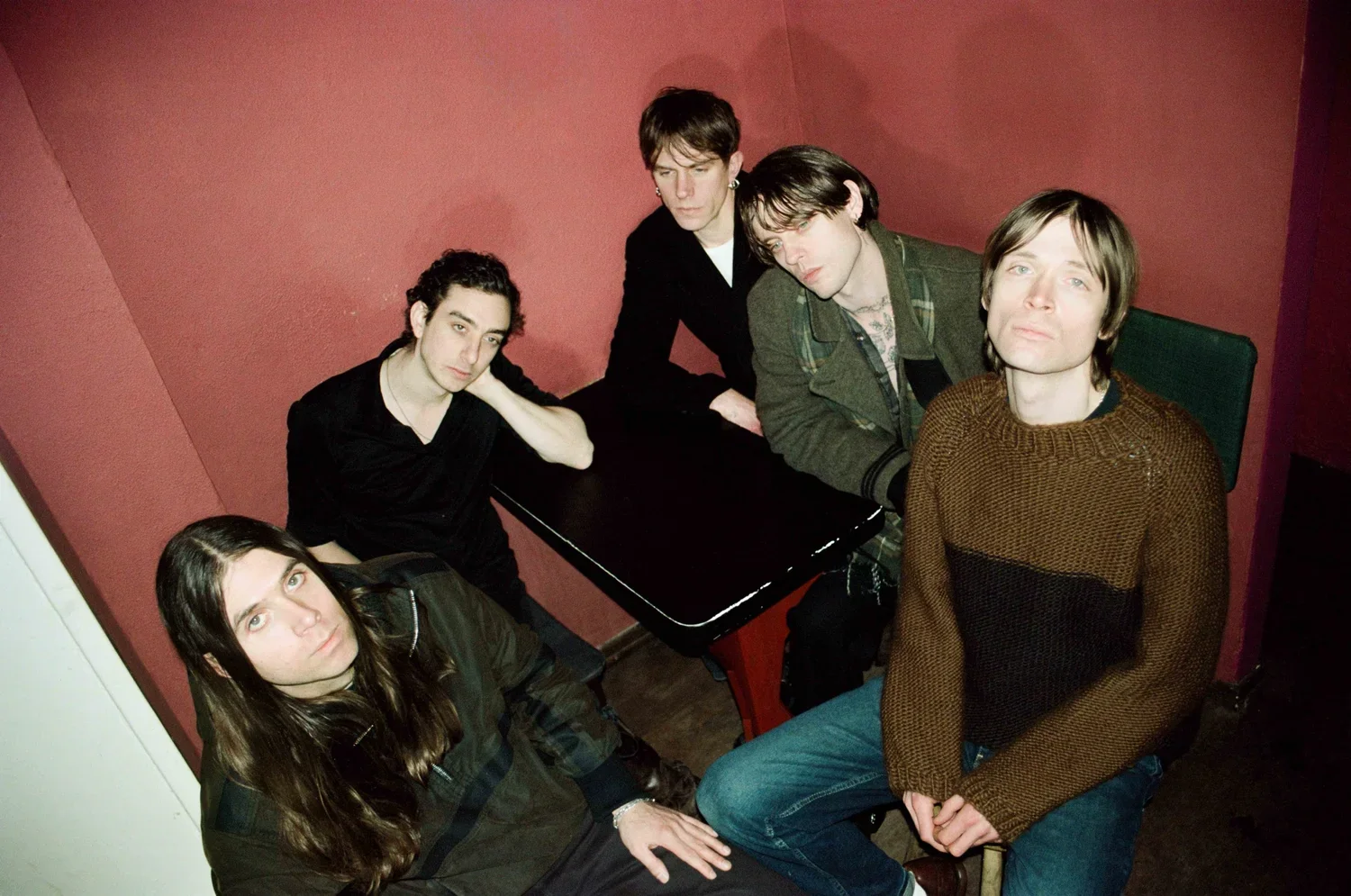
Over our half-hour video call, Johan’s demeanour remained calm and cool with no smugness, something I had presumed I would detect in a guy with a Death in June tattoo. Talking with his guitar on his lap, he tells me he was playing before I called; tinkering with instruments, whether it be his guitar or his half spinet, is something he usually does when around the house. It’s clear that he enjoys playing music, and it’s something that’s amplified by the album’s title, For Love of Grace and The Hereafter. The album itself is a celebration of the band’s love for playing music with their friends. ‘Elias came to us early on with the title; it seemed like a really good outline for what the songs represent,’ Johan says. ‘We wanted a raw, live energy to the album. Some of the songs on the last record [Seek Shelter] were hard to imagine playing live. Quickly in the process of writing this record, we were like, ‘This is going to be a great joy to play all of these songs.’’
Written over the course of four months, the immediacy in the writing process reflected the band’s desire for a record that was loud, immediate, and energetic - a task that they succeeded in - creating an album that’s energetic and carries the playful darkness of previous Iceage releases, while also bringing something new instrumentally to the table, with no two songs on the record sounding truly alike. ‘The Weak’ sounds like the Ramones if Joey Ramone knew who Hedi Slimane was; ‘Lifetime’ hits the mid-2000’s NYC-inspired indie button while ‘No Fear’ has a sweet, jangly instrumental. The varying sound wasn’t something discussed, but it was the way it worked out. ‘We don't sit down at a table and then say this is the record that we're making. You know? It just happens,’ Johan says.
With Elias’ lyrics being the underlying factor that ties the record together, the band felt they were worth highlighting, and so when designing the covers for the singles, the band decided to make display the lyrics for each single typed simply in black on a white background. When asked about the decision, Johan says through a giggle, ‘Well, Elias’ lyrics and his lyrical world are such a big part of the music, and to some extent, lyrics don't get a lot of attention. Someone was like, ‘Let's just show the lyrics,’ So we did.’ It was a decision that came much more smoothly than settling on the album's cover. ‘We had a few ideas and were sending stuff back and forth, but nothing really stuck. At one point, frustrated, Elias said, ‘Well, maybe this is the record that has a really shit cover.’’ Johan recalls with laughter. ‘Then the next day, Elias came and showed us the Elizabeth Peyton painting, and we all knew that was it. There was an intuitive collective feeling about it.’
Fifteen years on from their first album, they’re in drastically different stages of life from the high schoolers they were when the band started, but the love of making music with their best friends has never changed. ‘We’ve done all these amazing things that we dreamt of doing as teenagers,’ Johan says. ‘But, as long as I get to write the music that I want to write with my best friends. I'll do that forever. I'll go to the rehearsal space every Wednesday night, no matter what.’