Ed O’Brien On New Album And Film, ‘Blue Morpho’
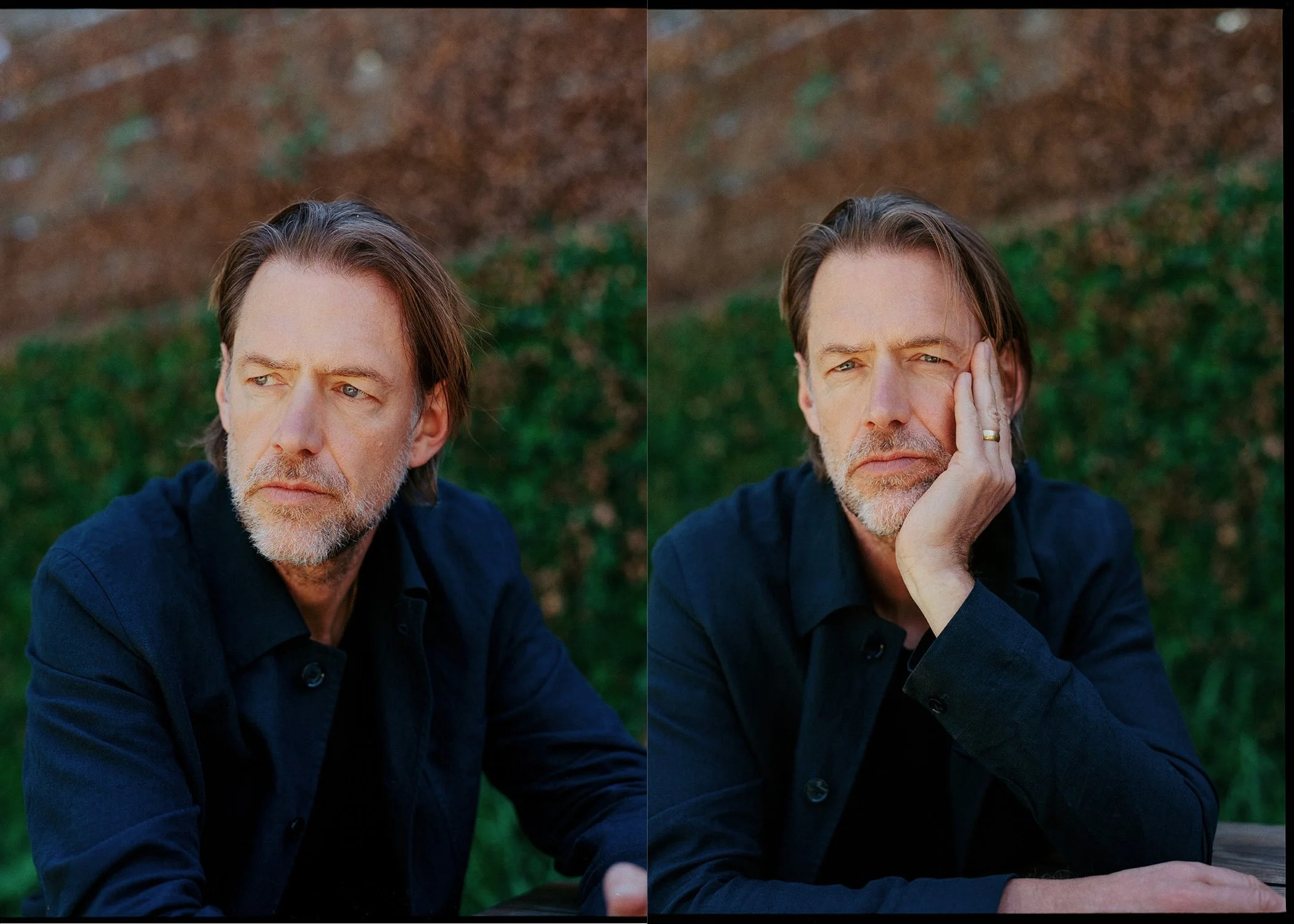
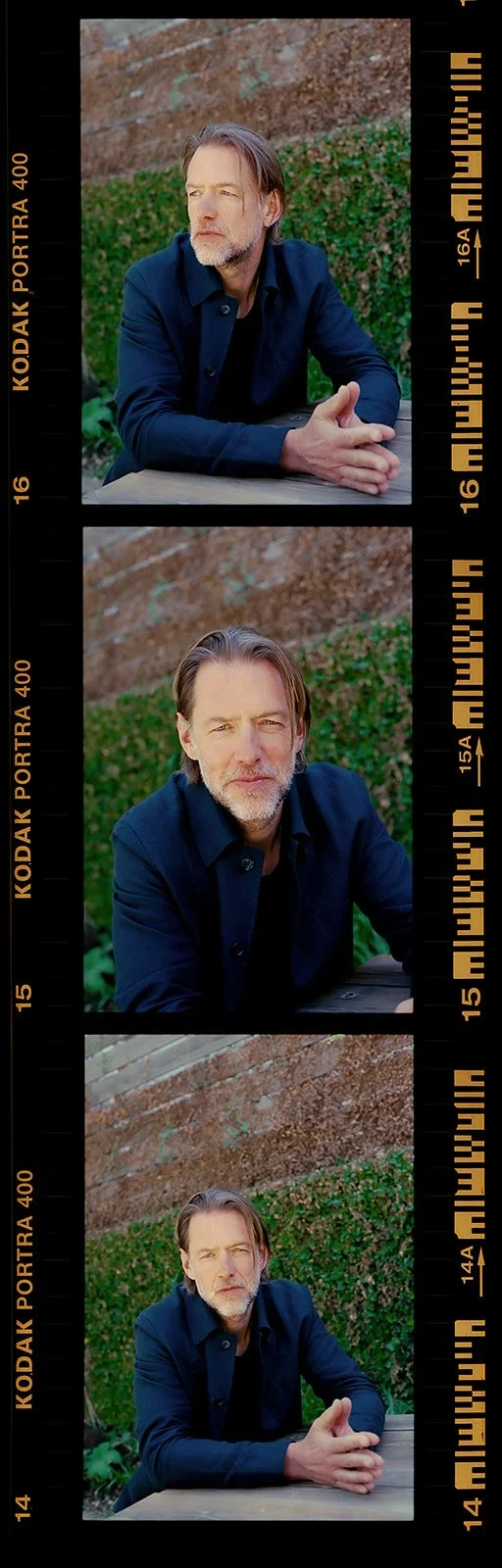
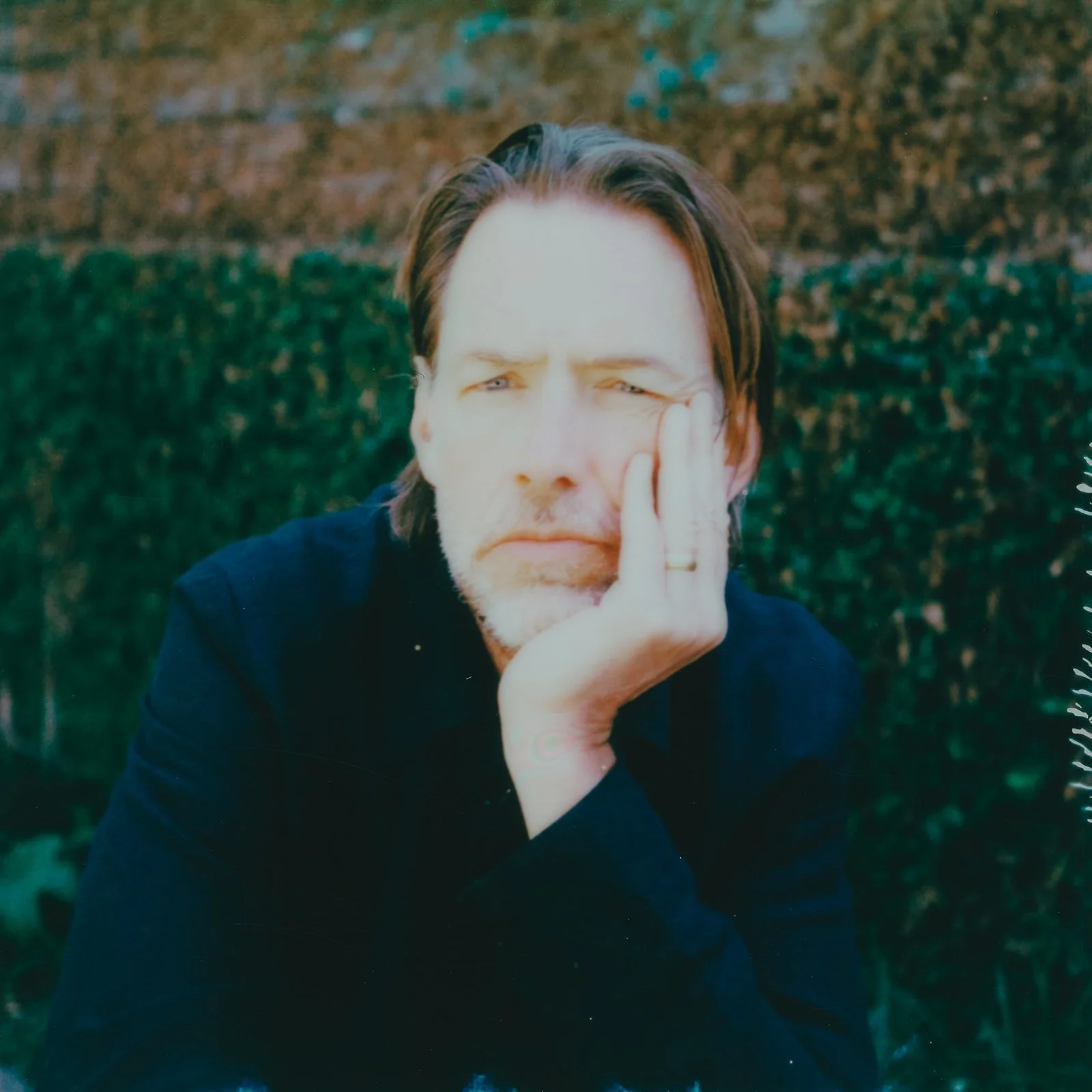
Portraits by Cristina Fisher.
I would not describe myself as ‘spiritual’.
The approximations and iterations of the concept of spirituality exist in my mind as a binary: new age and catholic, neither of which draw very much appeal. I don’t dismiss the impact, legitimacy, or validity of spiritualism nor the experience and nurturing or ‘healing’ benefit of those who engage with it, it just has never been something that I could bring myself to participate in. Intangible, unexplainable, improbable, imperceptible things hold little weight in my critical mind. When people at bars try to argue about the Grateful Dead or talk to me about ‘vibes’ and ‘resonance’, they may as well be wearing a tie dye shirt and holding up a peace sign. I’m checked out.
‘I’d argue that you’re a bit biased. The proof is in the pudding,’ I’d say, ‘and your pudding is made of psilocybin.’
What I’m trying to say is that I’m a skeptic of the beneficial physically-affecting - let alone ‘healing’ - powers of anything that isn’t a clinical inflammatory. And yet, a realist as I am, in times of strife, I gaze at the ocean and feel better. I feel rain and feel calm. I see a sunset and feel ephemeral. I stand in the woods and feel understood. I hear ‘Blue Morpho’, the title single from Ed O’Brien’s second and newest solo album of the same name, and I feel something.
There is an undeniable physicality to the music - a construction; a production; a texture that feels enveloping and dare I say, even a comfort. One minute and sixteen seconds into ‘Blue Morpho’, and I feel awash with a certain… tingling.
O’Brien, perhaps best known as the guitarist in Radiohead, has written and recorded Blue Morpho inspired by and actually within the mountains, valleys, and rains of Wales’ fervent countryside, and the album sounds like it. There is an affect, a tangible, audible, pristine, sort of gentleness that is both unsettling and accepting; minor chords resting slowly on major, beaded by percussive cues that accent but never overwhelm. For that matter, nothing in the album overwhelms. The tracks move gently and seamlessly, and with an average track run time of around six minutes, nothing feels too expedient. There is purpose without hurry. It is almost of the Tao.
Henry David Thoreau was a naturalist writer from the 1800s who believed that God resided in nature and that to experience nature’s effect is to be in the presence of God. Do I believe in God? Not necessarily, but I like to think that Thoreau said ‘God’ because it was the 1800s, and that what was really being referenced was the same multi-textural, transcendent sensory experience that can be heard and felt through a beautiful composition, or a kiss, or a sunset. It is all one and the same, maybe - the songs of Blue Morpho activating a very human, very naturalistic physicality.
I do not now nor do I expect to ever be able to identify the sensory experience that I am describing, and too my relief, neither does Ed. We’re both just happy to explore it.
Ed’s new album is available for listening, now.
I enjoyed the short film and the album very much. Last night at your Q+A, you talked about how geography affects a person, and I’m curious if you think that this album could have been made anywhere other than the southern English countryside.
I see what you mean. There are other places in this album. Brazil features quite heavily in ‘Blue Morpho’ and ‘Obrogado’. I don’t know, there are places in the world that have music - have resonance.
Would you be making the same music if it were written and recorded in San Diego?
I wouldn’t be able to make the same music in a different place. It’d be very different. This music is very green, has a lot to do with running water, it is hills and valleys and mosses and ferns. It’s the old British countryside. I’m curious to record in different places to see the effect of it. I’ve always wanted to come out to Texas, or somewhere that has big skies and red Earth, because I think that that would have an enormous effect on the music being written.
You talked a lot last night about the tuning and the different capabilities that come with resonances of music - can you explain some of the role and intention of that on this album?
For me, this is a bit of an exploration. It’s something that I’ve read about and am very interested in. I’ve dabbled with it a bit. ‘Olympic’ was in 432 (tuning, A=432 Hz). It’s this idea that music isn’t just pleasant on the ear or moves you emotionally, but that there is a deeper resonance. The frequency of it might affect the cells of your body, there is a physicality. In ayurvedic medicine, you have specific frequencies that are tuned to chakras in the body, so to heal or to open, you sing or play that frequency. I think that that’s very interesting and powerful, and I’m just exploring this. I don’t have any answers or anything definitive, but it feels right, and anything that can make the music more multidimensional, for me, is a good thing.
That draws me to a bigger question about art; do you think that art should possess a purpose being moving emotionally? Some more physical purpose?
This is an old question, ‘what's the purpose of art?’ Art can be many things. It can be fun, a piss-take, light, heavy, and as well, art could embrace a healing modality. Art shouldn’t be one thing, it should be many things, and it can be. It’s a broad and varied family. I like art across a spectrum.
Something I took from the film is solitude. You’re out on your own, much of this album came from experiences of solitude. Can you speak on that as a factor in your creative process and in your general experience?
Yeah, I never feel alone in nature. I could spend days alone at our house in the countryside in Wales, and yet, I can spend days in a city and feel completely alone, and I think that there’s something to that. Nature doesn’t make you feel alone. I know that it's probably just me, but I know that the example that I gave last night that I learned in year one of sociology, about how when the industrial revolution happened and people moved from the countryside to the city, that people felt more alone in the city surrounded by people than when they were out in the countryside in nature. I wonder whether that's more to do with the purpose of life. Maybe you feel like you’ve got more purpose if you live in the natural world than if you live in a tenement block. Maybe urban life feels crueler and harsher, more alone. I mean, there’s something about the energy of a city. I love London, but if I stay too long, I feel a bit frazzled by it.
Yeah, I live in New York, I get what you mean.
It’s fucking intense! I don’t think it's good for human beings to be surrounded only by man-made things all the time. In the city you look around and see man-made objects and if you’re lucky they’re beautiful but most of the time they’re ugly, and then all of the decisions of our lives are made by people who inhabit cities. There’s a huge disconnect between society and the natural world.
When you’re not making music or films, what do you get up to out there in the country? Are you painting? Shepherding?
I do some gardening - we’ve got some land out there that's been grazed for a long time by sheep and so we are trying to plant some trees along the mountain and bring back some growth. The sheep eat anything and everything, so we’re trying to work with the farmers and the tenants to replant the mountain. Hm… what do I do… I’ve just been hibernating to be honest. For the first time in my life, I haven’t picked up a guitar or sung - I’ve just been in the winter, going for walks, and reading. It was a pretty full on and amazing tour we went on, but I needed to come back down to earth and recenter. I’ve tended to be pretty busy out there, but it was nice to not be. When I go back home, I’m going to get back into everything, start singing again, playing a lot, sort of getting my chops up.
Are you saying that in an excited kind of way or like a, ‘ah man, I should get to work’ kind of way?
It’s funny - I’m at a stage in life where I feel like there are no ‘should’s. If I don’t feel like doing that, I’m not going to do it. When you’re younger, you have a lot of ‘should’s, especially as a young father. But my kids are older now, they’re in college, so there are no ‘should’s, I want to do the things that I want to do. I want to be guided by my intuition and instinct. I spent a lot of time in my life doing what I should do, so when I talk about getting back into music, it's because I want to. I want to practice, I want to see where my voice can go. I’ve never done this before, not picked up a guitar in three months, and I’m excited to see what happens.
Are you intimidated by that?
No, I want to get the calluses back on my fingers. I read an interview with Neil Young where he said he didn’t pick up a guitar or write anything for nine months because he was doing other things, and I thought that that was so cool. I’m a big believer in following what feels right, and trusting that.
Especially now, the expectation for artists is to produce content constantly.
Yeah, and I think that that’s fucking boring, and unreasonable - I want to have a multidimensional life. I want to learn about regenerative farming, and how to plant a hedge, and I want to do music until the day I die. I’m not one of those people who can exist in a monoculture and do music all the time. I need to go away and get inspired again.
I won’t ask you what inspires you because that's the most annoying question on Earth, but I am curious about your process of creativity and inspiration. What lessons do you think you’ve learned from making this album?
The process of making music is one whereby I feel like there is the initial stage - the initial burst of getting into a room and seeing what comes out; there is the next stage of taking those things and crafting them into something else, then arranging, then playing with other musicians, then comes the finished songs; what I’m trying to say is that like with anything else, there is a beginning, middle, and end, and at the beginning, when you’re most excited, you should not try to have an idea of an end, but allow the process to guide you. Let it unfold for you. It’s a co-creation of the spirit, you have to leave room for the magic to happen.
Do you find yourself ever fighting the tide? Or being precious?
Good question… I don’t think so now, because you can go back to things. Twenty years ago, you would work on tape. It's very difficult to undo things, which has its strengths because you commit to things, but nowadays, worse comes to worse, you can go back to a previous version. But if you do that, it should be to seek that original excitement. It’s a process which I am becoming more and more familiar with and which you can’t ever master, and I’m really enjoying it. I’m looking forward to the next thing because each stage changes, and you can never chase the previous thing, you have to move on and do it slightly differently.
Interesting that last bit. You can’t chase previous experience, but I feel like as a culture, we are constantly looking backwards or seeking to preserve something and keep it static. For example, taking a photo of a meal at a restaurant so that you can see it later, but you’re not actually having the meal again. Another example, a song doing well and a band going, ‘oh, we need to write another one like that.’ I notice that often, through these passive strategies, especially in art, we seek to repeat, relive, or maintain something that was good once rather than developing into something new. Do you have any advice for confronting that?
I think it's a no brainer. You don’t ever do something because you’ve had success with it in the past.
But that’s so many people’s instinct!
But you’ve done it! It’s done, move on. Follow your heart, because you won’t be excited by what you’ve already done. Follow that old saying, to thine own self be true. That’s the thing for an artist: trust in your journey. The only reason you carry on making the stuff that was a hit is because it came from a place of fear that you won’t have a hit, but you should let go of that fear. Trust your intuition and be true to yourself. I guarantee that anyone who makes good work has never sought to repeat themselves or shied away from pursuing what felt right - they followed their instinct. If you want to just play blues or something, then do that, that’s great, but be true to yourself - do that because you want to and because it feels right. Don’t try to be something that you’re not or that you think you should be, you’ll become a cropper.
A what?
A cropper.
What’s that?
It’s a saying, you’ll be a cropper. Like, you’re going to fall. It’s a good one from the lexicon of 1970’s England. ‘You’ll become a cropper, mate’. It’s a good one, I haven’t used it in decades, maybe.
You made a comment last night about how you felt you had spent a lot of your creative life hiding - hiding in Radiohead, even. Now, you’ve got this new solo album and an accompanying film. So my question is: are you alright? To me, that’d be an anxious nightmare.
Oh, I mean, yeah. I don’t feel any anxiety whatsoever. I’m at a point where I just don’t care. Of course, I’d like them to like the music more than hate it, absolutely. But is it going to change a course in me? Maybe only economically, because if people don’t like it, I won’t be able to tour. But will it stop me writing? Will it stop me making music? No. I used to care about what people thought of me, 100%, but now I just sort of don’t. I care deeply about the music, and about the performance being the best it can be, but I am not worried about what people think about me. If you do something with the right intention and with love in your heart, that’s the best thing you can do. Everything else is out of your control.