
Colours Of Home: Nina Treffkorn
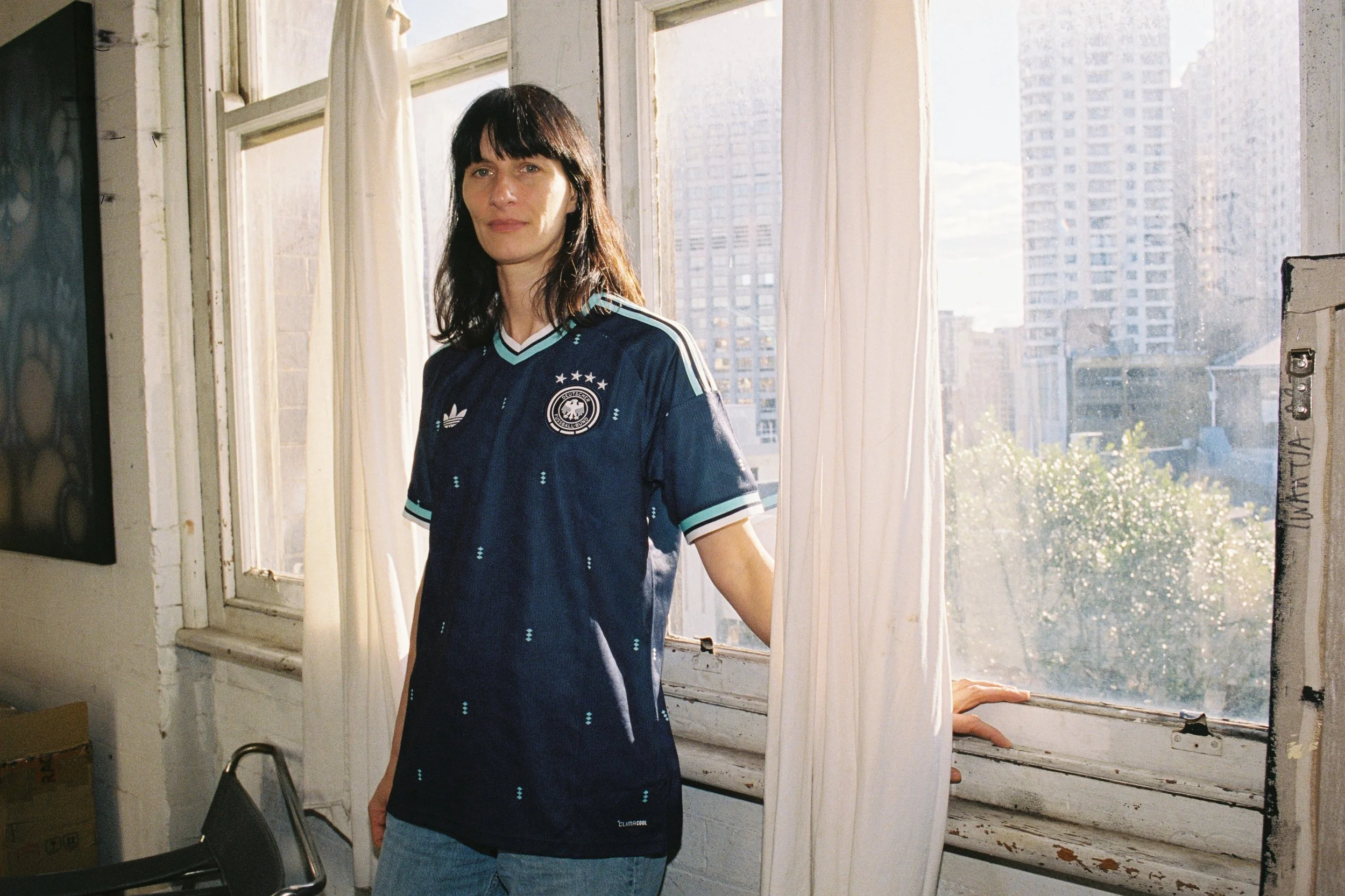
Photography by Josh Sabini.
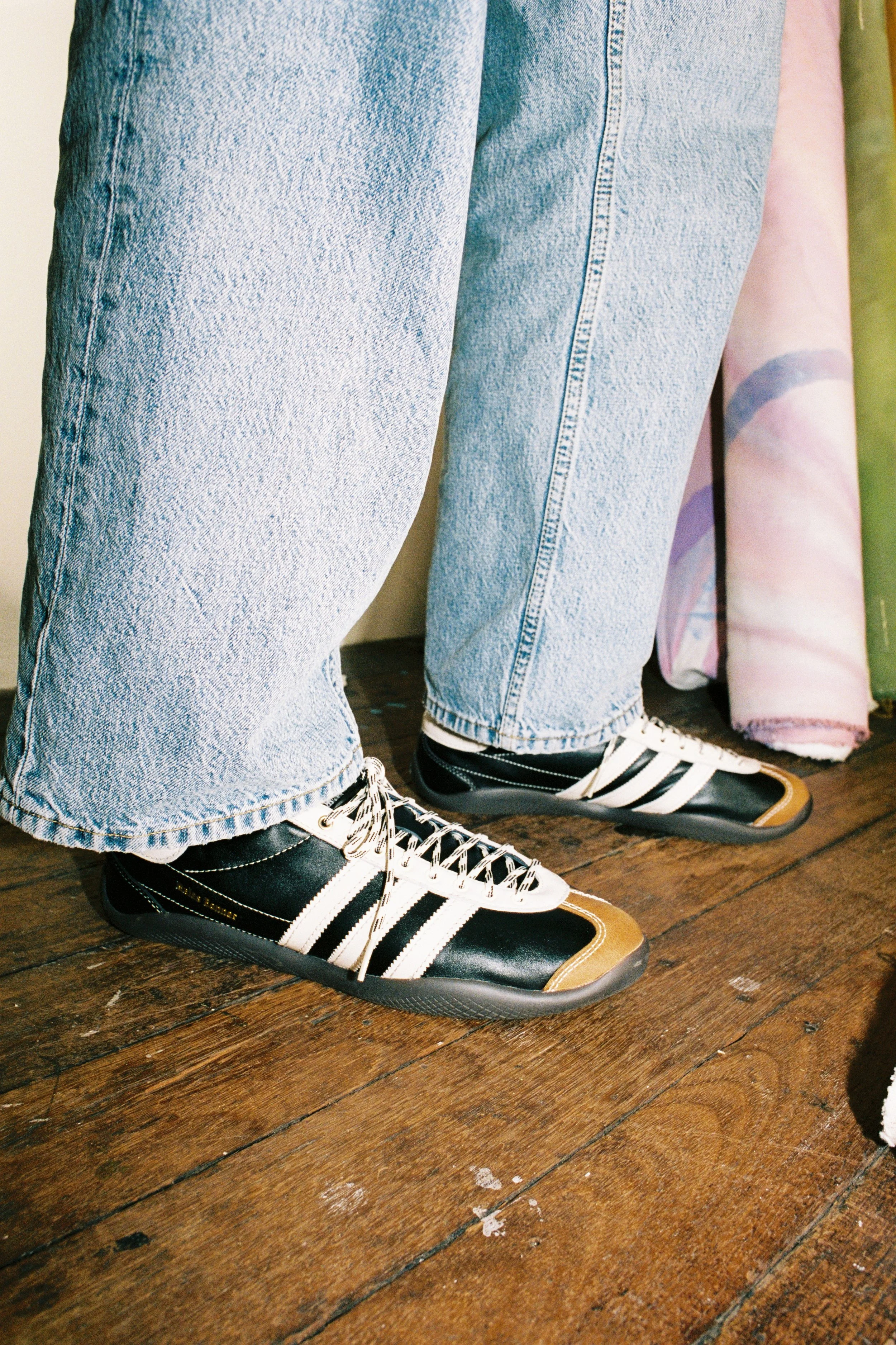
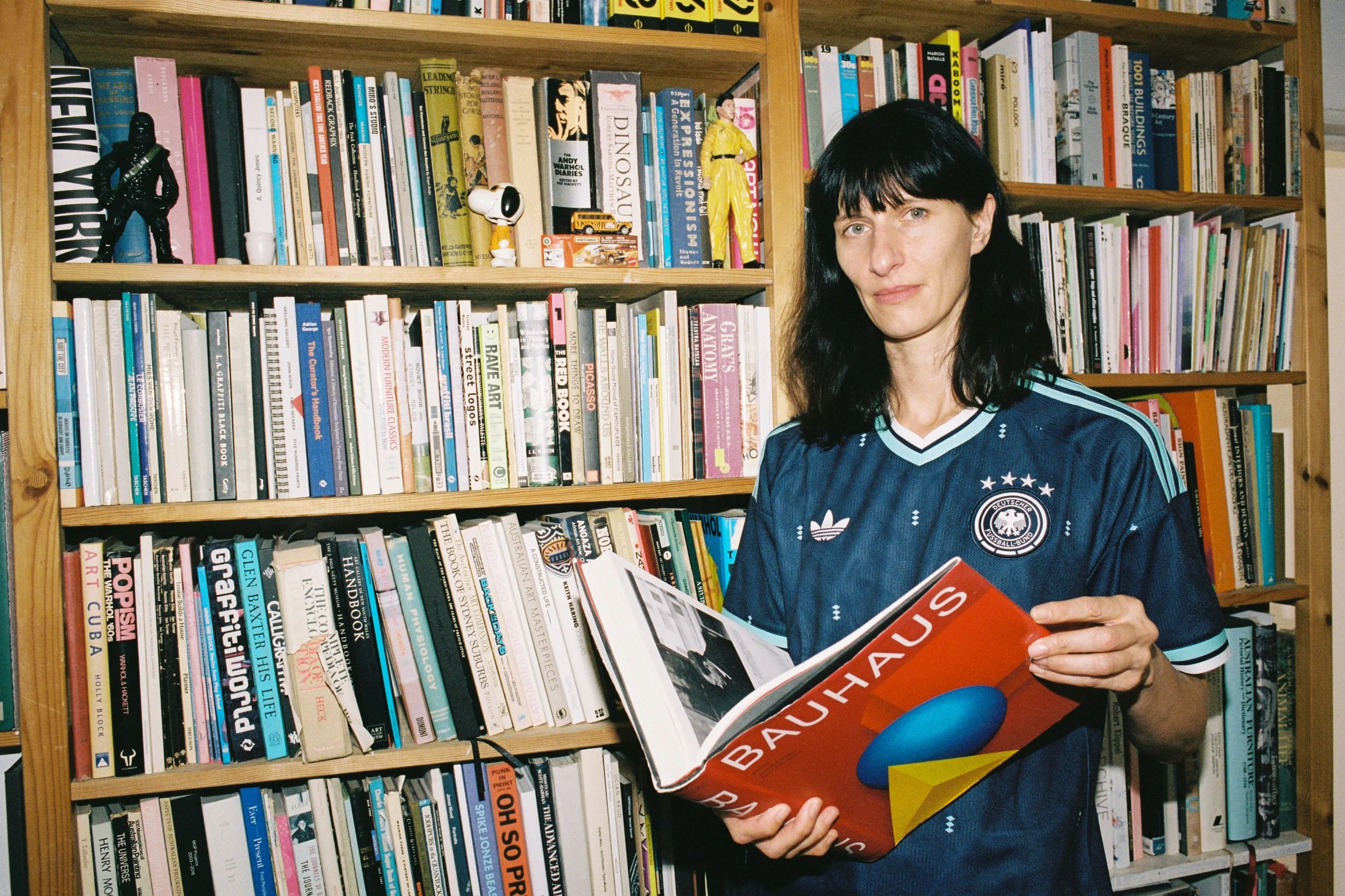
Welcome to Colours of Home, a series celebrating creative expats in Australia who love their national football team. Our second instalment is with the German-born, Sydney-based co-owner of the city’s iconic gallery, China Heights, Nina Treffkorn.
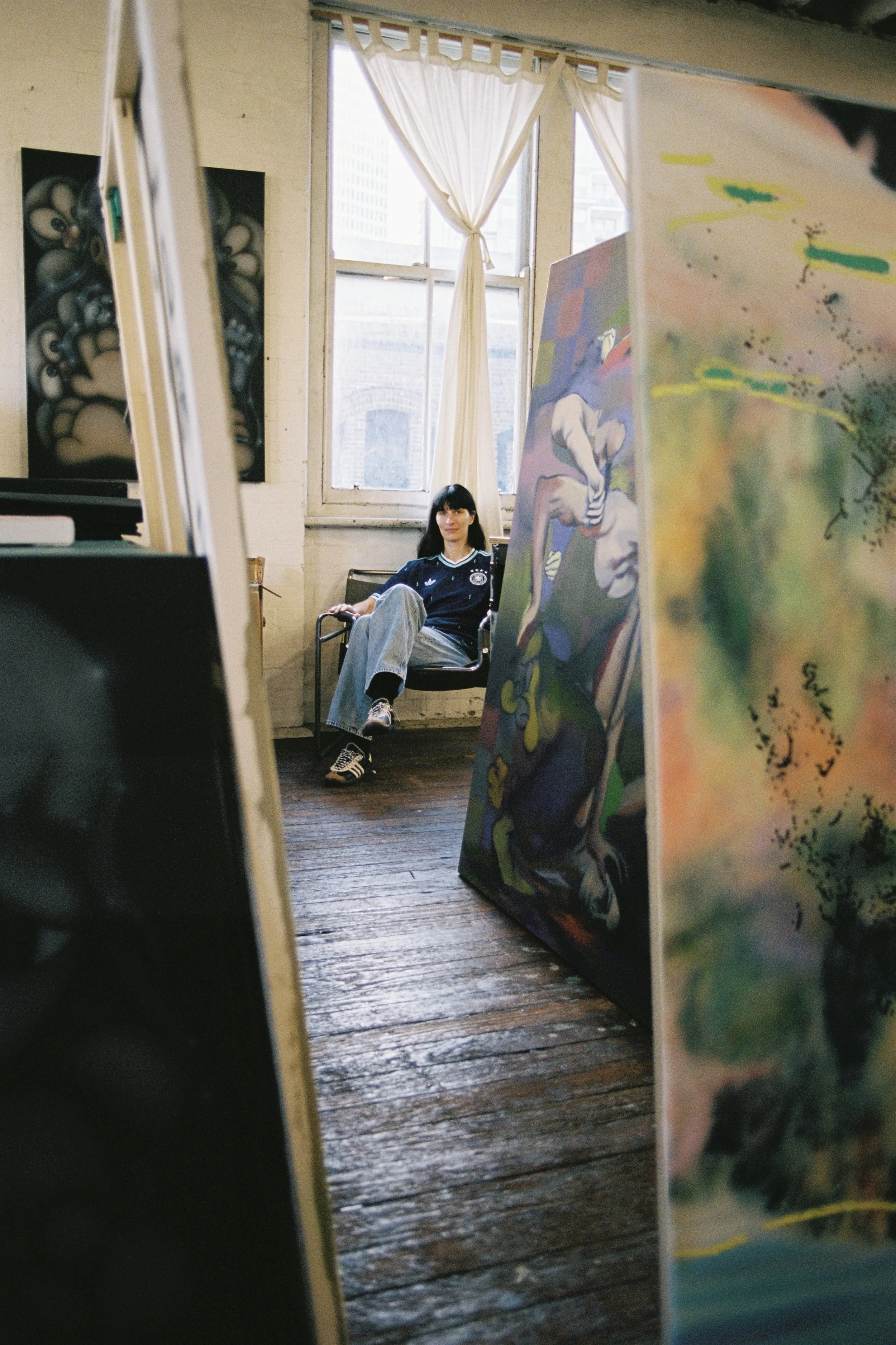
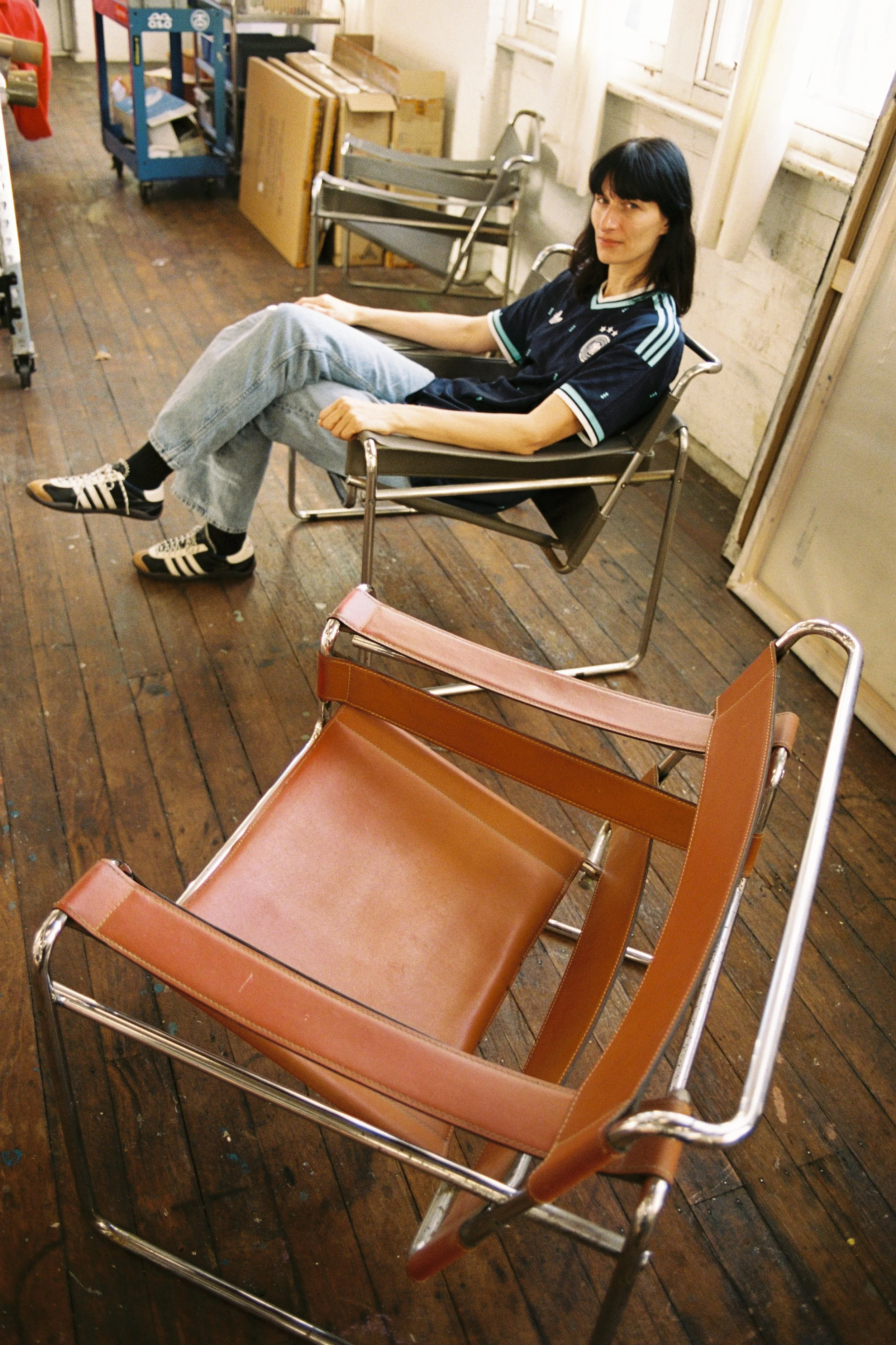
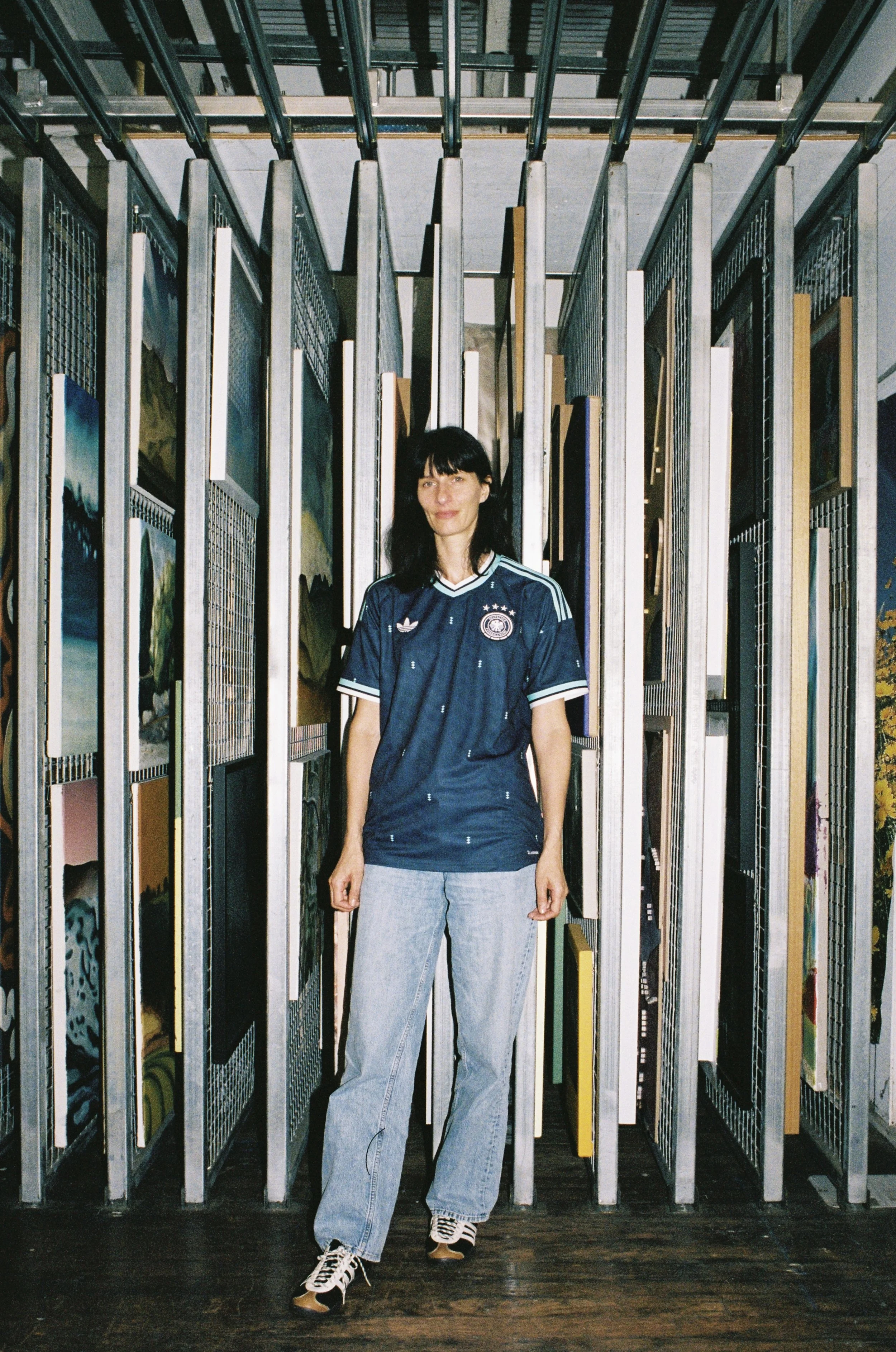
There’s a sense of worldliness that's immediately noticeable as you step into China Heights. It feels different to other galleries in Australia; it’s confident in what it is, it’s not cookie-cutter, while also not decrepit. Clean with a comfortable sense of edge. A quality that strongly reflects the artists they show and represent. Founded in 2004 by Edward Woodley, Benji Phillips, and Mark Drew, with an influence from skateboarding, music and graffiti subcultures, it’s never veered far from its original track. Since late 2008, the Surry Hills gallery has been managed by Edward and his partner, Nina. Talking with Nina, you understand that what underpins everything they do is genuine sincerity. ‘We almost don’t have any separation between our personal life and our business life, but we’re glad because we don’t want that,’ she says about the relationships she and Edward have with the artists. The gallery is their life; they’re not trying to mimic anything or be something they’re not.
I sat down with Nina in the gallery to talk about China Heights, her life, her relationship with art, and, of course, football.
You had a very international upbringing, having been born in Germany and then moving to Ireland at a very young age, before eventually relocating to Australia. Can you talk me through your childhood?
My family are German; my parents met when my mother was at art school in Hamburg. They were heavily involved in the commune scene, and when my siblings and I were young, my mother had a chance to set up a weaving studio in Ireland. So my parents moved everyone across to Ireland. I grew up in an extremely rural part of Ireland, which was essentially the middle of nowhere. My parents were really inspired by the landscape, which I found extremely boring; now I can appreciate its rugged beauty. We were a bit unusual as obvious foreigners in this small Irish town. We only ever spoke German at home and spent our summers and winters in Germany, seeing our relatives in the Black Forrest and Hamburg.
Oh wow, is your family from the Black Forrest? I’ve heard such incredible things about that area.
My uncle had a really nice property there, which was truly magical. It was like something out of a picture book, especially in winter when it was all covered in snow. My dad’s family is from Hamburg, which was a really fun place to hang out, especially during my teenage years.
When did you move to Australia?
I moved here when I was twenty. I didn’t know much about the country other than that the weather was good. I wasn’t really planning on moving, but through a series of events, I ended up staying here. I love it here, especially in Sydney. I wouldn’t live anywhere else. I find it very social, welcoming, and open; I love the healthy lifestyle, and there’s a degree of transient-ness to the city that I really enjoy. There’s also a great creative arts scene.
But you didn’t want to get into the arts when you were growing up…
I didn’t [laughs]. In my teens, I was like, I do not want anything to do with the arts. Artists are all weird. All my parent’s friends are weird [laughs]. I was really hating on it and just wanted to be normal with a normal life and a real job. At university, I started studying international trade and marketing, and I hated it At age 18, I found economics to be utterly boring - I have a different perspective now – but at the time I was like, ‘how is this even relevant to my life and what the fuck is inflation?’ Then I tried to work out what else I enjoyed that I could do well. I decided on cooking, so completed a chefing course and worked in kitchens as a chef until I was twenty-two. Around that time, I met a friend who had a fashion distribution business, and he told me that he needed help on the business side of things, which was my strength,
Business and international trade [laughs].
Yes, business [laughs]. I did the business side, and he worked on sales. Then I moved to Sydney from Melbourne, where I wove my way through fashion into the arts. Then, at the end of 2008, I met Edward. He was about six years into the gallery [China Heights], and the two people he started it with, Benji [Phillips] and Mark [Drew], were moving overseas. Benji had already gone to New York, and Mark was getting ready to move to Japan. Through the nature of our personal romantic relationship, as well as the fact that we both grew up in the arts, having parents who are both artists, it was a very natural integration that I came into the business. Our roles are relatively separate in what we work on, but there’s a lot of crossover.
Yeah, how does collaboration work between you two?
Originally, it was more task-divided; there wasn’t a set plan of this is what I do, and this is what you do. Obviously, we help each other where it is needed and where opinion is needed. Sometimes opinion is not needed, and it’s still given… from my side mainly [laughs]. We work with each other’s strengths. Edward has an incredible curatorial eye. I’m more on the managerial, pre-production side. It has always worked really fluidly.
It's been almost twenty years of you two doing this together; that's crazy to think about.
It’s a really long time, but it really doesn’t feel like it.
The thing that has always stood out to me about China Heights, especially being from Melbourne, is that it has this reputation for being the hub for contemporary art within Australia. The gallery is run with a very international eye and feels as if it could sit comfortably in any major global city. That really stands out when compared to the rest of the Australian art world, which seems to be only focused on what's happening within Australia. What is the importance of having this global scope for you?
The international gaze is true. I’m not from here, so I can’t even think just from the Australian perspective. Edward has travelled so much too; he is so inspired by what people are doing on a global level. It’s too hard to just lock in on what your neighbour is doing and try to do a version of that; I don’t think any of us want to either. It doesn’t feel interesting, so intuitively, we just do what we like and what we want to see. We really disregard what people around us are doing because it’s not relevant to us. It’s fine, and it works, but we don’t want to compete in that space. We also have strong relationships that we’ve fostered for a long time, and they also lie abroad, not just in Sydney.
That’s a really nice thing as well, you have such strong relationships with the artists you represent and show at the gallery. For example, I looked at Sam Stephenson’s page on the website yesterday, and he’s shown here around ten times over the last fifteen years.
Yeah, since he was so young, but we fully understand his practice. It’s so important that you understand the person, their practice, and the whole journey. It’s not just a thing of a photographer coming in with some photos that you maybe don’t get, but think look cool. It’s more than that. It’s understanding the full culture around them and their work.
Why do you feel that it’s important to have these personal relationships with artists?
It’s our life. We almost don’t have any separation between our personal life and our business life, but we’re glad because we don’t want that. It’s what’s really fun and fulfilling. I love that it's all-encompassing. I love that there is this world that all overlaps into fashion and music. I don’t want to pair that back and say we only do one thing and distance ourselves from these relationships. That's what makes it so fulfilling and what makes it work.
I want to go back to the international gaze aspect. I feel like I pick up something new every time I go abroad.
Definitely. You absorb everything; it’s not just about going to gallery after gallery. It’s what you see in the streets or in shop windows; it’s everything.
You see how artists interact with space and other people, too.
And design elements too, not just art. How people use space, the architecture fitouts etc.
Gallery spaces, too, seeing where they are and their layouts.
Totally. Interestingly, as soon as Edward found this space, he fell in love with it. It’s a perfect space. However, for a long time, people had a big gripe that the space wasn’t street-facing or ground-level. From our perspective, spending so much time overseas and many galleries in Paris or New York, being in apartment blocks or upstairs, where you can only access by ringing the doorbell, we didn’t see that as important. Yet, a lot of people couldn’t wrap their heads around the fact that we didn’t want the ground-floor, street-front presence.
Yeah, totally.
People have gotten used to it now, but I remember it being such a big thing.
Despite leaving Germany all those years ago, you still support Germany’s football team. Why do you think that connection has stayed with you more strongly than, say, Ireland or Australia?
I love Australia, but I don’t feel Australian or Irish. My interest in football also stems from my family's history with the game. Those times watching the World Cup together with my family are really standout moments to me.
What’s your favourite World Cup moment?
Definitely, the 2014 World Cup and the semi-finals when Germany beat Brazil 7-1. That was a huge upset, like, unbelievable. I have never felt like that ever before in my life. Then we went on to win the final against Argentina 1-0 in extra time. That was such a glorious moment.
How are you feeling about the upcoming World Cup in LA next month?
So good! We’re in for such a good chance. Germany is a bit of a dark horse, but I think they’ve got it. They’re going in strong, and I’m confident it’s going to be a big win this year.
++
Colours of Home is a Monster Children editorial series presented with our friends at adidas Originals.
The FIFA World Cup is happening in Los Angeles from 11th June 2026 – 19th July 2026. Shop your team’s adidas FIFA World Cup jersey on adidas.com.au.