
Chanel Beads on 'Your Day Will Come' (not a 2.0)
Shane Lavers answers my call from his sunny New York apartment sometime in the late afternoon.
I sit on the other end of the call, early in my morning, wearing a minimum of three layers in my completely uninsulated share house in the inner west of Sydney. Naturally, the first thing I notice about him is that he looks warm. We start talking, or rather, I start asking him questions about 'Your Day Will Come', his second studio album which has just been released and happens to share the same name as his debut album. And before I knew it, I had completely forgotten just how fucking cold I was.
Birthed a decade ago while still living in Seattle, Chanel Beads began from an interest Lavers had taken in the collage of different soundscapes. Having already existed on and off in the live band scene, he began to explore what the construction of a song could be outside of the conventional. Playing with the relationship between synthetic sounds, raw instrumentation, and snatched phone recordings of his environment, he began to create ambient textures that would sonically borrow elements from genres like post-punk to others like, dream-pop. Pairing it with his often distorted use of vocals; the release of his first body of work established him as an artist who was unafraid to question and push the boundaries of experimentation. A couple of years down the track and the release of an entirely new record, Chanel Beads continue to evolve in their sound, while taking a more collaborative approach. 'Your Day Will Come' is out now via Jagjaguwar.
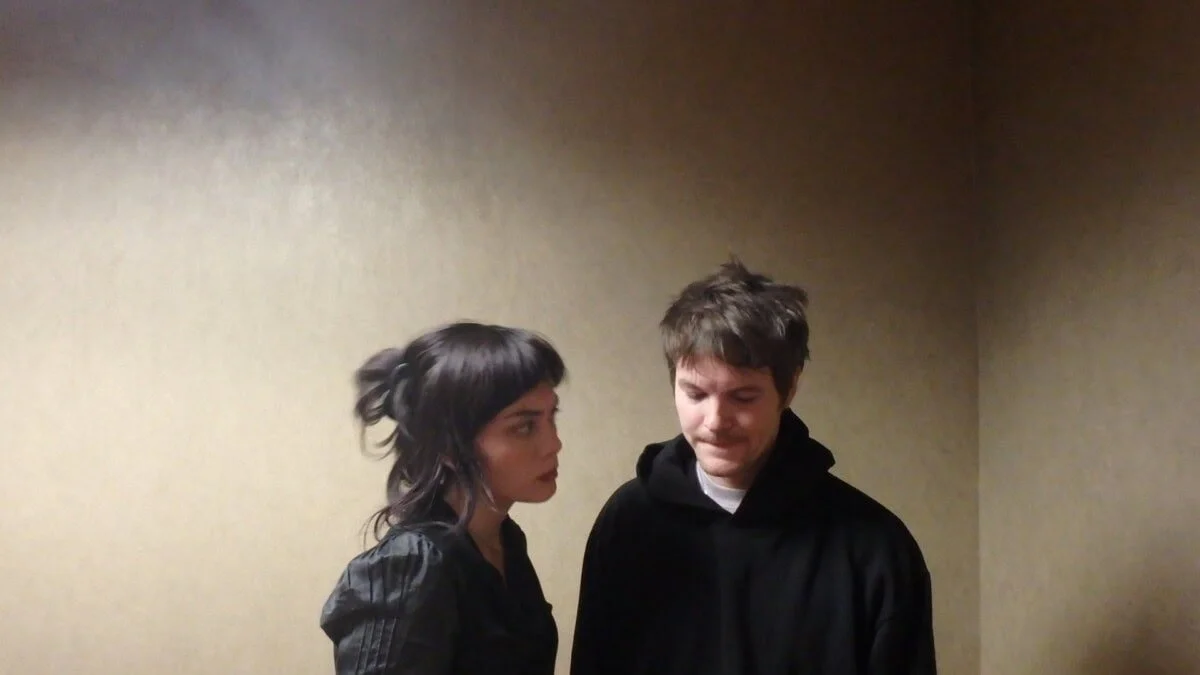
You have your second studio album coming out at the end of next month, 'Your Day Will Come', which shares the same title as your debut album. I’m curious to know what made you decide to do that?
It started with me thinking: "What is the stupidest thing I can do?" And it popped into my head with the exact same punctuation, not like a number two or an abbreviation. I kind of liked that it was stupid, but then it started to take on meaning. The meaning started to make more sense as a way of trying to live with denial. Or questioning whether something is certain or uncertain; if you lived your whole life thinking something is certain and it's not, at what point do you reckon with that?
I wonder, when you say “trying to live with denial,” do you mean that almost literally? As in, a denial of the first album ever really ending?
Umm, it’s not so literal; it’s kind of unrelated to the two albums being connected. It’s more about this second record being about how you can never really know anything for sure. The statement 'Your Day Will Come' is kind of a promise, but if someone’s repeating it, it kind of meant to me: "Did it not come? Will it ever come?" I don’t know. It’s more about belief and certainty.
I read somewhere that you recorded a lot of running water for this record.
[Laughs].
Tell me about that?
Yeah, I don’t know how much of it I used, but it’s just a habit that I have because I like to walk a lot and I get sick of listening to music. Sometimes I get a little bit over the noise in New York, so I'll just go through my voice notes and I’ll find them and be like, "Oh yeah, that was a little weird drain pipe." It’s weird, but there’s something special about the fact that I recorded it and I’m listening to it; it's like rereading a book or something. It’s a calming practice.
A grounding technique, if you will.
Yeah, and also it’s like, well, at least I recorded something today.
You’ve spoken about sampling your old music in the past. Is there much of that on the new record?
That’s, again, just a practice that I like to do to avoid feeling like I’m looking at a blank page. It’s nice to kind of recontextualize something, but I’m not sure how much of it actually ends up in a finished song. I like having some samples to go to when I want a certain feeling or effect. It’ll be like I’ve got this thing—like someone screaming outside of a bar—that I can reuse, and it feels like the meaning has changed. But yeah, it’s something that’s more utilitarian while also maybe trying to construct a link, like a language that’s unique to this project.
Would you say that the creation of this album was primarily driven by a desire to convey a feeling or feelings that you were experiencing at the time?
Yeah, I definitely think so. I sometimes get a bit dogmatic or something, but sometimes I’ll listen to stuff that’s coming out and I’m like, "Damn, I really just hate 'vibes'," like when something is just about a cool vibe. It drives me insane, and then I’m worried that I’m doing that. So then I feel like I really try to pour in something that I’m struggling with or that captivates or compels me, which always comes down to a certain feeling and a little bit of not really knowing what that means. I think strong feelings can sometimes have ambiguous meanings, and I think those two things can work really well together to try and push you forward into something.
Your music does seem to sit in this sort of undefineable category, which I can imagine is pointed out to you quite often. How does that make you feel?
Yeah, it’s funny to me because I don’t think of it that way at all. But I’m kind of at peace with it; what I think I’m doing is not what other people are going to experience it as. But to me, just because I’m exploring something that doesn’t have a simple logic to it – like it might appear more dreamlike – that doesn’t make it all just fade into a fog of ambiguity. I mean, with the last thing we put out, I thought was pretty concrete in terms of being like, “okay, here is what I am struggling with.” But then people kept talking about how kind of foggy and dreamy it is, and I’m like, "I don’t know, that one, I thought I really laid it out there for you" [laughs]. But yeah, I don’t know. I think it’s awesome that someone can come away with any feeling from it. It’s almost more compelling to me for someone to have a reaction that was different from my reaction while making it.
I guess that also just sort of rings true to the subjectivity of art, you know, everyone’s own experiences do, inevitably, shape their digestion of it.
Yeah.
I’m curious to know if you would consider geography to have had much of an effect on your music. I mean, you grew up in Minnesota, then you did a little stint in Seattle, and now you’re in New York. Do you feel it has influenced your musical output?
Yeah, definitely. I think it’s something you could think about and talk about all day. When I first moved to New York, I was feeling pretty confident in the fact that New York was influencing me. I can’t tell if that stayed true, but at the time, I thought New York was helping to strip some kind of sentimentality out of my music. I don’t know how to describe it, but I thought New York was making my music colder or more digital or something.
Interesting.
A lot of the music I’ve made is designed around how I’m going to be performing it or playing it for people, or with people. In Seattle, it was all kind of house shows that you could get pretty loud in, but you also wanted to be a bit more tasteful than I’m being now with my music regarding the types of sounds and frequencies you’re making. Whereas now, I think I’m more interested in kind of maxing out a limiter. I think they’re tailored to how you play them live in certain places. When I lived in Seattle, we played almost every weekend, and it was kind of similar when I first moved to New York. But in New York, it’s like a bar show, which was kind of unheard of in Seattle because bars were a place where people would ignore you and just drink. I then started to lean into that and got really into it in New York, and it kind of changed my idea of what performance could be; like how you could embrace being almost like furniture music.
That makes me wonder how you feel about Dime Square and just the downtown scene in general in New York?
It’s funny because I don’t know who first called us 'Dime Square', but when it happened we were like, "we’re not Dimes." I didn’t even know what Dime Square was.
[Laughs].
I think we played one show in Chinatown for this thing called Nina Protocol, which is like a music platform, and I think someone went to that show and was like, "Oh, we’re in Chinatown, this is Dime Square," and then wrote about us being Dime Square. But I don’t know; we’ve met some people who are super self-described Dime Square people, but I don’t really know what they’re trying to get at with that.
That’s so funny because based on my research of you, I was like, oh he’s going to hate this question, but I’m going to ask it just to be a bit of a fuckwit.
No, I kind of like it so that I get the opportunity to set the record straight and say that I hate it when people think we’re dime square [laughs].
You tell ‘em!