
An Artist You Should Know: Jack Penny
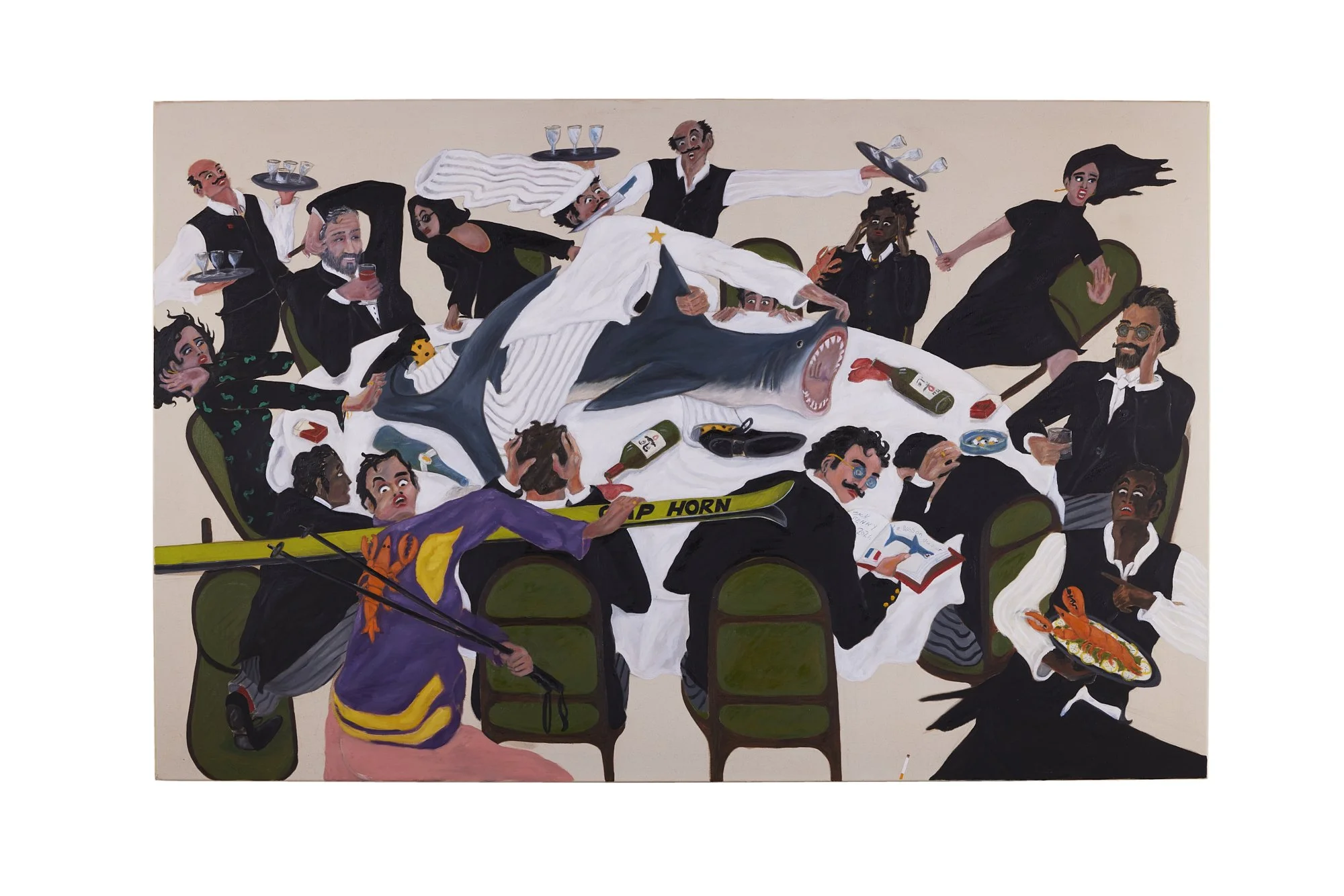
Driven by capturing a real sense of humanity within his work it is no wonder blue collar workers like chefs and waiters are the prominent features of a Jack Penny pieces.
With an abstract approach to figurative paintings, Penny transforms the 9-5 hustle into a beautiful work of art. Informed and inspired by a lifetime skating, as well as a stint in the big smoke of London, the debauchery found in Penny’s work could be interpreted as an extension of that - but what do we know? We spoke with the artist first hand to find out.
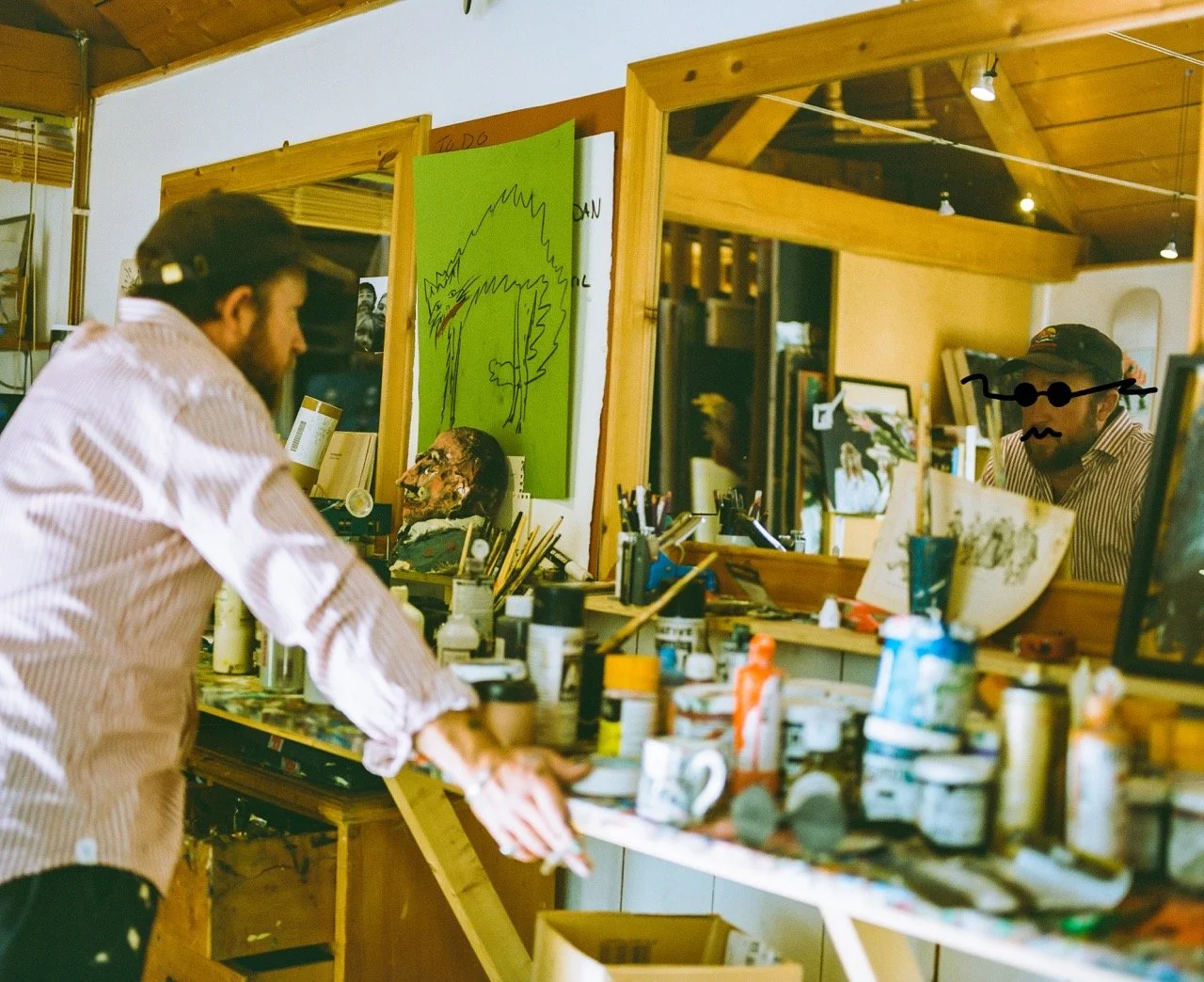
Photo: Louis Toledo
Hey Jack - give us a spiel on who you are, what you do, where you live?
Hi Sam, I am a painter. My paintings are seemingly on the nose, tracking down the missing laughter until the audience is laughing at themselves. I currently live on the south coast of England, which is soon to change, as my family and I are moving to France in a few months.
How would you personally describe your art?
I’m quite traditional with my materials, using oil on canvas in various sizes, but I am most comfortable working at the largest size possible, although that is not always practical. I like my whole body to be in motion when drawing a line or putting a stroke of paint down; it feels more action-orientated. I occasionally venture into sculpture, often using reclaimed wood, which seems a fitting material for my raw, unpolished figurative paintings.
Describing my work has always been a difficult task for me. Maybe this comes from being extremely dyslexic, or maybe from an unwillingness to box it in or tell the audience exactly what it’s about. I like a bit of mystery. When I am painting, it’s the only place I’ve ever felt real freedom, an addictive kind of freedom. Like a lot of artists, my work is a way of digesting the world, but not in a self-documenting way. My work can be provocative and precise, as well as purposefully ambiguous. I don’t think I would be painting the way I do if it weren’t for the time I live in.Over the last few years, I have adopted a stance of playfulness in my work, and my latest pieces feel a little like a joke without a punchline. That is the best way I can describe it.
When I’m painting, it is a space for the child in me, for lack of a better analogy, who is unreasonable and generally anti-establishment; a hater of arbitrary rules. Then there is also the adult in me, who is much more reserved and is obsessed with understanding the theory of painting and what makes a painting successful. In the process of discovering a painting, it’s a push-and-pull relationship between the two. It’s not often that I make a painting that pleases them both.
Art photos: Jonny Clark
What is it that draws you to dining tables and chefs particularly?
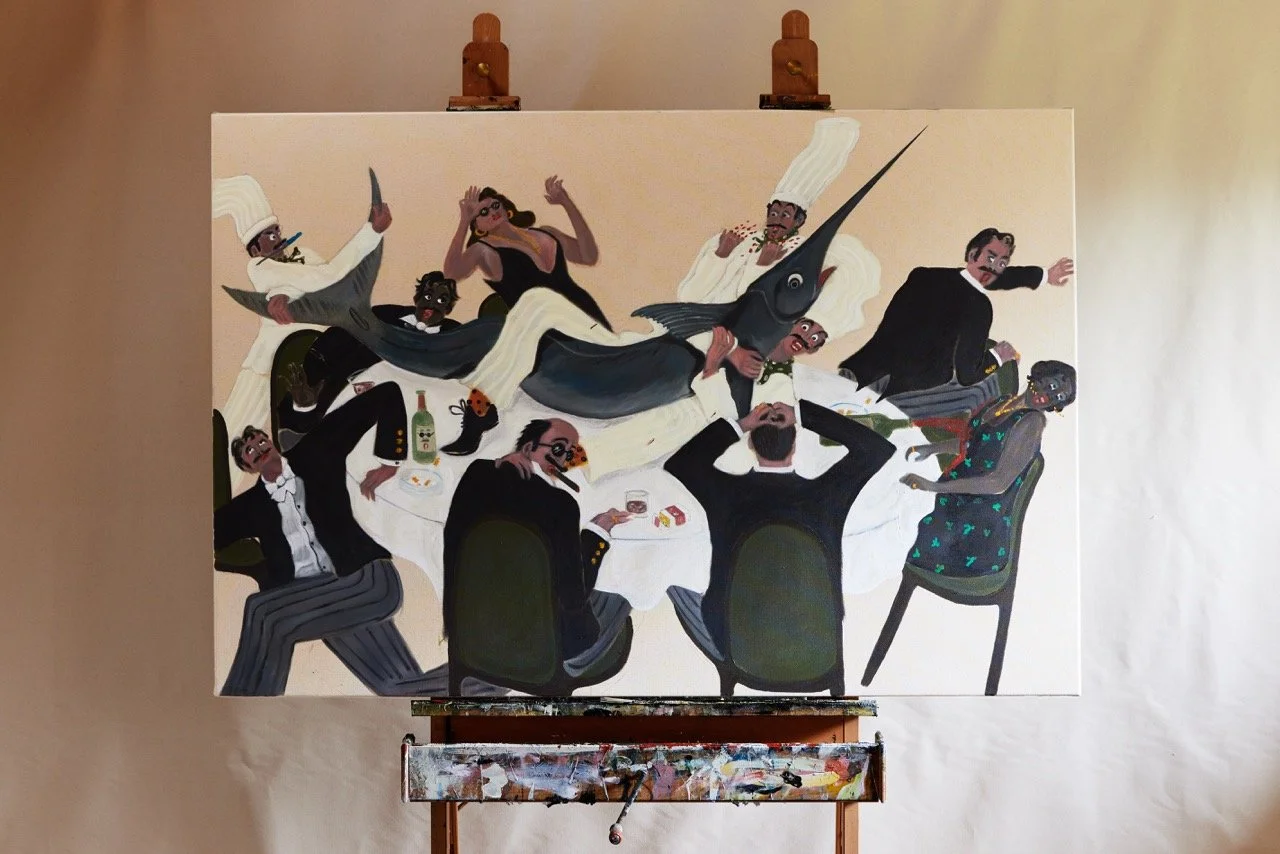
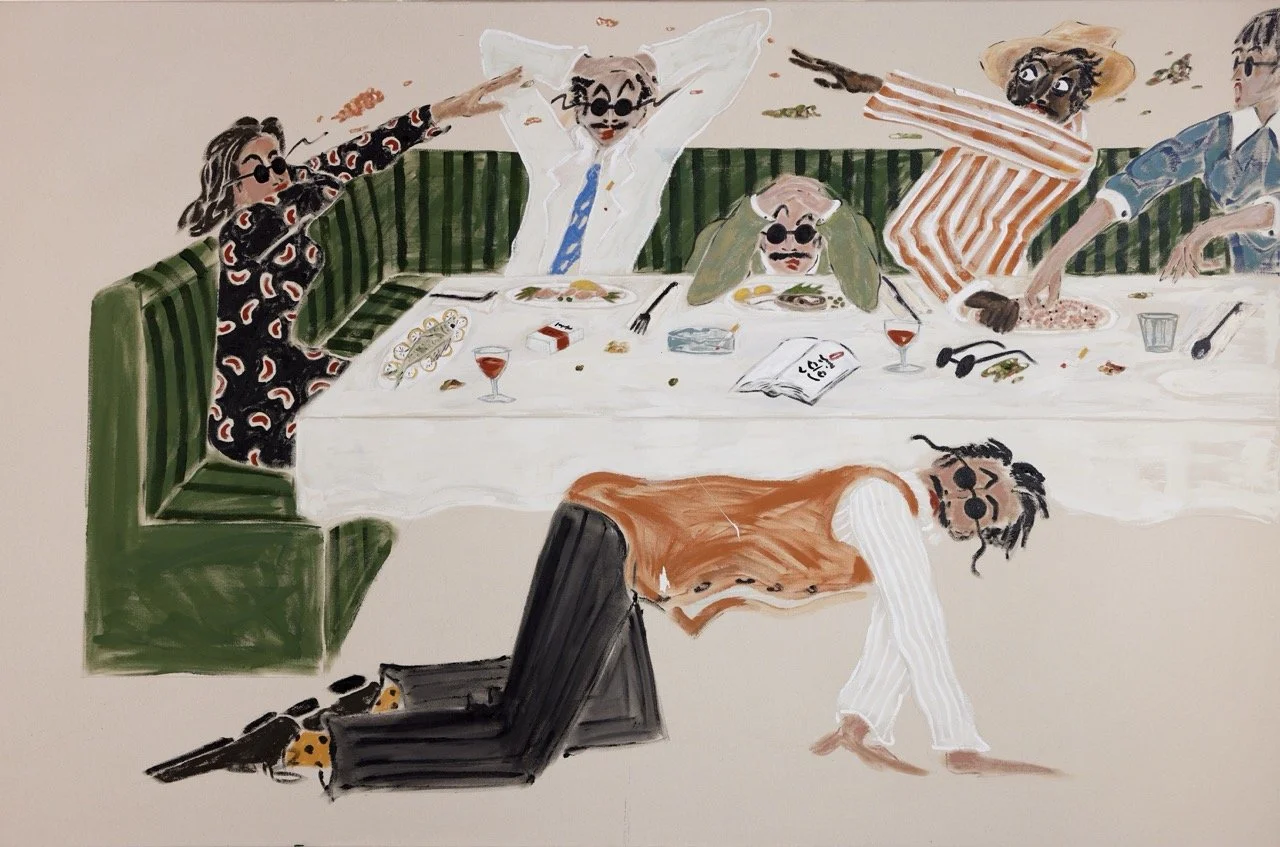
The table paintings lend themselves to something ceremonious that we can all relate to. Breaking bread with people is enjoyed across all cultures, all around the world. We all look forward to sitting down with friends or family, so I believe people are drawn to these paintings for what they represent. It’s a multi-layered concept that brings an ambiguous but familiar quality, something that seems liveable and approachable on the surface, in the room it occupies as its final resting place, but is fully loaded.
I love uniforms, and I use them as tools. I believe that once someone wears a uniform, they become less accountable and the individual loses their identity. It takes the painting away from the individual, they become a symbol (waiters, chefs, soldiers, nurses, police officers), separating themselves from their surroundings. It’s a language for me to engage with certain topics without having to be contrived or overly direct.
Art photos: Jonny Clark
Speaking of dining - what are you ordering for the table?
I love seafood, but my wife is deadly allergic, and naturally I am often eating out with her, which has put a tremendous strain on our relationship. I think I am having second thoughts! Joke aside, I usually ask the waiter to tell me the top picks. I am invited to nice restaurants frequently as some of my work is food-related which I definitely take advantage of.
What grew your confidence as an artist?
Naivety can be a powerful thing. I was very confident when I started out because I knew so little about the art world and art in general. It felt to me that I had a real identity from the get-go. Now, when I look back, I cringe a bit but, in a way, envy that confidence I had. Now I am confident in a different way, because of the years of work I have put in.
What draws you to depicting the hustle of city life? And also what repels you about it?
I am not a massive fan of people en masse - the feeling it gives me. I am not really sure what it is, but that’s what drew me to do a series on it called Commuters. It’s also the thing that repels me.

Art photos: Jonny Clark
Are you a city person yourself?
I am a countryside person through and through, yet I need cities at arm’s length. They remind me why I love space and the countryside. As I mentioned, I am about to move even further into the French countryside with my family, to live on a farm so we can grow our own food and become more self-sustaining. That said, I have made sure that Paris is not too far, so that when my children are older, it’s easy for them to get to. I don’t want to rob them of what a city can provide culturally.
Are you someone who listens to music when you create - and if so, what’s on the playlist?
Where was your first ever exhibition and how do you think you’ve grown as an artist since?
My friend Hugo Hamper-Potts and I rented spaces together over a five-year period in London. It was difficult to get any attention, but that’s the nature of the art world. The art world can be very closed off, especially if you have not studied at university. So we found our own way around it by renting spaces and putting on our own shows for years. Since then, my work has changed. My inspiration has changed. But the feeling I get when I paint has remained the same. My understanding of art, and of who I am as an artist, has changed greatly and continues to evolve.
You skate a lot too, do you think there’s any crossover between skateboarding and art? Do you think it’s had an influence at all?
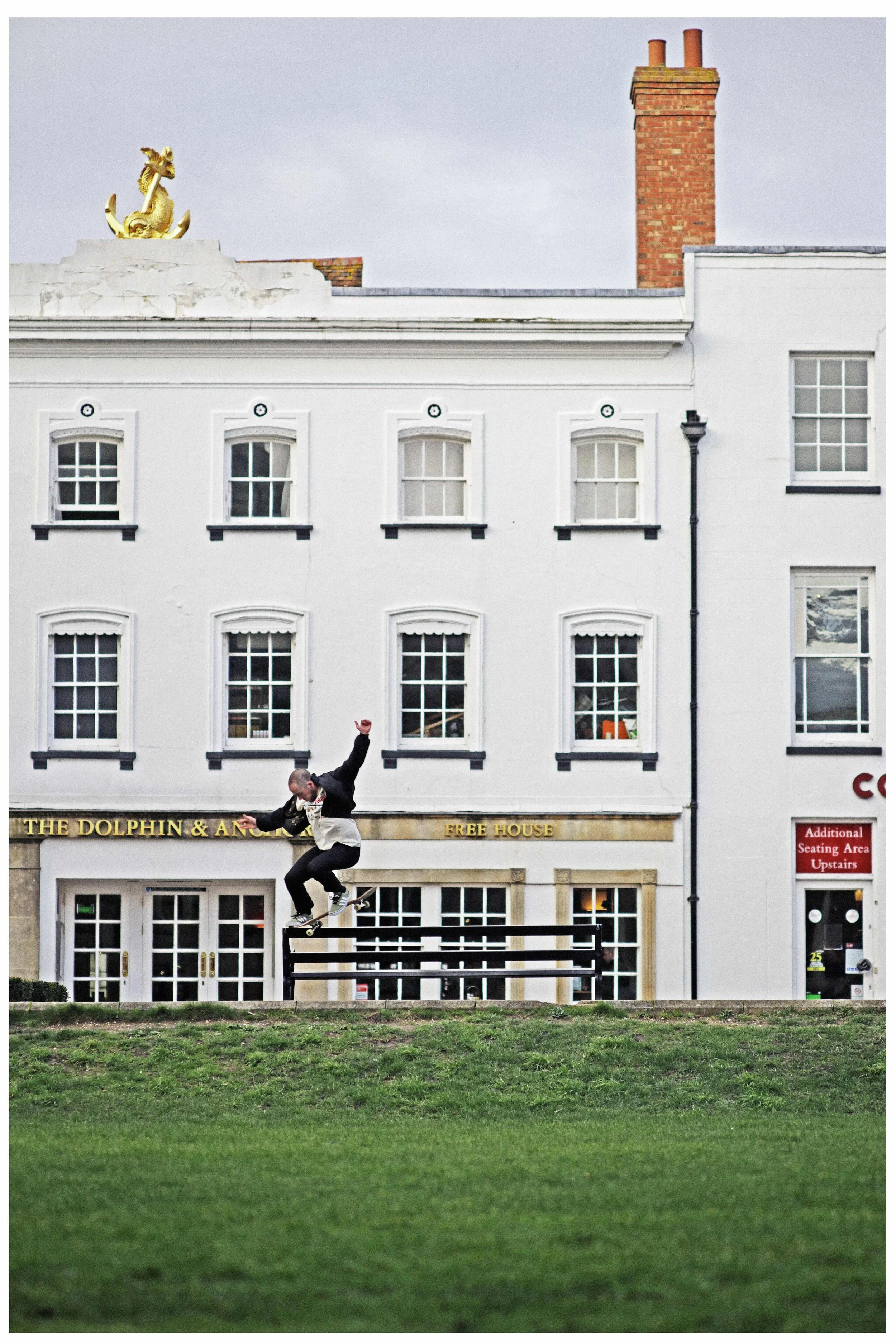
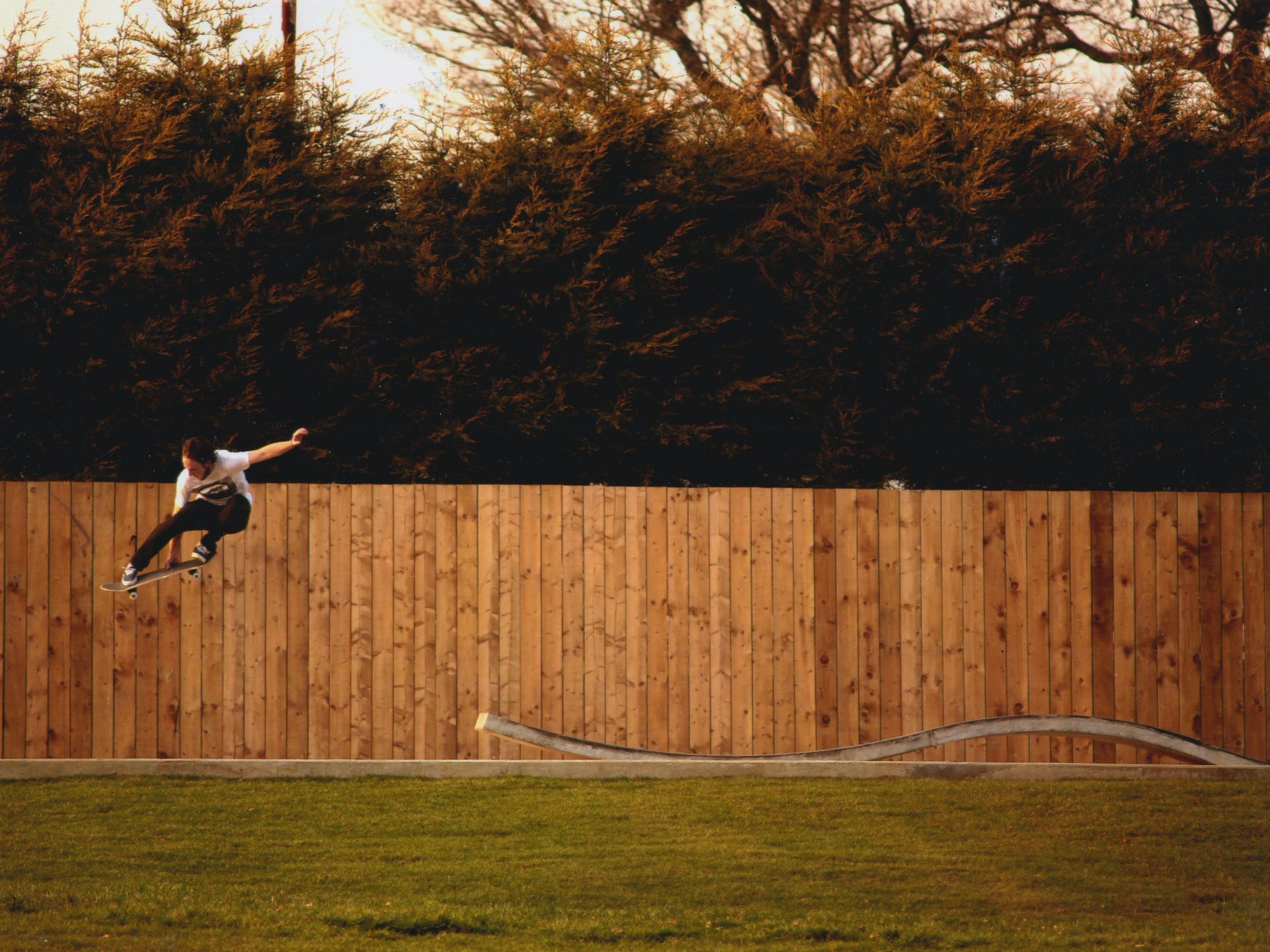
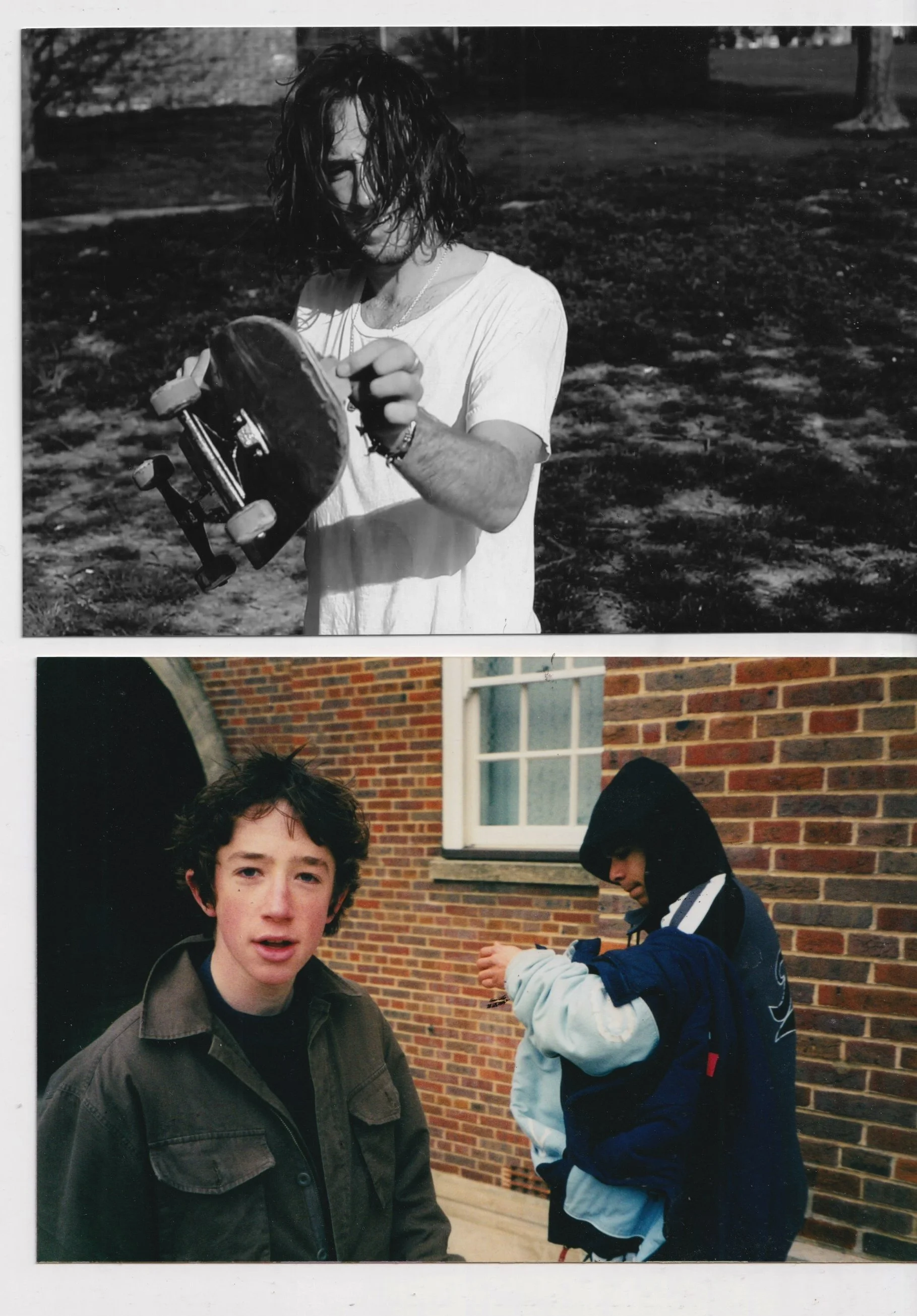
I have been skateboarding since I was twelve, and it was fully encompassing. It introduced me to music and art. Artists within the skateboarding world were my first art related interactions. I was heavily influenced by Fos who runs Heroin Skateboards - he was such a creative force when I started. And obviously, people like Mark Gonzales, Ed Templeton, etc. had an influence on me. Most importantly, it introduced me to other skateboarders who, on the whole, are a creative bunch of misfits. One other reason I was drawn to skateboarding was because it was a very self-taught and self-expressive activity. I had one particular friend, Sam Bailey, who was older than me and played a key role in exposing me to a lot of music and art when I was really young. I definitely wouldn’t be who I am if it weren’t for skateboarding.
Where are you hoping your art will take you - if anywhere?
It’s taken me to so many places I wouldn’t have gone already, but I would love to have a location-based show somewhere in the wild. At the moment, I am really interested in explorers in the 20th century, so doing a show based on this idea or something like that, would be of interest to me.
Do you think art has the power to change the world?
Absolutely. It has the power to make people question themselves and their peers. Art should be a means to make sense of the world that surrounds us. Art isn’t meant to just be pleasing or pretty. It’s meant to challenge ideas. And it’s only when challenged that we can grow.